


Chesna Klimek
Articles Written 50
Article Views 155,121

Chesna Klimek

Achievements

About Chesna Klimek

Bringing you eventing stories from the west coast! You can learn more about me on my blog at www.chesnaklimek.com or follow along on Twitter @ChesnaKlimek

Latest Articles Written

Dressage Day Recap from Aspen Farms Horse Trials

Dressage day at Aspen Farms Horse Trials, June 13. Photo by Jo Arlow Photography. Dressage day at Aspen Farms Horse Trials, June 13. Photo by Jo Arlow Photography.
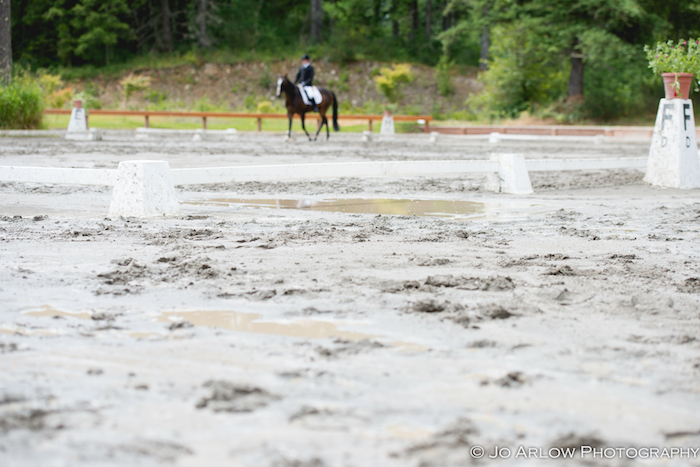
Unimpressive weather didn’t stop Area VII eventers from putting their best hoof forward on June 13–dressage day at Aspen Farms Horse Trials (AFHT) in Yelm, WA. With full classes in Beginner Novice to Intermediate, over 300 horse and rider pairs braved the dreary drizzle for their chance to shine. More than $28,000 worth of sponsored cash and prizes are up for grabs this weekend.
Emily Pestl-Dimmit and Airlington are the overnight leaders in Open Intermediate on a dressage score of 32.6. Rebecca Buehler riding Brighton and Patrick Billes and Rabenschwarz are close behind, tied for second on scores of 35.6.
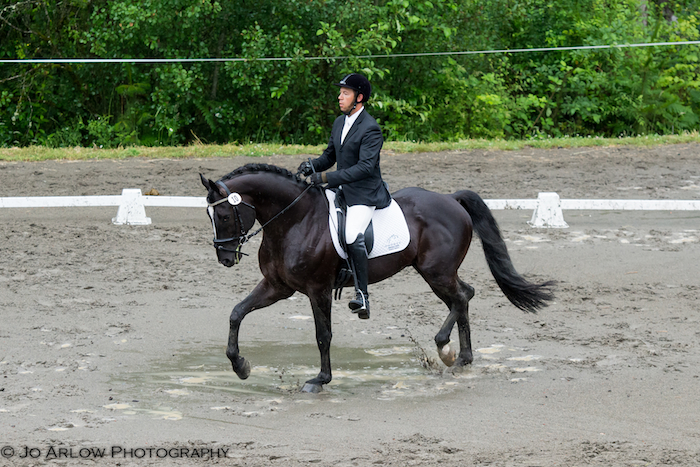
Patrick Billes and are tied for second in Open Intermediate after dressage. Photo by Jo Arlow Photography.

Patrick Billes and Rabenschwarz are tied for second in Open Intermediate after dressage. Photo by Jo Arlow Photography.

Riding in the rain presents unique challenges, and Pestl-Dimmit admits she was a little surprised by how strong their score was given the wet conditions and Airlington’s dislike of puddles. She reports, “I was happy with how obedient and attentive he was to me today.” Airlington, a Bavarian Warmblood, was imported in 2007 for Pestl-Dimmit’s mother, Michele Pestl.
Pestl-Dimmit took over the ride in 2011 and says, “ever since then he’s been mine; we’ve moved up the levels together.” For this season they have their eyes set on the three-star at Rebecca Farm in July, and she reflected that attending the USEA’s Under 25/Developing Riders training sessions in California with David O’Connor in January has been beneficial for her and her horse. “The program has been really helpful; very eye-opening. It’s been a highlight of this year.”
Karen O'Neal and Freudentag are leading Open Prelim after dressage. Photo by Jo Arlow Photography.

Karen O’Neal and Freudentag are leading Open Prelim after dressage. Photo by Jo Arlow Photography.

This June AFHT offered three separate Preliminary divisions to meet rider demand. Karen O’Neal rode Tracy Berg’s gelding, Freudentag, to an overnight lead in Open Prelim with a score of 25.9. “I thought our test was really good. He’s a new horse to me, and there’s some things I’d like to work on, but overall he’s a lovely horse, a lovely mover.”
This is their first Prelim together, but O’Neal is confident they have a chance to hold the lead, provided they can keep the pace on cross-country. O’Neal reports, “the course looks great. The footing’s pretty good right now. Hopefully it doesn’t rain anymore!”
The most popular classes at AFHT are those in the Zeit Capital Challenge, which combined award over $3,600 as well as fantastic prizes from sponsors. Overnight leaders in these divisions include Elizabeth Gold and Miles Away in Open Beginner Novice, Brooke Phillips and Absolute Chance in Open Novice, and Devin Robel and Highlight in Open Training.
Though Robel’s dressage coat may be ruined from the downpour that unleashed over their dressage test, she’s thrilled by the potential her six-year-old OTTB, Highlight, is showing in the ring. Robel has been developing Highlight, affectionately nicknamed “Beemer”, since his three-year-old year when his race career ended at Emerald Downs Racetrack.
While knocking on wood, Robel admitted that she thinks Beemer will stay true to his past performances at Training level and deliver a double clear; “He’s bold and easy on cross-country and likes to jump clean in the stadium. But my goal is to not get too competitive; my ultimate goal is to produce a nice horse.” They plan to move up to Preliminary later this season.
196

Margaret Heagerty and Wild Guess scored a 12 in the Junior Novice division. Photo by Chesna Klimek.

Honorable mention goes out to junior rider, Margaret Heagerty, and her horse, Wild Guess, competing in Junior Novice; they bagged the lowest dressage score of the day: 12.

The weather forecast for Saturday promises dryer skies and warmer temperatures. But no matter what the conditions, competitors will make the most out of the show experience. Robel points out, “Aspen is a beautiful event, even when it pours rain!” Both cross-country and stadium will run throughout the day on Saturday, beginning at 8:30 a.m. Pacific.


AFHT Links: [Website] [Live Scores] [AFHT on Facebook] #AFHT


Area VII Season Kicks Off with Equestrians Institute Horse Trials

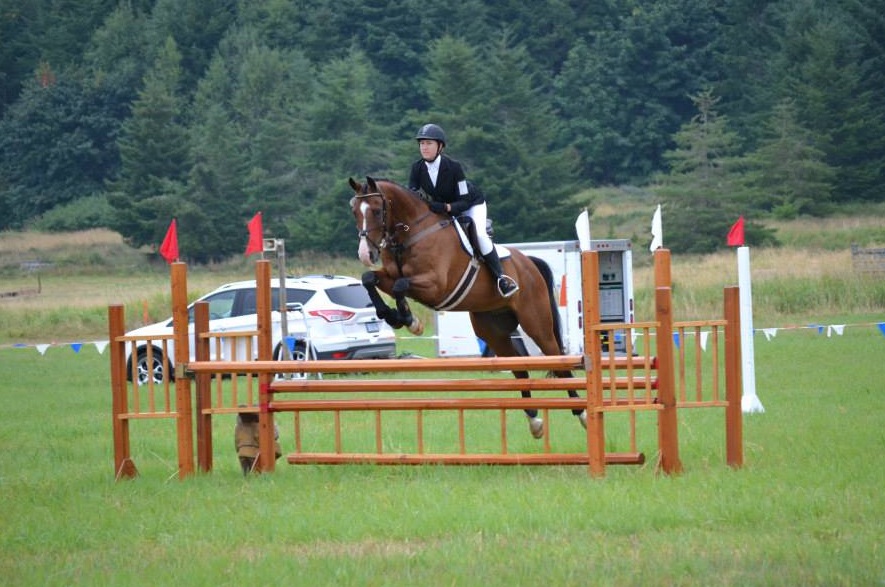
Show jumping at the EI Horse Trials. Photo by Karlin Ekberg. Show jumping at the EI Horse Trials. Photo by Karlin Ekberg.

Equestrians Institute (EI)  hosted the first event on Area VII’s 2014 calendar and the inaugural USEA horse trials at the Washington State Horse Park last weekend. As the first event of the season, entries filled quickly, with a wait list for levels from Starter to Training/Prelim.

Still tired and a little sore from the weekend’s workload, Meika Decher, the eventing director of Equestrians Institute, reflected on her Polestar Farm blog: “Overall, the Equestrians Institute H.T. event went very well. We had 265 competitors at a new venue, and all in all, it ran smoothly, on time and with a lot of happy riders.”

cross-country-log-by-michelle

Leigh Mesher riding Revolutionist in Open Training. Photo by Michelle Grimmer.

Many horses and riders had positive experiences at this year’s opening event. “Organizers and volunteers did an outstanding job,” trainer Michele Pestl said. “It was a very well-run first event — a success for EI and the Washington State Horse Park.”

Event mom Sally Brown says her daughter, Krisalyn, had a fantastic first-ever event in the Starter division with her 8-year-old pony, Linoleum. “It was a great event, and they did a really good job putting it on,” Sally said. “I wish more of (the events) had Starter division like here.”

Competitors, spectators and volunteers snapped candids from the weekend, with many smiles all around. Thanks to everyone who helped capture the fun!

[EI Horse Trials Final Results]

Eventing Barefoot: Is It Possible?

From a distance, Kelsy Smith’s horse looks like most Preliminary-level event horses: he’s fit, he’s bay, and he’s over 16 hands. But if you look closely, you’ll notice one major difference between Huxley Heights and the other equines in his classes: Huxley does not wear horseshoes.

Eventing barefoot is not the norm in the Pacific Northwest, but that didn’t stop Smith and her Dutch WB x QH, Huxley, from taking on their debut season at Prelim without shoes. In 2013 they competed in five USEA horse trials, accumulating scores to earn them the title of Open Prelim Year-End Champion in USEA Area VII. And this season they plan to compete in their first CCI*… barefoot.

Smith has kept Huxley barefoot for his entire riding career. “Every horse is an individual,” she says, “for Hux I think barefoot offers more advantages [than shoes]: easier on his joints, better circulation in the hoof/leg, good traction, etc. Also, I never have to worry about if my horse pulls a shoe on course or what type of stud to use.”

Kelsy Smith and Huxley Heights show jumping barefoot. Photo by Chesna Klimek.

Kelsy Smith and Huxley Heights show jumping barefoot. Photo by Chesna Klimek.

Smith is quick to point out though that she “spends a fair amount of time conditioning his feet for the workload. Making sure he’s turned out as much as possible in a large space, graveling his paddock, and working him on different terrains: gravel logging roads, paved roads, hard and soft pasture/grass, etc.” She cites lifestyle management and a thoughtful hoof conditioning program as key to Hux’s soundness.

Smith is not the only eventer keeping her horse steel free; there seems to be a small but dedicated number of eventers competing barefoot in the U.S., especially at the lower levels. Amrita Eldine Ibold competes at Training level on a home-bred, self-trained Akhal-Teke gelding, Turkmen Air. Ibold challenges the status quo that a barefoot horse is at a disadvantage or lacks quality care; she points out, “According to the barefoot movement, a horse that needs shoes is a lame horse.”

Amrita Ibold and Turkmen Air schooling XC barefoot. Photo by Jenny Rice.

Amrita Ibold and Turkmen Air schooling XC barefoot. Photo by Jenny Rice.

Bridget Brewer has been taking her horses barefoot for seven years, including two OTTBs. She currently competes barefoot on her Novice-level mare, Moonshine, a 9 year old Irish Draught. Her reasons for keeping her horses barefoot boil down to health: “From a physics perspective, a bare hoof absorbs the shock better [than a shod hoof] as it expands on contact, which reduces the shock that gets transmitted up the leg into the joints and soft tissue. This same mechanism also provides increased blood pumping action.”

Undoubtedly, in three-day eventing barefoot eventers are a minority group. Shoes and studs are widely considered necessary tools of the trade, and it goes against the grain to keep a show horse unshod. Responses to barefoot competitors can range from genuine curiosity to grave concern. Some riders report push back from trainers or fellow competitors when they choose to compete without horseshoes. Amrita sums it up: “In eventing, most people think you are crazy for going without shoes and studs.”

But the reality is that barefoot does work for some event horses. Smith says, “I think more horses could go barefoot than people think or allow,” and she encourages folks who have horses with quality hooves to consider barefoot hoofcare. After all, to shoe or not to shoe is a conscious decision riders get to make when it comes to their horse’s welfare; it appears the USEA, USEF, or FEI do not have rules regarding shoeing.

There are pros and cons with any hoofcare decisions. To riders who want to venture into barefoot territory, Smith cautions: “Don’t expect to pull your horse’s shoes and be competing at the same level the next weekend. It takes time, conditioning, and work to ‘fit up’ the hoof to be able to handle the workload. If you try to push too hard, too fast you’ll set yourself back a long way, just like with anything else.”

Bridget Brewer.

Bridget Brewer competing unshod. Photo by Kevin Michael Brewer.

Brewer elaborates on this, “Barefoot is not an easy road as today’s urban, mostly stalled horse lifestyles make it hard for the barefoot hoof to become robust and strong… Successful barefoot requires lots of movement, a low sugar diet, and frequent trims from someone who specializes in the barefoot trim. The hoof will adapt and change over time and the walls will thicken and the sole will develop a callous. Some horses are easier than others, and some may always be a tender on rocks and rough surfaces.”

Many recreational riders have embraced barefoot hoofcare for their horses, and if you look, you can find barefoot horses competing in mainstream sporthorse disciplines outside eventing. For example, some racehorse trainers are running unshod Thoroughbreds, and barefoot dressage horses are starting to make the headlines, with well-known riders like Shannon and Steffen Peters giving it a try. Brewer explains, “I am excited about some of the momentum barefoot is gaining as better information on how to be successful becomes available and the advantages to the horse is better known.”

When it comes to preserving equine health in our sport, honest discussions about what works and what doesn’t work for our horses is key. As a long-time “barefoot eventer,” I find that many of us are asked why when we don’t shoe, but few ask why when we DO shoe. At the end of the day, any conversation about what is best for our horses is a good one to have. What hoofcare practices work well for your eventing partner?

Barefoot hoofprint in arena sand. Photo by Bridget Brewer.

Barefoot hoofprint in arena sand. Photo by Bridget Brewer.

7 Facts You Should Know about USEA Area VII

Rebecca Farm in Kalispell, MT. Photo by Kelsy Smith. Rebecca Farm in Kalispell, MT. Photo by Kelsy Smith.

While most eventing enthusiasts are turning their attention to Lexington, KY for Rolex this week, I invite you to momentarily fix your gaze 1600+miles west. Behold USEA Area VII… Washington, Oregon, Idaho, Montana, and Alaska.

If you’re already a big fan of Area VII, then these facts will just affirm why you love eventing here. But if you thought eventers couldn’t clear the Mississippi, then read on! Here’s seven things you should know about Area VII:
  1. Area VII hosts the largest three-day event in the United States. Situated on 640 acres, The Event at Rebecca Farm in Kalispell, Montana boasts over 450 entries, hundreds of volunteers, and thousands of spectators. It’s such a big event, some horses fly by plane to get there! This world-class event is known for its picturesque venue, top notch courses, fundraising efforts for cancer research, and much more. For many, it’s the highlight of the Area VII calendar.
  2. Area VII eventers compete nationally and internationally. There are talented, hard-working horses and riders here in Northwest. In 2013, Area VII riders participated in the national Developing Riders/Eventing 25 program (Lizzie Snow, Emily Pestl-Dimmit, and Mackenna Shea) and the Under 18/Advancing Athletes program (Patience O’Neal). We’ve noted Olympic eventers such as Amy Tryon, Kevin Freeman, and Todd Trewin. We’re home to pairs who have competed or are currently competing at the 2*, 3*, and 4* level, and each year Area VII riders make it onto national leaderboards for their divisions.

    kevin-b-advanced

    Area VII’s Kevin Baumgardner was the top Advanced Master Amateur Rider in the USA in 2013.

  3. Area VII Young Riders rock. Area VII’s YR program is the largest in the USEA, and the kids make it a success. Jessica Heidemann, last year’s YR coach, explains, “The kids are SO involved and have an amazing camaraderie.” Through the YR internal team program, 49 participants accumulated over 160 volunteer hours in the 2013 season, excluding the many hours they put into organizing and running the YR fundraiser horse trials at Lincoln Creek. Their involvement also shows in their results. For example, Area VII (mixed) teams were first in the CH-Y** at NAJYRC in 2012 and second in the CH-J* in 2013.
  4. Area VII is home to the Washington State Horse Park. Located in the heart of WA state, this nonprofit equestrian facility in Cle Elum caters to riders of all disciplines. The Horse Park is growing to accommodate the needs of eventers, ensuring the future of our sport by providing a permanent competition venue. The 112 acre facility currently has XC and derby courses through Training level, including a water complex, outdoor arenas, and stabling. There’s a successful fundraising effort underway to build a Prelim course this year. And, this May the Horse Park will host the first horse trials of the Area VII season. Check out this video highlighting the Horse Park’s amenities and goals:
  5. Area VII hosts two stops on the USEA Adequan Gold Cup/Pro Tour series. You won’t want to miss Rebecca Farm’s CIC3* in Kalispell, MT or the Advanced division at Aspen Farms Horse Trials in Yelm, WA. Both offer cash and prizes thanks to fantastic sponsors, and both can promise top notch spectator experiences in some of the best scenery of the west.
    aspen-farms

    Aspen Farms in Yelm, WA. Photo by Joe Stylos.

  6. The Area VII Adult Rider (AR) program shines. Hundreds of amateur and professional adult riders come together in the Northwest to have fun, learn, participate in team awards, and grow the sport. Carina Vollmer, seconded by many AR members, says “Every time I attend an Area VII AR function, I leave having made new friends.” Lisa Haugen Eppley elaborates, “AR provides a wonderful support system and a sense of family at events.” AR also sponsors fantastic clinics and camps with leading clinicians to further Area VII’s talent base. Members of AR are eligible for team programs and awards, discounts on fantastic training opportunities, and the program constantly supports and grows Area VII eventing through volunteerism. Word around the paddock is that we should watch for an Area VII AR team at the AECs in 2014!
  7. Area VII eventers represent grassroots eventing at its best. Though we may be far from the hubs of three-day eventing in the USA, we care about our horses, we care about our sport, and we care about one another. The eventing community here is strong thanks to each and every person who contributes–dedicated volunteers who brave the weather, driven horses and riders, committed instructors and trainers… Whether we’re fundraising for great causes, running schooling shows or world-class horse trials, or having fun around the bonfire at the end of XC day, there’s a place for any type of horse or rider here.

    boyd-martin-clinic2

    Area VII eventers hanging out with Boyd Martin in 2013.

Learn more about Area VII on the USEA Area VII website, cheer for our horses and riders, and come visit us; we welcome you. Go Area VII!

Stay tuned here on my EN guest blog for coverage of Area VII eventing action.