

Articles Written 128
Article Views 182,879

John Lechner

Achievements

Become an Eventing Nation Blogger

About John Lechner

John Lechner is Australian based in the Hunter Valley of NSW with a focus on Eventing Photography and Writing about the sport he is passionate about. You can check out John's photography at http://esjphoto.com.au/about/

Latest Articles Written

A Celebration of Racing’s Best Mares

Makybe-Diva-racehorse-6209511.jpg

Did you read and see the beautiful story on Zenyatta the other day by Samantha Clark? I loved it and was particularly drawn to the lovely pictures of Zenyatta in the Kentucky snow. I then started a twitter conversation with Samantha basically saying that Zenyatta had nothing on Makybe Diva (real mature I know).  This descended quite quickly and Samantha being more mature (in personality) stopped it by refusing to enter the debate, mature yes but a little boring.

I got the inspiration to have a look at these two beautiful mares and write about them.  Not as a comparison, me saying the Aussie mare was better and Samantha staunchly standing behind the Kentucky bred mare, but instead a celebration of these two mares and their amazing achievements.
So lets start with Makybe Diva.
First up I know that there will be some Poms (that is what Aussie’s call people from England) who will already be jumping up and down and saying that The Diva was English.  This is sort of true, she was conceived and born in the UK of Irish American descent. The Diva’s Dam – Tugela (USA) 1995 – was purchased in foal to Desert King (IRL) 1994 by Tony Santic‘s bloodstock agent John Foote at Tattersalls in 1998, the filly was born in 1999. 
After being passed in at auction, the filly and Tugela travelled to Australia, to join the Tony Santic team. The filly was name Makybe Diva by Tony Santic in honor of five of his staff from his commercial Tuna fishing operation – Maureen, Kylie, Belinda, Diane, and Vanessa.
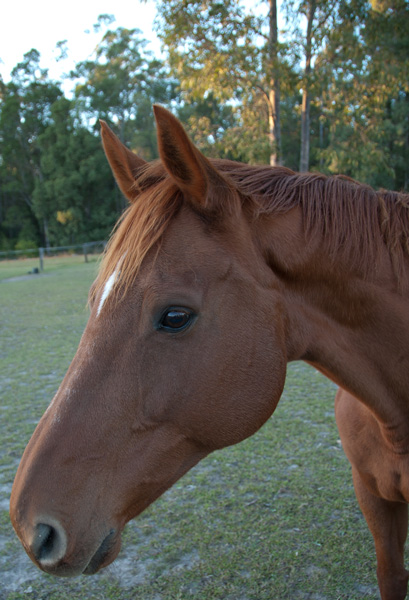
So begins the story of a legend. I do not use the name “legend” lightly when it comes to Makybe Diva, and yes I do have a soft spot for her, the picture below hangs in my office. I love the fact that while she is a legend she is also just a horse and her natural beauty shines.
Makybe-Pic.jpg
So “Legend” why?  The Diva won the Melbourne Cup, the greatest race in Australia, two miles (3200m), featuring some of the best stayers in the world. She didn’t win it once, but three times back to back. The only horse to have ever done so and the only mare to have won it more than once.
All three runs were spectacular but her last in 2005 brings chills down my spine, after running most of the race in the pack, nearer to the back than the front they came round the final turn boxed in, seemingly nowhere to run. Glenn Boss her jockey put his foot to the floor and almost made the rest of the field look like it was standing still. The Diva was carrying top weight in the field with a massive 58kgs (128 pounds). I recall the outcry at the handicappers, never had a mare carried so much in the Cup, it didn’t matter.
This is the video of the race, even if you don’t want to watch the whole four minutes of the video, start at 2:30 and look for the distinctive red and white checked cap, blue shoulders and sleeves with the red and white checks below, they were 7th from last.

I will never forget watching that race live and knowing that she was going to win as she started emerging from the pack, it was stunning.
Makybe Diva won over $14 million Aussie on the track and was retired immediately after her 2005 Melbourne Cup win to stud. Her record over 1 1/2 miles or more is stunning with 10 starts, six wins, and one each of a 2nd, 3rd, 4th and 7th (Japan). In 2010 Makybe Diva was entered into the Australian Racing Hall of Fame as a Legend, joining only three others, legendary race horse Phar Lap, trainer Bart Cummings and Jockey Scobie Breasley. 
So we come to the mare who has been stunning crowds in the USA for the last three years, Zenyatta. Zenyatta is a different racer to The Diva. A sprinter with a massive frame 17.2 hands, compared to the compact 15.2 hands of The Diva.
Interestingly both mares have Roberto (USA-1969) as a great grandfather in their Maternal bloodline, this is the only link in four generations of bloodlines.  Zenyatta is also of Irish American blood by Street Cry (IRL) out of Vertigineux (USA).
Zenyatta’s record is stunning 19 wins from 20 starts, this has only been bettered by a select few, Man o’ War (20 of 21), Native Dancer (21 of 22) and Kincsem (54 Undefeated). There is no doubt she deserves the title Queen Zenyatta.  Kincsem is the only mare to have bettered The Queen’s record and given that Kincsem is the most successful horse in the history of Horse Racing that is nothing to sneeze at.
Zenyatta also holds the record for winning a race three years straight, in fact she holds that record for three different handicaps, the Clement L. Hirsch Stakes (1 1/16 miles 1700m), Vanity Invitational (1 1/8 miles 1800m) and the Zenyatta Cup formerly the Lady’s Secret Stakes (1 1/16 miles 1700m).  
There is another record that Zenyatta shares, that being one of only three mares to have had 13 Group One wins, no mare has won more.  She shares this title with Bayakoa an Argentinean mare who competed in the USA and the great Sunline.
I know that the Aussies and Kiwis who are reading this were wondering if I would get to Sunline. To be honest, you can’t have a conversation about great mares without talking about Sunline. Sunline was bred in New Zealand by Desert Sun (GB) out of Songline (NZ).  She has the same Northern Dancer – Danzig line as Makybe Diva as a Great Grandfather on the Sire Line.
Sunline had 48 Starts in total, 32 wins, 9 seconds and 3 thirds, that is 44 places from 48 starts. This record is also stunning by any account. She won over $11 million Australian during her career. She won New Zealand Horse of the Year four times and is the only horse to have ever won the Australian Horse of the Year three times. Sunline, like Zenyatta, specialised around the 1 mile races.
All three mares were retired to stud. Sunline produced four foals before she passed away in 2009 after battling laminitis for a long time. Makybe Diva has produced three foals to date and Zenyatta was sent to stud with Bernardini only this week, so fingers crossed a new Prince or Princess is on the way.
Three Queens of the track, each special in her own right, unique and amazing.
Yours in Eventing,
ESJ

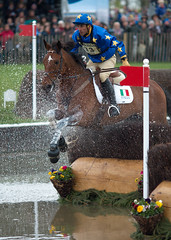
Eventing’s Honor Roll, the one list you don’t want to be on

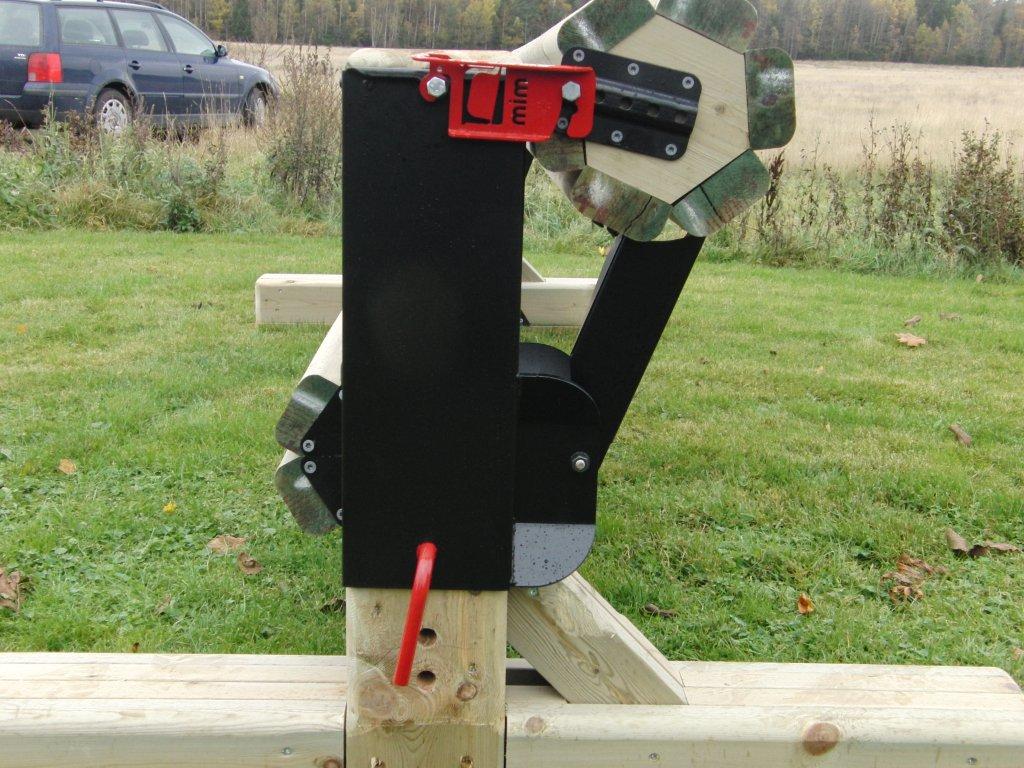
Mim_Rotational_fall_asat20100614-5.jpg

I have an excel spreadsheet and it contains a list. That list is the Honor Roll of Eventing. The list contains the name, location, date and usually the manner of death of a rider who has given their life in the pursuit of our sport.

It is a list I don’t look at very often but yesterday I was moved to do so. I needed to confirm that Jade South was on the list, she is number 37. My list was compiled by another person who is passionate about safety in our sport and has entrusted me with a copy of the Honor Roll.
Until the EN post earlier this week, I was not aware of the greater details of Jade’s incident and now that I am, I am deeply sorrowed. My sorrow stems from the fact that as a community, we cannot accept the loss of horses or riders as a fact of life in Eventing but something to be avoided at all costs.
When we lose a life we must learn everything possible from the tragedy and ensure we do not make the same mistakes again in the future.
Personally, the final paragraph of John’s post was the light bulb moment for me that I wish to share.
One of the complications in looking at whether the jump raising up contributed to the fall is the difficulty of knowing if the jump moving was actually a good thing in the sense that frangible technology suggests that a jump being fixed in place and rigid is not always a good thing.


In 2010, another young lady Elena Timonina also 15 of Russia died on XC in a one star level national competition. Now remember that Jade South had a rotational fall over a 2 foot 6 (76cm) fence, the current rules in the USA do not recommend the installation of a frangible pin below 37.5 inches (95cm) although they can be if room for a minimum 16 inch (40cm) drop of the rail is available*.  
* A rail should be 6.5 – 15 inches (16 – 38cm), so there is not always room below 3 foot to make use of the frangible pin.
Back to my point. Elena died in a rotational fall where the fence did not appear fixed, trust me on this I have watched the video too many times, you don’t need it etched in your brain.  Essentially the fence stayed in the way of the horse and allowed a rotation to occur. THIS IS THE CRITICAL POINT.  STOPPING A ROTATION OCCURRING.
If the horse does not rotate then the chances of a serious injury are significantly lower, once a horse commences a rotation it is extremely difficult to stop. Thus preventing the rotation in the first place must be a primary goal for all in Eventing.
So firstly, an incorrectly fixed portable fence or an unsecured portable fence can create a pivot point from which a rotation can occur. By incorrectly fixed I mean fixed in a manner that allows the front of the fence to lift off the ground.  
I do hope that you were able to sit through the video in my post on Eventing Safety – Has a new era dawned on Eventing if you did, you would have taken away a critical thing about frangible fences. That is that they (frangible fences) can help by allowing the horse to do what it does best, stay on their own feet.  Frangible fences can help by getting out of the way of the horse, in the fraction of a second it takes for a rotation to begin.
If the fence is out of the way then the horse can get its feet on the ground, it may still fall but it probably wont rotate.
So how does this help our problem of portable fences?
  • A portable fence is designed to stay up, so even if it does fall, by the time it does fall, the horse will be rotating, we are talking a fraction of a second for a rotation to begin.
  • Another key element from Mat’s (Mim NewEra) presentation was that 200kgs (440 pounds) is the magic number, when a rail on a frangible fence weighs more than this physics wins and a rotation can occur. Ever seen a portable fence that weighs much less than 440 pounds? I haven’t.
Well, simply in my opinion leaving a portable fence free to rotate, free to move is asking for a rotation to happen. Can you still get a rotation if the fence is perfectly rock solid, absolutely, as you can with almost every other fixed fence on a XC course.
The key difference is that an unfixed portable fence has all the key features you want to avoid in order to avoid a rotation.
That is enough theory and abstract thought, this story is about two 15 year old girls, who will remain forever young and the many more on the Eventing Honor Roll.
I wish you all safe and happy Eventing and please remember, if you see something on XC you don’t like, find the TD or another official and ask a question–there is no such thing as a dumb question.
Yours in Eventing
ESJ

A good place NOT to leave your car keys!

IMG_4598

Image by sffubs via Flickr of Juan Carlos Garcia & Iman du Golfe

Sometimes you hear a story you need to chase down, hear first hand and then share it with the world.  This story is one of those.
I have to thank my good mate Samantha Clark for unearthing it, in her interview with Dr Chris Newton of Rood & Riddle Equine Hospital Lexington Kentucky.  Dr Newton in his video interview (see the bottom of this story for the interview) with Samantha Clark talked about Italian horse Iman du Golfe (ridden by Juan Carlos Garcia) who was seriously injured on cross country at WEG in Lexington following a collision with part of the dressing of the Apex fence 20. 
The horse Iman du Golfe has since made a full recovery as reported by Eventing Nation and has returned home to Italy, hopefully we will see him once again on the world stage or at least out Eventing once again.

How Iman du Golfe is still with us is the story I would like to tell.

A little background first.

Australia was one of the few teams (the other two were USA & Germany) at WEG to field competitors in all eight disciplines, our Team included four Para-Equestrians who were in fact our most sucessful competitors at the games bringing home – two Bronze medals thanks to Sharon Jarvis.  Our Para-Equestrian team developed some strong bonds during their time in Lexington and on Cross Country day four proud Aussie Ladies (Victoria Kahn – Para-Equestrian Physiotherapist, Dr Janine Dwyer – Para-Equestrian Team Vet, Krysten Lituri – Groom to Nicole Kullen and Terrina Fairbrother – Groom to Sharon Jarvis) headed out to cheer on our riders. 
 
Having worked their way round the course as the day progressed they were looking forward to seeing Sam Griffiths and Happy Times come past soon (Sam was the rider in front of Juan & Iman du Golfe).  They heard that something had gone wrong for Sam Griffiths, so they started heading back to where they had heard that both Sam and Happy Times had fallen, uncertain of their condition.

Their trek back was interrupted by an approaching horse so they waited behind the tape for the crossing marshall to let them through.

Then it happened.

Iman du Golfe bowled into the side of the dressing on the top of the apex fence, ejecting Juan and having a big fall himself.  Iman got up and trotted off towards the Aussie girls, whilst everyone rushed to the aid of Juan.  Moments later as he turned towards them they saw he was in trouble, Groom Krysten Lituri, was shocked into action as those around her stood in awe of the drama unfolding before them.

Yelling she needed something to pack the wound, she was thrown Janine Dwyer’s Australian Team Vest, Krysten ran straight up to Iman, and stuffed the vest into his gaping wound, and litterally put her weight behind it as compression to try and stem the arterial blood flow.  When I spoke to Krysten she still sees things in a mixture of slow motion and high speed, almost gaps in time.

Krysten, herself a FEI Dressage Rider, had started a Veterinary course at Uni, (she wasn’t afraid of blood) and later switched to teaching as her passion for riding developed, she didn’t want to immerse herself in horses as both a vet and rider, some of us need a little balance, I get that.  Her reactions and quick thinking most likely saved the life of Iman du Golfe.

The next thing Krysten remembers is an army of vets and others surrounding her and the horse, white screens going up and she was now embroiled in a battle to save the life of the Italian horse. A number of times she remembers as the team worked around her if they wanted her out, “no stay where you are, keep doing what you’re doing” was the response.  So as they splinted his foreleg, suspecting a fracture, and wrapped the wound, Krysten was amongst it all maintaining pressure on the wound.

So the Aussie Team Vest ended up literally packed inside the torn open chest of the horse, layers of further packing and bandages covered it all as the horse was carried in a sling by the team of vets, officials and the young Aussie Groom. He was loaded on the truck and whisked off across the road from the Horse Park to the surgery of Rood & Riddle with Dr Newton and his team working to save his life.

Krysten and the others left behind were covered in blood and kept behind the screens as they were washed off, and the track covered in sand to mask the blood soaked ground, after a good scrub she ended up back with her team-mates.

Then it dawned on them that the Australian Team car keys were in a pocket of the vest, which was now packed inside the Italian horse on its way to surgery.  Pretty funny really, especially given the gravity of what had just happened.  So now the team had a new task make it the long way from XC to the Rood & Riddle surgery and somehow get the keys back.

Well, as we know the story has a happy ending and Iman du Golfe is now fully recovered in Italy, the keys were eventually located and now there is a very proud new owner of an Aussie Team vest at Rood & Riddle. Krysten mentioned to me she is hoping to go overseas and learn more about her craft (Dressage) I suspect she would be treated like royalty in Italy.  I know she has an open invitation from a Senior Italian Federation Official to visit Rome and a personal guide on her visit.

This is a beautiful story with a fantastic ending and one very cool headed young lady to have around in a crisis.  Thank you Krysten for sharing your story.

Here is the interview with Dr Chris Newton, thanks to Samantha Clark for unearthing this great story.
Yours in Eventing,
Only two weeks ’til I leave to come and see you all at Red Hills, looking forward to it.
ESJ

Helmets Rules – Are you confused too?

Wearing a Hunt Cap and a Certified Safety Helmet at the same time


When the USEF approved new rules for requirements for Safety Helmets in Eventing and Dressage, many of us breathed a sigh of relief and were excited that everything was now simpler and easier to understand.

Unfortunately that is not the case when you start reading rules. I have analysed rules from across the globe and believe I have sorted it out into one simple paragraph that applies to all riders, no matter their discipline and will result in ALWAYS complying with the prevailing rules where ever you are in the world, USA, UK, Australia, Canada, Europe, it doesn’t matter.
Every Nation and the FEI all have slightly different rules, different exemptions and even different languages.  
But there is one common thread and I will get to that.
John and I have had a discussion about all the differences, who is doing what and who is not doing it, but this loop hole makes most of that irrelevant. 
It is NOT A NEW RULE and does not require additional reading of three different rule books to understand (or get even more confused).
The best thing is, you DO NOT need to go out and by a new Certified Safety Helmet, that is if you are already competing in Eventing or Jumping in particular, you already have an appropriate one in that case.
Lets start with the genteel sport of Dressage.  
Did you see the news the other day about Debbie McDonald having a serious fall training a young horse. This is an extract of the full story here on Riders4Helmets.

“I feel like I’ve been run over by a Mack truck,” Debbie said of the accident that left her with lacerations on the left side of face that “looks like I was dragged along the asphalt” and a black eye. She suffered severe whiplash and a concussion.

She said that she was riding the horse belonging to a client when it started to go into bronco bucking mode, throwing its head and stretching down between its legs.

“I realized that at some point I was going to come off,” she said.

“I went head first into the footing,” Debbie said. “The helmet showed that the footing went up to the base of the helmet.

“It was like a Christopher Reeves’ fall, with my hands out behind me,” referring to the actor who suffered a riding accident in 1995 that left him a quadraplegic. He died in in 2004.

We all know even the best horse can react badly when something goes wrong. Think about when you’re warming up at an event and a loose horse gallops through the warm up arena or gallops past you halfway round the cross country course going in the wrong direction. Scary but could be even scarier.  

We Aussies have a saying about riding and I am sure it rings true around the world, if your not falling off your not trying hard enough.  Next time you see Philip, Boyd, Karen or any other elite rider and ask them when they last fell off a horse, I am sure it was only a matter of weeks ago.
Aussie Eventer and Dressage Olympian Heath Ryan maintains that when he has a fall off a horse it is always a big one. Why? Because he is so good in the saddle that when he finally starts flying, all hell breaks loose.  
I hope that by now everybody who reads my stuff knows that I am passionate about safety in our sport.  The big question is why?
Well there are a couple of answers to that.
  1. We all accept that our sport is inherently dangerous, but neither horses nor riders should need to die as a consequence of making a mistake on cross country in particular.
  2. As a Technical Delegate I NEVER EVER want to be living with the knowledge that a rider died on my watch, I will do EVERYTHING in my power to avoid this happening (regardless of how unpopular it makes me with some powers that be).
  3. I love that our sport is in the Olympics, I want it to stay that way. Just think of how much funding will be lost from our elite programs across the globe if our sport is no longer contested at the Olympics.
I leave you with one final thought before I share the global loophole on Safety Helmets.  In 2010 four riders died competing in Eventing around the world, this number is a devastating statistic, but imagine how many more lives were saved by wearing Safety Helmets.
So the loophole that will get you through Eventing across the GLOBE.
Wear a Certified Safety Helmet, with the strap snugly fastened at all times when you ride any horse.
Remember this is not a new rule, written in such a complicated way that you need to read it 10 times before you fully appreciate it, no, we will leave that task to the Dressage Rule writers.
I hope you saw that coming, but if you didn’t, let me take it one step further. All the differences in rules around the globe only give you an exemption for this reason or that, much of that is to do with tradition. Tradition has no place before safety.  Wear your helmet and you will not be marked differently, you will not look different to the other riders in the warm up ring because, to your surprise, within a few weeks, riders will figure out it is far simpler to just wear a helmet at all times.
I think the only reason riders in the USA both dressage and eventing are so bothered and confused about the rule is because it is bloody cold outside and it is easier to sit in front of the computer and complain than go for a nice hack in the snow or icy rain.  
P.S. On that note, could you guys start warming things up over there, it has been well over 100 deg F here for the last few days. I am hoping I don’t arrive to freezing conditions in a couple of weeks for Red Hills.
Yours in Eventing, please wear a Certified Safety Helmet at all times.
ESJ 
FINAL NOTE:
The FEI accepts protective headgear complying with the European (EN), British (PAS), North American (ASTM), Australian/New Zealand tested standards.  Any of these standards will keep you on good ground worldwide.

A chat with new Aussie Eventing Head – Prue Barrett

Prue and Craig Barrett at home

Prue Barrett is passionate, driven and focused.  Call me a biased Australian, but in 16 months at the London 2012 Olympics, the Australian Eventing Team will once again climb atop the podium to be presented with their gold medals.  And when they do, Prue will be standing quietly at the side of the arena, with a grin from ear to ear.  I had a chance to interview Prue earlier today, and here is the interview along with my thoughts.

Prue has been chosen to follow in the footsteps of the legendary Wayne Roycroft, no other Eventing Coach in the history of Eventing has a record at the Olympics that comes close to Wayne.  Is he easy to replace?  n]No way, but Equestrian Australia have done something ballsy and inspirational by hiring Prue to lead the Australian Eventing Performance Program.
Prue will be without doubt one of the youngest people to lead a team in London, and she will have riders on the team her age and older, if we are lucky we may see a young whippersnapper, like Chris Burton, return to the team. Prue has both the respect of the riders and the team around her to make a gold medal a reality.
Before you start at me that she doesn’t have the experience of a Mark Phillips, Jimmy Wofford or even Phillip Dutton, hang on a sec.
Prue has represented Australia before, including WEG in The Hague in 1994 and also Rome 1998, she rode alongside Philip Dutton for a good part of her career before he left for the USA.  Prue is both an experienced Coach and Coach Educator (she trains Coaches) in Eventing. She holds a Masters in Education from Sydney University specialising in Coach Education.  Her role is as Performance Director of Eventing.  This is different to what Wayne Roycroft did, she will not be standing in arenas, performing clinics and teaching personally all of our elite and up-n-coming riders. No, she will be leading the program, providing leadership, focus and direction to the program.  
Prue Barrett at the Melbourne CCI3* in 1999 on Wendela Jackamin
There have been suggestions that Australia follow the example set by New Zealand and uproot our program to the UK in preparation for the games.  I asked Prue about this, “not on my watch, we produce some of the best riders in the world here in Australia, they learn and master their craft here, not in Europe or in the USA but in Australia”.
To demonstrate the point she said, look at the WEG results, if you took the Australian produced riders, Phillip Dutton (USA), Boyd Martin (USA), Stuart Tinney and Jonathon Paget (NZL) all rose to 3 star and beyond in Australia, they achieved a score of 143.5 at WEG with Phillip being dropped as the lowest score. This is only just behind Great Britain who finished on 139.4 and well ahead of Canada on 151.5.  So the Aussie system isn’t broken–we had a bloody aweful day of cross country and lost one of our best horses in Megan Jones’ – Jester (or Festy to those who know and love him).
So where does Prue plan to take the team in the next two years?  Firstly GOLD in London, sorry USA better start following those Canucks around and see if they drop any silver.  But seriously, when I looked Prue in the eye I saw gold, not silver or bronze, gold.
But that is only part of the plan. Normandy and Rio are not that far off and she has her eye firmly on the plans for the future and ensuring that we not only have a full complement of riders to achieve success, but an excellent team of horses, vets, coaches and support staff around the riders.
Did I mention Prue is a Queenslander? No, I am sure you have seen the floods and then cyclone (read hurricane in North America) ripping through Queensland, devastating homes and communities in the path of natures wrath. People from Queensland are a little different to the rest of us Aussies, we discussed this and came to the conclusion that they are just a little more “Aussie” than the rest of us, deeper accents, a more laid back attitude, but if you are going to get in a bar fight and have the choice of a Queenslander or someone from Victoria to watch your back, pick the Queenslander.
I am sure in the weeks and months ahead, some people will make much of the fact that Prue is a woman. In terms of gender balance that may be important, but in terms of gold medals, it means nothing. That said the fact is that Prue is a wife and a mother of two young kids.  That does mean something–she is tough and resilient.  When your back is against a wall, things not going to plan, being a mum may count for something. 
Personally, I think her background in understanding sport psychology and working with coaches in a diverse range of Olympic sports will help to bring both a well rounded and successful formula to the Australian Eventing Team. This understanding is why she won’t be uprooting the Aussie program to the UK.  Our riders have families, lives and businesses, would you be 100% focused if you are 10,000 miles from home for 9 to 12 months? I know I wouldn’t.
Officially, Prue starts work next week, but she is already planning two trips to the UK, one fairly soon and then a return for Badminton. In this age of technology, skype and email, Prue can work closely with both riders and coaches across the globe, and still take her eldest son to soccer (football) on Saturday morning. She will be at all of the major competitions and has some great and firm ideas in her head for the next 16 months.
There are only 2 questions that are relevant at this point in time in my opinion.
  1. Does Prue Barrett have the capacity to lead Australia to the gold medal podium in London 2012? Yes, absolutely
  2. Will her contract be renewed following London 2012? Yes, without question.
Personally, I am very excited about the future of Eventing in Australia, I came away from our disappointing results at WEG feeling a little flat. After spending nearly two hours chatting with Prue, GOLD in London and Normandy for the Aussie team will be achieved and god help anyone who gets in her way along the way.
Yours in Eventing
ESJ

Ignorance and bliss!

They say ignorance is bliss. I can honestly say that I have been blissfully ignorant at times when dealing with horses, in so many ways but lets focus on one area.

Loaning, leasing, selling, trading – Exchanging horses.

Horses are both inherently dangerous and fragile creatures.

Dangerous, yes, half a tonne of muscle and bone designed specifically to flee at a moments notice.  That can be very dangerous.  Have you ever felt the air rush past your face as a horse lets rip with both barrels with only millimeters to spare from redecorating your face.

Fragile, half a tonne balancing on thin bones and tendons.  How easy it is to turn a multimillion dollar race horse into a broken hack or worse.

Even superstar horses can get colic. I understand that successful colic surgery costs somewhere in the ball park of $5-10 grand. For the average rider medical bills like this can be crushing.

In my limited experience I have competed on loaned horses, no written agreement, just a handshake.  You break it, you bought it was the principle. Sounds fair.  But I suspect the purchase price on these horses would normally been under $5 grand.

There is not a lot of medical attention or surgery you can get for a horse that costs less than $5000.  So if, I as the rider damaged a horse, I would have been better off, maybe? If the horse was euthanized (don’t get me wrong I am not advocating it, just making a point).

That is, of course, if we were able, after the fact to agree on the value of one of these OTTBs I rode was $5000 or less.  Perhaps, it may have skyrocketed in value thanks to my (very) inexpert attempts to get it round 80cm (31.5 inches) and now was valued at $15 – $20 grand as an experienced Eventer. God help me if I managed first to get it round something serious.

I have gotten horses for free, loaned horses and even given horses away.  Last time I did that, my asking price was $1.  I had a signed and dated very basic letter passing all responsibility to the new owner.

I am not going to comment on the legal minefield of trading, leasing etc, especially in the USA.  Only to say, we humans MUST BE COMPLETELY BONKERS. 

There is one transaction with horses that I definitely don’t get.  The “free lease”.  This story started from an email I got from a friend and a free lease arrangement that was a complete balls up thanks to a third party.

That is, despite complex and well researched legal documents and a multitude of lawyers.  The horse didn’t even make it out the front gate of her farm before the deal was canned.  Like I said we must be bonkers.

So this is my understanding of a “free lease”

You give your horse to someone else to look after, feed, keep shod, vaccinated, fit, happy and healthy.  You don’t charge any money for the privilege as long as they pick up all of the bills above.  At some time you may want the horse back.  You write a detailed contract (or not) to cover some of the thousands of possibilities that could lead to the relationship going south.

Now remember where I started, inherently dangerous and fragile creatures.  Perhaps I am being simplistic about the whole issue but perhaps it may be simpler to have a contract where you sell the horse for one dollar and reserve the right to purchase the horse back at one dollar say for the first year of the relationship, after that time you have no rights to the horse.  Personally, the free lease raises more questions than it answers but every horse has its risks and rewards.

Enjoy your riding, love the relationship with your horse/s and I hope they are fun, safe and without unnecessary expenses.

A final note:  Just in case you missed it, I have absolutely NO legal experience at all, please seek your own appropriate legal advise when trading horses.

See you all at Red Hills.
 

ESJ

Why travel 10,000 miles to go to an Event?

I hear that there may have been Gators here beforeYes, 10,000 miles.  It all starts with 2 1//2 hours in the car to the airport, a 14 hour flight from Sydney to Los Angeles, a 3 hour layover to stretch my legs and then cross to Atlanta, run to my next flight to the capitol of Florida, Tallahassee.

Tallahassee is home to the once a year event the Red Hills International Horse Trials. Why is it only once a year, well two reasons:
  1. Red Hills is a greenfield site, EVERYTHING is shipped in for the week, yes I mean everything, toilets, stables, vendor stands, office, stadium seating, the works.
  2. The whole Tallahassee community gets behind this event, throws in 150% effort for the event, they need a full 12 months to recover, so they can do it all again.
So yes, I am flying for a full 24 hours to come to what I honestly believe is one of the best organized, fun and most beautiful Events in the world.
Red Hills, runs on a combination of private land and a public conservation park, it is tucked up right in the top of Florida, in fact it is only about 10 minutes from the Georgia State border.  The landscape and setting for the Event is breathtaking.
Hugh Lochore, the Course Designer, does a fantastic job of opening up the wooded country to make room for galloping, no tricks just a good honest course.  Hugh took over as CD from Mark Phillips last year and is planning, this year, to really put his stamp on the course.  He has created a completely new water complex, after basically bulldozing the old one.  Below is a great photo of the finished complex, just after the new grass was laid.
The new Water Complex at Red Hills
Red Hills is the first big Event of the year on 11 – 13 March and I expect once again that it will attract many of the top riders, especially as it is just up the road from both Aiken and Ocala.  Red Hills also falls in the list of USEF Eventing Training sessions, so expect to see Mark with elite riders out and about.

There are three riders I am really hoping to catch up with personally while in Red Hills.  First up is Peter Atkins, I met Peter for the first time at Red Hills last year and even unknowingly met the superstar Henny on XC.  I do also hope to catch up with Boyd, I haven’t seen him since he moved to the USA and I am sure there is a beer or two in having a chat with Boyd.  Finally, I want to make time to have a beer with Phillip, and see if I can convince him to come home and coach the Aussie Team, instead of the USA! (I don’t think I have much chance on that score)
I hear that many of the EN Team will be in Tallahassee, I am looking forward to meeting both Samantha Clark and the Big Man Himself EN John, will Coren, Annie or anybody else from EN Corporate HQ be making the trip? Time will tell.  I know the Ecogold Team will also be heading to Red Hills and a final rumor is that Monty White will be crossing the pond for the weekend, flying in all the way from the UK to come to Red Hills.
Oh, I forgot to mention the Parties! Ask anyone who has been to Red Hills about the parties.  To be honest, you could almost come to Red Hills just for the parties! I hope there will be more Bang Bang Shrimp on the menu again!
So, have you entered? Are you coming along to have a great time, enter now, so you don’t miss out, here is the Omnibus listing. 

There is also a free Mercedes for 12 month and a cool $10,000 on the line in the Three Star, so if anyone has a 3* horse they could loan me, I might have to chuck in the TDs job for the weekend and have a crack at the Merc and the cash.  I’ve always wanted a Merc.

I will be there, just listen out for the Aussie accent, please come and say hello, introduce yourself.  I hear we may be having a special EN party, John’s shout?  I can’t wait, and yes it is worth every single one of the 10,000 miles each way to go to Red Hills, I do hope to see you there.
ESJ

National Coaches: where to from here?

Wikipedia">2000 Sydney Olympic Games, Gold Medal, Tara No...

Image via Wikipedia

Hey Eventing Nation, it’s ESJ writing from Australia.  As you read this post, two of the world’s most successful Eventing nations are on the hunt for a new National Coach.  Both Australia and the USA have had long standing team coaches.

Wayne Roycroft took over coaching Australia in 1988.  He achieved successive team gold medals in 1992, 1996 & 2000, and the Australian team took silver in 2008.  That alone is an impressive record, 5 games 1992-2008, 3 team gold, 1 individual gold (Matt Ryan 1992), 1 team silver 2008 and 1 individual silver (Andrew Hoy 2000).  

On the WEG side of things Australia has had very limited luck in all six WEG’s under Wayne’s leadership. Our best year was 2006 in Aachen where we achieved individual Silver (Clayton Fredericks) and Team Bronze.
By comparison Captain Mark Phillips took over the US reins in 1993. At the Olympics, under his leadership the USA has achieved 1 team silver 1996 and two team bronzes 2000 & 2004, individual gold (David O’Connor 2000), 2 silvers (Kim Severson 2004 & Gina Miles 2008) and a bronze (Kerry Millikan 1996). The USA like Australia has not had huge success at WEG, however in 2002 at Jerez the USA won team gold.
Interestingly both Mark & Wayne rode internationally for their home countries and retired from international competition soon after the Seoul Olympics. Both are experts with many years of horsemanship under their belts–these guys are old school. Wayne comes from Australian Eventing Royalty; Wayne with his brothers Barry (a member of the Australian Eventing selection committee) and Clarke are former Olympians. 
In fact in 1976, with their legendary father Bill, Wayne & Barry competed for Australia in Montreal, with Bill and Wayne part of the bronze medal winning Australian team. If you have never heard the legend of Bill Roycroft before, you need to check this out, certainly wouldn’t happen today. Bill competed in 5 consecutive Olympic Games for Australia in Eventing from 1960 – 1976. 
Mark Phillips married into the British Royal Family in 1973 by marrying Princess Anne, Queen Elizabeth’s daughter. His daughter Zara was world champion of Eventing in 2006.  As an equestrian Mark has individual results that are rivaled by few. Badminton 1st (1971, 1972, 1974, 1981), 3rd 1976 and 4th in 1968. Burghley 1st 1973, 2nd 1975 and 4th 1967. Mark also achieved 7th at Rolex in 1986 and was part of the silver medal winning British team in Seoul 1988.
In short, both men are legends in their own right and have achieved fantastic results both as a competitor and as a coach. Both are also not without their critics, people who don’t like their style and in some cases can’t wait to see them gone. Both Mark and Wayne have left a fantastic legacy for their replacements to put a personal stamp on.
So each nation has a selection process, a position description, goals and a budget. They will go about selecting replacements for these legends. What are the key characteristics of these individuals who will step into big shoes?
This is my list:
  1. Outstanding horseman who has represented their own country at the highest levels for a number of years, a pocket containing gold, silver or bronze would be expected.
  2. Is highly respected by the current crop of riders; both Australia & USA have long-term Olympians at the top, they must respect the new guy (or girl).
  3. Be a successful and well respected coach and mentor
  4. Have thick skin and be prepared to butt heads with administrators and bean counters
  5. Finally, if they are a current rider, they should be prepared to never wear the stars and stripes or green and gold in the Olympics & WEG again, or any other national team colors.

So where does this leave us, with the short lists?  

Lets start with Australia.
This is my personal short list. While I have asked people for their opinions, none were prepared to give me their thoughts. I look forward to being challenged.
In no particular order at this stage:
1) Former Olympian and dual gold medalist Gill Rolton. Gill is a national selector for Australia and is both a coach and mentor to riders past and present. Gill is a tough competitor, and is remembered for having broken her collarbone on cross country in Atlanta, remounting and finishing to allow Australia to win a second consecutive team gold. Gill is also the director of the Adelaide – Australian International Three Day Event, our four star event.
2) Olympian (Dressage 2008) and horseman, Heath Ryan. Heath is highly successful in both Eventing and Dressage having competed in both disciplines concurrently since the dawn of time. Heath is a highly successful trainer of both horses and competitors, the most famous of which in the USA is Boyd Martin. To this day, Boyd retains his ties with Heath, and most of Boyd’s Aussie bred youngsters spend some time in Heath’s yard working with Gordon Bishop, before being shipped to the USA. Heath has twice been assistant coach to Wayne Roycroft at Olympic Games.  
3) Stuart Tinney, Olympic gold medalist (Sydney 2000), Stuart is a master horseman who is fantastic to watch on cross country. Stuart has represented Australia at both the WEG and Olympic level since 1998. Stuart is also a successful coach working with riders at all levels. My biggest doubt about Stuart is whether he might be prepared to give up wearing the Green and Gold again. Personally I see that Stuart could make a successful transition from competitor to coach, just like Wayne.
And finally, the Dark Horse:
4) Lucinda Green, six time Badminton Champion and the only rider to hold this honour. I hear you say, ‘but she is English’ (or a Pom as we say down under). Lucinda has long ties with Australia after marrying Australian Eventer David Green in 1981. Lucinda and David have since divorced but Lucinda’s ties in Australia remain strong. In addition to her ties in Australia, Lucinda is based in the UK. This is a key base for Australian Eventing so whoever the new coach is, they will spend time between both countries.
What about the other side of the Pacific? I hear you saying, “the Aussies are good fun, but what you really want to know is who will be the US team coach after London.”
1) The first choice I will mention was made easier last week when he formally gave notice that he will be applying for the job, Phillip Dutton. Phillip is without doubt a master horseman and he is a Dual Olympic gold medalist (1996 & 2000 for Australia). Phillip has since joined the US team and he has been the most consistent competitor in the USA for many years, closely rivaled by his protégé Boyd Martin. Phillip, whilst an import, is now very much a part of the US Eventing scene and calls Pennsylvania home.  Phillip will be applying for the coaching position in coordination with Bobby Costello, who is applying for the role of Chef.
2) The other obvious choice, in my mind, is David O’Connor. David, of course, was the individual gold medalist from Sydney 2000. Recently it has been interesting watching him successfully coach the Canadian team to WEG silver whilst maintaining his strong ties to the USEF and USEA. To many people David may be a natural successor to Mark. 
3) Finally, another dark horse, and another Brit. Recently there has been chat that William Speed Lane Fox-Pitt plans to retire after London. I will never forget seeing William in Hong Kong, literally wrapping his long legs around his mount in Hong Kong (Beijing) after a stumble and pick the horse up three strides from the fence. I think there may be 3 or 4 riders in the world, perhaps those mentioned earlier in this post, who could have pulled off that save. William is well credentialed and has a lot to offer US Eventing. That said, while he may be in the running, I can’t see the US team taking on another visiting coach from overseas.
So here it goes, who will be the new Australian and US team coaches?
In my opinion, two Aussie blokes from the country, team members from the successful Australian gold medal winning Eventing team in Sydney 2000.
Stuart Tinney – Australia
Phillip Dutton – USA
Now let the arguments begin.

Yours in Eventing from Australia,

~ESJ

There’s a CD, TD and a GJ, why don’t they believe me?

Two Sample TDs - Tor Yotviriyapanit (Thai) & Andy Griffiths (GBR)

Recently there was a lot of chat about a penalty for a run-out by Alison Springer at Galway.  I wasn’t there, nor have I spoken with anyone there but I thought it may be worthwhile explaining what generally happens in a situation like this when the CD, TD, and GJ are all involved in a situation.
For the sake of clarity I will comment only on what happens at an FEI event as opposed to a USEA/USEF event, although they are similar, there will be some differences.
Let’s start with some descriptions of the roles and what that means to you as a rider.
CD – Course Designer
Self explanatory in many ways.  The designer usually has a long term relationship with a course and will design a track and course (usually 3 or 4 classes, sometimes more).  The CD will invest months of time, working with the committee (and their budget) and the course builder.  Some CDs will do some or all of the building themselves, others wont lift a hammer or chainsaw and will work with and rely on the course builder to create their vision.
The CD has a very specific challenge.  Firstly, where in the season does the competition lie? If it is early the course may be a little softer than say mid or late season.  
Next they have a budget, no event can afford for a CD to build a course without worrying about money, let alone build a 1, 2 and 3 star track without a budget?  Could you imagine entering a competition with entry fees say $1,500 or $2,000 per horse?
The CD must design a course that is up to specification for each class, height, width, intensity, distance and with appropriate tests.
Appropriate is important, for instance you do not build a 4 star Rolex style combination for 1 star at the smaller height/width specification.  They are completely different tests.  1 star is about educating the horse and rider, building teamwork, trust and confidence.  Not great for confidence if say you design a 9 foot bounce into water with a skinny on a turn to narrow triple brush at 1 star level?  Sounds to me like at least 3 star maybe 4.
The overarching principle for the designer is also to ensure that the course is as safe as possible.  That doesn’t just mean using frangible fences.  It includes ensuring the track follows a safe path, minimizing interaction between horses, pedestrians, trees or other obstacles and vehicles of course.
  
It also means: are the footings on take off and landings suitable? Is each fence in the right spot, sometimes moving a fence as little as a foot, up or down a hill makes a huge difference to safety.  Is the footing and camber of the track dangerous?  These are all questions the CD will ask themselves and answer, well before the rest of the team arrive on course.
TD – Technical Delegate
This is what I do.  The TD has two key priorities at an event – Safety and Fairness.
Sounds simple but how does it work?
A TD will always visit a course 6-8 weeks before an event, if the TD is from overseas then perhaps one of the local TDs involved in the competition may do the pre-event inspection.  In the USA you also have an inspection by one of a small group of Course Designers who do a Peer Review of the design usually in conjunction with one of the TD’s at the Event.  The inspecting CD will make recommendations and copies go off to a variety of people including the Committee, CD, TD’s and the USEA/USEF.
Notice how I mentioned TD’s, most FEI events would have 2-3 TDs, we divide up the workload by classes but we work as a team.  
Teamwork is one of the most critical skills for a TD, we represent the FEI, but must work closely with all parties. This includes; committee, CD, Ground Jury (GJ), vets, emergency services, riders, sponsors and just about everybody else who is working at or involved in an event.
The TD is both the glue and the meat.  We are usually the face that riders see and so when the proverbial hits the fan, it is also our fault or at least we get the blame.
Usually the TDs will arrive the weekend before the event, yes 4 or 5 days before the start of competition.  For those first few days our job is to get to know the venue, XC courses and logistics back to front.  Ensure the XC course is up to standard, safe and appropriate.
During the Competition, the TD actually hands over control to the Ground Jury, who are responsible from the Official Inspection, usually the day before dressage until the completion of the event.  The TD works a conduit between all parties and an adviser to the GJ.  I will come back to this.
Ground Jury and the Vet Delegate at the Jog
Finally the Ground Jury (GJ)
Usually there are two or three people in a GJ with one of them nominated as the President.  The GJ are the dressage judges, and are ultimately responsible for all phases and aspects of the sporting competition.  In most cases the GJ will delegate responsibility for Jumping (Stadium) judging to a specialist judge.
The GJ are the people you will see at the Jog, will be sitting in the cars during dressage and the President will be in XC Control while the GJ members will be out and about on the XC course watching out.
So lets go back to a run-out on XC. 
Usually what happens is the rider knows they had some sort of issue and will go looking for the scores.  When they see the dreaded 20 penalties, they will be upset, go and see the Secretary (who is always number one in the firing line for upset riders and parents).
A word on Event Secretaries for a moment.
At EVERY event in the world, baby classes to four star, the Secretary is GOD.  Don’t believe me, go and upset one, make them really upset.  Then go wondering why you are first horse on dressage, missed off draws or other mysterious issues happen in the future.
All Event Secretaries love a smile, know when you are feeding them BS and appreciate it when you say thank you.  Be nice to them.
Hopefully the GJ and TDs are onto the fact that something interesting happened during XC and have been straight over to the fence judge, talked to witnesses and looked around to see if anybody caught it on video (this happens more often than you would think).  Fresh minds make the process much easier.
Events will often operate a less formal query system for rider queries, this is great as a filter for the more formal process.  Sometimes after 5 minutes of investigation by the TD they will find a transcription error in scores, wrong number recorded on the jump sheet and this can just be corrected without starting the formal process.  I love these ones, usually everybody walks away happy, unfortunately it doesn’t always work like that.
So the rider lodges a formal protest, pays the local equivalent of 50 Swiss Francs to the Event Secretary and fills out a form explaining their version of events.  This comes to the TD who then informs the President of the GJ that a protest has been lodged.  The TD will then set about the task of investigating the incident, talk to the fence judge and others who may have seen it occur.  
Real live spectators may help your case, but these guys wont
Please note, this is usually at the end of a very long day of XC, most riders are now relaxing with a cold ale.  The TD can gather any evidence available.  This is critical for riders to know.  If you know someone who videoed it, bring it with you, it makes everyone’s life easier.
So the TD investigates, there is no film, no other witnesses, no unusual hoof prints in the ground, just the fence judge and the rider. 
Unfortunately for the rider this is the worst possible situation.  The fence judge has watched every single other horse jump the fence in question.  No-one else has. In these cases, the TD and GJ will 90% of the time favor the fence judge.  Is this fair? Yes, remember every other rider has been through that fence, the fence judge has seen that.  
Is it upsetting to the rider, absolutely, usually by this time we start to hear language worthy of a drunken sailor. COTH Forums will start going off, and people will be upset.  
I know it doesn’t seem right to be trusting the word of a sometimes volunteer, over you, the worthy rider who does this every week.  Perhaps you need to take a weekend off competing and pencil on dressage day, and fence judge on XC day and see what it’s like to sit outside in the elements all day watching 300 odd horses jump your fence and then feel the rage of one rider at the end of your long and weary day.
Hopefully you wont feel the rage of a rider, but XC Fence Judging can be a boring, hot, cold, wet, freezing and unpleasant experience.  It can also be exhilarating, if you haven’t done it recently, time for a reality check and volunteer at one of your local events.

Tim Boland – The Eventer with a business plan

Tim Boland is an unusual Eventer in that, he not only has the single minded goal of wearing the Australian Flag at an Olympics or WEG, he also has a business plan. Nowhere in his business plan is there room for teaching 12 year olds to ride 20 meter circles til he is 60 or jumping on the back of horses nobody else is prepared to sit on.

Instead, Tim is focused on ensuring he never again has to sell his potential WEG or Olympic horses to pay his feed bill.  Tim now runs and owns Limitless Lodge, named after his best ever event horse Limitless, who now resides in the front paddock (with his mate Waratah, who was on the long list for WEG in The Hague 1994) of Limitless Eventing, one of three farms that form the backbone of Limitless Lodge.

Trackwork in a beautiful setting - horses train both clockwise and counter-clockwise

Trackwork in a beautiful setting – horses train both clockwise and counter-clockwise


Tim has a relaxed manner and goes about his job in a professional manner. I caught up with Tim at the Adelaide Event, during the jog and he invited me to pop in one day, any time, to check out what he does at Limitless Lodge. 

So today I set my alarm for 4.30am, packed my cameras, laptop and a coffee for the journey and headed down to Limitless Lodge.

During the 90 minute drive, I had plenty of time to reflect on the mad things we do, in the name of our sport.  All Eventers are a little mad, my plan was to see Limitless Lodge on a normal day.  

When confirming the visit with Tim, I asked what time they started their day? I figured, no point getting there after half the day is done.  Tim starts his day in the office at 4.30am before heading down to Limitless Racing at about 5.30am, his team start feed-up at 5am.  So my plan was to arrive somewhere at around 6am when the yard was in full swing.

Limitless Racing is the showpiece of the Limitless business.  This 30 acre property is dedicated to preparing race horses for Australia’s top breeders, trainers and owners.  It has 66 stables with an overflow farm across the road for the peak periods.

On any given day Limitless Racing will be home to some of Australia’s best blue blood thoroughbred’s including those sired by Redoute’s Choice (Arrowfield Stud) and Encosta De Lago (Coolmore).  Yes, there was millions of dollars to be seen down each breezeway.

I found Tim putting some horses through their paces on the Aqua-Ciser.  This is a great way of doing interval and cardio work for horses, especially as it is non weight bearing, so it looks after their legs.  I could see a queue of Eventers heading off there now as part of their training.


Every horse at Limitless Racing has a fitness plan, with daily work on the Aqua-Ciser, walker, fast or slow work on the track and is turned out in one of the yards for a couple of hours each.  Tim knows every horse by sight, by name and knows where it is at in its training.  This is incredible considering there are at least 66 horses in the racing yard, and every week 20-30 are turned over and replaced.  He also knows the quirks of each horse and will ride every horse at least once each week so that he can feel exactly where it is at.

The Limitless team is quite large with 21 staff manning the three farms. Racing has 14 staff including 5 riders, who help Tim with the trackwork which he supervises and rides himself.
 
All three Limitless farms are immaculate, the lawns are trimmed and the edges neat and tidy.  They all have the same look and feel. Also his staff are all friendly, welcoming and professional, there is an amazing vibe at Limitless and that comes from Tim.

After watching some fast trackwork we headed up the road to Tim’s home and heart, Limitless Eventing.  This is where his now much smaller Eventing team is based.  Before his business plan and the evolution of Limitless Lodge, Tim was one of those Eventers you saw at every event riding 7 or 8 horses, he worked hard at training young horses to keep turning them over and always hoped he wouldn’t have to sell off that special horse to keep running.  

Today, Tim has a smaller truck and can’t take more than 4 of his own horses to any competition.  He has three horses that are real 4* prospects and he is always on the lookout for quality youngsters. 

One of his stars is GV (Green Valley) Billy Elliot, Billy is a German Hannoverian imported by Olivia Bunn a few years ago.  Tim purchased Billy earlier this year and since then has had top 10 finishes in 7 of 9 FEI starts including an impressive second in the CCI3* at Lakes and Craters only a few weeks ago.

Tim also has a very famous racehorse in his Eventing yard.  Grand Armee won over $5.3 million on the track with 13 wins & 13 places from 31 starts.  Surprisingly, Grand Armee didn’t come to Tim through his racing connections but through a clinic he was doing with Eventers, when the owner of Grand Armee offered him to Tim, to see if he could do something new after his racing career.

Grand Armee had an impressive career as a lower level Eventer, but was never quite able to get his head around flat work.  He has since been retired from Eventing and now lives the quiet life as an occasional showjumper.

Grand Armee – racing superstar, retired eventer, part-time showjumper and Eventing Nation correspondent

I had a chat with Grand Armee in his paddock and despite his superstar status, he was able to take a few moments from his busy day, eating grass, to talk to Eventing Nation.  His simple message was ‘more grass, more hay and I love the occasional scratch behind the ear.’  He was very impressed that Eventing Nation had traveled all the way from the USA to visit him, his dad Hennessy is from there.

The Eventing farm has everything an Eventer could want (apart from the Aqua-Ciser although that is only 5 minutes up the road), indoor arena, jumping and XC paddocks, lots of grass and a team of staff, to wait on the every need of the pampered ponies.

Finally we took a 15 minute drive to Limitless Spelling.  Tim’s own spelling facility for racehorses has room for 54 horses at capacity and is run by his girlfriend Sophie’s family.  Mum – Sonia, Dad – Paul and Daughter – Jess, run the rehab and resting yard that like the other two farms is immaculate and well organised.

I watched as Tim and Sonia organised the lists of horses to be managed by the two farriers who both turned up at the same time. We all know how hard it is to get one to turn up at all, let alone having two there together and then managing their egos. Personally, I would rather be riding trackwork on a 3 year old breaker, less chance of getting into trouble.

So Limitless Lodge is an empire in the making, funds a healthy career in Eventing and I know that in 20 years time, Tim won’t be trying to earn a humble living teaching kids to ride a 20 meter circle or riding horses nobody else wants to. He will still be getting up well before dawn and supervising operations at Limitless Lodge, hopefully having achieved his dream of wearing the Green and Gold and winning another Australian team Olympic Gold medal.

Thank you to Tim and the Team at Limitless Lodge for being gracious hosts during my visit. 


Limitless Racing

Limitless Racing – barns, horse walker and Aqua-Ciser in background


Note: EN John and I decided that it would make more sense to convert my original author name (EventingSafety John) to “ESJ” to help avoid any confusion about us being one and the same. You can check out my EventingSafety blog here.

The implications for safety in Eventing

I’m with John (yes there are two John’s; “John” – he runs Eventing Nation and is a Media Mogul and myself “ES John” – EventingSafety John, check out my bio here).  I am jealous of the attention that Coren is getting for her Robert Dover comments.

Since I started the whole Eventing Safety website, facebook and twitter thing earlier this year I have been trying to get the Eventing Community to react.

Robert Dover disappoints me.  He hasn’t read my stuff, and doesn’t see fit to include me at all in any of his rants (in a positive or negative way, to be honest either is fine).  I salute you Coren Morgan; between yourself and Mr. Dover, you, in a few short days, have achieved what I have failed to do in the last nine months.  GET EVENTERS TALKING ABOUT SAFETY.

When you read Robert’s rants, yes they are rants, there is actually some truths behind them. 

Can we defend ourselves and our sport? Absolutely!
 
Are we doing enough? Not even close!!!!
 

Before you storm off in a Dover-like hissy fit hear me out.
 
Individual Federations are doing some great work, and I would put the USEA & USEF up there with British Eventing as the organizations leading the pack.  No doubt about that, I am awaiting the publishing of a session from the USEA Convention before I publish my next story on my EventingSafety blog.
 
BUT!!!

NO SINGLE FEDERATION OR THE FEI CAN DO THIS ON THEIR OWN.

Key people from the US, UK and the Mim NewEra guys got together with FEI big wigs about 6 weeks ago, and they made some important decisions and have a timeline and plan.  Where are the minutes and that plan?  Not up publicly on the FEI website or anywhere else, they have been sent to a select few and further information will be in a Private secure section of the FEI website.  There should have been a press release and a hyperlink to more information sent out worldwide.

Check out the FEI Eventing Risk Management page, it is pitiful.  This is exactly why I started my website–the fantastic information that is out there is fragmented, hard to find and difficult to decipher as much is written in bureaucrat speak. The FEI is usually great at press releases but unfortunately lets itself down when it really counts.

Let me tell you, as a TD, my greatest nightmare is losing a horse or rider at an Event. I do EVERYTHING in my power to avoid both, at every occasion I get including writing comments like this.

What Mr. Dover fails to acknowledge is all the great things being done to help mitigate the issues.  We have horses dying on XC from heart conditions, these same horses would, and do drop dead in paddocks from their conditions.  But the USEA has a Cardiovascular Study underway to find out why and to see if it can be prevented.

As some people have pointed out in both the comments on EN and Dover’s World, dressage is not without its fair share of abuse.  Has Robert done a rant about, Rollkur? Don’t know, don’t care, but sometimes it hurts to look in your own backyard. We Eventers do and we can be proud of that.

Keep up the rage people, ask more questions of those in power at a local, national and international level and things will be begin to change.

So what are the implications for our sport from this exchange of opinions? Personally I think they are all good, because we are discussing the issue publicly, being candid and tackling the issues head on.  This is great for our sport.

So hopefully next time Mr Dover google’s himself over coffee, this post will come up. Hopefully he takes some time, reads my blog, sees the wonderful things that are happening in Eventing Safety and then lets go with a considered and balanced spray on our sport.

So who is this EventingSafety John bloke anyway?

Well, lets start with the basics. My name is John Lechner, I am 36 and live in the Hunter Valley of New South Wales, in Australia, about 2 hours from Sydney.  I am married to Kim (my very understanding and supporting partner who allows me to travel the globe chasing my dreams). I have two boys aged 6 & 5.

Kyle & Ethan, future Eventers, maybe

Kyle & Ethan, future Eventers, maybe

We live in a little village on just under 6 acres, with a retired event horse in the back paddock, a dozen chooks (that’s what we Aussies call chickens) and our Siberian Husky Kody who is 11 years old.

Many years ago I was an event rider, only ever up to 3 foot two, which we call Preliminary here, but is the Training level in the USA.  In between horses I fell into the Technical Delegate thing by accident.  I will come back to that in a moment.  I have always loved horses and remember as a young child my auntie was in the mounted police and on a rare trip to Melbourne as an 7-8 year old I got to sit on her big grey police horse.

Later while at University, I had a girlfriend who was into horses and I got into riding then as a way to spend more time with her.  I loved it and even got a weekend job leading trail rides for a while.  Girlfriend moved on, and so did the horses.  

In my mid-twenties I discovered horses again, this time with a purpose.  I had a stressful job working as a Professional Fundraiser at our State Library.  I needed an activity to throw myself at to help clear my mind.  Horse riding was it, and when I started out I wanted to do something with purpose, not just own a horse, so I decided there and then I wanted to EVENT. 

At that time, I knew no Eventers, had only seen it at the Olympics on TV but figured that was what I wanted to do.  I found a coach, who thankfully was a great horsewomen.  

She taught me a lot in those first couple of years and even got stuck into me when I did dumb stuff, like trying to ride a horse when I was pissed off after a tough day at work.  That day she said to me, “if you ever try that again or go near a horse with an attitude like that, you can leave”.  That stuck with me and I thank Jane Reid for that piece of wisdom.

Horses are special creatures and if we are to work in partnership with them it must be with respect and understanding.  

Frankie, my retired Eventer

Frankie, the retired event horse


Today, I don’t ride nearly enough but know one day I will get back to it.  I work full time in Disability Services as a fundraiser and business development manager for another understanding and patient lady.  I couldn’t chase my dreams without the support of my wife or my boss and for that I am truly grateful.

I am an FEI Technical Delegate, TD to most.  I love it.  I am very passionate about our sport, Eventing, and enjoy contributing to the future of our sport.  I am one of the youngest FEI TD’s in the world, which is great because I get to work with some of the world’s best and learn, before many are forced into retirement.

As a TD, earlier this year I got to go to my first overseas event as part of the FEI Global Education Program for Eventing Officials(GEP).  Red Hills Horse Trials was my destination, boy was I lucky.  Red Hills is a brilliant event with a fantastic team behind it and I can’t wait to go back in 2011, (I have just over 80 sleeps til I fly out).  For me to get to Red Hills requires about 30 hours, three flights and no sleep each way for about 10,000 miles.  It is definitely worth every second of it.

I am also lucky enough that in 2011 I will be participating in the GEP again this time to the Four Star Event Burghley in the United Kingdom.  On both counts I am truly grateful.

Then of course there is the Eventing Safety side of what I do.  That has evolved out of my trip to Red Hills.  I was impressed and surprised at some of the great, and not so great things that happen in the USA.  

I’ll get the not so great out of the way, I was dumbfounded to see riders wearing hunt caps and baseball caps whilst working their horses on the flat.  Here, basically unless you are doing a 2* of above dressage test you MUST be wearing a fastened safety helmet.  This was a big shock for me and I note that even this week at the USEA Convention this will be discussed as a possible rule change.  My visit to the US was only days after Courtney’s fall and the weekend after Karen had a big crash at an event I can’t remember right now.

There were some great things I picked up on at Red Hills.  For starters Eric Bull, Course Builder Extraordinaire, was using his fantastic “Ground Anchors” plus Velcro fasteners for flags.  Both of which were new to me and great safety and building improvements.

Also I was very impressed by the ProLogs developed by Kyle Carter and Mike Winter.  Hugh Lochore, utilized the ProLogs for two methods 

  • Firstly as a frangible log, which was its original intention to reduce rotational horse falls
  • Secondly, to reduce stifle injuries on horses before a drop into the water.

How I got into the Eventing Safety website was that I tried to find out more about these, as well as the new Mim NewEra clip which I saw a prototype of at Red Hills.  I struggled to find information or details of the strategies to implement the use of frangible devices.  I set out to bring the information together and that is where the whole EventingSafety John saga started.

Kody our beautiful puppy, 11 years young

Kody our beautiful puppy, 11 years young


Eventing Safety will continue and I will continue to bring the information together and try to make it as easy to understand as possible.  I welcome contributions on the issue so please email me direct [email protected] if you have anything of interest you wish to share with the worldwide Eventing community.

Finally, we end up back here at Eventing Nation, how did this happen?  To be honest, if you want something, you chase it. Don’t wait for it to happen all by itself, because it wont.  I enjoy writing and have written a little for our local Eventing mag called “The Eventer”.  My wife sent me to Adelaide as a last minute thing (my wedding anniversary gift) and I thought, I’ll be bored if I go purely as a spectator, so I emailed EN John and the rest is history.

Enjoy the ride,


EventingSafety John (John Lechner)

Aussie Heath Ryan and the Auction of Stars

P1010390.JPG

Hey Eventing Nation,

I’m John Lechner, otherwise known as “EventingSafety John” from the Eventing Safety Bog, writing for Eventing Nation from my home in Australia.  This is my first post as a certified EN writer so I hope you enjoy it.

Aussie Eventers, much like our North American cousins are tough, industrious, creative, hardworking and know how to live off the smell of an oily rag.  I don’t know any Eventers who don’t work extremely hard, not only at their sport but making a buck so that they can continue to chase the dream in our amazing sport.

This is my first post with an EN author account and I have chosen to make it the first in what I hope will be a long running series looking at Australian Eventers, their sport and the creative ways they find to make a buck.

My first guinea pig is Eventing and Dressage Legend (just ask him) Heath Ryan.  Heath is an amazing horseman who has spent much of his lifetime not only achieving amazing results in Eventing, but also as a world class Dressage competitor.  Only two weeks before finishing fifth on his own Mystery Whisper in the four star Australian International Three Day Event – Adelaide, Heath won the Australian National Dressage Championships on his stunning black stallion Regardez Moi.

Heath’s Bio is too numerous for me to mention here, but let’s just say that horses are in his blood. The Ryan family including Heath’s parents Rod and Sue, his brother Matt and his wife Rozzie have all represented Australia at the highest levels.

Heath, like most pro riders, teaches his working pupils, who move around so fast and continuously it is hard to get a head count, as well as other students who come to Heath & Rozzie’s farm at Heatherbrae in NSW, about 2 hours north of Sydney.

Heath is also a clinician and can be seen around the world teaching eager riders in both his disciplines.  So you’re thinking that none of this is particularly exciting, he’s a pro rider who trains people and horses, no biggy, and your right.  The difference with Heath is he is a showman, horse breeder, horse trader and marketer extraordinaire.

Heath and Rozzie, along with business partner Ann-Maree Cambridge, created Auction of the Stars.  “AoS” for short is a business that holds 4-5 auctions of performance horses annually here in Australia and attracts buyers not only from across Australia but across the world to pick up some beautifully bred Aussie horses.

Yes, AoS is only about performance horses, for the three olympic disciplines, with a heavy slant on both pure Dressage and Eventing horses.  The Auction runs over two days of a weekend and is held in several locations across Australia during the year.

Last weekend I attended the last auction of the year, which is held at Ryan’s farm.  Saturday morning began with a parade of horses and finished with a master class and cocktail party.  I didn’t make it to this year’s cocktail party but have in the past and this is where Heath – The Showman, really steps out.  It is a fantastic chance to see the bloodlines of many of the young horses in action as Heath and his team put the top stallions of the Stables through their paces.

Heath-Ryan-giving-a-running-commentory-on-the-horsesweb.jpg
Heath giving a running commentary on the horses

I arrived Sunday morning just as the final parade of horses was getting underway.  If you have never met Heath, one thing you need to know is he could talk the leg off a dog.  Ryan’s farm looked very different from normal; there were extra temporary stables brought in to house the extra horses, vendors selling tack, insurance and coffee (very important on a Sunday morning).  The place was abuzz with excitement and last minute preparations. 

Heath’s team of staff, volunteers and anybody else who could be roped in were finalising grooming, tacking up and generally keeping the well oiled Ryan’s machine ticking.  Heath does know his weakness, talking, and he had a very tight time-line planned for the parade of horses, 4-5 horses at a time, 15 minutes per group. One of the team was responsible purely for watching the clock.

It was fun to watch from in amongst the action and I got to catch up with some old mates who always seem to pop up at these types of things.  To be honest it is funny watching Heath in action. I know that AoS is a critical part of his business.  He breeds on average 50 youngsters per year from his own stallions and large team of broodmares.   AoS is vital to turning over these youngsters, but I also know that Heath has a bigger plan. His stallions are selected and imported from Europe with the goal of breeding the perfect performance horse using a variety of bloodlines. 

Heath does not play for the short-term, he is in this for the long-term and can see clearly where he believes that Aussie horses need to be both now and further down the line. 

All that said, Heath has to support both himself and Rozzie at the elite level.  That’s three teams of horses because he competes in both Eventing and Dressage, whilst Rozzie focuses on Dressage.  That is a serious horse habit to support for any family. 

So how about the actual Auction?  Well 38 horses were presented for sale, and 19 sold under the hammer which is exactly half.  Experience shows a few more will sell in the coming weeks.  After the taxman has taken his cut over $350,000 in horse flesh was traded–not a bad weekend.  Six horses sold were listed by the Ryan’s, the remainder by a variety of clients who brought along their prospects hoping to get the top dollar that is often attracted at AoS.  One of my old friends I bumped into on Sunday morning had only two horses listed and she walked away, I’m thinking, very happy after selling both for a total of $62,000.

So how does Heath support his Eventing and Dressage habit?  The answer is by breeding and selling his own horses, selling other peoples horses at AoS.  To list a horse in AoS you pay an entry fee and you then pay a further 10% commission on the sale price.  In 2010 there have been five Auction of the Stars, around Australia. 

What I also know is that Auction of the Stars is a unique format in Australia and it helps to lift both the profile and quality of the sport horses here.  Heath works bloody hard to achieve what he does.  Most days he trains 15-20 horses–he is training both the next generation of sport horse and the next generation of Olympic riders.  For example, Boyd Martin is a product of Heath’s yard.

Heath’s biggest downfall is also his greatest strength.  He really does love a chat and if you pop into his yard, or run into him walking a cross country course, he will stop and make the time to talk.  He is never too busy to share his wisdom–often much to the complete distraction of everyone else around him, because ‘Heath time’ means that things go until they are finished. 

If you do pop into his yard you may just see him working a young dressage hopeful in a piaffe with his mobile phone tucked into the strap of his safety helmet, yes he wears it every time he gets on a horse, chatting to some client in a far flung part of the Country or world about a ‘service’ from his amazing stallion.