


Articles Written 5
Article Views 10,895

Helen Casteel

Achievements

About Helen Casteel

Latest Articles Written

Access Eventing: ‘Just Go Do It’ with Pendragon Stud Equestrian Center’s Laura Backus

One is lucky in life to have discovered a passion for an artform, profession, hobby, or social cause. But the truly fortunate are those that are able to spend their lives with that passion, working to achieve and weathering the inevitable lows. For Laura Backus, founder of Pendragon Stud Equestrian Center in Larkspur, CO, that passion for horses began with a family connection and bit of well-intentioned subterfuge.

“Well, You Just Go Do It.”

Photo courtesy of Laura Backus.

Laura spent the first few years of her life in Florida close to her aunt Lynn Shepard and her decidedly non-horsey mom, Leslie. Lynn (who also founded STRIDE Dressage in Ocala), encouraged Laura’s very early interest in horses by finding a Shetland pony for her to ride. Behind Leslie’s back.

“My aunt would pick me up after school. I would change out of my school clothes into my riding clothes, ride the pony, and change back into my school clothes, do my homework, and then she would take me home. My mother never knew, it was all behind my mom’s back,” Laura recalls, laughing. The chicanery worked well until Laura had a riding accident. “I was already bitten by the horse bug by then so it was too late. My mom was a single mom and very, very young. She kind of took the ‘if you can’t beat them, join them’ mentality and supported me all the way up until she died four years ago.”

Laura describes Leslie as ‘a bit of a flower child’ and the pair moved freely around the country for a few years. “Even though my mom had me when she was really young, she was extremely fiscally smart. She would buy a property, we’d live in it for a few years, and then she’d flip it and make money on it,” Laura explained. Leslie’s real estate acumen would later assist them in their future purchase of the 78-acre tract of land in Colorado that would become Pendragon Stud Equestrian Center.

Growing up, Laura knew that horses needed to be a part of her life. She moved back to Ocala in 1980 for a few months to live with Aunt Lynn and her husband who was a manager at a racing facility. At the time, Ocala was primarily full of Thoroughbred racing training and breeding facilities. The polished sport we have now was still a scrappy start up that neither Lynn nor Laura were familiar with. “Lynn introduced me to Eventing. But she didn’t know much about it either,” Laura recalled. “She was like, well, you just go do it. So I did and I won which was beginners’ luck for sure! I didn’t win another event for like six or seven years but that one hooked me.”

Photo courtesy of Laura Backus.

Fully introduced to the eventing community, Laura headed back home to Colorado where she knew what she wanted to do. “I just went in feet first.”

As a young adult, Laura tried to start a life and career outside of horses. However, her efforts did not provide much success. “I really didn’t want to do anything else. I did try. I tried to do office management. I went to college for a couple of years. I tried to do other things but would get very depressed when I wasn’t riding and around at least one horse.”

She gained experience as a working student for dressage trainer Debbie Bowman in Virgina then moved to Indiana for four years where she was able to compete at more upper-level events. She met her husband Dale and had daughters Madeline and Charlotte when Leslie had a catastrophic accident that left her quadriplegic. Laura and Dale knew that the best way forward was to move back to Colorado live and work communally.

Creating a Community

Laura Backus leads a cross country walk with students.

Pendragon Stud Equestrian Center opened for business May 1,1998. Located near Larkspur and about an hour outside of Denver, the Backus family transformed the bare acreage into a full equestrian center with horse and hay barns, indoor and outdoor arenas, and family homes. They also have a cross-country field and grow their own hay.

Leslie’s experience in real estate helped the family expand their footprint with a long-term lease of an additional 110 acres and 10 years later purchased a neighboring 10-acre farm they named Little Creek (fans of Spirit: Stallion of the Cimarron, stand up). All the while the family was able to achieve their goal of living together to take care of Leslie who in turn fully managed the farm’s operations.

The farm works as a teaching and boarding facility. As a proud Pony Club graduate, Laura has a clear teaching philosophy to ensure that her students progress safely up the levels. “We start beginners off on the lunge line. They have to be able to do at least 10 lessons on the line and show that they can walk, trot, canter without stirrups and hands before they can get off the line. Anybody that sticks through that program, you know that they’re pretty horse crazy and dedicated to the process, not just the end result.”

Laura is able to cater to committed individuals through her lesson program but she also hosts Hunter Hill Pony Club and runs the friendly starter Beginner Horse Trial and a series of camps for all ages and levels. “We do beginner camps for just a day. We do intermediate day camps. We do Eventing camps where adults come for three or four days before Horse Trials to tune things up. We have unmounted camps, which I never thought would be big and they’re huge.”

Laura manages a busy lesson program for about 40 students and the boarding/training program across the Pendragon and Little Creek farms. The boarded horses in training live at Pendragon and the various camps and pony club activities are hosted at Little Creek. Laura also has a small breeding operation so her broodmares, babies and retirees also live at Little Creek. There are plenty of activities taking place across both farms but Laura is able to keep the programs intimate and communal. All students are invited to optional social and educational activities such as Grand Prix Show Jump course walks and veterinary webinars. There is a legendary haunted barn and hayride for Halloween that Laura says is ‘really scary’ and doubles as a fundraiser for Hunter Hill Pony Club.

She designed an inclusive program and makes it clear to students and parents of students that all are welcome. “The first thing I tell people after a few lessons if they say that they’d like to join the program is that we are all inclusive. My mother was disabled. We have gay people and we have people of color. If they have a hard time with that then we are probably not the program for them. I am very upfront about that to begin with because I don’t want judgement and I don’t want drama in the barn. This is a hard enough thing as it is.”

Education and the Importance of Certification

Photo courtesy of Laura Backus.

Students can use the Pendragon program to help them achieve whatever goal they have for themselves. For some students, this is primarily a recreational activity and they’re happy to take lessons, volunteer at shows, and participate in schooling shows. Others have definite aims for themselves that require clear planning. Laura sits down with those students in early January to make a goal sheet so there is a pathway for competition and training objectives.

The Backus family also have a small farm in Summerfield, FL, which enables them to spend the four winter months there for training. Some students train with them just for that time while others make the trip back to Colorado. Pendragon’s most prominent student is Madeline Backus, Laura’s daughter, who has competed to the CCI5* level in the United States and overseas, is a USDF silver medalist and ‘A’ Pony Clubber. Madeline has stepped up as an Assistant Trainer at Pendragon by taking over many of the active riding and training roles Laura has stepped back from, while Laura manages the all-important administrative needs that her mom Leslie originally handled.

Laura is proud of her generational business and credits her emphasis on continuing education to her program’s success. “I think the biggest thing is, you can’t be a teacher if you haven’t been taught by good teachers, right? I was really blessed with Debbie (Bowman). I worked with Denny Emerson who is a phenomenal educator. I had my aunt who was a great teacher as well in the very beginning. I’m constantly learning. Probably 25 years ago I did a seminar with Daniel Stewart and I learned so much. My teaching got exponentially better by just going to one of his seminars and keeping an open mind about it.” Crediting her mentors and other dedicated instructors, Laura continues, “I’m standing on the shoulders of giants. There’s so many good trainers I’ve learned from and they don’t even know that I’ve learned from them.”

Madeline Backus, Laura Backus, Leslie Backus and Libby Stokes.

Many trainers have ambivalent feelings about the USEA Eventing Coaches Program (ECP) but Laura is clear in her support of the growing program. “I think it’s a really good thing. I think it needs to develop more and they need to require certification in the country. I’ve been told numerous times it’s not going to happen, but it’s going to have to at some point. You have to be certified and licensed to be a nail technician or an aesthetician and those aren’t life threatening sports, right?” Laura says that as a British Horse Society BSHI, ‘H-A’ in Pony Club, American Riding Instructor Association (ARIA) certified instructor, she became ECP Level IV certified in order to coach Young Riders.

Requiring certification doesn’t vibe well with independence minded Americans but Laura considers it necessary. “I know it’s not popular, but I think it’s just growing pains. And if we want our sport to continue to grow, we will have to set a standard and we have to have the ability to say that we are accountable as instructors.”

Laura makes sure to acknowledge her family while discussing Pendragon’s success. She credits husband Dale and their 34-year marriage for supporting not just her professional ambitions but supporting Leslie after her accident. They have a second daughter, Charlotte, who missed out on the horse gene, but as a professional cyclist shows the same commitment to high adrenaline sport as her mother. Charlotte is currently pregnant with her first child which will make Laura a first-time grandmother. Naturally, the baby is due the same week as The Event at Rebecca Farm.

Laura Backus is a USEA ECP Level IV Eventing Instructor. In 2025 she was awarded The Cornerstone Instructor’s Award by the USEA and has multiple recognitions from the U.S Pony Club, Colorado Horse Council, and American Riding Instructors Association (ARIA). She owns Pendragon Stud Equestrian Center, LLC, an eventing sport horse training and breeding facility in Larkspur, Colorado.

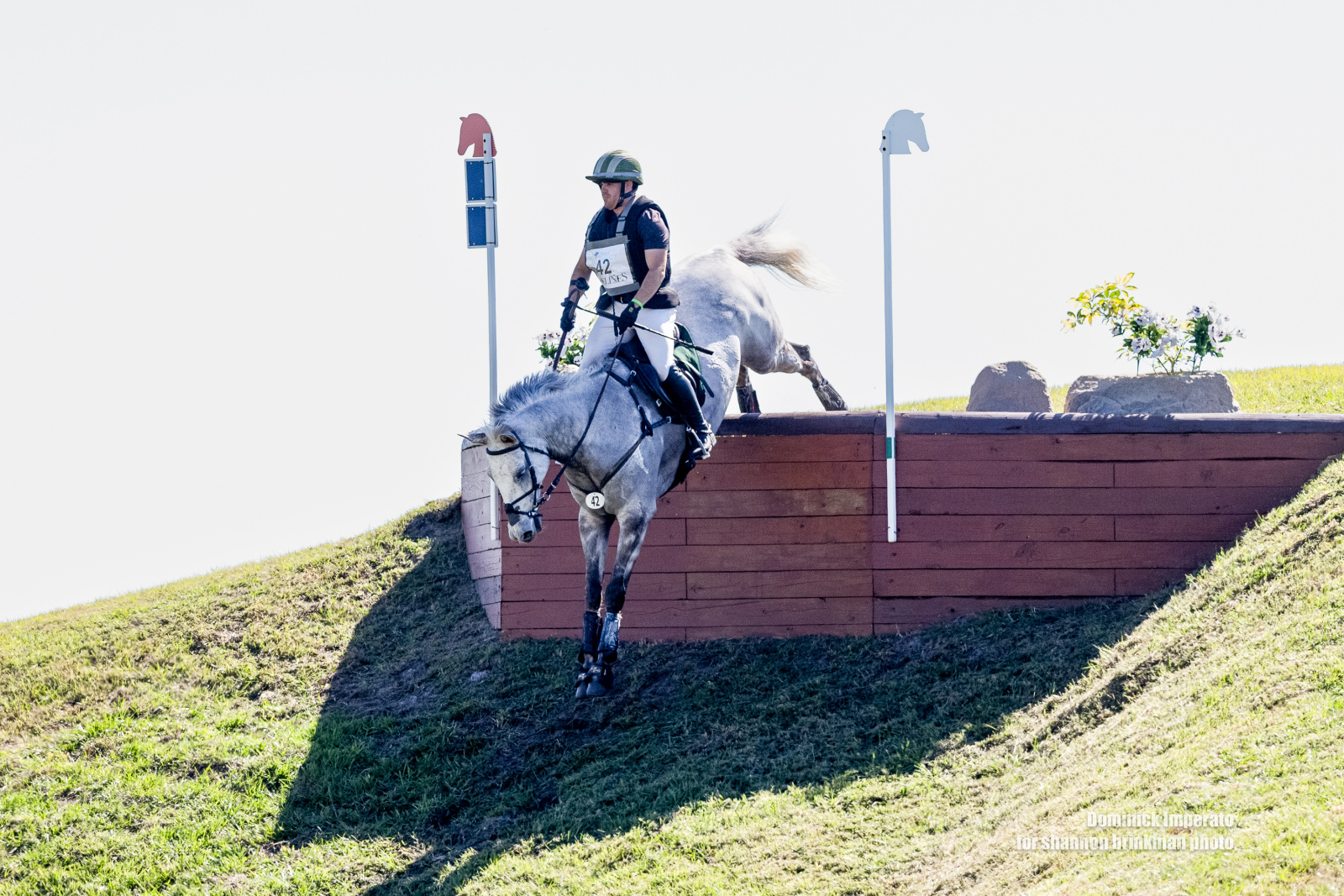
One More Box to Tick: Braden Speck Aims High at CCI5* Debut with BSF Liam

Braden Speck and BSF Liam. Photo by Shannon Brinkman Photography.

Even the most devoted eventing fan can be forgiven for not being familiar with the name Braden Speck. The 2026 Defender Kentucky Three Day CCI5* first timer is an increasingly rare type of upper level competitor: an amateur young rider with one fine horse aiming to compete at the highest level of the sport.

Braden’s partnership with BSF Liam, his handsome grey Connemara-cross gelding (Ballywhim An Luan—Rumor Risky, Hawkster), seemingly occurred after a bit of kismet brought the two together. Braden grew up in eventing hub Kennett Square, PA with decidedly non-horsey parents. But older sister Kaelen found the sport and convinced seven-year-old Braden to give it a go. “Neither of my parents rode but my sister started riding and she eventually convinced me to try riding and I really liked it,” he says.

Braden joined Kaelen in Erin Kanara’s program with lessons and competitions up to Beginner Novice on Kaelen’s old pony, Rosenharley Romello, or ‘Weasel.’ After outgrowing Weasel he moved on to Regal Dancer, who was already a trusted member of Erin’s program, and the two progressed to the Preliminary level when Braden was in the eighth grade.

The next two years of Braden’s young life were marked by three losses that would test anyone’s faith. During a normal cross-country school at Boyd Martin’s Windurra Farm, Dancer collapsed from a ruptured aneurysm and passed away immediately. Braden stayed committed to riding and his family supported him by leasing another mare, Moondance, a couple of months later. She suffered a colic and was successfully treated at New Bolton but suffered a relapse soon after and had to be euthanized. Horses were firmly a part of Braden’s life and he didn’t want to give up so he then began to ride Kaelen’s horse, American Fortitude or ‘Wolf’. Braden and Wolf progressed well together until Wolf sliced his leg on a show jump cup while schooling at home. An expensive surgery on Wolf’s superficial digital flexor tendon plus extended stall rest offered a marginal possibility of recovery. The Speck family made the agonizing decision to euthanize Wolf since the outlook for a high quality of life for him was so low.

Tragically losing three horses in two years would be more than enough reason for most people to step back and move on to anything else that didn’t involve such a close connection to another living animal. But in 2019, the late Annie Goodwin reached out to Erin to let her know that she had the perfect horse for Braden. “We went down (to Aiken, SC) and I tried one or two other horses but pretty much as soon as I saw Liam, I knew I wanted him,” Braden recalled. “He is very special, he’s a big pony. He’s got a pony attitude and pony brain but very athletic. He’s got a switch that flips on for cross country. He can be a real nut but I love him to death.”

Braden Speck and BSF Liam. Photo by Shannon Brinkman Photography.

Still recovering from losing his previous horses, Braden did not purchase 6-year-old Liam to be an upper-level prospect. “I just wanted something I could ride and have fun on. He had originally trained as a hunter and he was just like a cute fat pony.” This focus on personal, not competitive, success translated into a solid foundation and steady rise up the levels. Braden says, “We kept progressing. Liam didn’t really ever say no to anything. He just kept going and kept going and loves his job. He absolutely loves going cross country.”

As Braden’s partnership with Liam strengthened, he also began to shape his professional future. The medical profession runs deep in Braden’s family with his Mom being a doctor, his Dad a dentist, and his sister now in school to become a dentist. “I had always wanted to do be in a healing profession. Then the whole experience of losing three horses, watching the vets treat my horses and everything I learned through that made me want to go into vet med,” Braden explained. He graduated from University of Delaware pre-veterinary medicine and was accepted into University of Pennsylvania School of Veterinary Medicine with classes starting this August. Braden is currently on a gap year to focus on his goal of competing at Defender Kentucky CCI5* and is also working part-time at New Bolton research labs in Kennett Square.

Braden Speck and BSF Liam. Photo by Sally Spickard.

With one eye on his future medical career, Braden continued to progress with Liam but without the personal pressure to move up the levels. He believes that his connection with Liam under Erin’s guidance is the secret to their success. “I think if Liam was in a more traditional professional program where they’re trying to get the horse up the levels faster that it wouldn’t work quite as well. I’m learning too and we’ve taken the time that we need to learn each level and then get confident at the level before moving up,” Braden continues, “We spent two years at Preliminary, then two years at Intermediate, and now two years at Advanced.”

Like many eventers, Braden always wanted to compete at the Defender Kentucky CCI5* but didn’t necessarily think it would ever happen. But after a solid performance at their first CCI3*-L at MARS Maryland 5 Star in 2022, he started to think that a CCI5* could be on the horizon. “At that point Liam was starting to come out of his shell and get more confident. He just walked around the cross country course at Maryland and I was like, ‘I think you might be ready for more in the future.’”

After that first CCI3*-L, Braden smartly did not rush the move to Advanced and instead spent another year at the Intermediate/CCI3* level, which helped give Liam more time to physically develop. “When we got him he was a bit short-strided, so it was a little bit more difficult for him to make the distances. That is part of the reason why we took our time at Preliminary and Intermediate to give him the time to get the strength for him to open his stride up a bit more. It’s really paid off because now he is insanely adjustable. We’ve been together for so long and he’s so smart and he knows exactly what’s happening.” In 2024 Braden and Liam moved up to Advanced and to date have never had a FEI cross country jumping penalty.

Braden and Liam’s trajectory have not completely been without its challenges. At the start of the 2025 competitive season, Braden had a solid plan to earn the qualification needed so that he and Liam could attend the Defender Kentucky CCI5* in 2026. However in March, Liam hit his stifle jumping into water while the pair were competing in the Advanced class at The Event at Terranova in Myakka City, FL and needed surgery to repair his patella.

Braden Speck and BSF Liam. Photo by Sally Spickard.

Liam’s surgery was successful but it meant that they would not be able to attend both the Defender Kentucky CCI4*-S and the Rebecca Farm CCI4*-L as planned. With the surgery behind them and Liam doing well in rehab (that Connemara pony fortitude certainly came in handy), Braden recalibrated his major goal before going to vet school from attending the Defender Kentucky CCI5* to competing at the US Equestrian Open at Morven Park CCI4*-L in Leesburg, VA, which they accomplished. “He came back super well. He felt great at Morven and after Morven so I decided it was worth making that shot to go for the five-star.”

Braden focused on solid, confidence building runs with Liam this year in the lead up to late April in Kentucky. With positive completions at Pine Top Horse Trials and Carolina CCI4*-S, Braden is set up to achieve his main goal of finishing his first CCI5*. He also has an eye on having a clean run around Kentucky’s blue grass. “My main goal is to get around, but if we can also complete with no jumping penalties around cross country I’ll be very, very happy.”

EN’s coverage of Defender Kentucky is supported by Kentucky Performance Products, your one-stop shop for all the science-backed nutritional support your horse needs. Learn more about KPP here.

Defender Kentucky: [Website] [Entries] [Tickets]

Access Eventing: In the Heart of America, Eventing Thrives at Wolfert Eventing

We spend a lot of time highlighting the riders and the programs at the top of the sport, but we also should be talking more about how to grow the sport’s base. It’s no secret that membership and competition entry numbers aren’t exactly exploding. Many programs around the country (and the world) have found ways to make headway into the broader world by attracting budding riders to well-run riding school programs. This year on EN, we’ll be paying a virtual visit to several of these programs to ask them what drives them, how they’ve set their business up and what, perhaps, we can all take away when we think about growing the sport from the bottom up. Look for new installments of this series coming your way regularly. 

To read more from our Access Eventing series, click here.

Much has been said of the tribulations that upper-level eventers must withstand to achieve their professional and competitive goals. Even the most successful athletes operate on razor thin budgets and a need to have ongoing sales and consistent students to keep the wheels on the bus. For Kansas-based Julie Wolfert, these challenges are compounded by being based far outside of “hubs” like Areas II and III, for example. An average person would rapidly back away from the work needed to be part of that life. Julie has not only built a successful career at the upper levels of the sport but also a successful riding program for dozens of Midwest riders.

Celebrating Horses and People Spirit

Julie cheers on student Molly Gall at a Kansas City-area show. Photo courtesy of Molly Gall.

When you talk to Julie about how she found eventing and began her riding program, it’s easy to just be amazed that she even found this path. Her parents have never been active riders outside of the occasional pleasure ride. But they still decided to purchase a 40-acre farm outside of Kansas City when Julie was still a child for her mom, Susie, to establish a therapeutic riding program. They named the farm, which started as just open fields and a few sheds, Chaps for “Celebrating Horses and People Spirit”. “My mom just loves taking care of people and she’s so patient and good. That was her calling,” Julie says.

Growing up on a farm with horses meant that Julie was lucky to start riding at an early age. She successfully competed in the local hunter/jumper circuit with Kendall Lacey but had no knowledge of eventing as a sport until she watched the 1996 Atlanta Olympics on television. “I was like, oh my gosh what are they doing! They were galloping horses across the field and jumping big jumps,” she said. “I had no idea that eventing existed and was a sport.” At this point 16-year-old Julie’s riding focus shifted to how to be an eventer.

Julie Wolfert and SSH Playboy en route to winning the Morven Park CCI4*-L in 2024. Photo by Sally Spickard.

Julie went from zero knowledge about eventing to happily discovering Heritage Park horse trials just 10 minutes down the road in Olathe. “It was hiding in plain sight,” Julie recalled. She utilized all of Heritage Park’s resources and took to eventing like the proverbial duck to water. Julie was self-taught up to the Preliminary level with success when she found herself competing at the American Eventing Championships in Lamplight, IL. At the Championship Julie was stabled next to Emily Mastervich who she quickly connected with and realized could provide the professional assistance required to keep achieving her goals. “Emily helped me get to the Advanced level. I have always been based in Kansas City so I would commute from KC to Virgina for a few years. I don’t like doing clinics so she’s basically the only eventing trainer I’ve had!”

As Julie explored what it would take to be an eventer, she also began crafting her lesson program at Chaps. She was able to utilize her Mom’s therapeutic riding horses to teach basic walk/trot and lunge line lessons for local students. “I had about three or four lesson horses that I could use. They were so quiet that anyone could learn how to ride on them,” Julie said. As she expanded her knowledge base with working student positions for Emily it eventually came time for her to go off to college. However her attention was always truly stayed with her growing business and she always came back home to keep her program going. “I just knew. I went to college for one year and I was like, this is ridiculous. I want to be a trainer,” she laughed.

Midwest Resourcefulness & Program Management

Even the smallest students are welcomed at Chaps Equestrian Center in Bucyrus, KS! Photo courtesy of Julie Wolfert.

Today, Chaps Equestrian Center is fully owned by Julie and has been transformed into a full-service eventing facility. The 40 acres that started as just fields and a few sheds are now compromised of multiple barns totaling 15 stalls for about eleven or twelve horses. Four are Julie’s personal horses with the remaining being clients in training with her. She has large indoor and outdoor arenas and a cross-country schooling field. Julie laughs as she describes her schooling field as “a very Midwest cross country field.” It doesn’t have a water complex but is full of varying levels of jumps that she built or bought over the years including the ditch that she dug and built herself. This resourcefulness extends to how she manages day-to-day operations. “Believe me when I say I do not have any working students. I literally mow the fields and feed the horses. I am the trainer, the groom, I am everything. That’s just how I can keep it afloat and afford everything.”

It is important to note here how Julie has purposefully transitioned her program so that she is able to support her own riding goals while running a farm and manage a training and boarding program. Julie says, “When I was starting to develop the training program, I had a lot of lesson horses that could jump and all that. But then my program shifted where basically everyone hauls onto my farm with their own horse.” Her students range from entry level to the Intermediate International level. “I’m a pretty private facility where if you board with me, you are in training with me,” Julie continues. “I do it all myself so I do not want to have 20 horses on the property because I would run myself into the ground.”

As a working professional rider and trainer with her own facility, it would certainly be tempting for Julie to pack in as many boarders as possible onto her farm to help with overhead expenses, but this thoughtful management of her time and willingness to put sweat equity into her property is what contributes to her success. Though she limits the number of horses boarding at Chaps Equestrian Center and most of her students are haul ins, Julie still spends a significant amount of time teaching pony club and other students just coming into the sport.

“Many people assume that just because I ride at upper-level and have upper-level students that I won’t teach up-down lessons. Whenever I hear that it actually makes me angry. I enjoy my time with our local Pony Clubs and with students that are barely doing 18 inches,” Julie says, “I even have some western dressage riders and it’s been so fun working with them. It is a different take for them training with me and they like the fact that I can help them out even though they’re in western tack.”

Engaged Care

JWE students showing off their winnings at an Awards Banquet.

Since Julie’s training program is mostly decentralized, it would be easy for her to default to just teaching a lesson or coaching at an event and keep it moving to the next student. But she makes sure to involve herself in the education of her students’ horsemanship and care of their horses which is especially important living in a part of the country where everyone is spread out and a student might not have close access to institutional knowledge for sport horse care.

This can range from Julie noticing that a horse is struggling with an exercise and suggesting that the horse might be having a physical issue a veterinarian should address, to show turn out, to designing a conditioning program individualized for each horse so that it can be appropriately fit for its level. This is key in pancake-flat Kansas where sprint work is going to be more effective than your traditional long trot and canter sets. Julie also makes sure that her students know she is a resource when inevitable problems occur. “I get texts all through the day and sometimes night asking for advice when a problem comes up even though I’m not a vet myself,” she says.

Efficiency is important when you have as many balls in the air as Julie and that extends to how she teaches her students. “I enjoy seeing challenges and then trying to figure out different ways to help them understand something. Even if it’s a different way to explain to them how to put their heels down or how to close your lower leg around the horse,” she explained. Many times the fastest way to help a student along is to hop on their horse herself. “I might get on a horse and find that I’m doing stuff that I don’t realize I’m doing. It comes natural to me, but that might not come as naturally to my student.” This extends to cross country schooling if a student is having a problem with an element like a ditch. “I’ve found that students really do like (when I school their horse) because they might be really nervous and then they can see their horse do it. I can change the mood for the day and my student believes that they can immediately go do it,” she says.

Finding the Chaps Equestrian Center Community

Photo courtesy of Julie Wolfert.

Chaps Equestrian Center is located about 30 minutes south of Kansas City in blink-and-you’ll-miss-it Bucyrus, KS. The farm’s close location to an urban area and Mill Street Pony Club helps to keep Julie consistently busy with eager students. Along with her regular clients, she has also earned a reputation for being a coach who willingly helps people on the fly at a show. “I do a lot of catch training. I’ll get a message a week out from a show from someone saying they’re coming in from Minnesota and their trainer can’t make it,” Julie says. I can help them with the course walk and all that.” She has also worked with some students in a barter system where she can exchange discounted lessons for them feeding her horses while she is away competing. For Julie, it is all about being as flexible as she can be so that people who are dedicated to horses and eventing are able to continue their passion. She easily relates to students who drive two hours and more one way to learn from her. “I just really want the sport to keep thriving in our area and keep going. I will do whatever I can to help.”

This dedication has helped Julie build a 30+ student community made up of people from all around the Midwest. She is active on boards of the Mid America Eventing Association (MIA) and Heritage Park Horse Trials and regularly donates lessons to Pony Clubs that can be used for benefit auctions and trivia nights.

Julie maintains a welcoming ‘come one, come all’ attitude with her program. When she travels to Florida for winter training, she makes sure that her students know that they are welcome to join her even if it’s just for a few days. Also, a student does not have to be in regular training if they’d like to join her down South. “It helps me sleep at night that I’m helping everyone else. I’m just here to help people and I do what I can,” she says. “That’s definitely the Midwest in me.”

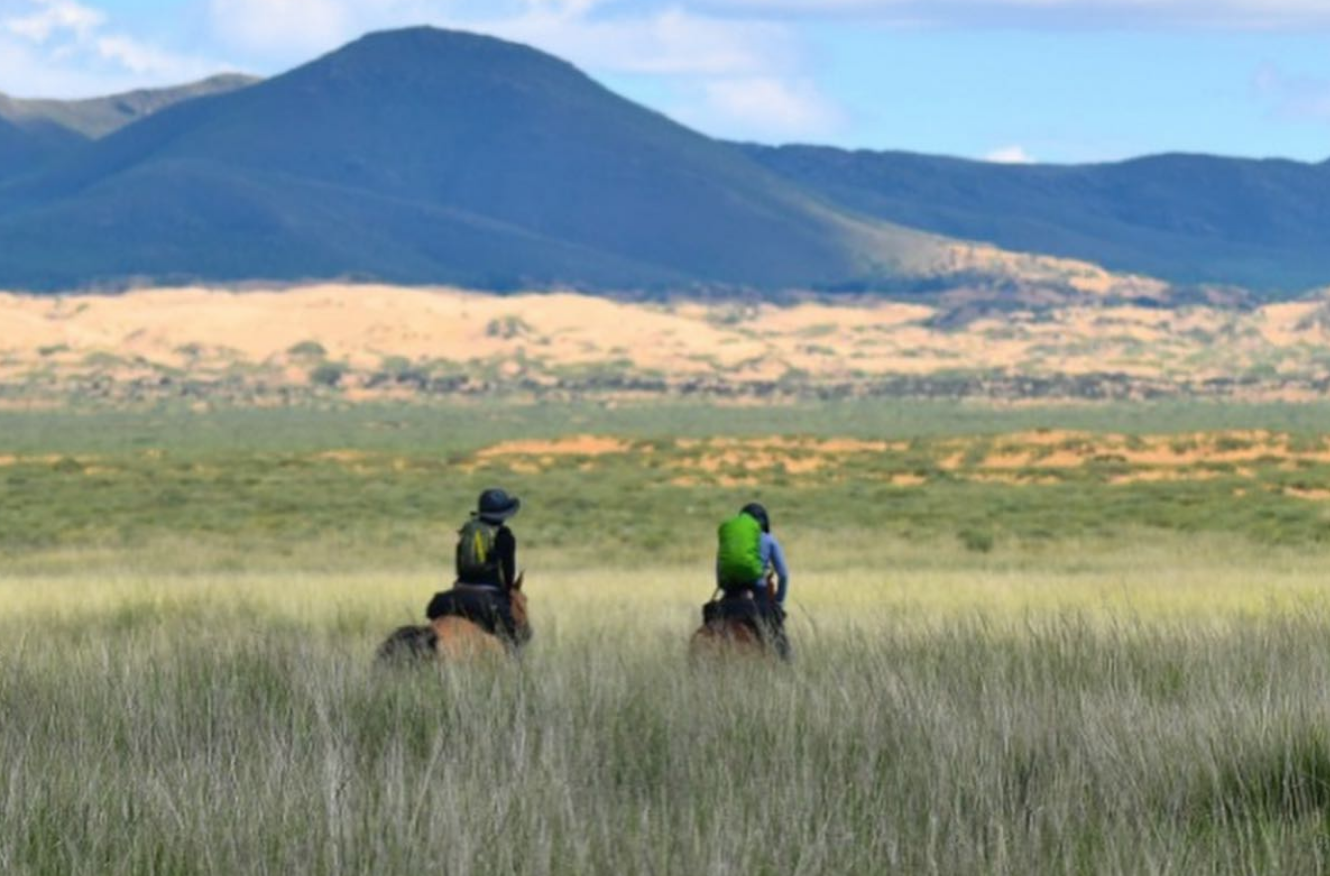
Oh, also, Julie competed in the Mongol Derby in 2022 alongside friend and longtime supporter Renee Senter. Photo by Bayarsaihan Ochiroo.

Though Julie keeps a jovial attitude while discussing her program, she does turn serious when discussing how she manages her students’ goal setting, expectations, and safety. “Being a trainer can be tricky because I’m also pretty close friends with them. I have to be able to turn off ‘friend Julie’ and turn on ‘trainer Julie’ and not worry about hurting someone’s feelings at the end of the day. What matters most is the safety and well-being of the student and I have to forget about how this might affect our relationship”, she says.

Julie has often had to have difficult conversations not just with riders, but also parents, to let them know that their expectations are greater than their current skill set or their child’s skill set. “I always say, this is a dangerous sport. You pay me for my opinion and you need to respect that. I have found people respect me almost more because I gave them my honest opinion and they do appreciate that I am looking out for them. I don’t sugar coat things. If they aren’t ready, I’m not afraid to tell someone that.”

This honesty also extends to a student with a goal such as competing at the American Eventing Championships but is reluctant to put the resources needed to travel out of the area to compete. This is especially important because a student may technically be qualified from results at local events but has not been to a show with a larger atmosphere. “If you’re going to go to AECs, you need to compete out of state and go places you haven’t cross country schooled before. So I have those conversations where I have to tell someone they aren’t ready and everyone respects that. And I appreciate it.”

Julie’s good-humored attitude returns when discussing her community. Most of her students are adult amateurs who can honestly tell her when they show up that they haven’t been able to ride their horse for a couple of weeks. Like most of us, her students rely on their time at her farm as a break from real-life problems and primarily want to have a fun time while learning with their horse. She says, “We’re all a community and we like to randomly do things together. We’re all horse people and we all have that in common.”

Julie Wolfert is an Eventing International CCI 4* rider with several top ten finishes at the level including a CCI4*-L win in October 2024 with SSH Playboy at Morven Park in Leesburg, VA. In 2022, she completed the Mongol Derby in East Asia and in 2025 she was awarded the Amanda Pirie Warrington Grant by the United States Equestrian Team (USET) Foundation. She owns Chaps Equestrian Center, an eventing sport horse training facility in Bucyrus, KS.

Access Eventing: Dragonfire Farm

We spend a lot of time highlighting the riders and the programs at the top of the sport, but we also should be talking more about how to grow the sport’s base. It’s no secret that membership and competition entry numbers aren’t exactly exploding. Many programs around the country (and the world) have found ways to make headway into the broader world by attracting budding riders to well-run riding school programs. This year on EN, we’ll be paying a virtual visit to several of these programs to ask them what drives them, how they’ve set their business up and what, perhaps, we can all take away when we think about growing the sport from the bottom up. Look for new installments of this series coming your way regularly. 

Many a recent written article, show recap, and podcast devoted to eventing have included the sentiment that our sport is “in danger’”or “at a crossroads” due to concerns about social license to operate or the actions of upper-level riders. As those stresses continue to be chewed over, if one digs deeper into our sport’s challenges it is easy to find a very real and growing difficulty: the loss of our bedrock riding schools and academies.

Frankly, how do we support the base of our sport? How do we make sure that quality riding programs are available nationwide to teach the actual skill of horseback riding and proper horsemanship. How can we shepherd a young person from up-down lessons into the sport of eventing? Is it possible for riding horses to be somewhat affordable in this day in age?

While this forum might not be able to resolve these salient issues, it can highlight some of the successful programs that are actively developing next generation riders and eventing fans — and perhaps inspire something or at least provide a takeaway that’s useful for other programs who have the same goals.

Introducing the McFall Family and Dragonfire Farm

The professional life of an eventer almost always involves teaching in some form, even if only to support the competition side of the business. But for the McFall family, Jennifer, Earl, and Taylor, their Dragonfire Farm is more of lifework.

Based in Northern California at their long-standing family farm, the McFalls operate a dedicated program for properly developing their students into successful eventers. “Our students just learn over time what a fun sport eventing is. I think we’ve had very few people who didn’t decide to stay in the sport,” Jen said. “We just want to turn people on to loving horses. I think bottom line is that the horse world needs more fans.”

Jen and Earl began building their 20-acre property from the ground up in 2005. Now 21 years later, Dragonfire Farm can fully service the human and equine athlete. They have multiple barns, all-weather turnouts and irrigated pastures for year-round grazing. There are several arenas including a full-size dressage area with mirrors and a huge acre large all-weather jumping arena that Earl built. The farm also features a complete cross country schooling field that has a full water element, multiple banks and ditches and tons of portable jumps. Conditioning tracks wrap around the whole facility.

Jen McFall and High Times at Rolex 2017. Photo by Leslie Threlkeld.

The facility supports 35-45 horses, the majority of which are owned by clients. Jen and Taylor have a few of their own personal horses and the farm also has a boutique breeding operation so that at any given time they have a baby or a yearling or two on the ground. But the heart of Dragonfire Farm is The Academy, the lesson program which supports five-year-old littles being led around on saintly ponies all the way up to students competing at the Advanced International level. Jen says, “When Earl and I first built this place, we built it with the idea of having a progression of levels for people. We’ve always been cognizant of the necessity for grassroots in all horse sports. If you don’t bring people along, the sport ends up absolutely suffering.”

Earl McFall and Tropic Delight. Photo courtesy of Nancy Dein.

Jen and Earl had The Academy running from Dragonfire Farm’s inception. Taylor, who was just a tot when the farm began, went through the program herself and at about sixteen really started to take over its management. “It’s really evolved into a strong program with two summer camps and two shows of its own that are here on the property,” Jen said.

“I had several instructors that were my Mom’s students. They brought me along and taught me everything on my little ponies when I was running around wild,” the now 22-year-old Taylor said. “I was so inspired by all of the instructors when I was younger and they are basically my role models. I wanted to continue that and keep the lessons really fun and encouraging so that everyone knew they were doing a good job.”

Developing The Academy

Photo courtesy of Dragonfire Farm.

It is important to recognize the business side of establishing a flourishing riding program. The Academy has a strong 35 student roster that has grown over time thanks to the McFall’s promotion of the program in social media and word of mouth. They’ve also been able to take advantage of local charter schools who enable their students to participate in sports thanks to a bursary. Earl credits his mentor Yves Sauvignon from Oak Ridge Farm in Sonoma for having a similar, larger, program which helped act as a feeder for his operation. “Out of 60 people maybe 10 will continue and maybe 5 will be good at it and keep you going,” Earl said. “It’s just been a really foundational and important part of our business.”

The McFalls credit the most important part of their operation, their horses, with The Academy’s continuing success. Unique for their farm is the Morgan breeding program that Jen’s Mom, Cheron, began about 50 years ago. Jen trained several of the homebreds to competitive success and many of them were funneled into The Academy. Those horses combined with others that were acquired from students allow their wide range of students to progress happily and safely up the levels. The lesson horses’ reward for their service is a lifetime at Dragonfire Farm. Jen said firmly, ‘None of our lesson horses ever leave. They all stay here, until the end.’

Taylor also emphasizes the importance of horsemanship for all Academy students. “We have summer camps mostly so that we can introduce more advanced horse care to the students. We have a lot of people who started their whole riding career here so they don’t know what it takes to maintain a horse or own a horse. They’re learning how to do a graining schedule, how to clean their tack, what bit should work for their horse. Cooling out, fitness work. How to wrap its legs. I want them to understand what it takes to be a good horseman because that’s going to help them as the move up the levels,” she said.

Photo courtesy of Dragonfire Farm.

The progression of The Academy’s students knowledge also extends to the show ring. Becoming a proficient competitor is separate skill into itself and Taylor makes certain that her students have proper experiences from the beginning. Beginners go through show grooming clinics where she teaches them how to braid, clip, and give a bath. “I grew up with a bunch of grey ponies, so I’m an expert in bath time,” she laughed. Dragonfire Farm hosts small in-house only shows that include poles only classes but students still must braid. After a student is comfortable at the in-house show, they are able to move on to the Farm’s Derby series which is open to the public. Jen continues, “It feels like a bigger competition but it’s still at home. We have several students that take it seriously and get up at 4:00am. It gives them a larger opportunity to feel some competition but we still keep it fun and with good prizes.” From there, students that are wanting more can access the active local show circuit with trips to Ram Tap, Woodside, Twin Rivers, and Montana.

But still a lot of students are happy competing at just the in-house shows and the McFalls do not pressure them to do more. “There is no pressure to accelerate you,” Jen said. “Students are welcome to ride here whether their aspirations are no showing, showing locally, or showing nationally. We are unique in that we don’t pressure anyone to become a high performer, but we are certainly capable of supporting a high performer.”

This supportive vibe extends to how The Academy’s tiers its rates. The McFalls organize their lesson pricing structure in a way that allows them to charge less than other area programs which helps to keep their lessons affordable even though the program is run by three FEI level horse people. “I’ve always been adamant (about keeping lessons affordable) because I really hate the idea of education being out of reach for people. And that is what stops people from wanting to try horses.” said Jen.

Helping Students Find Their Path

Earl rightly points out that lesson barns need to give their current and potential students a reason to be a part of program. Dragonfire Farm is located in small town Wilton but conveniently just 30 minutes outside of Sacramento. He notes that they have a great facility and horses, along with a fun and educational program but there are other fancier barns that people can choose to go to. “You have to figure out how you’re going to be unique,” he says. “You also have to understand your competition and how you’re going to set yourself apart from them.”

For Taylor, The Academy’s success hinges on the most basic element. Their horses. “The kids get really excited about moving up from the first pony to the slightly harder horse, to the cool horse,” she says. “It makes milestones for them.” As a student gains more expertise in and out of the saddle, the McFalls are careful to ensure that ambitious students set proper expectations for themselves and their horse. Active goal setting is another important part of The Academy’s ethos with annual sit downs to figure out what a student wants to do and how they can get there. “We give them the path because we’ve been there and can take them to whatever level they want,” Jen said. Taylor had a student make it to the American Eventing Championship last year and others have progressed to the 3* and Advanced International level.

Earl is quick to credit Taylor for properly driving her students to help them reach their potential. “She really makes them better riders. She makes them ride without stirrups and pushes them hard. It’s great to get kids having fun with their ponies but ultimately we all want to get better at what we’re doing.”

It can be a fine edge that separates a riding program from being one that is too casual with their student’s development against one that propels them too fast and too hard. The McFalls have found a way to balance The Academy so that it is equally fun, educational, and targeted for success. The enjoyment of a riding program tends to be focused on the student, but it should not be glossed over how fulfilling this work is for the instructors. And it is work that Jen hopes more young trainers jump into. “I want young trainers to think this is a fun thing to do, we certainly need more of them. The more programs out there creating new riders the better.”

Jennifer McFall is an Eventing International CCI 5***** rider, with several Top Ten Finishes at the CIC4**** and CCI4**** Level, along with being the recipient of the Rebecca Broussard Developing Rider Grant. She is also a winner in the USEA Young Event Horse Program, through the National Championship level. Earl is a graduate “A” Pony Clubber and is still actively involved in the program, teaching at several of the local pony clubs and giving clinics at the pony club summer camps, as well as being the DC of the Deer Creek Pony Club based at Dragonfire. Earl has competed successfully in Grand Prix Jumpers and through the Advanced International level. Taylor has competed up to the CCI 3-star level and is Head Academy Instructor. Together they run Dragonfire Farm, a sport horse breeding, training and sales facility, in Wilton, California. To learn more about the Academy and Dragonfire Farm, click here.

Helen Casteel grew up as a horse crazy kid outside of Houston, TX. She was able to purchase her first horse after graduating college and discovered eventing soon after. An avid follower of the sport, Helen lives in Maryland where she manages access to a cancer research database for a government contractor. Helen was the first recipient of the Strides for Equality Equestrians Ever So Sweet scholarship and remains active with the group as a member of the steering committee.

Helen Casteel: ‘This Has to Become Your Problem to Solve’

In summer 2020 we launched a 1st Annual $5,000+ Diversity Scholarship with the support of generous donors, inviting minority equestrians to contribute to the discussion of diversity and inclusion in equestrian sport. It is the mission of this annual bursary, which we intend to expand in coming years, to call for, encourage, elevate and give a platform to minority voices in a space where they are underrepresented.

How do we build a more diverse, inclusive and accessible sport? In the coming weeks we will explore this question alongside many of the 27 Scholarship recipients as they share with us their essays in full. Collectly, their perspectives coalesce into a body of work that will no doubt help inform a viable path forward for equestrian sport, and we are committed to connecting their actionable ideas with the public as well as leaders and stakeholders of the sport.

Today we welcome Helen Casteel. More voices: Aki Joy Maruyama | Anastasia Curwood | Caden Barrera | Christopher Ferralez | Dana Bivens | Dawn Edgerton-Cameron | Deonte Sewell | Jordyn Hale | Jen Spencer | Julie Upshur | Katherine Un | Leilani Jackson | Lyssette Williams | Madison Buening | Malachi Hinton | Mitike Mathews | Muhammad Shahroze Rehman

Helen Casteel and Unapproachable at the 2019 American Eventing Championships. Photo by Shannon Brinkman.

I was very much on the fence about submitting this essay. Like many others, I thought the request for members of one racial group to help another racial group overcome their own biases to make horse sport more diverse for a nominal one-time benefit leaned more towards self-seeking than genuine. Like many other Black people, I am tired. I am tired of watching Black people be murdered by police officers that are sworn to protect them. I am tired of constant streams of stories about how Black people are persecuted for being present in spaces some white people don’t think they belong in. And as much as I appreciate the outpouring of recognition of the centuries worth privilege that my white friends and neighbors now know they have enjoyed, it also exhausts me. As Damon Young wrote in his excellent New York Times op ed, “You learned yesterday what white privilege means? Great! Welcome to 1962.”

I consider myself very fortunate in my experiences as a Black woman in the horse world and specifically as an Eventer. I’ve always ridden at racially diverse barns and am based now at a place where I’ve only felt welcome and safe as I train and compete. Have white people looked at me and wondered what I was doing on or near a horse? Yes. Being the one that looks different from everyone else is something I’ve gotten used to but I’m lucky to not have to worry too much about it. Unfortunately not all other BIPOC in equestrian sport have been as lucky as I have been. So I took a breath realized I actually had something to say.

Helen Casteel and Unapproachable at the 2019 American Eventing Championships. Photo by Shannon Brinkman.

Just about every year the topic of how to expand eventing’s reach and participation to the larger public comes up along with plenty of handwringing about how we are too small, exclusive, and elitist. We are now having those same types conversations now about how to attract BIPOC. I read every article I find plus all the comments and always think to myself that each think article has the same flaw. There is this singular focus on how to make ‘them’ come to ‘us’. This is completely backwards. There is no rule change, expansion in television coverage or clothing rule change that will magically grow our sport. A quick story. Years ago I was watching the Kentucky Derby on television with a crowd of horsey and non-horsey people. It was an unusually large field the shot of the horses galloping together through the first turn was beautiful. An older non-horsey man standing next to me breathed, ‘Wowww’ eyes wide and mouth open as he watched the horses take the first turn. The point is that people love horses and I believe that there is something very primal that just about every human feels when they see a person riding a horse; especially riding a galloping horse. The sport is not confusing or hard to follow. It doesn’t need to fixed or altered to encourage more participation by BIPOC, or anyone for that matter. We need to go out and invite people to us.

Unfortunately many Black families lack the household wealth to participate in expensive horse sports (white household median wealth is $171,000 vs. Black household median wealth of $17,600) so there is an overall assumption that people of color and Black people specifically just aren’t exposed to horses. However there are still many that ride in Western sports like barrel racing, team penning, steer wrestling, calf roping and are members of trail riding clubs. Historically, this makes sense. As the West was being ‘settled’ after the Civil War, it is estimated that 1 in 4 cowboys were Black. However this history has been whitewashed so now most Americans’ visual reference of a cowboy is John Wayne and the Marlboro man. If this is news to you, spend a minute Googling Bill Pickett and Bass Reeves. If you don’t follow Black Reins on Facebook then you should get there quickly.

Helen Casteel and Unapproachable at the 2019 American Eventing Championships. Photo by Shannon Brinkman.

Expanding eventing’s reach to include BIPOC and other horse enthusiasts that ride outside of our sport or are unfamiliar with horse sport in general can begin with basic outreach but professional riders and leadership have to be more proactive about taking the first step. What would the impact be if a professional rider regularly visited an area riding school to teach a few lessons or lecture about horse care and management? What would the impact be if a professional rider personally invited riding school students to a horse trial or Championship to introduce them to the competitive side of our sport? What would the impact be if US Equestrian Federation leadership encouraged the above by facilitating these new relationships and supported their growth? Would every single person immediately become an active participant in eventing?

Of course not, but you can guarantee that awareness about our sport would be raised and enthusiasm would grow with consistent effort from our leaders and ourselves. In 2015, British show jumper Ben Maher visited the Ebony Horse Club in Brixton, London. He spent his day doing the above and I am sure it was a day that no one has forgotten. I have no idea if experiences like these happen regularly in the UK or US but I’m guessing not. I hope I am wrong. I’m pretty sure I’m right. Kids that don’t have the means to event when they were young would always remember the sport and the people that gave them their time and may come back to it as adults. Or they may be in a better position as adults so their children will be able to actively participate and be encouraged by a parent that grew up loving the sport.

Helen Casteel and Unapproachable at the 2019 American Eventing Championships. Photo by Shannon Brinkman.

That’s exactly what happened with me. As a teenager in Massachusetts I followed a friend to an area barn and started taking riding lessons. One weekend, our instructor piled us into her car to go watch competition at Groton House Horse Trials. I was immediately hooked but completely unable to participate in any riding activity other than the occasional lesson. Some 20+ years later I now actively compete with my own horse and I also volunteer regularly. We are active competitors and have completed Championships like the Waredaca Novice 3-Day Event and the 2019 American Eventing Championships. Along the way has been experience gained with my regular coaches Stephanie Kohr and Carolyn Del Grosso, also Gretchen Butts, Kelley Williams, Stephen Bradley, Eric Smiley and Jimmy Wofford. Earlier this year we were lucky to snowbird it in Florida for a few weeks. The point is, it took a few years but I’m here!

I am very lucky in my situation but the lack of a substantive diversity outreach program and basic representation for everyone else has always troubled me. After the Civil War and during Reconstruction, Frederick Douglass was the most photographed Black man in America. He used photographs of himself and other Black people to fight against a proliferation of racist caricatures depicting Black people as simple and unable to control themselves. He knew that no law could change minds but photos showing the humanity and beauty of Black people were the best alternative to what was in the media. Right now when I open an equestrian magazine, I usually see nothing but pale faces. You all literally can’t see us.

It is lovely that Eventing Nation has made this scholarship opportunity available and I hope it renews every year. However real change will only happen when white people truly prioritize diversity and representation efforts. This has to become your problem to solve.


Get Involved: Helen is right to be frustrated. It is very unfortunate that the burden of emotional labor has fallen, and continues to fall, on BIPOC persons to explain and problem-solve. What we can do, as a community, is say, “No more.” We can listen, learn and hold ourselves and one another accountable for creating — and embodying — change. 

Helen recommends reading “Reflections From a Token Black Friend: On structural racism, implicit bias, and what white people do (and don’t) say” by Ramesh A. Nagarajah. In this powerfully insightful and honest essay Ramesh talks about what he describes as “the covert nature of the new breed of racism,” which took the author well into his adulthood to fully unravel:

“The length of my journey makes me inclined to be more patient with others in this process, as it’s taken me this much time to wake up. We should all be reasonably patient with one another, but I would encourage individuals to not be patient with themselves and to treat these issues with the urgency they deserve.”

Are you treating these issues with the urgency they deserve? In addition to listening to and learning from minority voices, many of these essays have included a postscript about how you can directly take action, such as educate yourself on Black equestrian history, support our LGBTQIA+ community, break through language barriers, support an urban riding program or launch an outreach initiative of your own, demand diverse representation in marketing communications, donate riding clothes/gear, support youth initiatives like 4-H and Pony Club as well as intercollegiate/interscholastic riding programs, utilize social media for social change, call out racism when you see it, volunteer and support volunteers, write/email/call equestrian governing bodies, address immigrant labor problems, complete SafeSport training, support retailers that support diversity, and more.

This is OUR problem to solve, and the change must start within each of us. From Ramesh’s essay: 

“I will never turn my back on the black community. You’ll bump our music and rep our athletes, but will you stand with us when it’s not convenient? The pain is real. The stories are real. Our call for help is real. My uncle posted on Facebook yesterday, ‘When the dust settles, I wonder if anything will actually change?’ To be honest, I’m not sure how quickly or how much things will change. But I know that one thing is directly within our individual control. You can celebrate black lives by making a choice to inquire about them, to educate yourself, and to question many of the norms around us. You no longer have the excuse of being unaware of your own ignorance. I’d reword my uncle’s post to a question that we should all ask ourselves: ‘When the dust settles, I wonder if I will actually change?’ “


Nation Media wishes to thank Barry and Cyndy Oliff, Katherine Coleman and Hannah Hawkins for their financial support of this Scholarship. We also wish to thank our readers for their support, both of this endeavor and in advance for all the important work still to come.