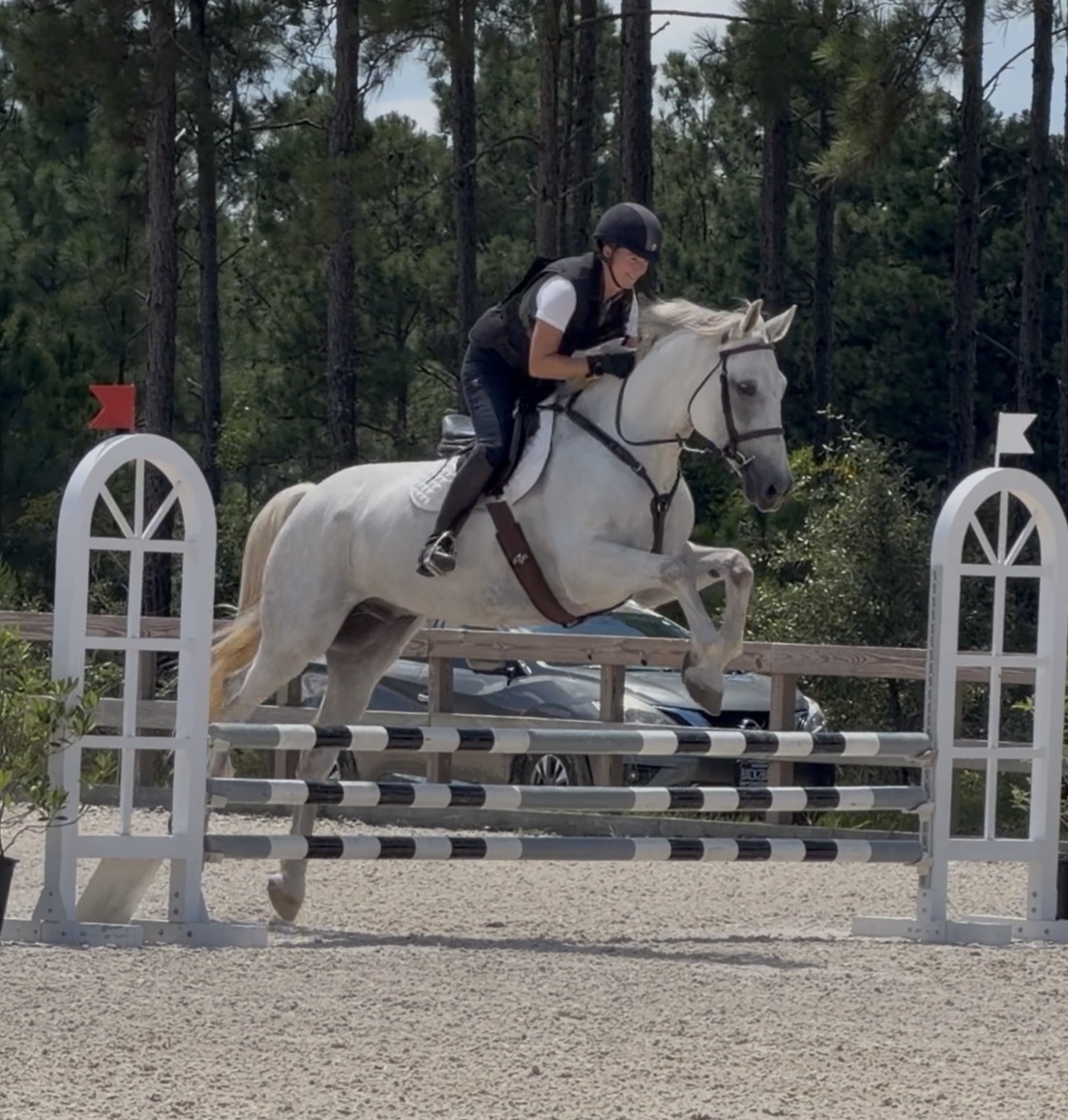





Photo by Amy Flemming-Waters.
Last weekend at Defender Burghley Horse Trials, I watched horses and riders tackle what’s considered the most demanding cross-country course in the world (I was watching online; sometime, I’d love to go in person!). It’s easy to forget, when you are watching the finished product at the top level, that these horses and their riders started somewhere. Lordships Graffalo was once a four-year-old contesting his first event. Ros Canter was once a child doing her first competition. It takes years—sometimes decades for the riders—to climb the levels and make it to a competition like Burghley.
But they all began somewhere.
That’s why I think it’s important to highlight our local events, where horses and riders are made, and where people are introduced to this wonderful sport. My first taste of eventing came as a pony clubber at my local pony club field, Bittersweet Field, which hosts a recognized Horse Trials each spring and fall.
Like owning an event horse, running an event is not exactly a money-making endeavor. The effort required to purchase and maintain the jumps, mow the facility, hire officials and course designers, aerate the ground, organize volunteers, and coordinate ride times and scheduling is no small feat (to be honest, I’m not sure how show secretaries stay sane creating and then shifting around everyone’s ride times!). The costs are astronomical, and I don’t think competitors always realize or appreciate what goes into these events when they just drive in and show up to compete for the day. There is a huge team working behind the scenes before, during, and after the event to allow everyone to compete successfully and safely.

Photo by Amy Flemming-Waters.
The Seneca Valley Pony Club Horse Trials is a great example of a local event with high standards and an army of dedicated volunteers. Located in the heart of Area II, within an hour of Washington, DC, the event hosts every level from Starter to Intermediate. Seneca has several Pony Club volunteers who have been giving their time and effort to the event for well over 20 years—as organizers, stewards, and volunteers in other various positions. Most of these volunteers started as members of the pony club, or parents of members, and many of them continue to volunteer their time years and years later.
But Seneca puts more than time into its event; it puts a huge number of resources into being a top-class facility. Recent improvements at the event include complete renovation of the water complex last winter, which required removing and replacing the old footing and liner; purchasing 23 new cross-country jumps; updating and re-painting 78 additional cross-country jumps; building a new “grob” mound complex with novel terrain, in honor of the late Packy McGaughan; and entirely refurbishing the show jumps.

Photo by Amy Flemming-Waters.
Of course, when a local event puts incredible time, effort, and money into a show, they hope to be supported with entries. The entry fees help to offset the costs of running the show, and for this club specifically, to help support pony club activities for members. At the recent event, the show received over 280 entries, which was a wonderful reward for all of the work put into the event.
So please support your local events—ride, compete, volunteer, sponsor—in any way that you can. At Seneca, all three phases are held on beautiful grass footing. You never know—there could be some future Burghley horses and riders doing their first events on that grass, the stars of the future for the years and decades to come.