Hey EN, a quick note:
On Saturday, July 18, two statements from British Eventing were posted informing us that two serious incidents had taken place at competitions — one at Swalcliffe in Oxfordshire and one at Penrith in Cumbria. Both events were abandoned for the remainder of the weekend, and live scores were removed from the scoring platform out of respect for those affected. The full statement released by British Eventing can be found here.
Following other losses in our sport, EN has undertaken the following protocol:
These incidents represent incredibly dark days within our sport. We understand that the news cycle is cruel, particularly in cases like this. To help keep the cycle from perpetuating in the light of such loss, EN will continue to publish stories and news on an as-needed/timely basis, but we will refrain from sharing these updates on our social media platforms for the next few days. We feel as powerless as anyone in these situations and feel that the least we can do is not move on lightly. We will also not speculate on the circumstances of the incidents, nor will we allow this to take place in the comments sections.
We also know that there’s a World Championship (two of them — one this weekend at Millstreet for U25 riders and one next month at Aachen for Seniors) right at our doorstep. We’ll be covering these events to honor our commitment to our sponsors as well as to continue to provide coverage of the sport’s key competitions. However, we hope you’ll understand that we don’t feel it appropriate to approach these with our usual happy hype. Our content will be quality, but out of respect to all of those we have lost, we hope to offer this as a time of reflection.
Our thoughts are with all of those affected by these losses and we work for a safe sport in everything we do. We thank you for your understanding.
Anyone affected is encouraged to seek support through the British Eventing Support Trust Helpline, which is available 24 hours a day, seven days a week, on 07780 008877.
____________________________________________________________________

Calvin Böckmann and Altair de la Cense. Photo by Tilly Berendt.
When the selection list for the 2026 FEI Under-25 World Championships went live a few weeks ago, it felt like it would be a flip of the coin for who might end up winning it: ten-time five-star partnership Alice Casburn and Topspin of Great Britain, who repeatedly took rosettes at Badminton and Burghley like they were mere Pony Club rallies, or Germany’s Calvin Böckmann, the World Number One in the under-25 rankings, who was fourth at the European Championships at Blenheim last year and travelling reserve for the German Olympic team in Paris. Though he wasn’t to ride his top horse, the ineffable The Phantom of the Opera, he had an interesting – and formidable – partner in the little mare Altair de la Cense, and the sense of a match race was quickly established.
After the first phase, it was his, thanks to a very nearly patriotic level of attention to detail. After the second, it was hers, thanks to a blazing turn of speed perfected over five-star hills. Before the third, it was someone else’s entirely.
Alice didn’t come to this morning’s final horse inspection, feeling that her 18-year-old homebred wasn’t quite himself; that left the door open for Ireland’s surprise hero, the nineteen-year-old Tom Nestor, to step into the two-phase lead with Cooley Diamond Dancer, which he held by just 2.9 penalties over Calvin and ‘Ali’.
But as the 30-strong showjumping finale got underway, it was very clear that experience was going to count for everything today. Not just experience under team pressures, mind you – experience, too, over every kind of course trickery that can be crammed into one arena, including variable stride patterns, tight rollback turns, long curving lines that tempted riders to lose their heads entirely and go galloping and flailing into the next fences. By the time we got to the top three, 52 rails had fallen and two refusals had played out in the capacious, intimidatingly atmospheric ring.
Vying for bronze or better, Great Britain’s Jasmine Underwood rode into the ring brimming with confidence with Indian Girl G, with whom she’s been the FEI Young Rider European Champion and represented Britain at the European level on three other occasions, only knocking a single rail across them.
But although the first half of their round looked as though everything was heading in the right direction, two taps in the latter half – at fence 8, which fell for four other riders, and fence 11, which fell for five – pushed her off the podium.
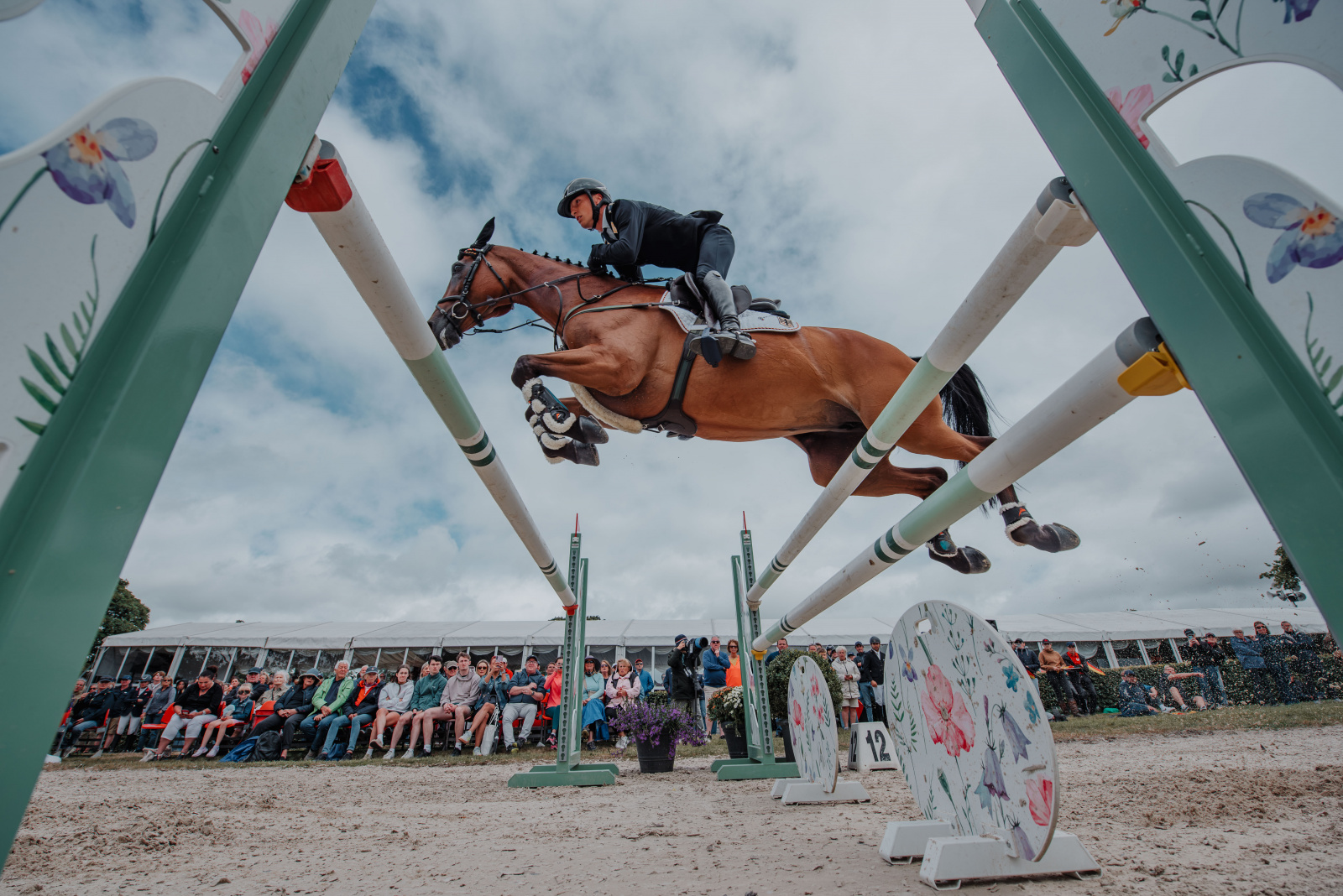
Calvin Böckmann and Altair de la Cense. Photo by Tilly Berendt.
Overnight runner-up Calvin Böckmann had watched some of the earlier rounds of the day, wherein rail after rail fell, and after a few abortive minutes of trying to get a sense of how the course was riding, he wandered away from the arena to make his own plans. Whatever it was that he took – or left behind – at the ringside certainly did the job: he and the sixteen-year-old Ali dug deep and delivered in the ring, adding neither poles nor time to their two-phase score of 40 to deliver just the third clear inside the time of the class.
And then it was Tom Nestor’s turn, with the weight of Irish hopes upon his shoulders. At just nineteen, Tom is one of the youngest riders in this class, and though he’s still eligible for Young Riders, he’d opted to aim his sights on this gap-bridging championship a level up. It’s a brave choice, to ride for the challenge rather than going for what might be an easier victory, and although his week ended with a frustrating four-rail round, Tom has to be commended for the performances he’s delivered this week. The future of Irish eventing looks to be in safe hands – and the individual medal in this inaugural World Championship is, too, in those of Calvin Böckmann.
“I’m super relieved,” admits an emotional Calvin who, at 25, is in his final year of eligibility for this new title.
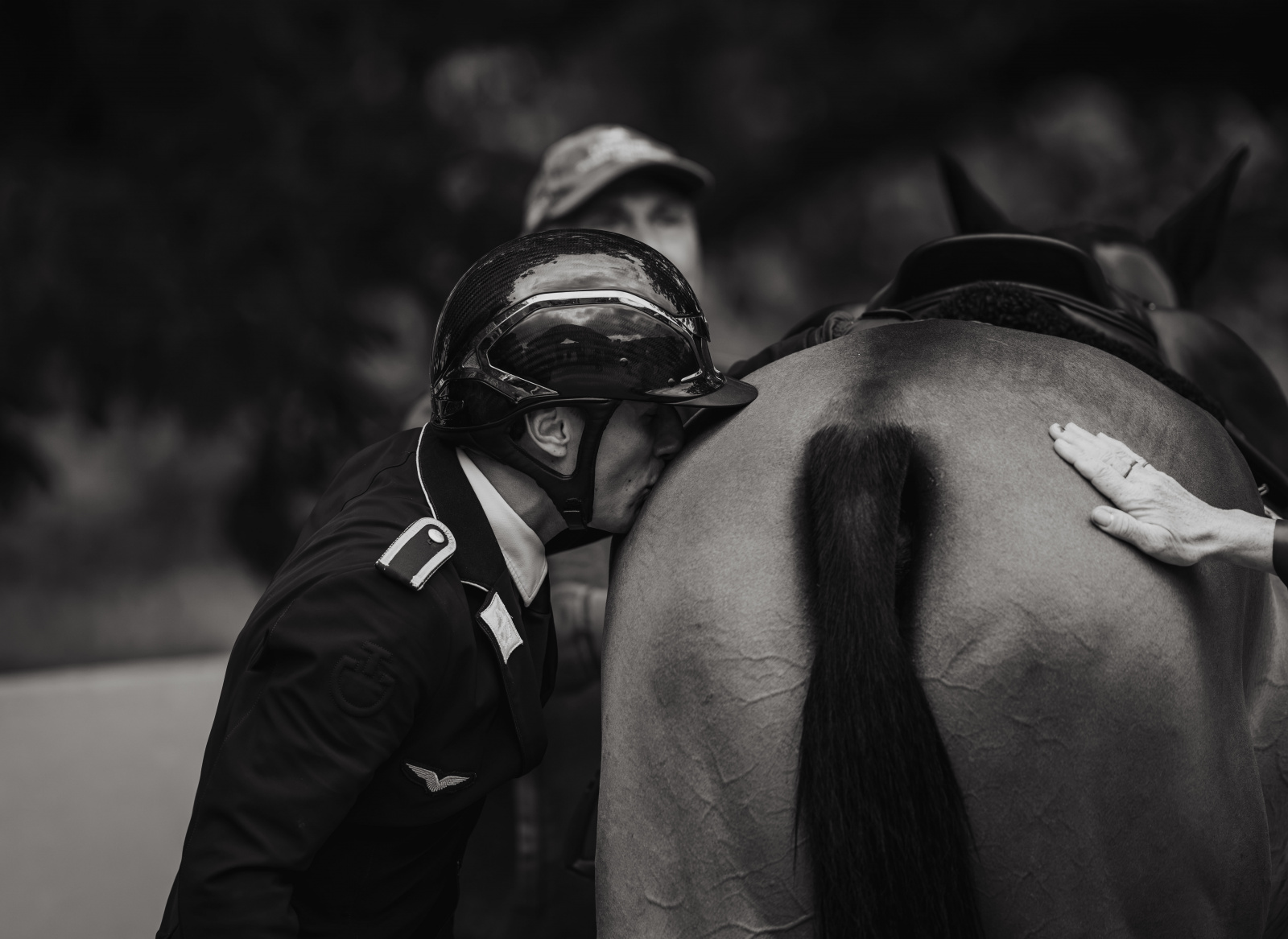
Calvin Böckmann and Altair de la Cense. Photo by Tilly Berendt.
But it’s not really that that put the pressure on him, nor even the expectation that someone with so much experience representing his country must surely walk away with the prize. It was, more than anything else, a desperate desire to prove to the world exactly who little Altair de la Cense really was.
“We’ve had a partnership for more than ten years, and we first bought her for me to do Juniors on,” he says. “Then everybody said to me, ‘okay, well, she might be good enough for Juniors, but she’s not good enough for Young Riders.’ Then I took her to Young Riders and it was, ‘oh, she might be good enough for Young Riders, but she’s not good enough for Seniors.’ So to be here, and for her to win this – I simply can’t put it into words. We’ve had our ups and downs; we’ve gone up from one-star all the way to four-star, and then back down to two-star when we lost some confidence, and there’s been so many people along the way who’ve said to me, ‘oh, just sell her. Get a bit of money for her, sell her to a Junior.’ But I think today she showed how much she fights for it – how much she really wants to do her best. She gets ten centimetres taller in the ring.”
Ali is owned by Calvin’s mother, Simone, and his brothers, Jason and Liam, but it’s Simone who, with Calvin, has invested her heart and soul into the little mare. It’s Simone who is ringside with her grooming bucket, wearing a t-shirt printed with a photo of Calvin smiling lovingly at the mare; it is Simone alone who can match Calvin for tears and shock and joy when Ali touches down from the last fence.
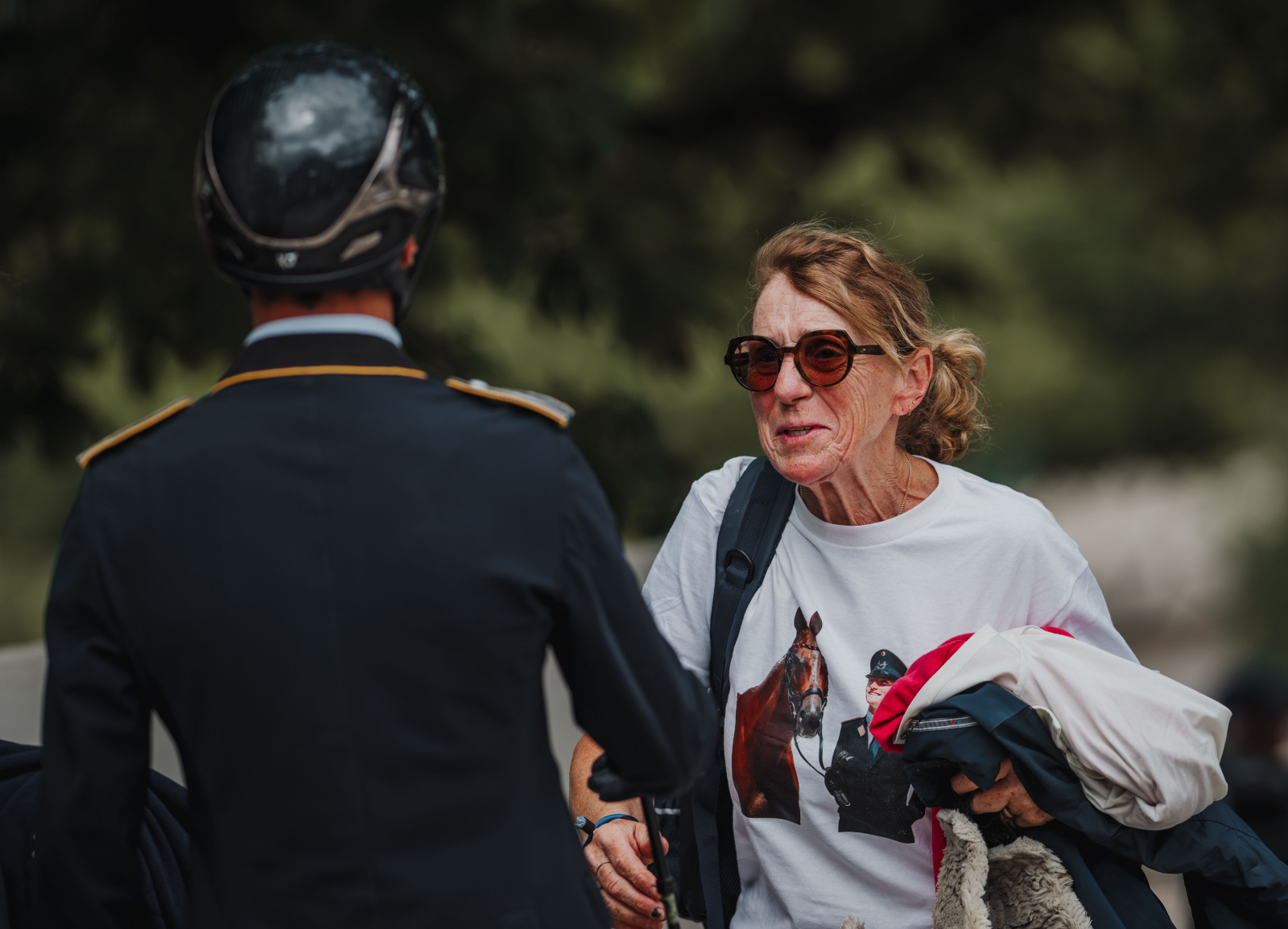
Simone Böckmann: the happiest mum in Ireland right now, we reckon. Photo by Tilly Berendt.
“She means the absolute world to me, to us, especially to my mum, who’s been there for the whole journey” says Calvin.
Calvin and Ali’s week started with a smart test that earned them a 27.6, putting them in the lead – though not by a huge margin – going into cross-country. Over Mike Etherington-Smith’s stiff track, they added 12.4 time penalties when Calvin, aware that the mare doesn’t love hills, opted to ease off the gas pedal and give her a confidence-building run. That dropped them down the rankings to overnight third, but if this week’s competition has been anything, it’s been changeable.
“I thought at the beginning of the show that there would be a few people here who’d never had the chance to compete on a big stage before but have made it here now,” says Calvin. “I think that’s how it ended up [playing out] in the competition, as well. It was a tough cross-country course, a tough course today, but I think that was perfect to prepare us all for big things.”
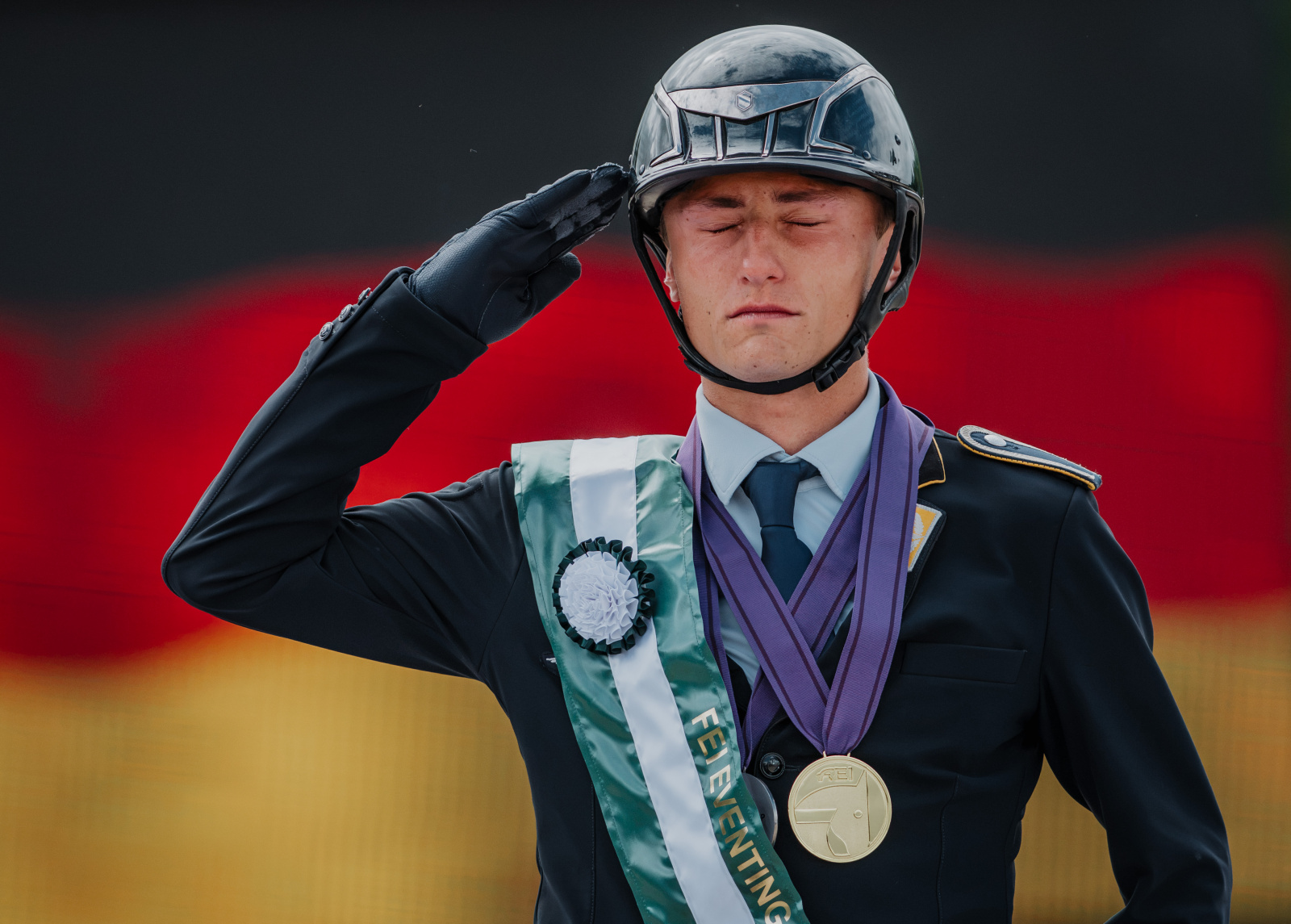
An emotional Calvin Böckmann takes gold. Photo by Tilly Berendt.
Now, as Calvin well and truly graduates from the youth rankings, with an individual under-25 title and a team silver to add to a championship trophy cabinet that already includes – let us catch our breath here – a Young Riders team silver, Juniors team gold, Juniors team bronze, Ponies team gold, Ponies individual silver, Ponies individual bronze, Children on Horses jumping team gold and individual silver, and the 2015 Pony European Champion individual title. Phew. Not bad going.
The extraordinary influence of today’s showjumping track allowed for some surprise entries onto the podium from horses and riders who hadn’t yet featured on its platforms. Silver medal, and the title of Vice Under-25 World Champion, went to Great Britain’s Cerys Macaulay and the eighteen-year-old Kananaskis, whose clear round with 0.8 time penalties allowed them to complete a three-phase climb from 12th to second place.
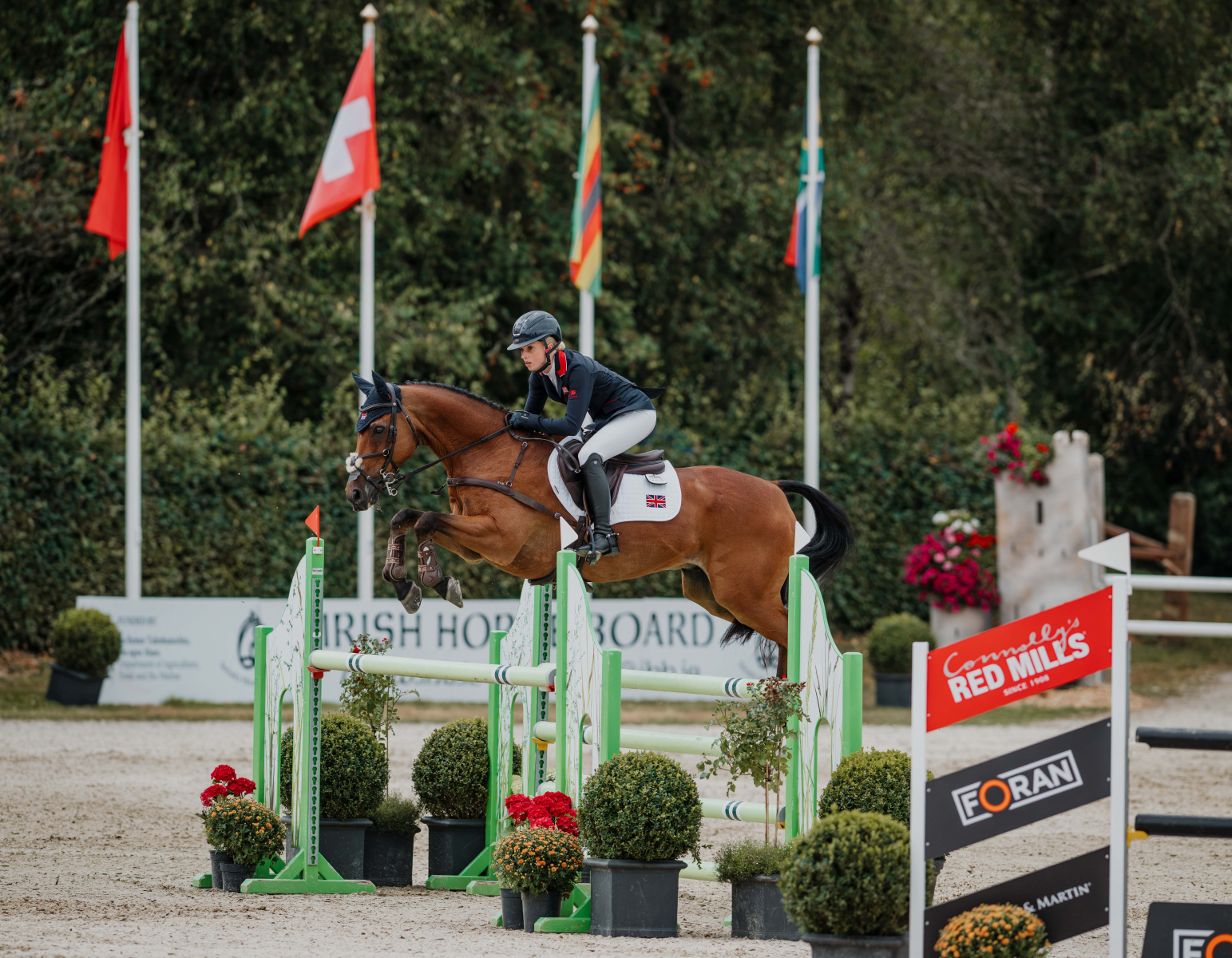
Cerys Macaulay and Kananaskis. Photo by Tilly Berendt.
This is Cerys’s first time on a British team, but not so for diminutive Kananaskis, who Cerys inherited a couple of years ago from boyfriend Richard Coney when the little horse needed a pilot to leg him back up after some time off. He had, before his injury, represented Great Britain in three youth European Championships, helping the team to medals in all three of them, and had taken Richard to his first five-star, too, at Pau in 2020. Now, with Cerys, he has climbed again, from two-star back to four-star, and to a double medal finish at his biggest championship yet.
“It’s so nice for the Coney family – they’ve had him since he was five and he’s taken Richard from Pony Club to five-star and now me to this, at the age of eighteen and at barely 15.1hh,” says Cerys. “He’s some horse.”
Even still, Cerys never quite expected this sort of finish in her debut wearing the Union Jack.
“I’d hoped I could be up there, but I didn’t really except to win an individual medal. I sort of thought the team could win it, and I was expecting to be a counting score, but not necessarily one of the top lots. So I was quite surprised when I got off and looked at the leaderboard and realised we’d gone up a few – but he does excel in the jumping phases, and when I walked the course and realised there’d be enough to do in here, I thought, ‘well, he’s quite small, and we can cut a corner here and there to be speedy enough to climb a bit.’”

The British team – Tom Bird, Alice Casburn, Jasmine Underwood, and Cerys Macaulay – take gold. Photo by Tilly Berendt.
Cerys finishes the week as the best-placed of the strong British contingent, who also took the gold medal in the team competition – a competition that saw the Brits, Germany, and Ireland begin the day within a whisper of one another, but that tiny margin opened up into a much, much bigger one for the British as the class played out.
Team medals can come down to a knife edge of chance, and our three podium-finishing teams — Britain in gold, Germany in silver, and Ireland in bronze — know that all too well, because each had just three riders left in the hunt in today’s competition after the overnight withdrawals of Alice Casburn and Jenny Kuehnle, and a late fall on course yesterday for Nicholas Goldbeck of Germany. It takes nothing at all for a team to find itself out of contention even after some excellent competitive riding, and that’s the frustrating fate that befell the US team, who had to settle for fifth place despite arguably bringing one of the strongest fronts into this week’s event. But two falls on course yesterday, in the latter stages of two excellent rounds from Quidley Kellerman and Cassie Sanger, meant that the team had to add 200 points to their tally, and that was that for their podium hopes.
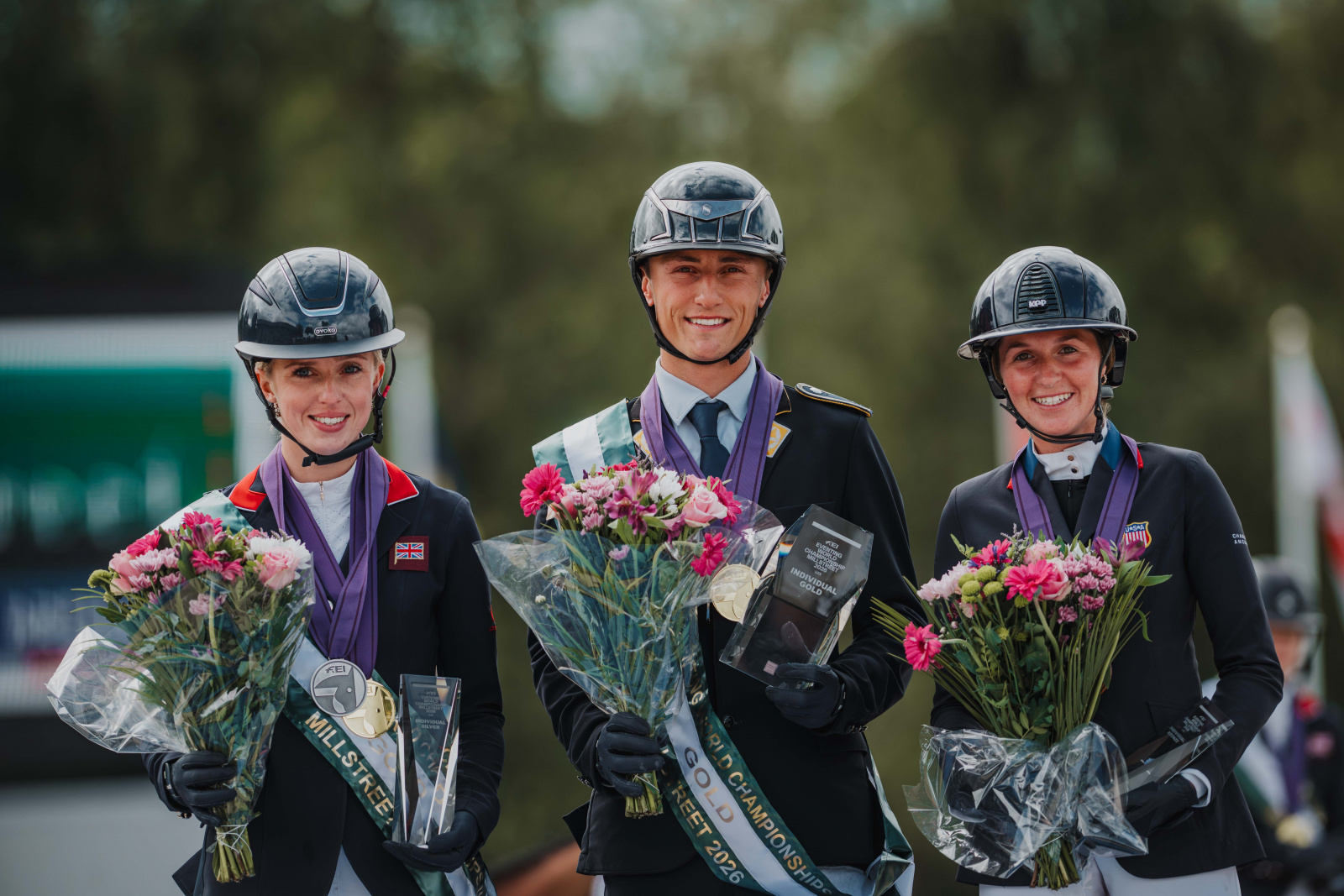
Our individual medalists: Cerys Macaulay, Calvin Böckmann, and Olivia Dutton. Photo by Tilly Berendt.
But individually, they weren’t ready to stop writing the story. Eventing is arguably at its best when it’s a true three-phase competition, with true three-phase movement and gutsy climbs, and that sort of gutsy climbing is exactly what Olivia Dutton did to claim individual bronze with Jewelent. They began their week in 26th place on a score of 35.8; they finished it in third with just 0.4 time added today and a relatively efficient 12 time penalties on that tough track yesterday.
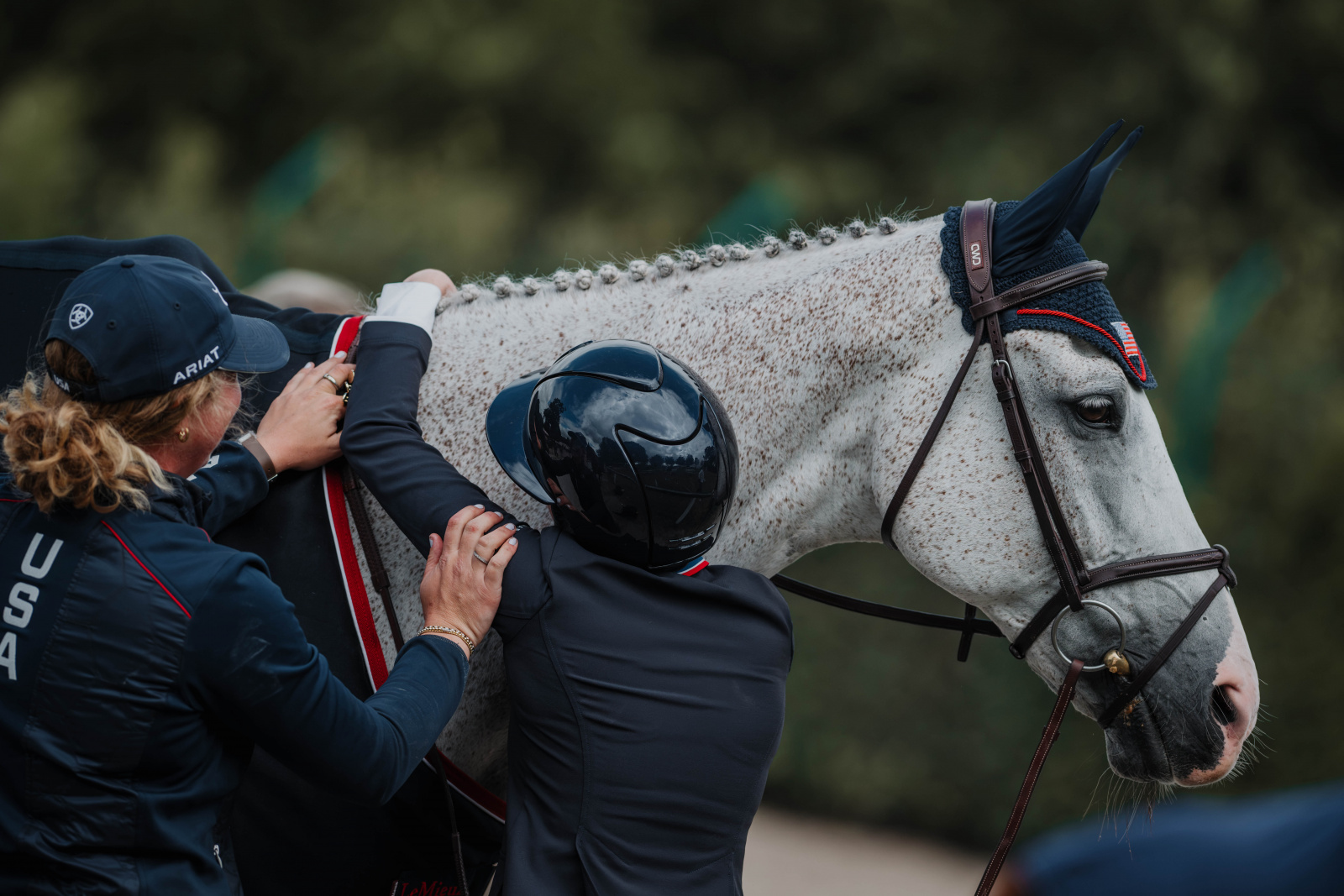
Olivia Dutton and Jewelent. Photo by Tilly Berendt.
“I was a little bummed after my dressage test, and I wasn’t where I wanted to be at all – but I don’t remember that at all right now,” laughs Olivia, who inherited the ride on the full brother to Cooley Rosalent from her father last season. “I’m really, really happy. We just kind of slowly kept moving our way up, and then after showjumping, suddenly we were in third place.”
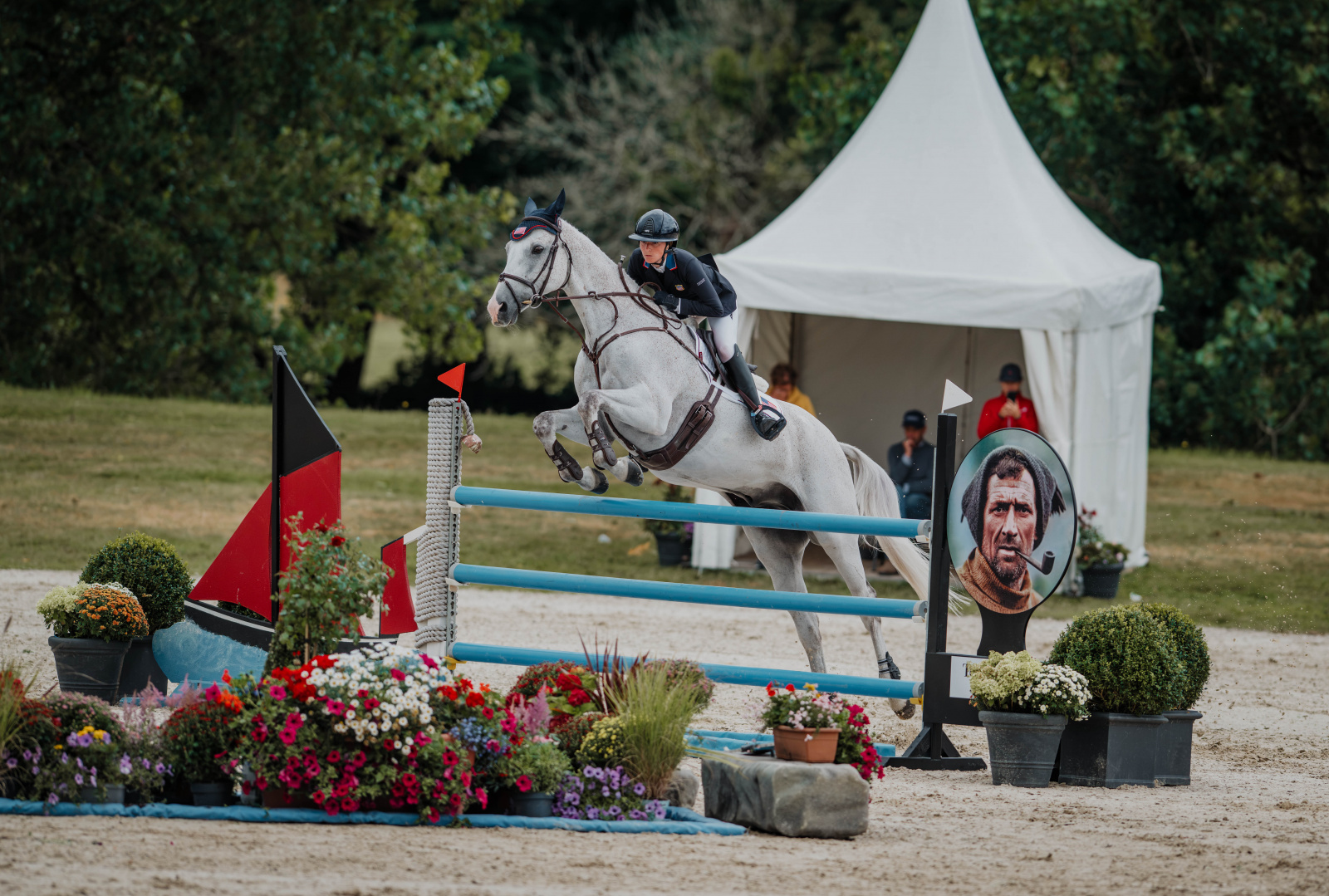
Olivia Dutton and Jewelent. Photo by Tilly Berendt.
It is, she says, “a big trip coming from America and flying our horses here, and it’s a big commitment, especially financially. So I’m really thankful for my owners for supporting me, and while I think we’re bummed that the team didn’t do what we came here to do, we’ve got the best team and have had the best few weeks, and we’ll learn a lot from it. It’s completely different to doing something like the North American Youth Championships, and watching all these riders today, they’re just amazing, and I feel so proud to be competing against them.”
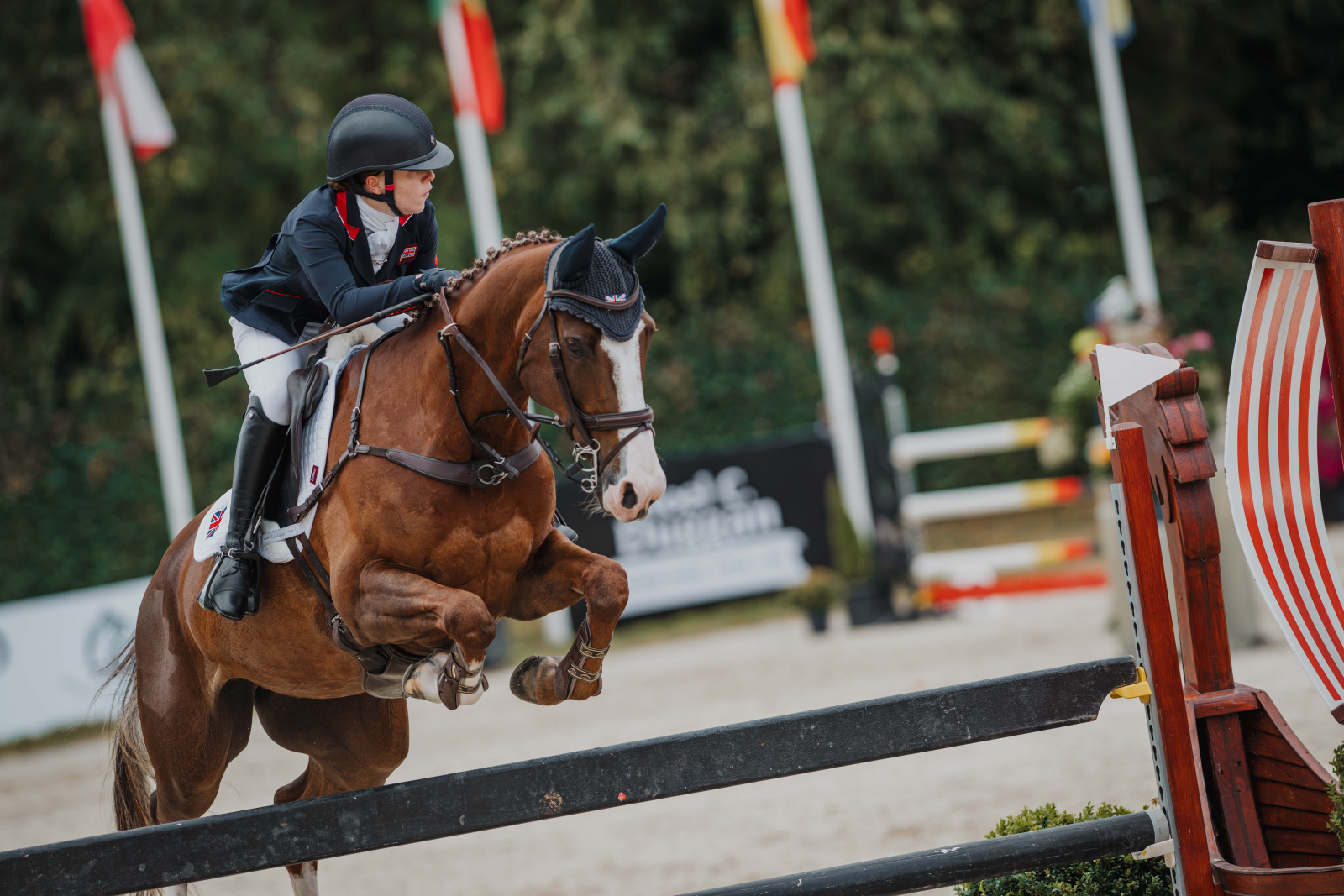
Jasmine Underwood and Indian Girl G. Photo by Tilly Berendt.
Great Britain’s Jasmine Underwood and Indian Girl G’s two rails didn’t see them fall too far down the leaderboard; the pair finished in fourth place.
It is, no doubt, a bittersweet finish for a young talent who came here with everything it takes to win an individual medal, but at just 21 years old, Jasmine will undoubtedly be back to tackle this championship’s next iteration, taking place on home soil at Cornbury in Oxfordshire next year.
“I think I definitely felt the pressure,” says Jasmine. “I think having done it before, and maybe even more so because I have such high expectations of myself. But the week’s been incredible; the team’s been incredible; I’m a bit gutted to have let it down a little bit today, but I’m glad we pulled it through for the team and I’m really grateful for the experience.”
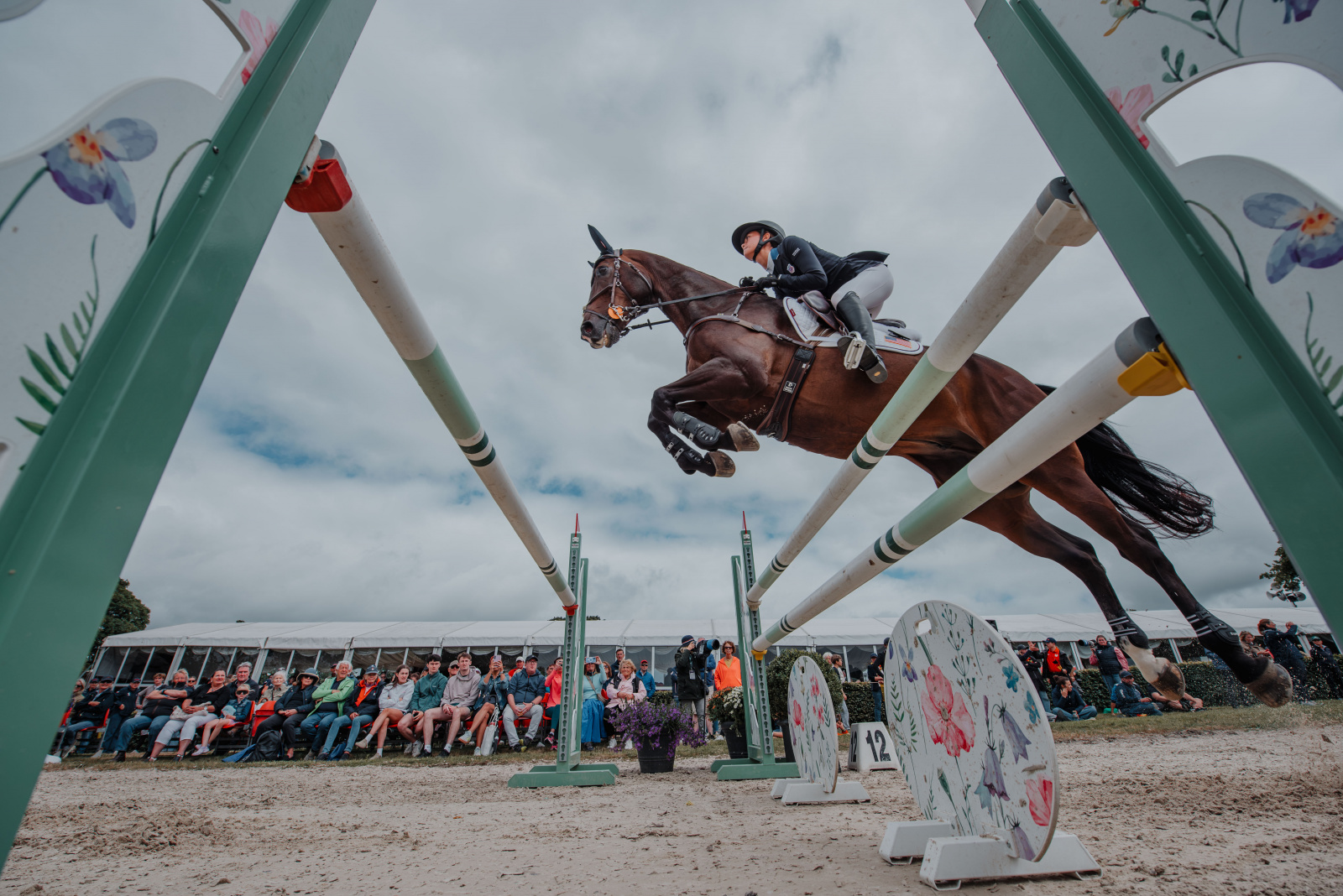
Molly Duda and Disco Traveler. Photo by Tilly Berendt.
50% of the top six individuals ended up being from the US of A, and fifth-placed among them was 21-year-old Californian Molly Duda and her own 16-year-old Disco Traveler. They began their week in 24th place on a 35.6, climbed to eighth after adding just 9.6 time penalties yesterday, and then tipped a single rail – the first part of the treble combination at 10A – today to secure their position in the top five. Their fellow US individual competitors, Jack Curtis and Luska Candy Clover, took sixth place, having climbed through the week from first-phase 22nd and delivered one of just three fault-free rounds today to shoot some eight places up the leaderboard.
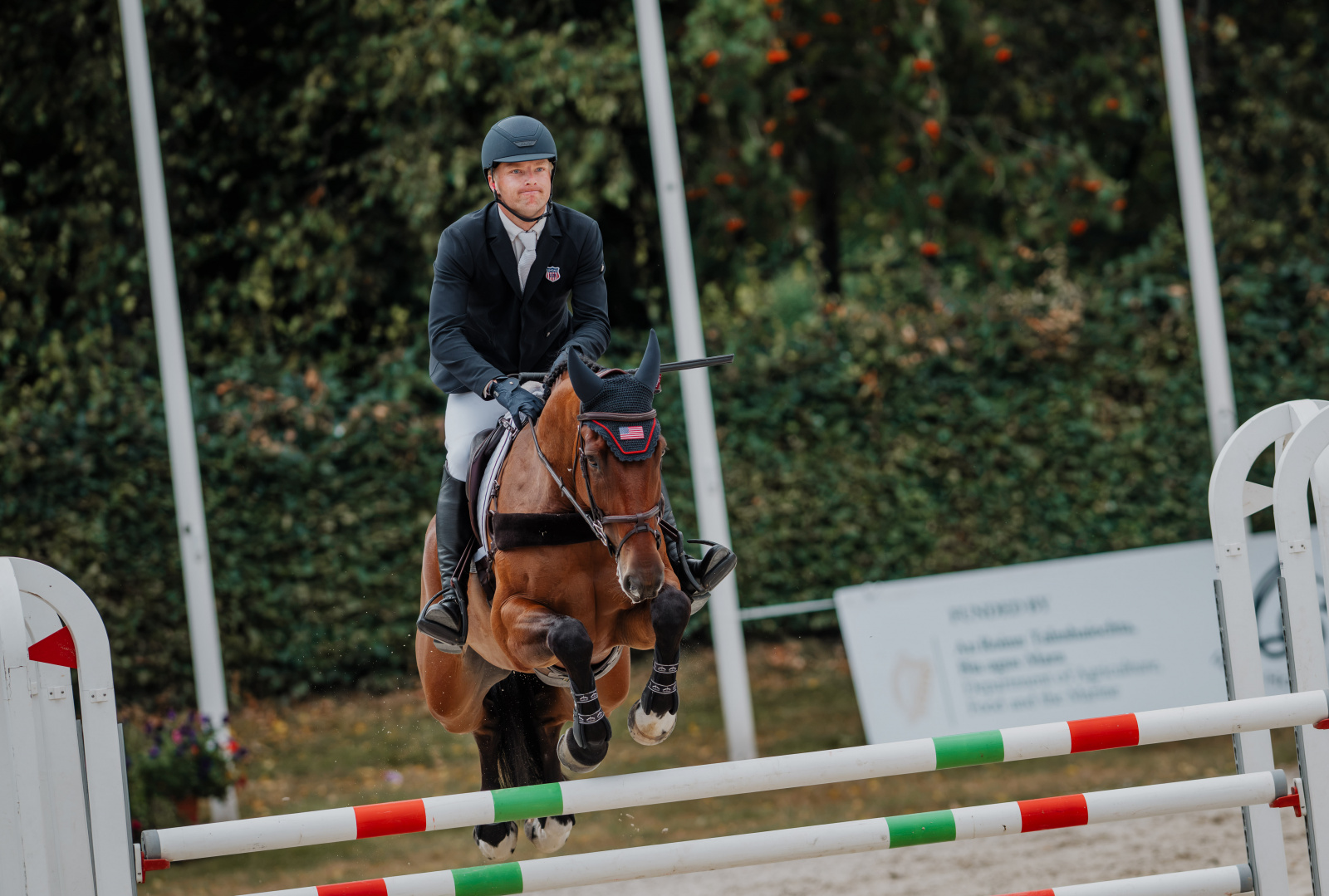
Jack Curtis and Luska Candy Clover. Photo by Tilly Berendt.
The Irish contingent might be feeling subdued now, but there’s plenty to celebrate in their ranks from throughout the week: they’d led the first phase as a team, which shows a real development on the flat for a country that ordinarily has to climb the rankings, and their youngest rider had led coming into today’s showjumping, too. While this phase might have caught them out, they can be expected to regroup and come back stronger for it.
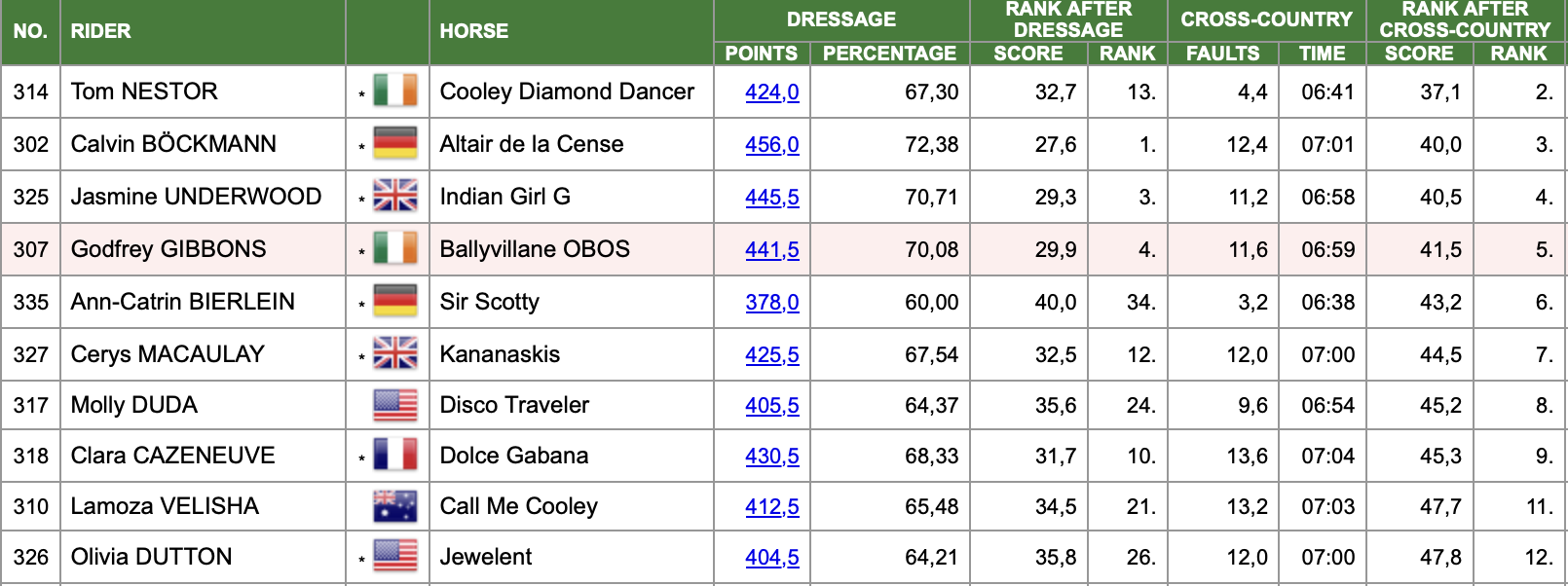
Best among them in the final standings is Godfrey Gibbons, former stable jockey for Tom Jackson, who had the first and fourth fences down, and 1.2 time penalties, to drop from fifth to seventh, while morning leaders Tom Nestor and Cooley Diamond Dancer tipped a frustrating four rails to take eighth place.
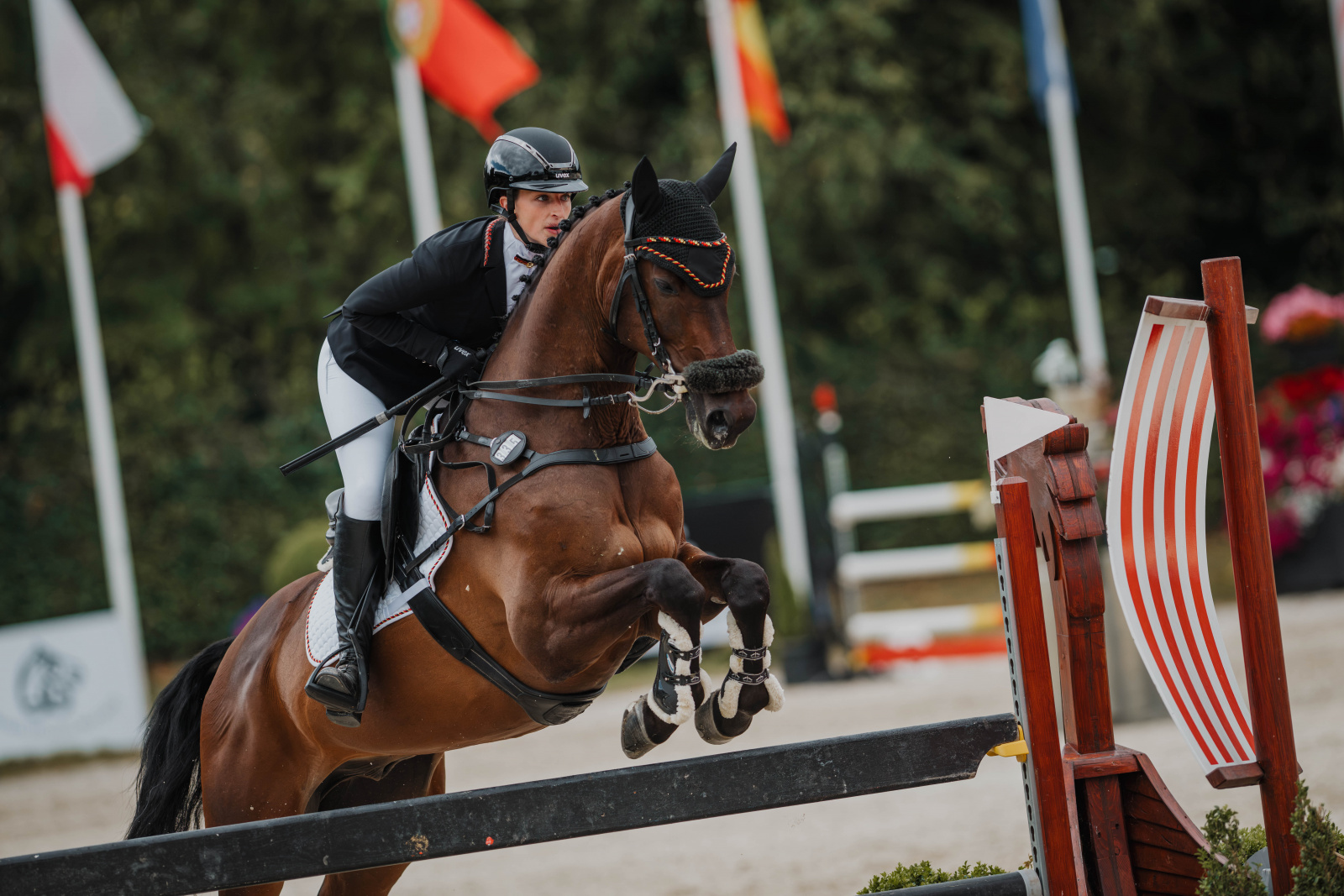
Ann-Catrin Bierlein and Sir Scotty. Photo by Tilly Berendt.
Germany’s Ann-Catrin Bierlein celebrated her 25th birthday in the ring today, and although she, too, will be feeling disappointed to have tipped two rails, her performance this week with the eighteen-year-old Sir Scotty will have put her on the map as a serious contender for future German teams.
The gelding has never been a fan of the first phase, and Annca nursed him to a score of 40 on Thursday, but on cross-country yesterday they truly shone, delivering the second-fastest round of the day to add just 3.2 time penalties and climb to sixth place. They finish the week in ninth, and while this may be the tail end of Scotty’s career – for the second time, really, as he was ‘retired’ a few years ago before making a surprise comeback — it’s truly just the start of Annca’s. Keep a particular eye on the six-year-old homebred Daisy Dynamite 3, with whom she’ll be aiming for the Young Horse World Championships at Le Lion d’Angers later this year.
The top ten is rounded out by France’s Clara Cazeneuve, who had two rails to drop just one place in the order.
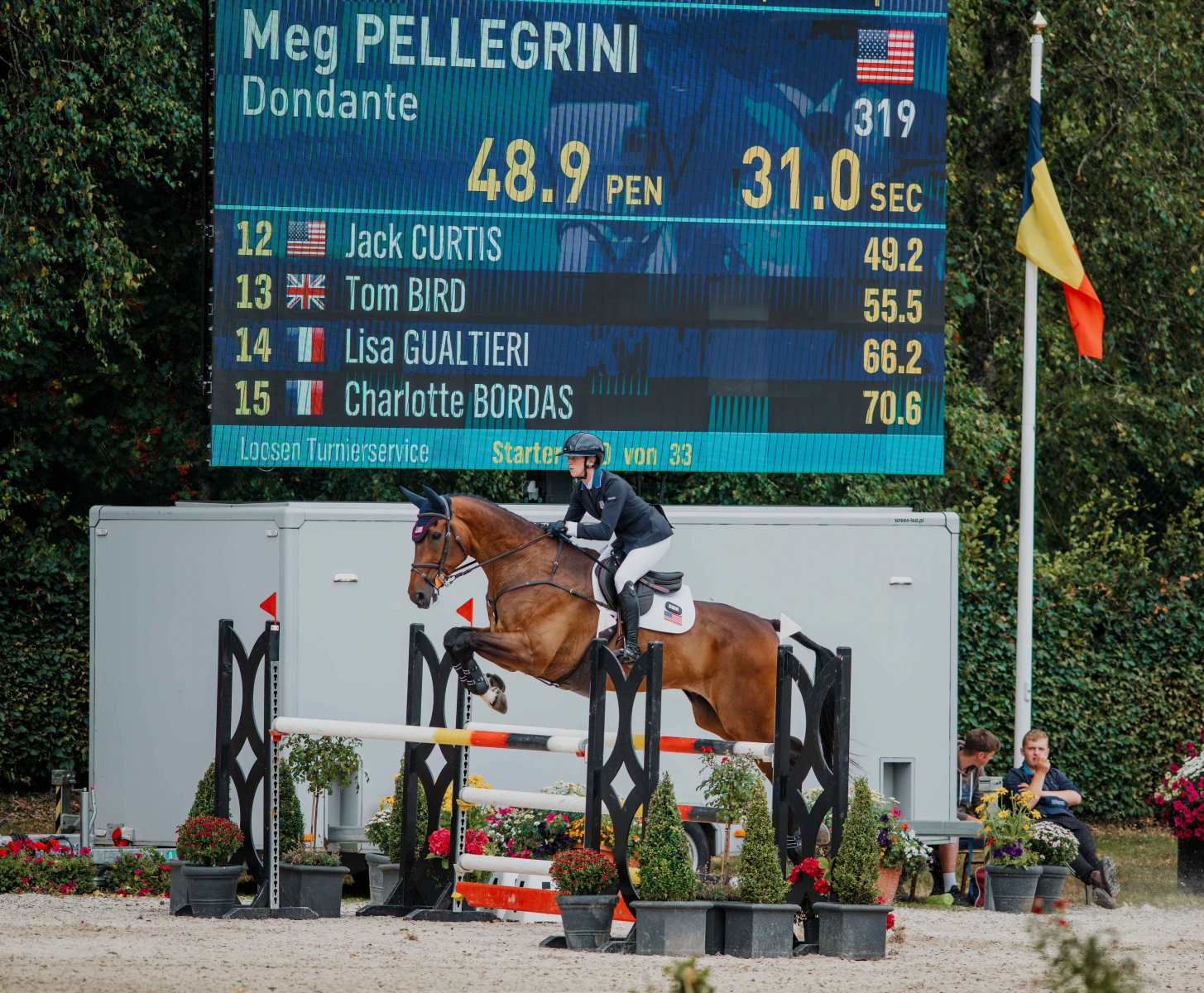
Meg Pellegrini and Dondante. Photo by Tilly Berendt.
British pathfinder and team gold medallist Tom Bird piloted Lenny to a rail and 1.2 time faults for eleventh place, ahead of Aussie individual Lamoza Velisha and the charismatic Call Me Cooley, who had two rails to finish twelfth. Thirteenth place goes to US team members Meg Pellegrini and Dondante, formerly the ride of Will Coleman, who also had two rails. Canada’s Kyle Charles Morton and Shannondale Gambit finished 25thafter knocking just one rail and stopping the clock a second over time.
We also have an update from Alice Casburn on the much-loved Topspin after his withdrawal this morning.
“He was very angry this morning not to be showjumping with his friends,” she says. “He owes us absolutely nothing, and he’s a horse that’s always been very happy and excited, and I felt that he just wasn’t 100%. It’s obviously very difficult in that team situation, when you want to do your best, but my teammates have been so incredibly supportive of me. He’ll go home now and see some of his buddies and have a very happy retirement.”
For now, from us, that’s all from the inaugural FEI Under-25 World Championship at Millstreet – and onwards to the senior World Championships at Aachen in just a couple of weeks’ time. The pipeline to the future for our young talent has never looked clearer. Go Eventing.
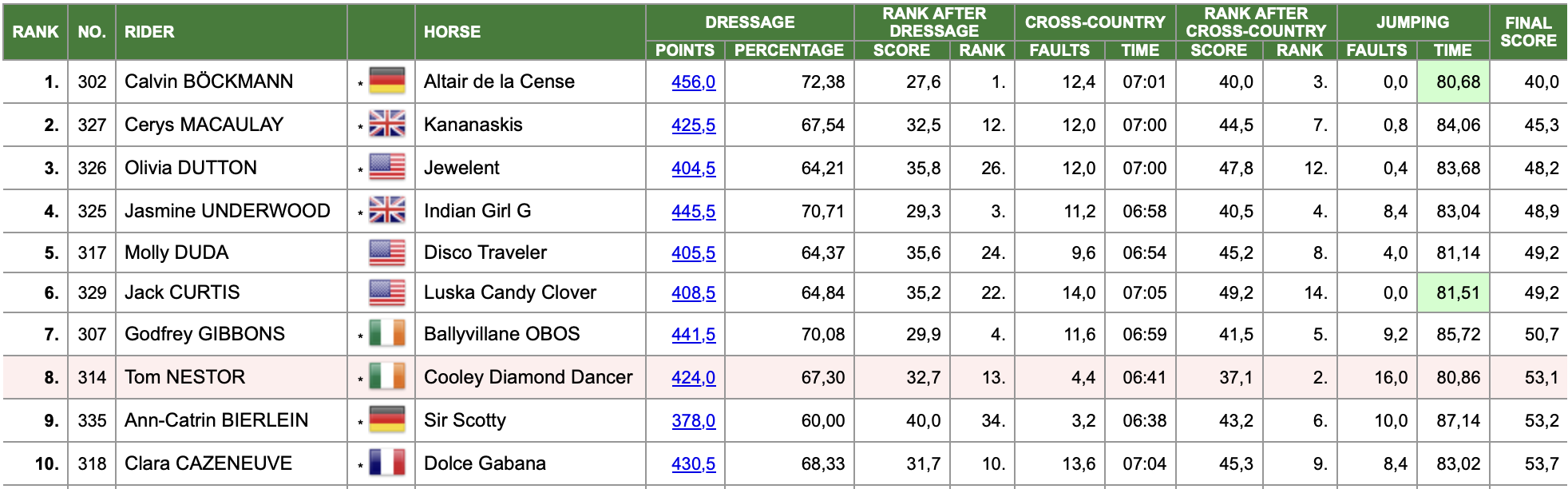
The final individual top ten in the inaugural Under-25 World Championship.

The final team leaderboard.
FEI Under-25 World Championships at Millstreet, presented by Connolly’s Red Mills: Website | Live Stream | Entries & Scoring | EN’s Coverage