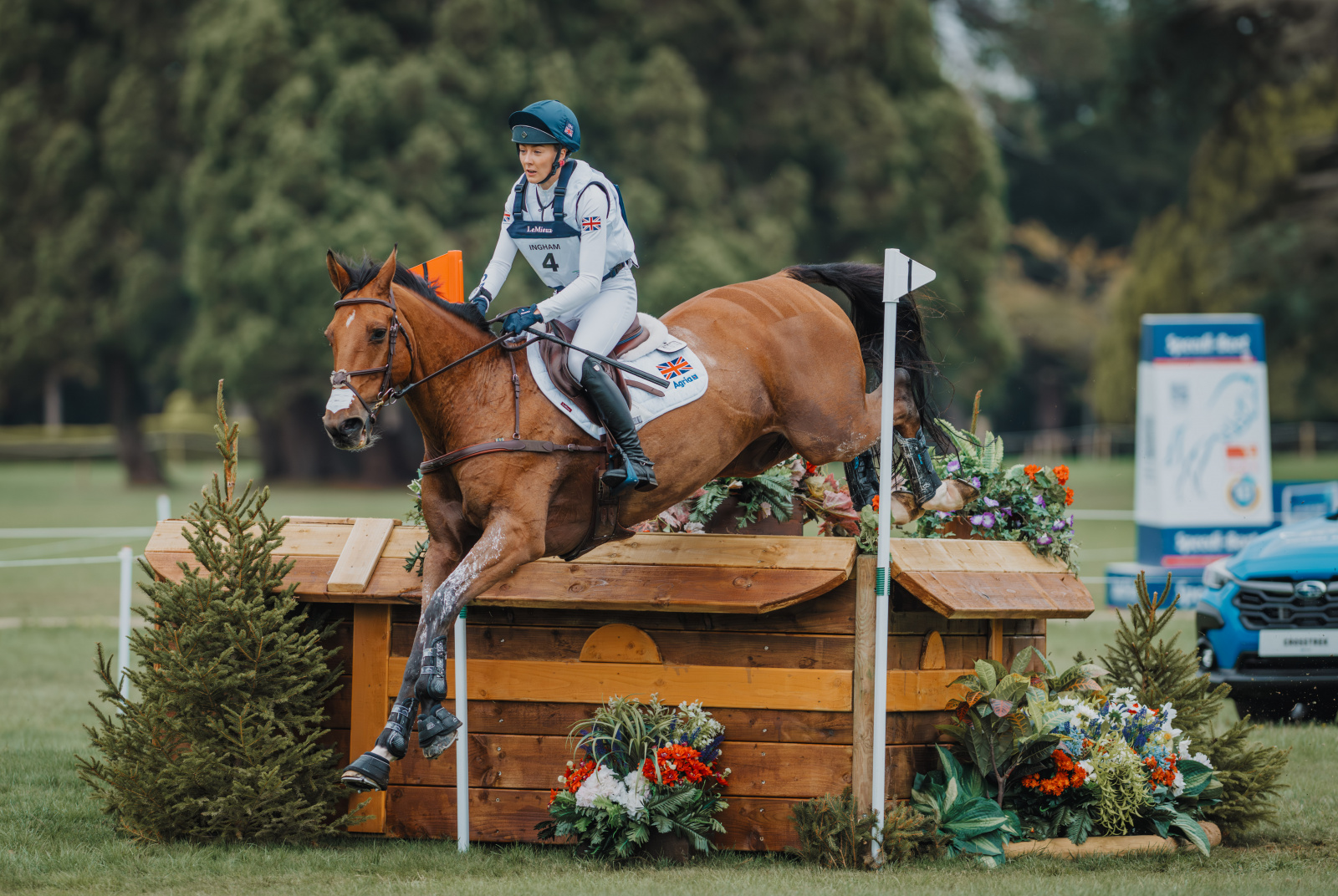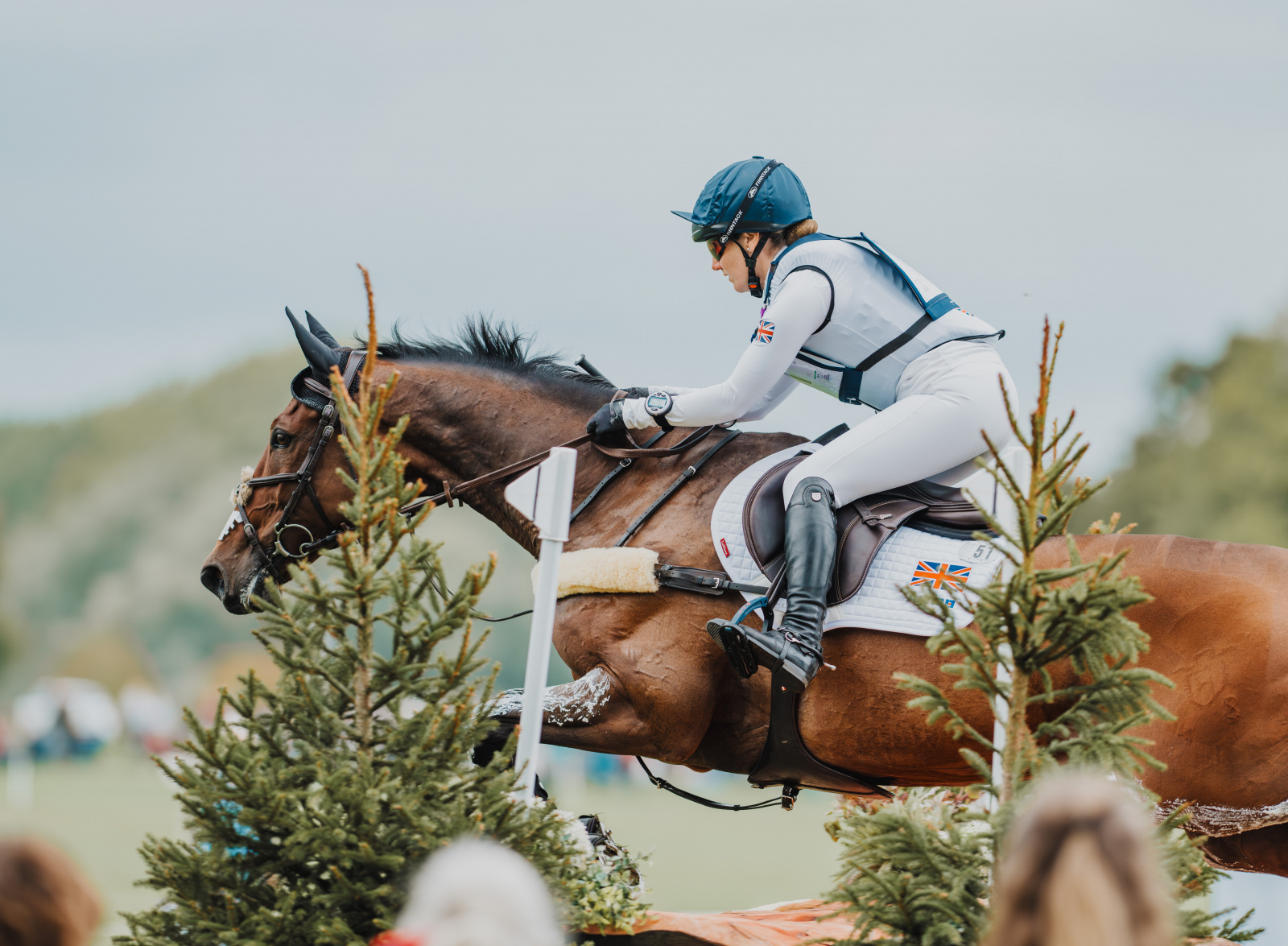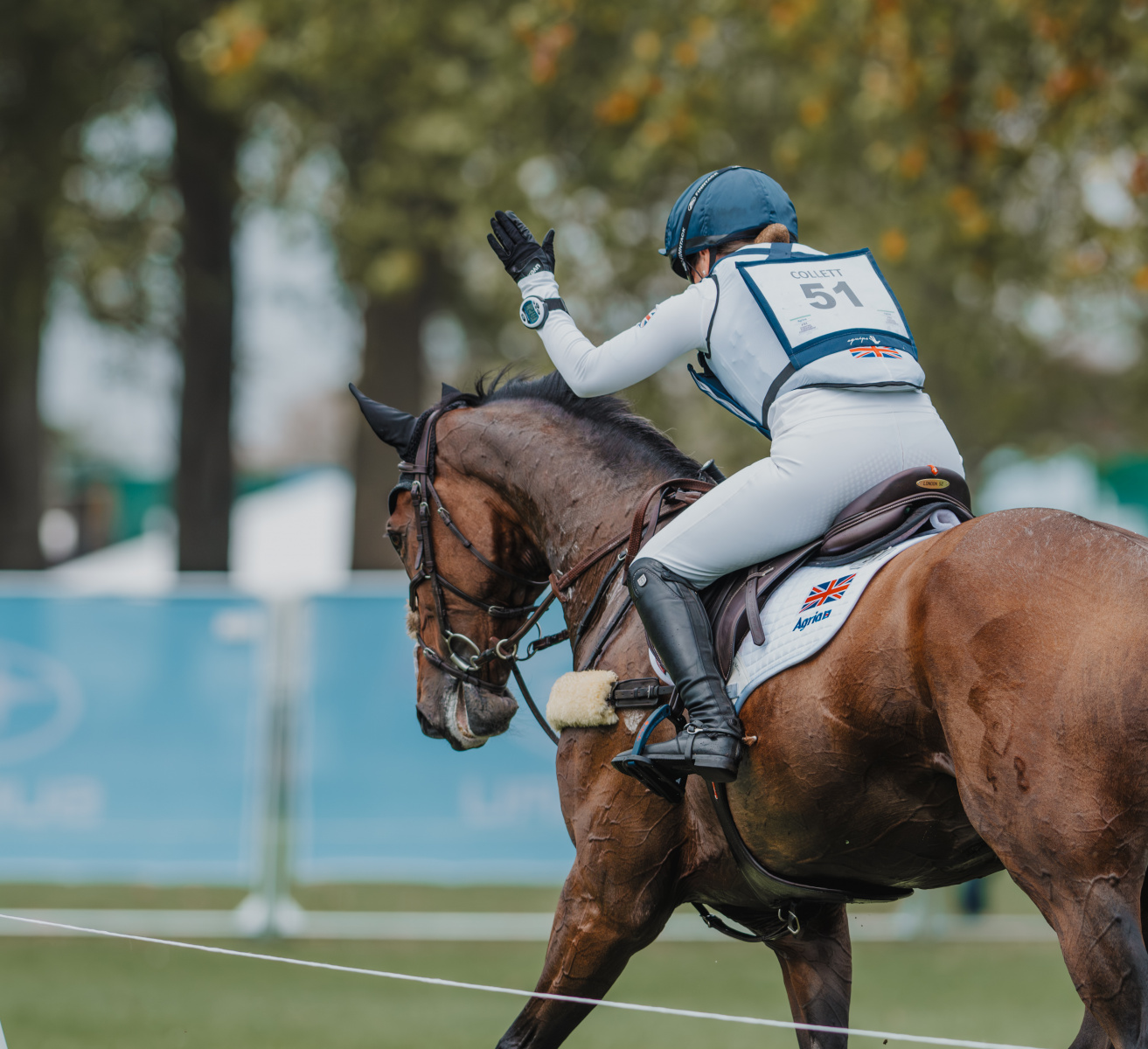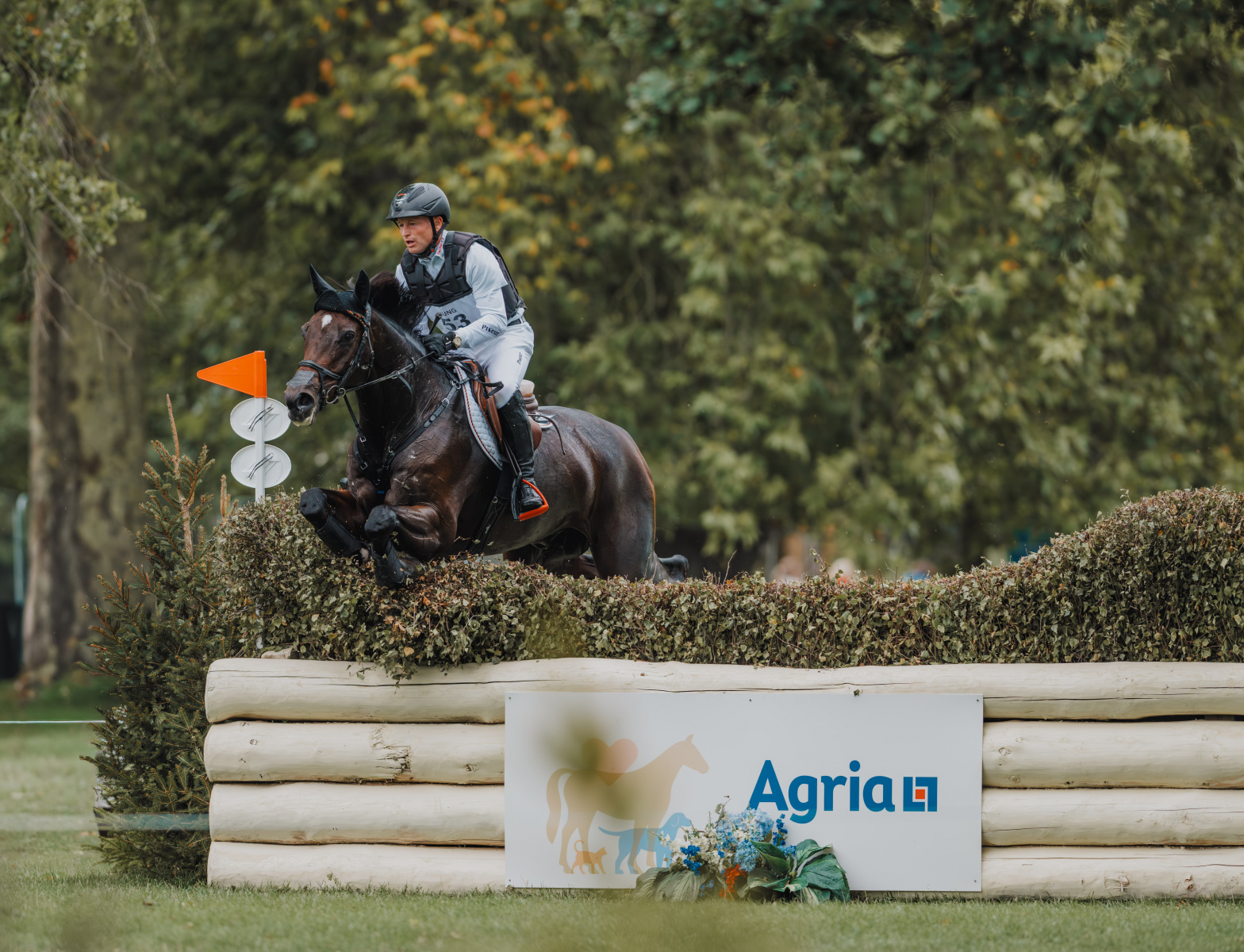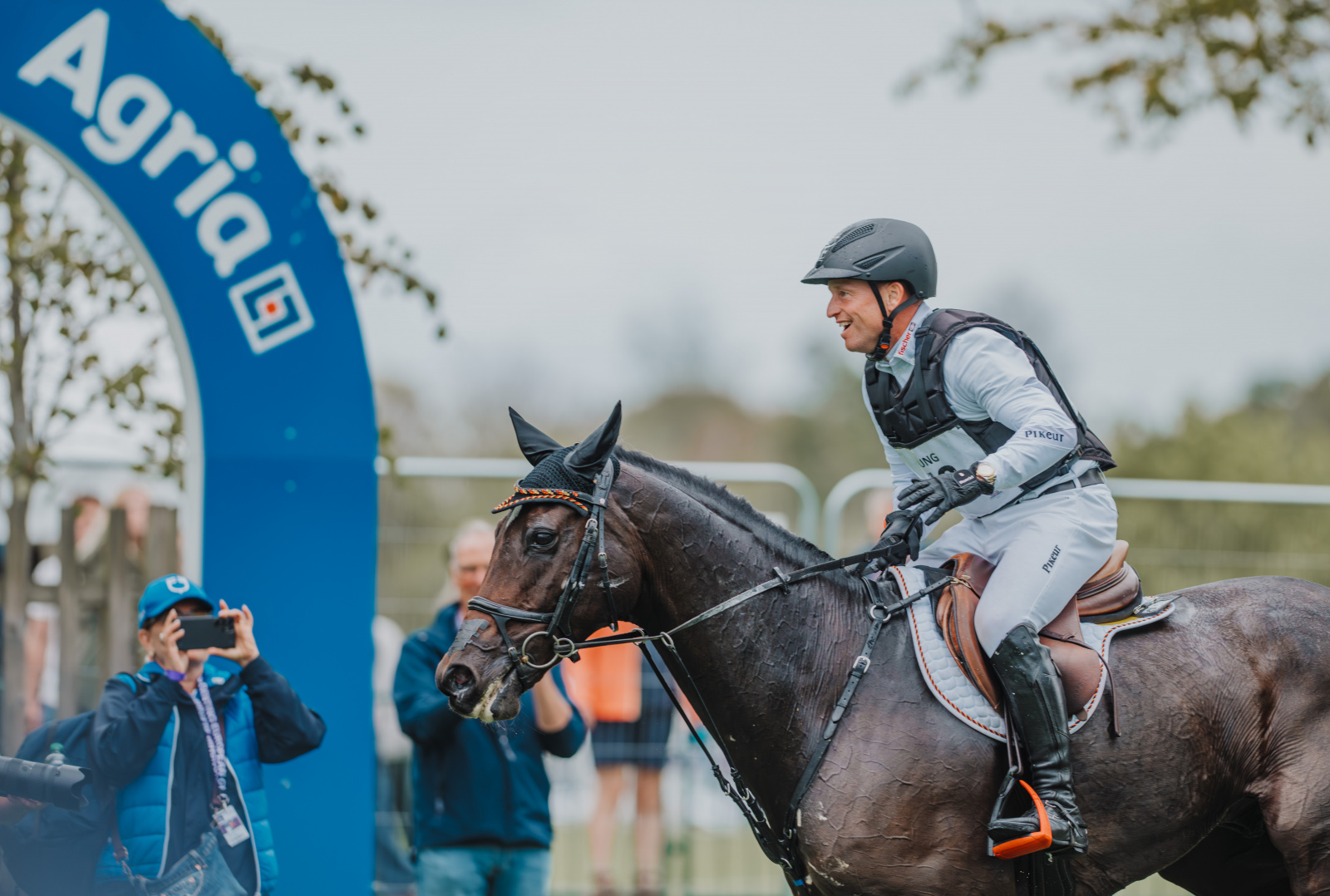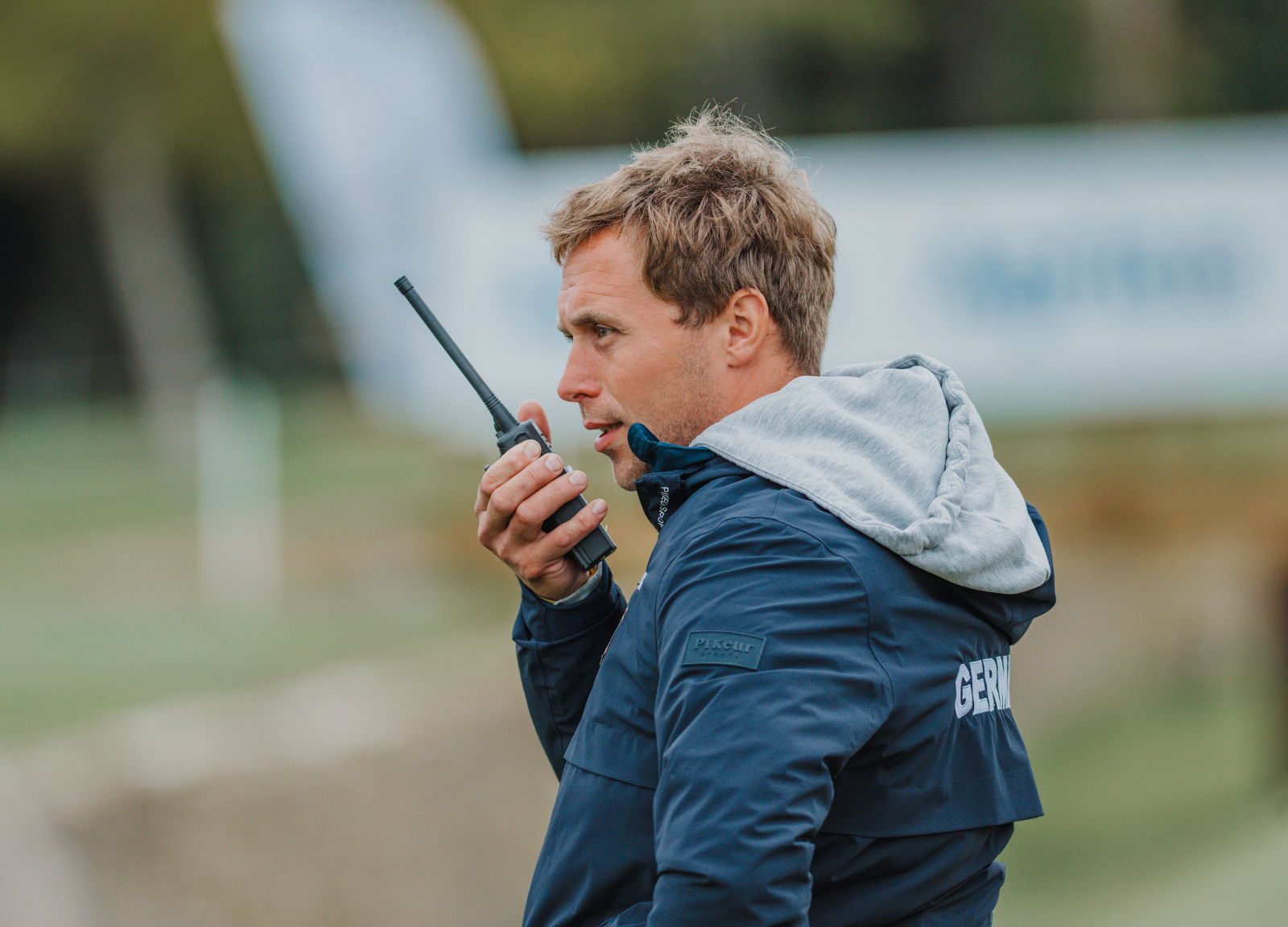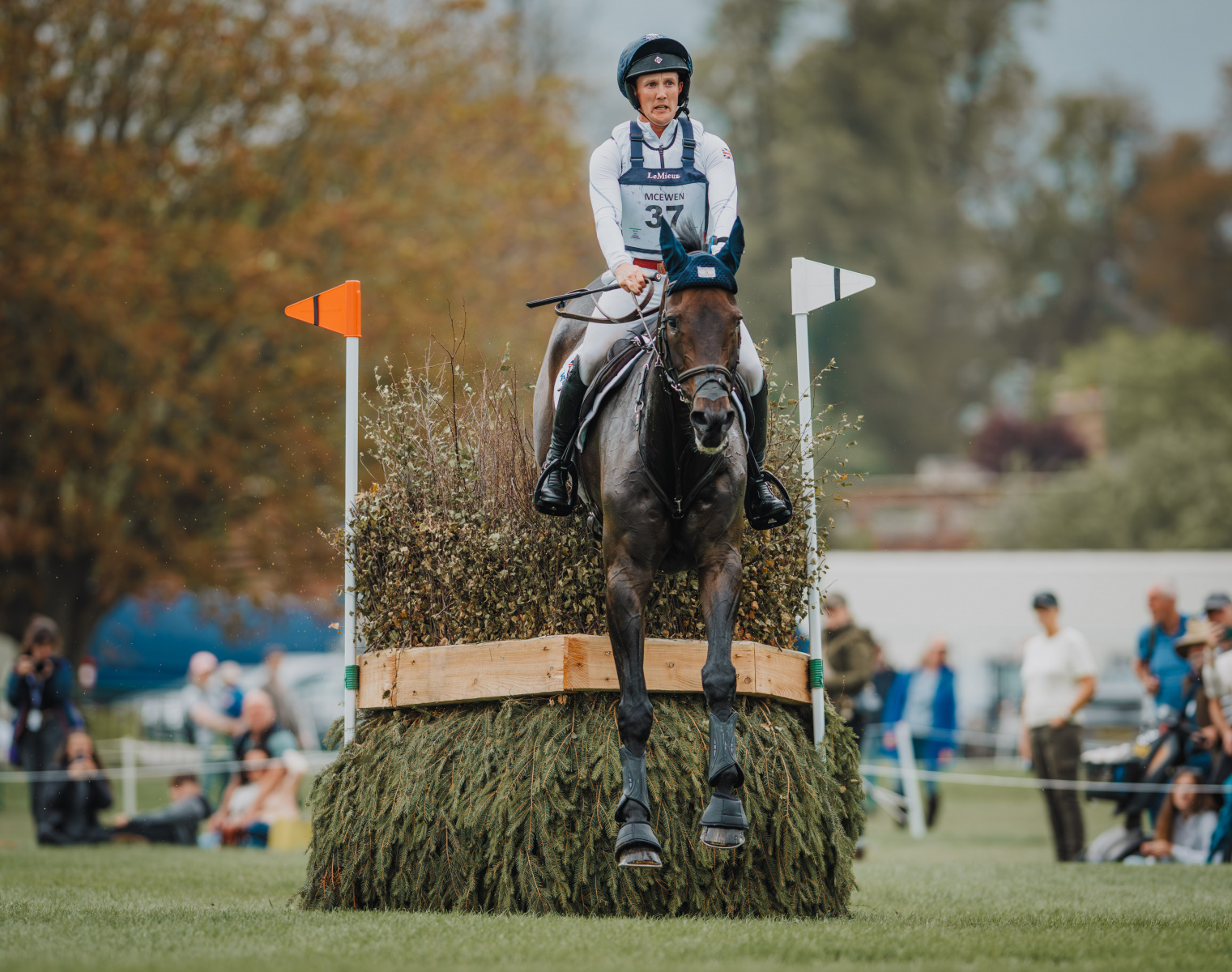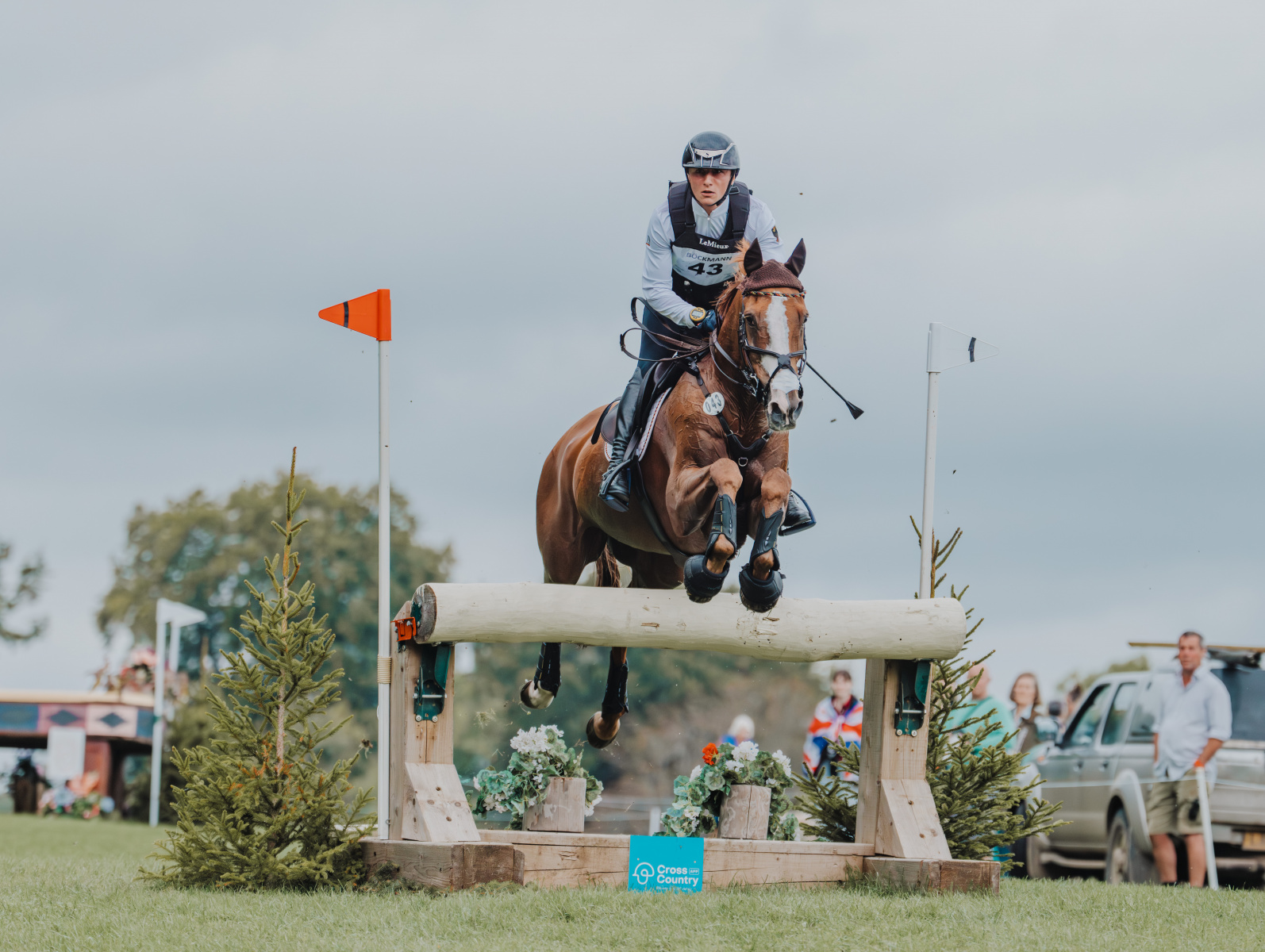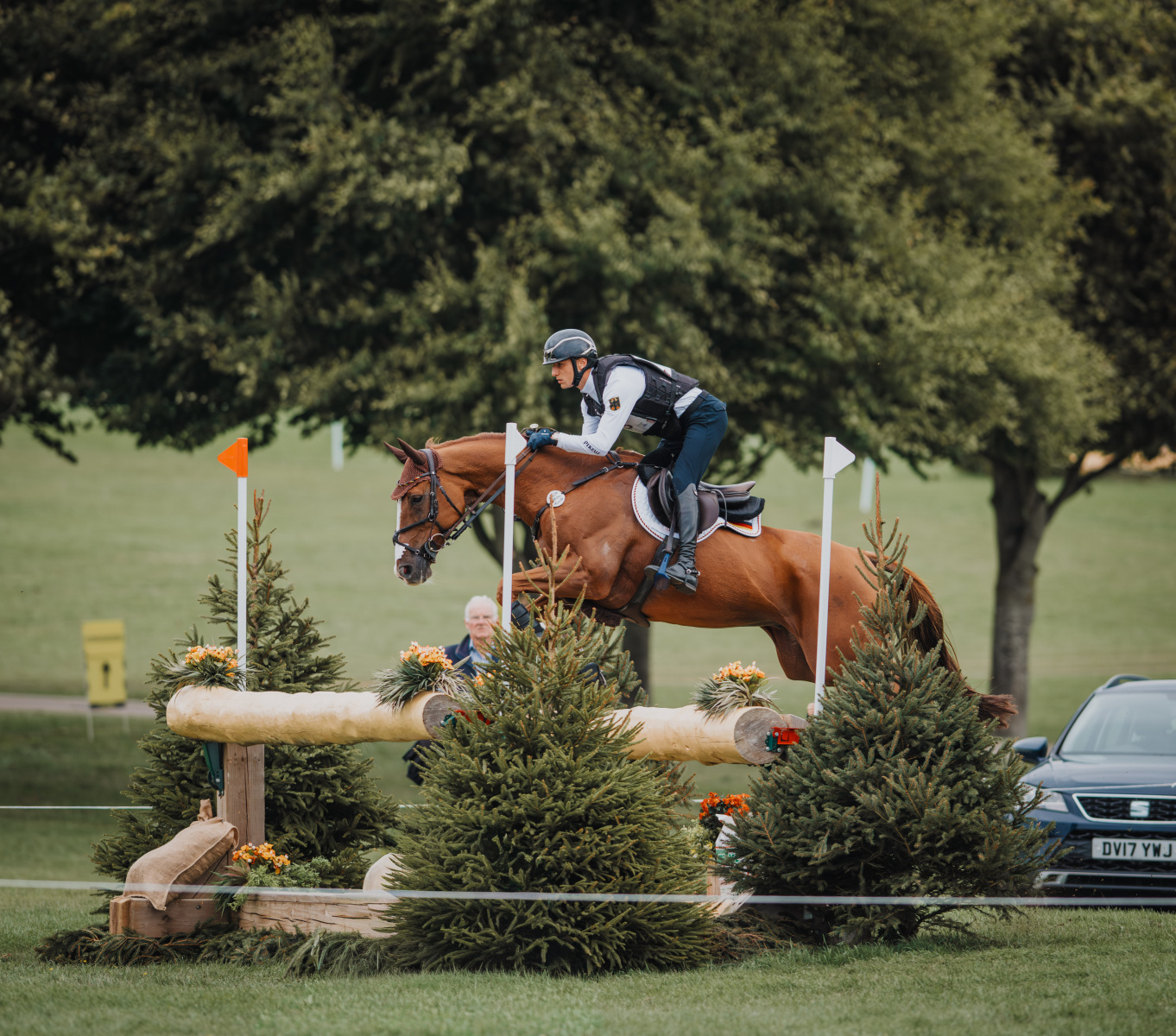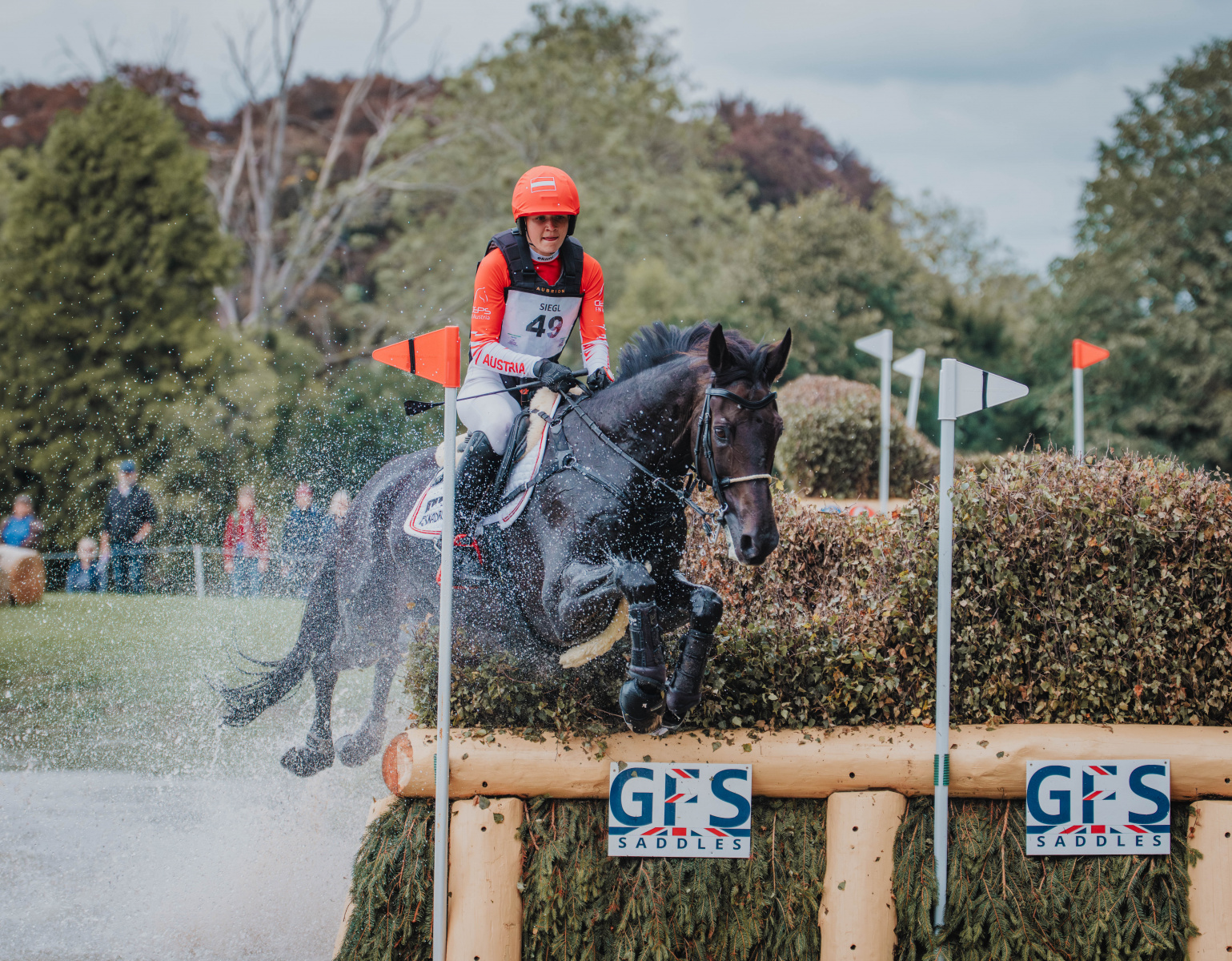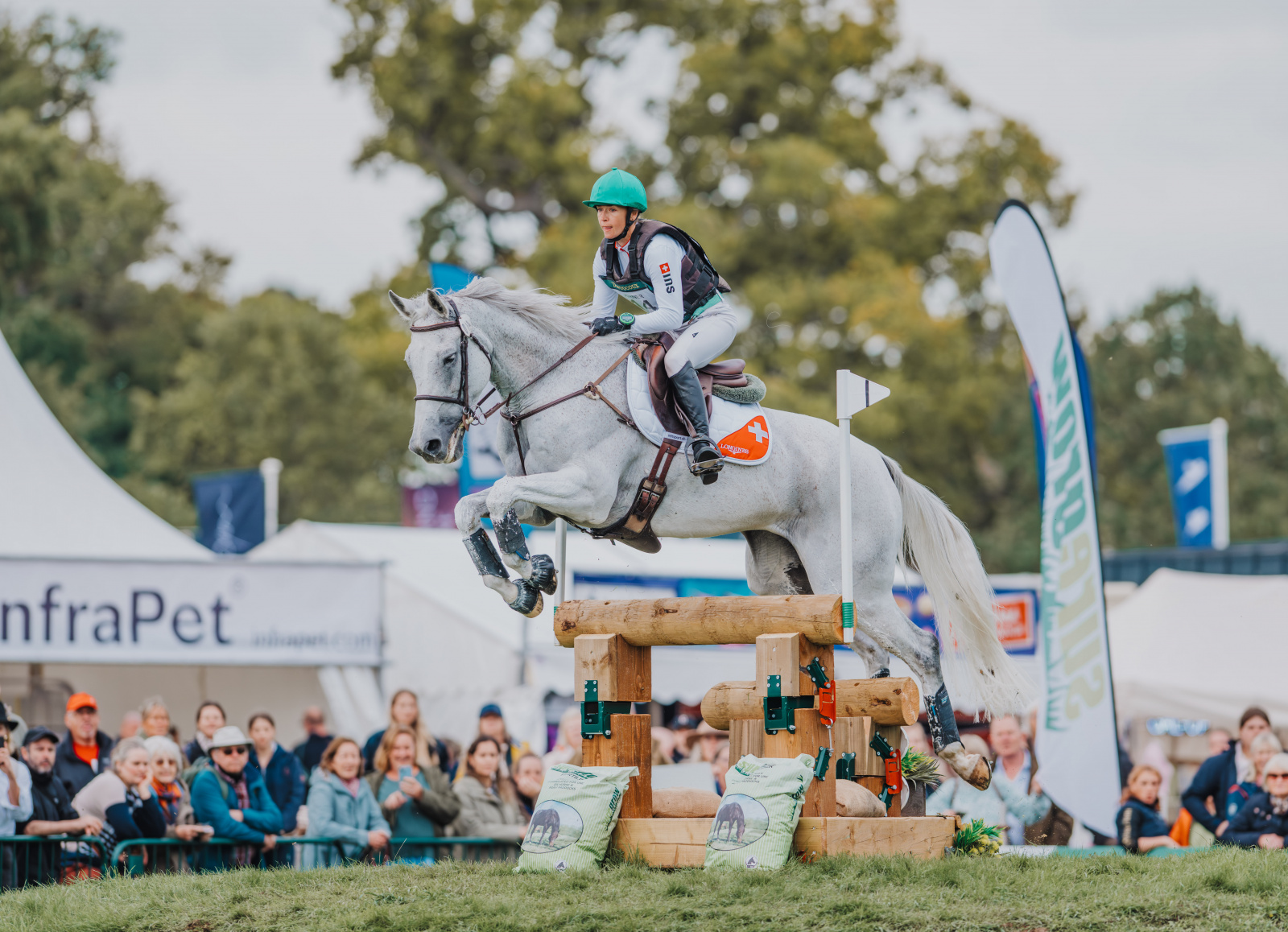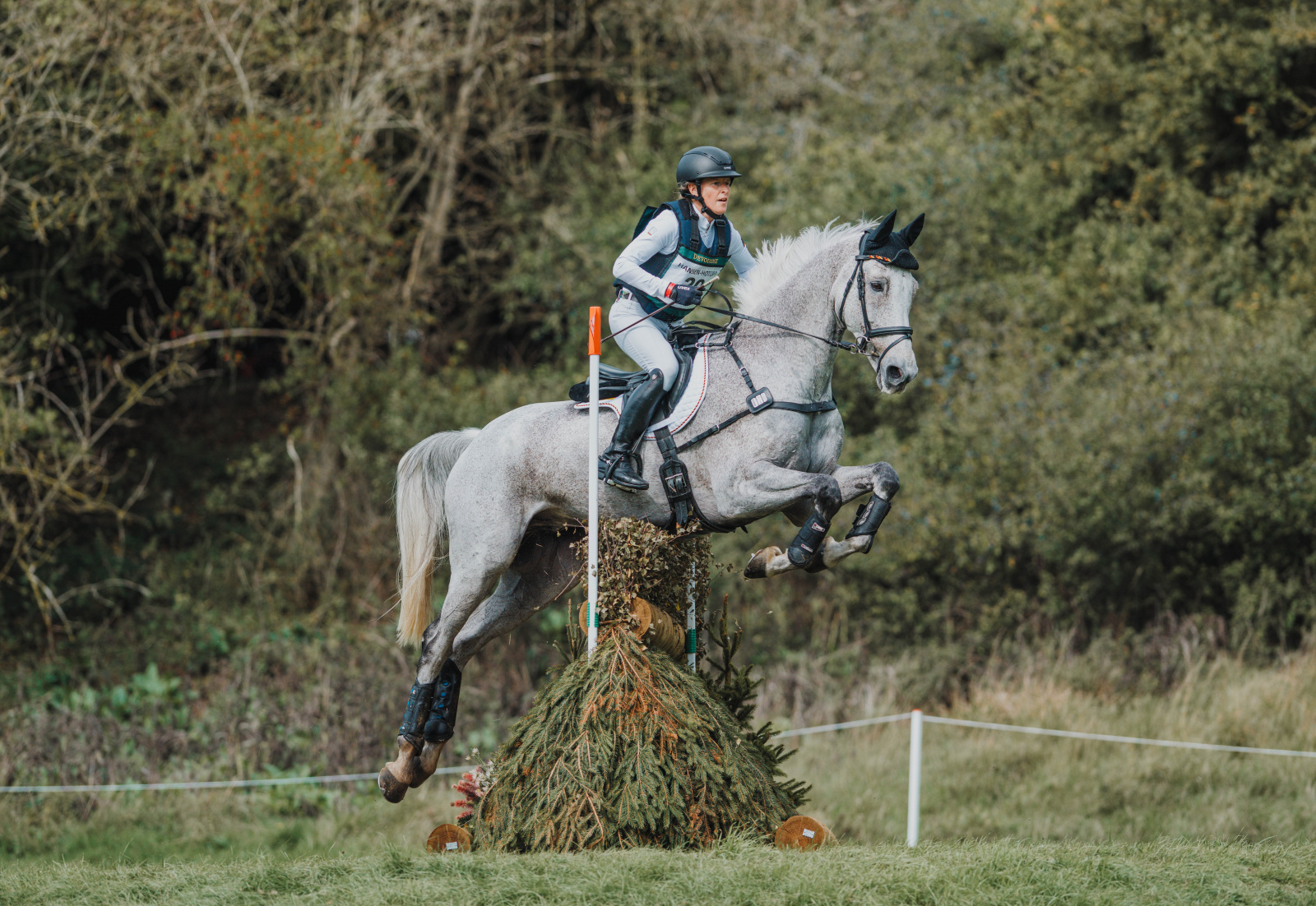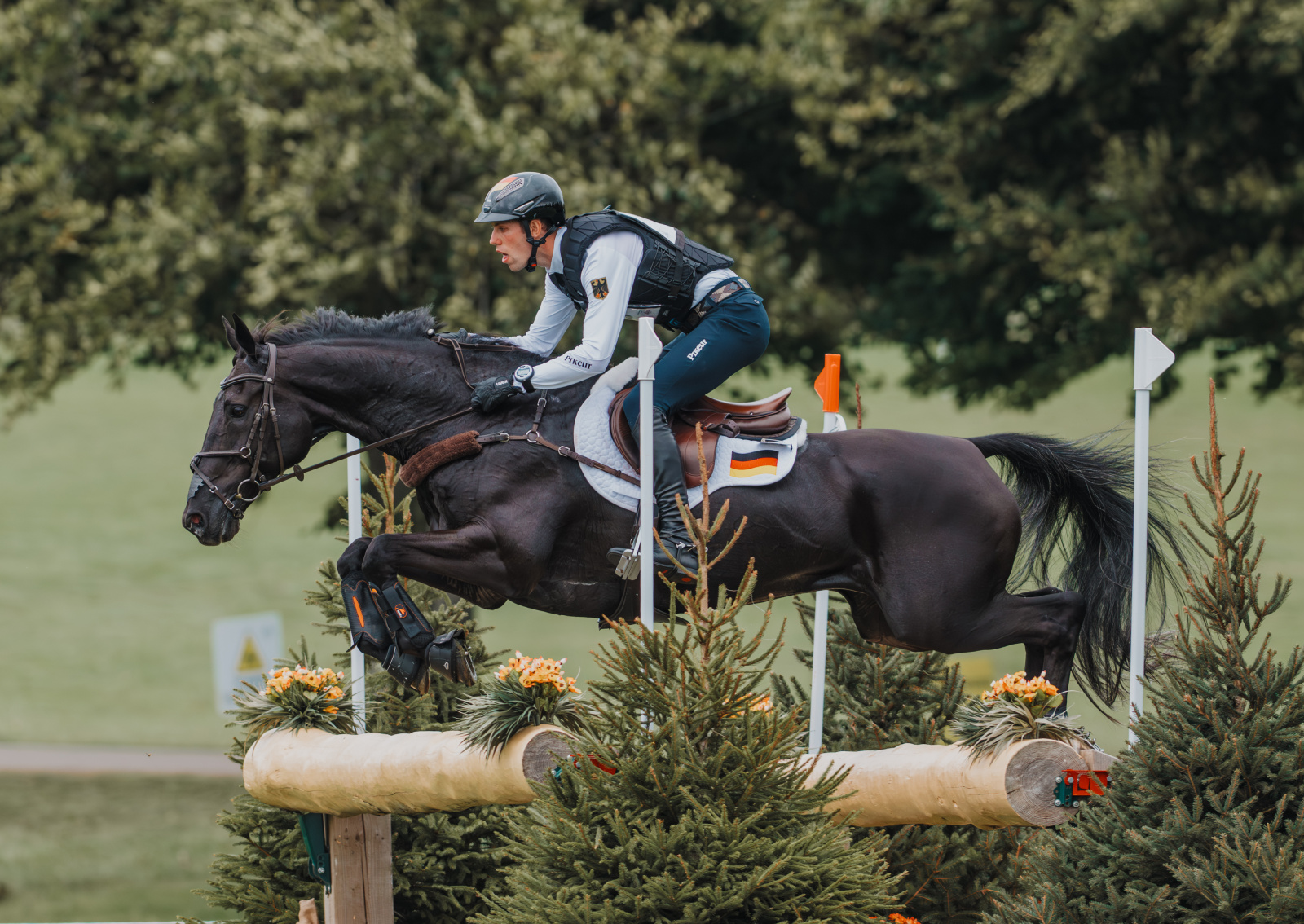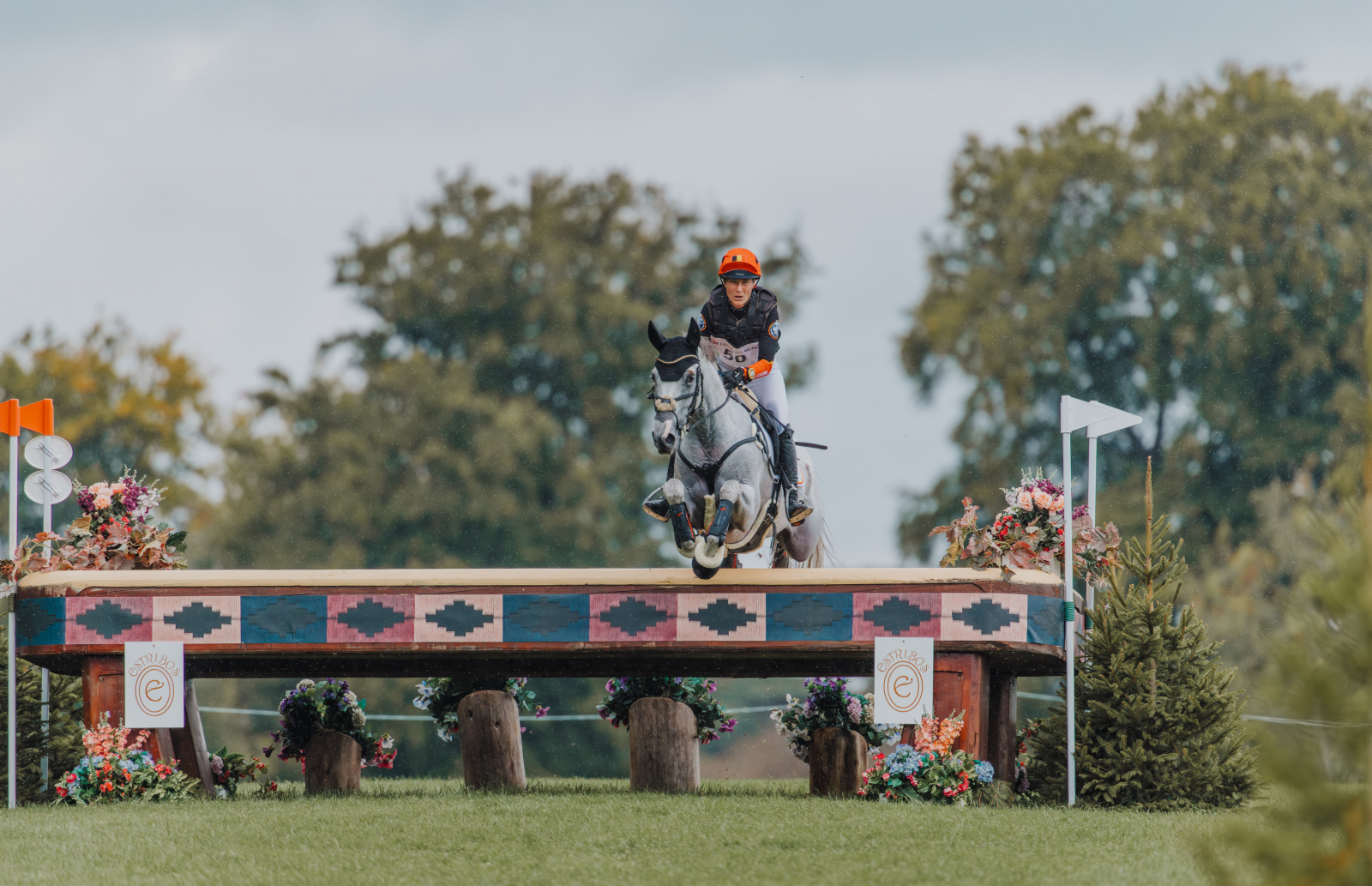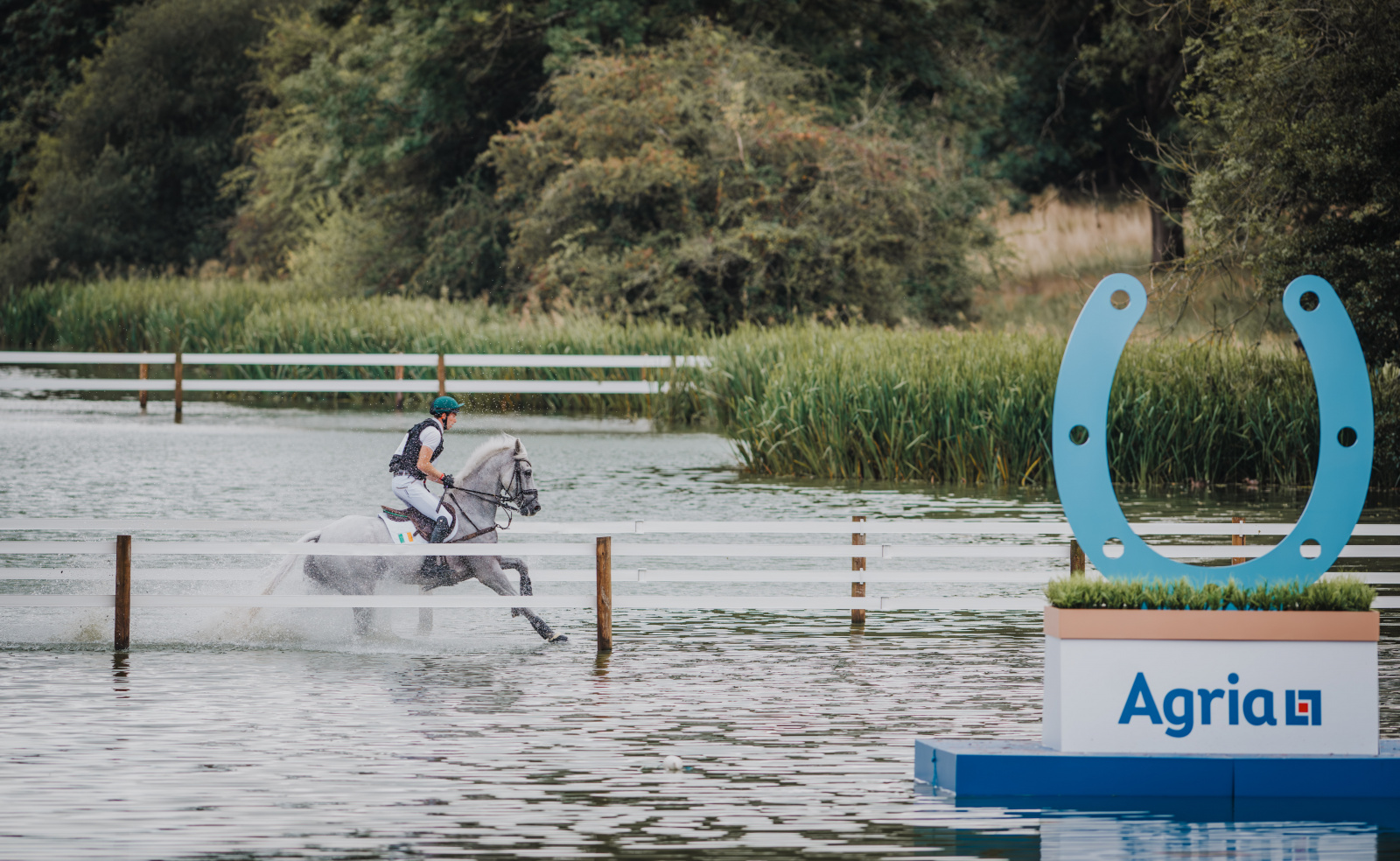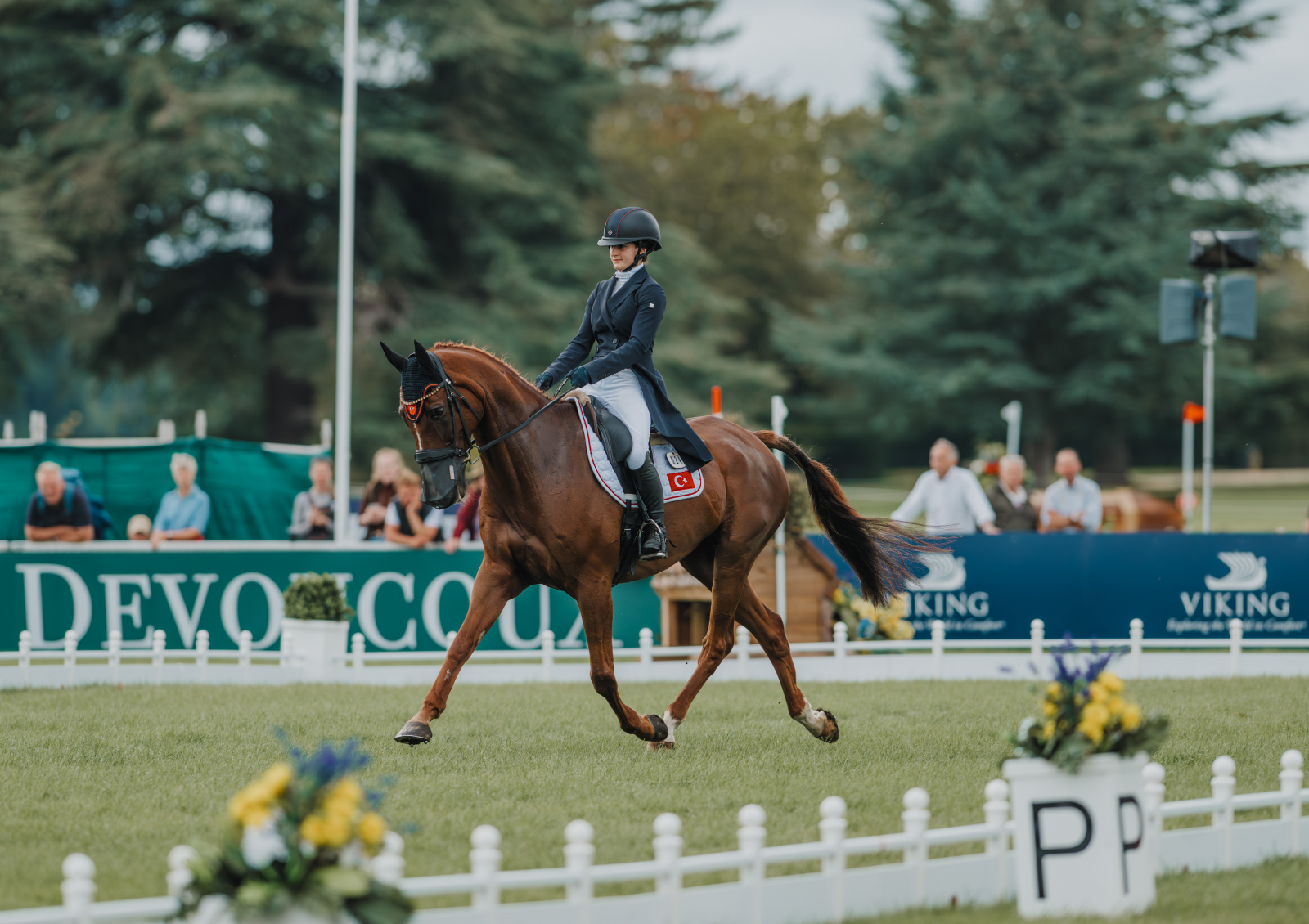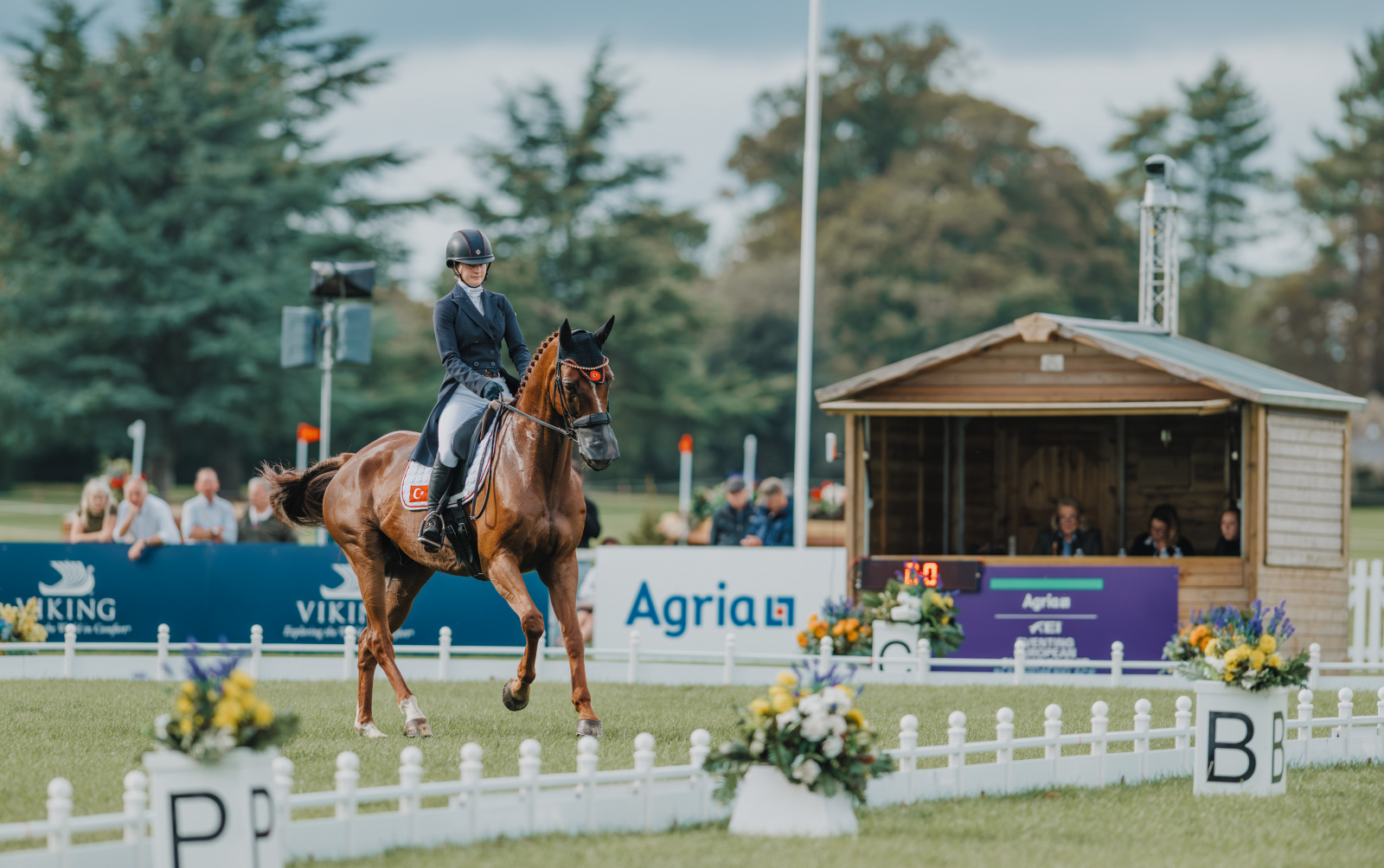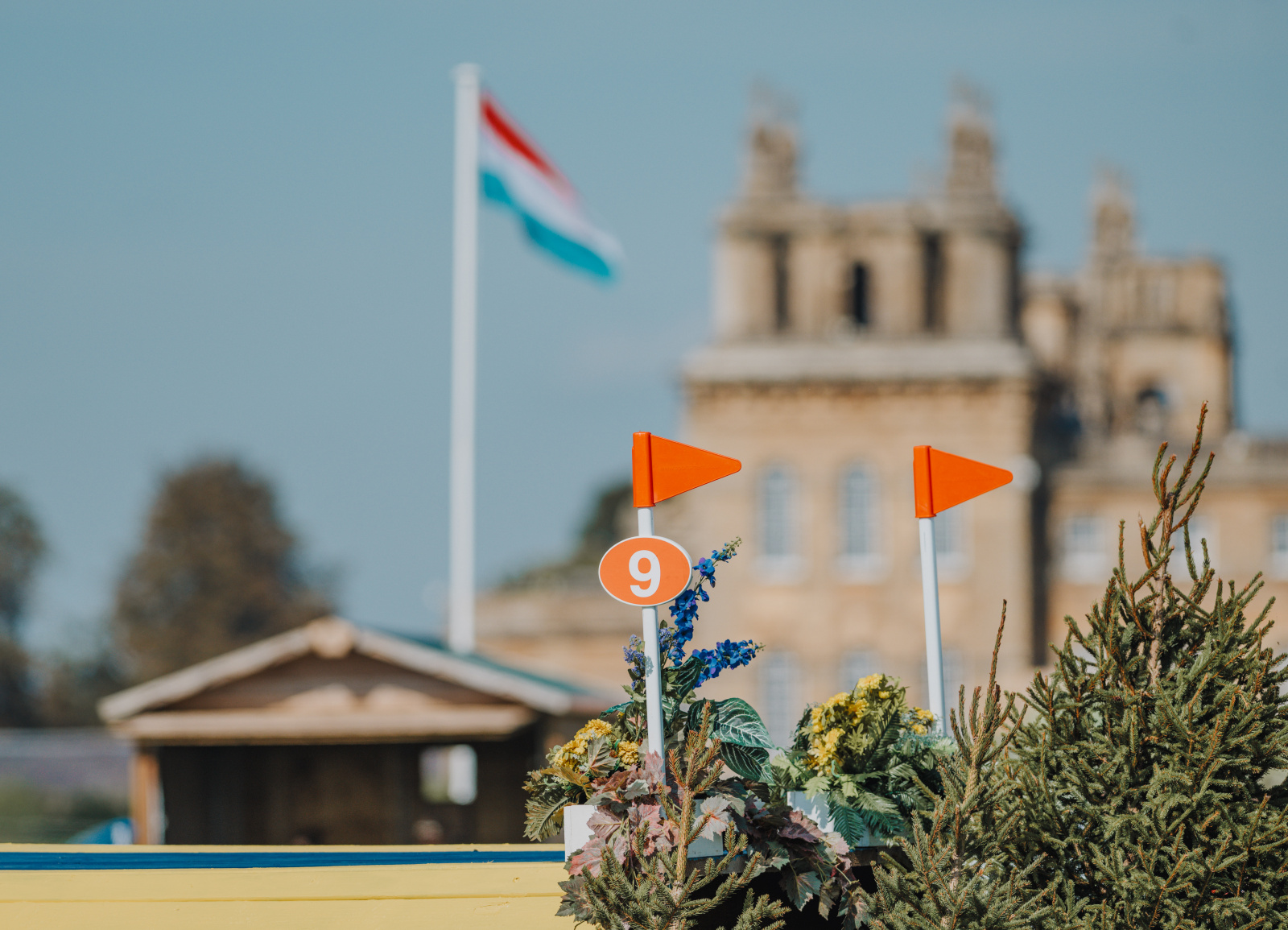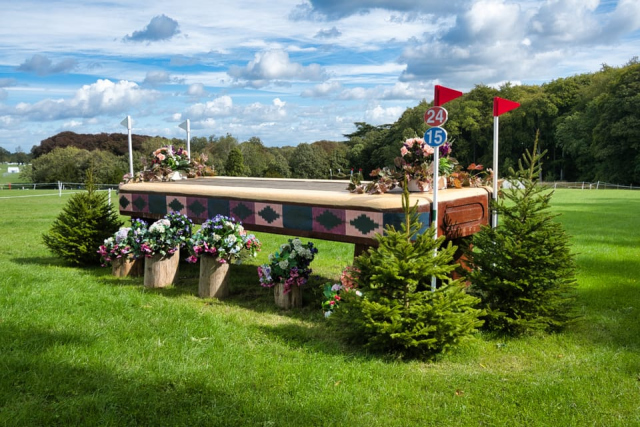
Just a few of the many Christmas trees out on course. Photo via CrossCountry App.
It’s Championships time once more ENers and I’ll be bringing you live updates of all the cross country action from the Agria FEI Eventing European Championships as 17 nations and 9 teams duke it out on Captain Mark Phillips’ swansong track.
Before we get down to the business of the day, here’s a look at how things stand on the leaderboard following the dressage phase.
Individual Podium Placings:
1️⃣ 🇩🇪 Michael Jung and fischerChipmunk FRH – 18.3.
2️⃣ 🇬🇧 Laura Collett and London 52 – 20.6.
3️⃣ 🇬🇧 Tom McEwen and JL Dublin – 26.2.
You’ll find the full individual scoreboard right here.
Team Podium Placings:
1️⃣ 🇩🇪 Germany – 74.4.
2️⃣ 🇬🇧 Great Britain – 75.8.
3️⃣ 🇫🇷 France – 90.7.
You’ll find the full team scoreboard right here.
Here are the links you need to catch up on all the deets from the dressage:
▶️ Thursday Report
▶️ Friday Report
But we all know that eventing is almost never a dressage competition, so it’s all to play for as the competitors take to the start box for today’s cross country test. You can see what’s in store on the course today here and check out EN’s take on the key combinations right here. As ever, we’ve wrangled the riders for their insights into the track – read their reactions here.
The defending champs and host nation, Great Britain, are fielding an enviably solid team, despite the absence of the reigning individual title holder, such is the strength and depth of the British squad. The team to beat following the first phase though, is the German representation, silver medalists at the last Euros edition and coming for Britain’s crown with everything they’ve got. Currently sitting in third, France took bronze on home soil at Haras du Pin in 2023 and will have the podium set in their sights once more; with plenty of potential within their ranks it’ll be ‘allez’ all the way.
Take a closer look at all the representatives in our Guide to the Nations, which we’ve conveniently placed right here for your perusal.
But as has been proven so many times, nothing’s a dead cert when it comes to eventing and we’ll just have to buckle up and hang on for the ride before we find out just who will be taking home the hardware at the end of play tomorrow. (FYI, the show jumping is scheduled for 1pm BST / 12pm CEST / 8am ET.)
And to make sure you don’t miss a trick, EN has got two sets of boots on the ground at Blenheim Palace, bringing you all of the news straight from the competition site. You’ll find EN’s slightly soggy, windswept content here. And don’t forget to head on over to our Instagram channel @goeventing for even more goodies – follow along here.
There’s just time for a little ‘refresher’ on the no. 1 rule of following EN’s classic live blog: refresh, refresh, refresh – and all will be revealed.
via GIPHY
If you’re catching up with this later and are the type to like things in order, scroll ⬇️ and read ⬆️. If going backwards is more your jam, have at it.
We’ll be going live at 11am BST / 12pm CEST / 6am ET.
The start box beckons. Let’s go eventing!
(* Denotes team member. Euros team credentials are for the past decade, with medals recognized for earlier competitions. Team representations are prioritized.)
________________________________________________________________________________
EN is proud to welcome Horsepal onboard as the sponsor of our European Championships coverage! Horsepal is a newly-launched heart rate monitor brought to you by Tom MacGuinness, founder of Horseware and an FEI eventer and endurance rider, who’s brought his decades of knowledge to practice in the design of Horsepal. You can now purchase Horsepal directly to the UK and Europe — learn more here.
________________________________________________________________________________
Agria FEI European Eventing Championships at Blenheim: [Website] [Tickets] [Live Stream] [FEI YouTube Streams] [Entries] [Timing & Scoring] [CrossCountry App XC Map] [EN’s Coverage] [Support Our Sponsor: Horsepal]
________________________________________________________________________________
10:40am
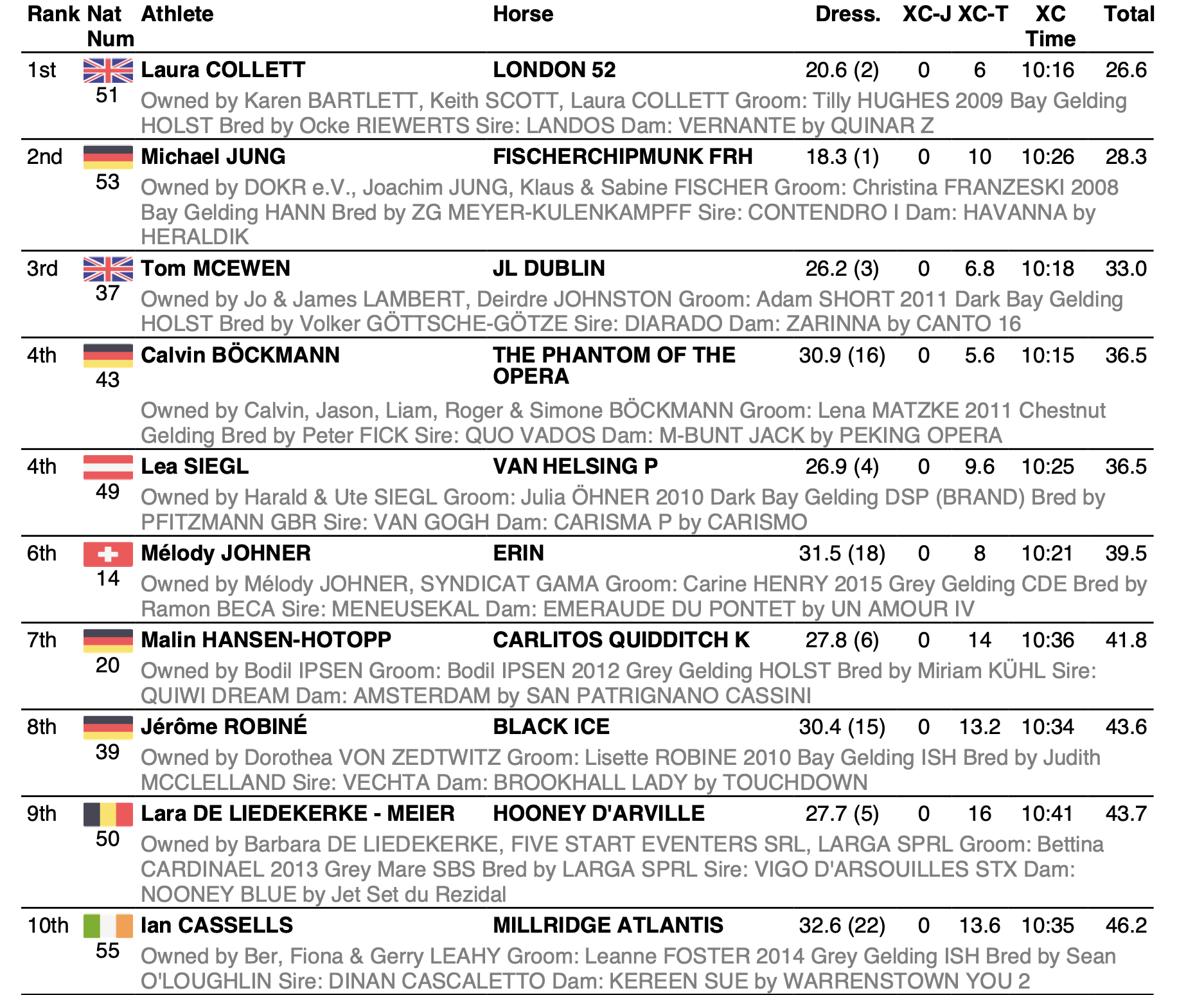
So that’s that ENers and what a competition we’ve seen. Huge shake ups in the team standings and a switcheroo in the individual podium.
Just a quick update before we look at those placings: Michael Jung’s flag penalty has been removed.
Individual Podium Placings:
1️⃣ 🇬🇧 Laura Collett and London 52 – 26.6.
2️⃣ 🇩🇪 Michael Jung and fischerChipmunk FRH – 28.3.
3️⃣ 🇬🇧 Tom McEwen and JL Dublin – 33.
You’ll find the full individual scoreboard right here.
Team Podium Placings:
1️⃣ 🇩🇪 Germany – 113.7.
2️⃣ 🇮🇪 Ireland – 150.7.
3️⃣ 🇨🇭 Switzerland – 161.3.
You’ll find the full team scoreboard right here.
Keep it locked on to EN for a full cross country report headed your way as soon as super-humanly possible.
Set your notifications for 1pm BST / 12pm CEST / 8am ET to find out who the European medalists will be.
It’s over and out from me.
Thanks for coming along for the ride.
Until next time… Go eventing!
________________________________________________________________________________
10:30am
🇮🇪* FINAL COMBINATION OUT ON COURSE: IAN CASSELLS AND MILLRIDGE ATLANTIS
Dressage Score: 32.6
Place: 22
Euros Credentials: Represented Ireland as an individual at Le Pin Au Haras 2023.
Ian’s showing as having a pending flag at 10 as we catch up with him going a bit sideways after the Roller Coaster combination and into the Ha Ha Oxer at 16. Ian jumps that with just the one pedal. This horse is looking very strong. He’s still bold as he comes to the hollow fence at 25 and Ian has to really bring him back to be careful of the pins on those rails. They’re careful through there as they near home. They clear the final combination at 30 and kick for the finale. They cross the line with 13.6 time and that pending flag.
Astier heads for home and picks up a pending flag penalty at the final combination at 30. He crosses the line with 14.4 time, 11 for the frangible device at 6 and that pending flag.
We catch up with Michael at the bullfinch double at 28 with 30 seconds left on the clock. They go into time as they come into the final combination at 30 and Michael really pushes on as they come out of there and towards the finale. We actually see Michael breath a massive sigh as he rides for the finish. 10 time penalties. A pending flag. He’s dropped into 2nd. Laura Collet and London 52 are in the lead after cross country.
________________________________________________________________________________
10:20am
🇫🇷* PENULTIMATE COMBINATION OUT ON COURSE: ASTIER NICOLAS AND ALERTAMALIB’OR
Dressage Score: 29.8
Place: 13
Euros Credentials:
🥉 Team bronze Malmö 2013
Astier has a bit of an up and down jump over the table in the arena at 8 but he kicks on and they continue through there neatly enough. He’s showing as having had a frangible device at the Dew Pond at 6 on the live scoreboard but we didn’t see it on screen.
OK, Michael is showing as having a flag question at 22 on the live scoreboard. I’ll obviously update you with any information asap. We do see it on screen and honestly, from the angle we see it at it’s not really a question, surely? Aside from that, he’s having a storming round. Too quick to keep up with but characteristically beautiful and impressive.
________________________________________________________________________________
10:15am
🇩🇪* NEW COMBINATION OUT ON COURSE: MICHAEL JUNG AND FISCHERCHIPMUNK FRH
Dressage Score: 18.3
Place: 1
Euros Credentials:
🥈 Team silver Haras du Pin 2023 (horse & rider)
🥈 Team silver Avenches 2021
🥇🥈 Team gold & individual silver Luhmühlen 2019 (horse & rider)
🥈 Individual silver Strzegom 2017
🥇🥇 Team gold & individual gold Blair Castle 2015
🥇🥇 Team gold & individual gold Malmö 2013
🥇🥇 Team gold & individual gold Luhmühlen 2011
🥉 Individual bronze Fontainbleau 2009
Just two more combinations to come after dressage leaders Michael and Chipmunk.
Oh, there’s an early moment when Michael and Chipmunk go in kind of opposite ways over the a element at the Dew Pond at 6, but they’re firmly back together on landing. Just giving us a bit of excitement. They’re very quick into the main arena and Chipmunk is hunting out the flags as they take on the two tables at 8 and 9 and then the double at 10. They’re characteristically fabulous through the combination at 11 and then the two boxes at 12 and 13.
Laura takes a bit of a chance at the final fence and then crosses the finish line with just 6 time penalties, the second quickest of the day so far.
Frieda is showing as having retired after picking up penalties at fence 17.
________________________________________________________________________________
10:10am
🇸🇪* NEW COMBINATION OUT ON COURSE: FRIDA ANDERSEN AND STONEHAVENS BABY BLUE
Dressage Score: 32
Place: 20
Euros Credentials:
📌 Team member Haras du Pin 2023
🥈 Team silver Malmö 2013
We pick them up in the main arena where the horse is ears pricked and sweetly popping over the big tables at 8 and 9 before neatly jumping through the double of angled brushes at 10. They’re just as neat through the treble combination at 11 and then through 12 and 13 before heading off into the woods.
London 52’s looking strong as he comes through the Roller Coaster combination at 15 and Laura adds a stride to the Ha Ha Oxer at 16, getting him to listen to her. There’s a little wiggle coming into the brush shoulder at 19 but Laura’s all over it and they’re clear and kicking on. Laura sits back at the FEI Mounds at 22, jumping very boldly through there.
Lara picks up a flag question at the final combination at 30, taking a bit of a chance there. They cross the line with 16 time and that pending flag.
________________________________________________________________________________
10:05am
🇬🇧* NEW COMBINATION OUT ON COURSE: LAURA COLLETT AND LONDON 52
Dressage Score: 20.6
Place: 2
Euros Credentials:
🥇 Team gold Haras du Pin 2023 (horse & rider)
We’re into the final five combinations to come forward now.
There’s cheers for this pair as they make their way neatly through the Dew Pond at 6. They’re clean through the main arena fences and then easily make the long strides through the combination at 11. All’s well so far for this pair as the rain starts to come down.
Lara’s horse has a little look going into the water at 18 but Lara’s got her leg on. They jump the biggest part of the brush shoulder at 19, just to be absolutely sure. They get a great shot into the water at 20 over the hanging log and then make the distance to the corner at b look easy. Very slick. The horse is strong through the FEI Mounds combinations at 22 but Lara gets her back quickly. She looks back to check the pin but all’s well. They pop through the hollow combination at 25 and head towards home.
________________________________________________________________________________
10am
🇧🇪* NEW COMBINATION OUT ON COURSE: LARA DE LEIDEKERKE-MEIER AND HOONEY D’ARVILLE
Dressage Score: 27.7
Place: 5
Euros Credentials:
📌 Team member Haras du Pin 2023 (horse & rider)
📌 Team member Avenches 2021
📌 Team member Luhmühlen 2019
📌 Team member Strzegom 2017
We see them through the main arena, with Lara setting up for the big tables at 8 and 9 and then skipping through the double of angled brushes at 10. They’re very neat through the combination at 11, easily making the four strides between the two big corners at the b and c elements. Lovely.
We catch up with Lea as she makes her way through the water crossing and over the brush shoulder at 19. She’d just been held for a little while on course. She gets straight back into her round and easily gets the four strides through the water at 20 to the corner. They knock the flag out but that looks to be fine. Lea takes a short five strides through the FEI Mounds combination at 22, very controlled and ridden quite beautifully. This really does look to be shaping up to be a very impressive round. No worries at all for them at the hollow combination at 25 as they hop over the ditch there and head for home. She clears the final combination at 30 neatly and the runs on for the finale and the finish line. Big pats for ‘Heli’. They finish with 9.6 time. A superb showing from them.
Vittoria crosses the line with 22 time penalties, there’s also that 11 for the frangible device and a pending flag penalty.
________________________________________________________________________________
9:50am
🇦🇹* NEW COMBINATION OUT ON COURSE: LEA SIEGL AND VAN HELSING P
Dressage Score: 26.9
Place: 4
Euros Credentials:
📌 Team member Haras du Pin 2023 (horse & rider)
📌 Team member Avenches 2021 (horse & rider)
Lea sets off meaning business and sees a great shot to the second. The horse looks bold and brave and really keen for his job today. They’re really confident and economical through the Dew Pond at 6. They’re very neat through the combination at 11 and then over the two related fences at 12 and 13. Very elegantly ridden there from this young rider.
Vittoria is neat over the Raging Bull Roller Coaster combination and kicks on confidently. But then Vittoria goes for an extra stride into the oxer at 22a but it doesn’t work out and the frangible device comes down. Vittoria sits tight but that’s 11 penalties for them there. She continues on over the corner clear.
Felix has crossed the line with 28.8 time, 20 jumping and a pending flag penalty.
________________________________________________________________________________
9:45am
🇮🇹* NEW COMBINATION OUT ON COURSE: VITTORIA PANIZZON AND DHI JACKPOT
Dressage Score: 33.2
Place: 26
Euros Credentials:
📌 Team member Luhmühlen in 2019
📌 Team member Strzegom 2017
🥉 Team bronze Pratoni 2007
Vittoria has to really drive for the stride into the second corner at the c element of 11 but the horse responds and they make the stride there. We see them pop neatly over the two boxes at 12 and 13 before heading into the woods.
There’s another moment for Felix at the water at 20. They’re good going in over the hanging log but then they get close to the corner in the water and the horse has to squew to get her legs out of the way. Felix sits tight though and they continue on. The opt for the longer route at the hollow at 25 and are looking towards home now.
Janneke takes a real chance through the bullfinch combination at 28, taking both flags at the narrow fences there. That’s come up as a pending penalty. She’s close on the clock as she heads for home and ends up crossing the line with just 7.2 time penalties, as well as that pending flag. She looks delighted with that round and the horse looks great.
________________________________________________________________________________
9:40am
🇨🇭* NEW COMBINATION OUT ON COURSE: FELIX VOGG AND FRIEDA
Dressage Score: 29.2
Place: 11
Euros Credentials:
📌 Team member Haras du Pin 2023 (horse & rider)
📌 Team member Avenches 2021
📌 Team member Luhmühlen 2019
📌 Team member Strzegom 2017
This is it – we’re into the final team rotation now.
Ooo. We see Felix’s horse being a little naughty as she hops to the side of the skinny rails at 6a. Felix looks a little surprised. They pick up an early 20 and come round to take the long route. Felix rides beautifully through the treble combination at 11, clearly having put that 20 behind them and the horse looking very accomplished.
Janneke pops through the Roller Coaster at 15 and they really look to be having a lot of fun and they get stuck into the course. They’re bold into the water at 18 and are steady through the water crossing and neat over the brush shoulder at 19. Oh, there’s a moment for them at the FEI Mounds at 22. They don’t get a good stride in and are lucky not to have the pin. Janneke’s pitched forward but the speed’s gone so she has time to right herself before going on to jump the corner at the b element. They were lucky there.
________________________________________________________________________________
9:35am
🇬🇧 NEW COMBINATION OUT ON COURSE: BUBBY UPTON AND ITS COOLEY TIME
Dressage Score: 28.9
Place: 8
Euros Credentials: Making her senior Euros debut.
Just ten more combinations to come after Bubby.
Bubby looks to mean business as she sets off with her lovely gray gelding. He’s fighting her a little through the Dew Pond at 6 but Bubby keeps him on side and they’re neat through there. They’re very quick into the main arena and take the first table at 8 on the angle. But they’re totally on the same page and they make light work of the fences in there. They’re brilliant through the combination at 11, so confident. They’re very brave up and down the hill at the Roller Coaster at 15. He’s looking strong as they come into the water at 17 and 18 but Bubby gets him back and then, oh no. The horse gets too close to the brush shoulder at 19 and trips up. There’s no fighting gravity there for Bubby and she tumbles over his head. What a day for Great Britain on home turf. Goodness.
Pavel is still popping round the course. We haven’t seen a lot of him, sorry. We finally catch up with him at the bullfinch combination at 28, making light work through there and heading towards home.
________________________________________________________________________________
9:35am
🇳🇱NEW COMBINATION OUT ON COURSE: JANNEKE BOONZAAIJER AND ACSI CHAMP DE TAILLEUR
Dressage Score: 29.9
Place: 14
Euros Credentials:
📌 Team member Haras du Pin 2023 (horse & rider)
📌 Team member Avenches 2021 (horse & rider)
Janneke’s got the course to herself for the time being. They’re very good through the main arena, athletic through the double of angled brushes at 10 and then very neat and tidy over the treble combination at 11 and then again over the related boxes at 12 and 13. A great start for them.
Pavel comes through the final combination at 30 really nicely and then kicks on for the finale, crossing the line with 58 time penalties. The 20 jumping has been taken off. We didn’t see anything on screen, it just came up on the live scoreboard so must have been an error. That’s good news for them.
________________________________________________________________________________
9:30am
🇨🇿 NEW COMBINATION OUT ON COURSE: PAVEL BREZINA AND TURIN
Dressage Score: 39.1
Place: 50
Euros Credentials:
📌 Team member Avenches 2021
We see them take on the Dew Pond at 6 nice and neatly and then Pavel puts his foot down as he gets stuck into his round. They opt for the long route at 11, seemingly after picking up a 20 there according to the live scoreboard.
Calvin is still motoring on but the horse is coming back to him when needed. He puts in a huge leap over the LeMieux wedge at 23. He looks at his watch after flying through the two bullfinches at 28 and is heading towards home. The horse is still full of running as they come very quickly through the final combination at 30, but Calvin makes the turn through there. They flash over the last and over the line, quickest of the day, 5.6 time penalties and a pending flag penalty.
________________________________________________________________________________
9:25am
🇩🇪 NEW COMBINATION OUT ON COURSE: CALVIN BÖCKMANN AND THE PHANTOM OF THE OPERA
Dressage Score: 30.9
Place: 16
Euros Credentials: Making his senior Euros debut.
Calvin gets off to a characteristically quick start. The horse is very keen to get on with the job. The Dew Pond complex at 6 is very fast and furious, but the horse is nimble and quick on his feet and they hunt their way through. They’re super quick through the main arena, going in and out of the fences there in a flash. They’re good through the treble combination at 11 though and make the line through the two related boxes at 12 and 13 really neatly.
Susie gets to the corner at 22b on a half stride but Clever Trick gets her feet out of the way and they make it over but with a pending flag question. And then, oh no, they have a drive by at the LeMieux wedge at 23. That’s a 20 for them, a shame when the looked to be having a great round. They continue on over the longer route and head for home. They pop the final fence neatly and complete with 24.4 time, the 20 penalties and two pending flag penalties.
________________________________________________________________________________
9:20am
🇮🇪 NEW COMBINATION OUT ON COURSE: SUSANNAH BERRY AND CLEVER TRICK
Dressage Score: 36.4
Place: 40
Euros Credentials:
📌 Team member Haras du Pin 2023 (horse & rider)
Susie takes us into the final batch of individual riders.
They make a really neat job of the water complex at the Dew Pond at 6 and look to be very confident as they get their round underway. Susie’s bold through the Raging Bull combination at 15 and the horse has got her ears pricked as they come down the hill towards the water at 17 and 18. They’re very confident through that water complex although they are showing as having a pending flag penalty at fence 10 from the angled brushes in the main arena.
Unfortunately we’re hearing that Aoife has had a fall at fence 20. We see her and Full Monty De Lacense walking away.
Alexis has crossed the finish line with 14.8 time and a pending flag penalty.
________________________________________________________________________________
9:15am
🇮🇪* NEW COMBINATION OUT ON COURSE: AOIFE CLARK AND FULL MONTY DE LACENSE
Dressage Score: 34.7
Place: 33
Euros Credentials: Making her Euros debut.
We catch up with Aoife as she disappears into the trees on the way to the Roller Coaster combination. They’re really fast up and down the hill there and bold over the rails at 16. It seems that the martingale has snapped and is dangling but the horse doesn’t seem to have noticed. He’s incredibly bold into the water at 18 and Aoife holds him very firmly on the line over the brush shoulder at 19.
Alexis seems to take the long route after a bold jump into the water at 20, although there’s a bit of a query over whether that was plan A, that’ll be for the ground jury to look at although no penalties have come up on the live scoreboard. He’s another one to take the longer route at the hollow at 25. The horse has a good look at the ditch but they’re clear through there.
Jerome has crossed the finish line with Black Ice, 13.2 time penalties for them in what’s been a superb round.
Update on Tom McEwen’s score, his flag penalties have been taken off.
________________________________________________________________________________
EN is proud to welcome Horsepal onboard as the sponsor of our European Championships coverage! Horsepal is a newly-launched heart rate monitor brought to you by Tom MacGuinness, founder of Horseware and an FEI eventer and endurance rider, who’s brought his decades of knowledge to practice in the design of Horsepal. You can now purchase Horsepal directly to the UK and Europe — learn more here.
________________________________________________________________________________
9:10am
🇫🇷* NEW COMBINATION OUT ON COURSE: ALEXIS GOURY AND JE’VALL
Dressage Score: 31.9
Place: 19
Euros Credentials:
📌 Team member Luhmühlen 2019
Alexis is careful through the main arena and they navigate the fences in there very neatly. He asks his horse to wait coming into the treble combination at 11 and they make the distance through there very easily, even holding his horse for the long five there. They’re very neat through the Raging Bull Roller Coaster at 15ab. The horse is quite a long way off the skinny brush into the water at 18 and they get a bit of an up and down jump. The horse is unbalanced on landing but Alexis sits tight and then kicks on for the straight route on the way out. Brave.
Amanda crosses the finish line with huge pats for her horse. 21.2 time penalties for them, and a pending flag penalty.
Yikes, Jerome’s horse slightly lost his balance jumping into the water at 20 but Jerome sits tight and they make the b element without having to add an extra stride. The FEI Mounds at 22 come up beautifully for them. Robin really rides this horse brilliantly. They’re bold and fast and confident but so secure.
________________________________________________________________________________
9:05am
🇩🇪* NEW COMBINATION OUT ON COURSE: JÉRÔME ROBINÉ AND BLACK ICE
Dressage Score: 30.4
Place: 15
Euros Credentials: Horse and rider represented Germany at Haras du Pin 2023.
Jerome is quick into the main arena and takes a flyer at the table at 8. They balance round the corner to the second table at 9 and then make nothing of the double of angled brushes at 10. The treble combination at 11 is more of the same, easy and super confident. Black Ice jumps the big table at 14 brilliantly before heading off into the woods. They’ve very quick up and down the Roller Coaster combination at 15. This is a very impressive round so far.
Amanda’s horse is very suspicious going into the water at 18 but she makes it happen. They’re on a squiggly line to the brush shoulder on the way out at 19 but her elbows are going and they squeak on through. They opt for the longer option at the hollow at 25. The horse is a bit looky at the ditch at the c element and takes a huge jump over there. But they’re through clear and heading for home.
________________________________________________________________________________
9am
🇸🇪* NEW COMBINATION OUT ON COURSE: AMANDA STAAM AND CORPOUBET AT
Dressage Score: 35.5
Place: 38
Euros Credentials:
📌 Team member Haras du Pin 2023 (horse & rider)
Amanda’s careful through the main arena, popping neatly through the two Joules fences at 8 and 9 and then the double of angled brushes at 10. They’re good through the combination at 11 but then take the flag at 13, that’s a pending penalty there.
Tom picks up a flag question at the FEI Mounds at the corner at 22b. Tom really has to make the stride happen there, relying on the horse’s scope to through there. Those penalties will be pending. He opts for the long route at the hollow at 25 although there’s not much in it, to be honest. He’s looking good on the time. He’s flying for home and Tom’s crouching low. They take the fischer Stick Pile at 29 in their stride and then are as quick as they can be through the final combination at 30. He kicks on and clears the last. Over the line, fastest of the day. 6.8 time penalties, but there’s a pending flag penalty.
________________________________________________________________________________
8:55am
🇬🇧* NEW COMBINATION OUT ON COURSE: TOM MCEWEN AND JL DUBLIN
Dressage Score: 26.2
Place: 3
Euros Credentials: Horse and rider represented Britain as an individual at Haras du Pin 2023.
🥇🥇 Team gold & individual gold (JL Dublin with Nicola Wilson)
Tom and ‘Dubs’ look to be flying as we see them head off into the woods. They emerge to take on the Roller Coaster fence at 15 and make nothing of the terrain up there. They’re quick over the BE Support Trust fence at 17 and Tom hails a cab into the water at 18. They’re really pushing on and look to be in it for individual glory now that Britain’s out of the team competition.
We catch up with Wouter looking a little sticky through the water crossing heading into the brush shoulder at 19 and then the horse propped on landing over the brush corner in the water at 20 and Wouter’s popped off. He gets wet but is quickly on his feet and the horse looks to be fine. A sad, wet end to their competition.
Katrin has crossed the finish line with 46.8 time penalties and two pending flag penalties. Big pats for Renegade.
________________________________________________________________________________
8:50am
🇧🇪* NEW COMBINATION OUT ON COURSE: WOUTER DE CLEENE AND QUINTERA
Dressage Score: 33.8
Place: 28
Euros Credentials: Making his senior Euros debut.
Wouter gets off to a strong start, with horse and rider looking confident as they set off for their round. They’re clear through fence 17, although we haven’t seen a lot of his round, sorry.
Katrin is having a great ride. Renegade is strong but she’s riding really well. There are pending flag penalties showing on the live scoreboard for them at 19 and 22. They opt for the longer route at the hollow fence at 25 and make a neat job through there.
________________________________________________________________________________
8:45am
🇦🇹* NEW COMBINATION OUT ON COURSE: KATRIN KHODDAM-HAZRATI AND RENEGADE
Dressage Score: 35.2
Place: 36
Euros Credentials:
📌 Team member Haras du Pin 2023
📌 Team member Luhmühlen 2019
Katrin is careful through the two tables in the main arena at 8 and 9. The horse looks very keen through the two angled brushes at 10ab and then is fighting a little through the combination at 11 but Katrin steers him through there and they head off into the woods.
Robin picks up a flag at the final combination at 30 but that’ll be pending. They continue on to cross the finish line with 18 time penalties, 20 jumping and two pending flag penalties.
Arianna takes a roundabout route at the water complex at 17 and 18. The horse has been backing off a little for the last couple of fences and that culminates in them griding to a halt at 18. Arianna opts to put her hand up.
________________________________________________________________________________
8:40am
🇮🇹* NEW COMBINATION OUT ON COURSE: ARIANNA SCHIVO AND FIRST LADY DE BELHEME
Dressage Score: 40.4
Place: 53
Euros Credentials:
📌 Team member Luhmühlen 2019
📌 Team member Strzegom 2017
📌 Team member Blair Castle 2015
Arianna’s showing as having picked up an early 20 at the Dew Pond at 6 as they grind to a halt at the skinny rails at the a element. They come round to continue on, cat jumping over the final element and lucky not to pick up more penalties. They kick on. They take the long route at the combination at 11 and make a neat job through there. They take the flag at 12 but Arianna just catches it with her foot.
Robin seems to have put his early penalties firmly behind him as he comes very boldly into the hollow at 25. Woah, he’s lucky not to have the pin there. But the horse gets his feet out of the way and they head on over the ditch at c.
Sanna squirrels her way through the final combination at 30 and kicks for home. They cross the line carrying that 20 and accruing 27.2 time.
________________________________________________________________________________
8:35am
🇨🇭* NEW COMBINATION OUT ON COURSE: ROBIN GODEL AND GLOBAL DHI
Dressage Score: 36.5
Place: 42
Euros Credentials:
📌 Team member Haras du Pin 2023
📌 Team member Avenches 2021
📌 Team member Luhmühlen 2019
Robin gets us going with the third team rotation.
Oh dear. The problems come early for Robin when he picks up a 20 at the first water a 6. We didn’t see it on screen but it’s showing on the live scoreboard. We catch up with them in the main arena, clearly having put that behind them as they’re neat through the fences in there. They opt for the long route at the treble combination at 11 and then pop through the related fences at 12 and 13 cleanly.
Sanna doesn’t quite get the stride to the corner at 22b and they have to duck out the side, picking up 20 penalties. They put that behind them and gallop on. They’re quick through the bullfinches at 28 and head on towards home.
Noemi has crossed the line with 20.8 time penalties and clear jumping. A great round from them.
________________________________________________________________________________
8:30am
🇫🇮 NEW COMBINATION OUT ON COURSE: SANNA SILTAKORPI AND BOFEY CLICK
Dressage Score: 34.4
Place: 30
Euros Credentials: Most recently represented Finland as an individual at Avenches 2021, Luhmühlen 2019 and Blair Castle 2015.
Bofey Click sets off very boldly, coming into the combination at 11 very quickly but he’s clever with his feet and they’re quick through there and then through the two related fences at 12 and 13. They make nothing of the Roller Coaster fence at 15 and then are brave into the water at 18. The horse has his ears pricked and looks to be relishing his time out there.
Noemi is having a great round with Piltown Harry, taking the long route at the hollow at 25 very confidently. It looks like they’re having a really fun time together.
Christian takes the long route at the final combination at 30 and full props to this pair for getting it together. For sure the horse has grown in confidence through the round and she looks happy at the end. 49.2 time penalties, 40 jumping and a pending flag penalty.
________________________________________________________________________________
8:25am
🇭🇺 NEW COMBINATION OUT ON COURSE: NOÉMI VIOLA DOERFER AND PILTOWN HARRY
Dressage Score: 37.6
Place: 49
Euros Credentials: Making her Euros debut.
They opt for the longer route at the treble combination at 11 and then again at the river crossing, taking a wider line into the brush shoulder at 19. Then it’s foot down and on with the job.
Christian gives his mare a huge pat after the water fences at 17 and 18. She’s really started to settle and he’s giving her confidence as they navigate their way together. They pick up a 20 at the FEI Mounds, slipping by the big corner there. Christian seems to be looking around for the alternative route but manages to pick his way through. They take the longer route at the hollow fence at 25, a little look into the ditch but they pop over there.
Jaroslav is headed for home, taking the final combination steadily but neatly enough. They clear the last and Jaroslav is delighted to cross the line. 70 time penalties, plus 40 jumping.
________________________________________________________________________________
EN is proud to welcome Horsepal onboard as the sponsor of our European Championships coverage! Horsepal is a newly-launched heart rate monitor brought to you by Tom MacGuinness, founder of Horseware and an FEI eventer and endurance rider, who’s brought his decades of knowledge to practice in the design of Horsepal. You can now purchase Horsepal directly to the UK and Europe — learn more here.
________________________________________________________________________________
8:20am
🇱🇺 NEW COMBINATION OUT ON COURSE: CHRISTIAN CHABOT AND FLORA-B-LUX
Dressage Score: 36
Place: 39
Euros Credentials: Making his Euros debut.
Oh! There’s a real moment at the Peden Flyer fence at 5 for them, the horse is not at all looking like it’s happy at this early stage. There’s some sideways and napping, Christian stays in the plate though but they sidestep the a element of 6 and pick up 20. The napping continues into and around the water but Christian sits tight and tries to instil some confidence in his horse. They continue on and the horse does look to be settling into the round.
Jaroslav has a moment at 22, getting pitched forward but sitting up. They take the longer route round there and then pick up at 20 at the LeMieux Wedge at 23. They come round for the alternative and continue on.
________________________________________________________________________________
8:15am
🇨🇿 NEW COMBINATION OUT ON COURSE: JAROSLAV ABIK AND MADOCK
Dressage Score: 40
Place: 52
Euros Credentials: Making his Euros debut.
Oh dear, there’s early problems for Jaroslav when the horse grinds to a halt at the a element of the Dew Pond at 6. That’s a 20 for them. They continue on and clear the fences in the main arena before opting for the long route at the treble combination at 11, although the horse looked to fancy the straight route. They put an extra stride between the two related boxes at 12 and 13 but make a neat job of it.
Pietro has picked up 11 penalties for a frangible device at 22b after the horse just caught a knee on the front rail of the big corner there. A good example of how the technology has helped the sport there. They’re neat through the final combination at 30 and then head towards home. 29.6 time penalties plus that 11 for them.
Florinoor makes a neat job of the final combination at 30 and is very positive over the final fence. 18 time penalties and clear jumping. That’s been an impressive round for them.
________________________________________________________________________________
8:10am
🇮🇹 NEW COMBINATION OUT ON COURSE: PIETRO MAJOLINO AND VITA LOUISE DH Z
Dressage Score: 32.7
Place: 23
Euros Credentials: Making his senior Euros debut.
This 18-year-old horse looks fabulous as he sets out with great confidence, a real credit to the team to see an older horse looking so athletic. They balance up for the tables in the main arena at 8 and 9 and then are neat through the Agria Angles combination at 10. The treble combination comes up perfectly for them at 11 and then it’s more of the same through the related fences at 12 and 13.
Florinoor looks good as she drops into the water at 18 and then makes a very quick line over the brush shoulder at 19 on the way out. They’re foot down and galloping away from their fences.
Yasmin opts for the longer route at the hollow fence at 25, taking in an extra jumping effort. The horse really looks into the ditch at the c element, so that was a smart choice. The continue on to complete carrying that 20 penalties from early on course, 78.4 time and three pending flag penalties. But a completion will have been their goal with this young horse on their championships debut, with lots of experience gained along the way.
________________________________________________________________________________
8:05am
🇳🇱 NEW COMBINATION OUT ON COURSE: FLORINOOR HOOGLAND AND HONTONI
Dressage Score: 41.7
Place: 55
Euros Credentials: Making her Euros debut.
We see Florinoor through the main arena and they look to have made a steady start to their course. They’re very neat and tidy through the combination at 11, the strides there coming up perfectly for them. They’re equally neat through the two related boxes at 12 and 13. A solid start for them.
Yasmin takes the flags at both the fences at the Raging Bull Rollercoaster at 15, drifting right slightly over each of the skinnies there. There’s a pending penalty there for them. She opts for the longer route at the water at 17 and 18. The horse drifts right again at the log into the water and she has to work hard to stay on track. But they get things back together and continue on to take the long route at the next water at 20.
________________________________________________________________________________
8am
🇳🇴 NEW COMBINATION OUT ON COURSE: YASMIN OLSSON PAYNE AND COS ME WILL
Dressage Score: 37.2
Place: 46
Euros Credentials: Making her Euros debut.
Oh, Yasmin has had an early problem on course. She’s not quite straight to the skinny wedge rails at 6a and the horse doesn’t really understand the question and ducks to the side. That’s 20 for them. They come back round for the longer route. The horse locks on nicely through the main arena fences, ears pricked and looking for what’s being asked of him. They go for the longer route at the difficult combination at 11 and then pop through the two box fences at 12 and 13 very sweetly.
Kumru has had a great ride and is close to home now. She navigates the final combination at 30 very neatly and kicks on towards the line. Big pats for the horse as they finish and a big smile from Kumru. 61.1 time penalties for them and a pending flag penalty.
Benjamin is also nearing home. They’re still going forward and the horse still looks quite strong as they come into the last. Benjamin is delighted, fist pumps all the way. 14.4 time penalties for them and clear jumping.
________________________________________________________________________________
7:55am
🇫🇷 NEW COMBINATION OUT ON COURSE: BENJAMIN MASSIE AND FIGARO FONROY
Dressage Score: 32.4
Place: 21
Euros Credentials: Represented France as an individual at Haras du Pin 2023.
Benjamin makes things very clear to Figaro Fonroy at the Subaru Sensation combination at 11, pushing on when the horse slightly questions the c element. He locks on though and they’re clear through that tricky complex before getting a good shot through the two related boxes at 12 and 13. The horse has a good look at the water at 18 and Benjamin reacts very quickly, squeezing him forward and then making the line to the brush shoulder on the way out at 19 actually very neatly.
Kumru opts for another long route at 22, the FEI Mounds, the fences are actually slightly bigger but they’re on flat ground and the lines are much friendlier.
________________________________________________________________________________
7:50am
🇹🇷 NEW COMBINATION OUT ON COURSE: KUMRU SAY AND BALADIN DE L’OCEAN LA
Dressage Score: 37.1
Place: 45
Euros Credentials: Making her Euros debut.
They’re brave through the main arena, pushing for the big Joules table at 8 and then popping on over the second one at 9 before making the line through the two angled brushes at 10 very neatly. They opt for the long route at 11, a smart decision for their first time. They picked up a pending flag penalty at the double in the arena, fence 10, according to the live scoreboard. They’re very bold into the water at 18 and the horse gets a little distracted as he makes the water crossing so Kumru opts for the longer route into the brush shoulder at 19, more sensible riding. She loses a stirrup through the water at 20 after another big jump but she fiddles for it as they gallop away.
________________________________________________________________________________
7:45am
🇱🇹 NEW COMBINATION OUT ON COURSE: AISTIS VITKAUSKAS AND COMMANDER VG
Dressage Score: 41.5
Place: 54
Euros Credentials: Most recently represented Lithuania at Avenches 2021 with three previous times at the Euros, including this year’s host venue, Blenheim 2005.
Aistis is the first of the second section of individual riders.
Oh, there’s early problems for Aistis. They pick up 20 at the first water at fence 6, with Commander VG stopping and ducking out to the side of the skinny wedge rails at the a element. Aistis decides to put his hand up.
Robbie Kearns and Chance Encounter have the course to themselves for the minute. They opt for the longer route at the hollow complex at 25, taking an extra jumping effort to separate the a and b elements and then going on to the ditch at c. Oh my, there’s drama at the final combination on course at 30, the horse leaves a knee at the skinny roll top and Robbie has to sit very tight. The horse gets his legs back underneath him and they manage to make their way through the longer route, going on to clear the last and cross the line with 19.2 time penalties. They’ve also got two pending flag penalties on the live scoreboard.
________________________________________________________________________________
7:40am
🇫🇷* NEW COMBINATION OUT ON COURSE: SEBASTIEN CAVAILLON AND ELIPSO DE LA VIGNE
Dressage Score: 29
Place: 9
Euros Credentials: Making his Euros debut.
Sebastien has to work hard through the Dew Pond at 6, the horse is so bold the strides through there look a little tricky. It’s a similar story through the main arena, really bold jumping making things not so easy for Sebastien. He’s really forward through the combination at 11, pushing for the big corner on the way out. The horse is still strong at the water at 17 and 18. Sebastien’s got his elbows going. They jump the biggest part of the angled shoulder on the way out of the water at 19 and gallop on.
Malin scatters the ducks as she comes through the water crossing to fence 19, but nothing’s stopping this pair. They’ve got a great gallop going. The horse is very bold through the water at 20, the horse completely understood that question and the pair look very confident. They get a huge jump at the corner at the b element of the FEI Mounds at 22, really bold and forward. They make nothing of the bullfinches combination at 28, nearing the end of the course now. She pushes towards the finish line and Malin punches the air over the final fence. 14 time penalties for them.
________________________________________________________________________________
EN is proud to welcome Horsepal onboard as the sponsor of our European Championships coverage! Horsepal is a newly-launched heart rate monitor brought to you by Tom MacGuinness, founder of Horseware and an FEI eventer and endurance rider, who’s brought his decades of knowledge to practice in the design of Horsepal. You can now purchase Horsepal directly to the UK and Europe — learn more here.
________________________________________________________________________________
7:40am
🇮🇪* NEW COMBINATION OUT ON COURSE: ROBBIE KEARNS AND CHANCE ENCOUNTER
Dressage Score: 33.3
Place: 27
Euros Credentials: Making his senior Euros team debut.
Robbie completes the second team rotation.
Robbie sets up for the Joules tables in the main arena and navigates the line through there and over the combination of angled brushes at 10 really neatly. Robbie rides the treble combination at 11 really well, pushing for the stride through there and making a confident job of it. Robbie makes a great turn into the skinny fence into the water at 18 and they’re bold into there.
Sebastien opts for the longer route at the hollow fence at 25, taking on an extra jumping effort there but making their way through safely. There’s a pending flag penalty showing for them at fence 23, the wedge arrowhead at the LeMieux fence. He makes his way towards home and asks the horse to gallop on after the final combination at 30. They get a great shot to the last and Sebastien punches the air as he crosses the line. 21.2 time and a pending flag penalty for them.
________________________________________________________________________________
7:35am
🇩🇪* NEW COMBINATION OUT ON COURSE: MALIN HANSEN-HOTOPP AND CARLITOS QUIDDITCH K
Dressage Score: 27.8
Place: 6
Euros Credentials:
🥈 Team silver Haras du Pin 2023 (horse & rider)
Yikes, it’s a sticky start for them at the second when they get in very close, but Malin hangs on and they motor on. They’ve set out really quickly, fast and furious for sure. She brings him back for the water at 6 but they’re close to the a element and there’s another little moment for them. Heart in the mouth stuff but they stick tight and carry on. They’re better balanced through the main arena and navigate the fences in there neatly and then are totally together through the treble combination at 11 and the strides come up perfectly for them between the two huge corners.
Karin has crossed the line with 30.4 time penalties.
________________________________________________________________________________
7:25am
🇬🇧* NEW COMBINATION OUT ON COURSE: PIGGY MARCH AND HALO
Dressage Score: 29.4
Place: 12
Euros Credentials:
🥇🥈 Team gold & individual silver Avenches 2021
🥈 Team silver Luhmühlen in 2019
🥉 Team bronze Luhmühlen 2011
🥇🥈 Team gold & individual silver Fontainebleau 2009
Piggy and Halo are beautiful through the main arena, both horse and rider totally focused and concentrating. Piggy rides brilliantly through the combination at 11, shimmying through the line between the two corners at b and c. Very smooth from them at the start of their round. They’re very neat and efficient through the Raging Bull Roller Coaster at 15 and then over the Ha Ha Oxer at 16. They’re wasting not a second. They land a little steeply into the water at 18 but Piggy’s sitting up. There’s a big cheer for them as they clear the brush shoulder on the way out and kick on up the hill.
Oh! Oh! Piggy’s off at fence 20. Halo jumps right out of her hand at the hanging log on the way into the water but tries to make it out over the corner. But things are in a real muddle and he scrambles sideways through the brush on the top of the fence, twisting in his efforts and Piggy’s toppled off the side. A wet ending for her, but she’s up on her feet and the horse looks fine. Great Britain are out. Two eliminations leave them without a complete team.
Karin seems to be reaching down to fix some sort of tack malfunction, perhaps a lost stirrup. We’re not sure but it doesn’t faze her and she gallops on.
We were expecting to see Sweden’s Sofia Sjobörg and Govalent out of the start box next, but they have withdrawn as the gelding isn’t quite feeling himself. That leaves Sweden with a team of three.
________________________________________________________________________________
7:20am
🇧🇪* NEW COMBINATION OUT ON COURSE: KARIN DONCKERS AND CERES DE LA BRASSERIE
Dressage Score: 34.9
Place: 34
Euros Credentials:
📌 Team member Haras du Pin 2023 (horse & rider)
📌 Team member Avenches 2021
📌 Team member Luhmühlen 2019
📌 Team member Strzegom 2017
📌 Team member Blair Castle 2015
🥉 Team bronze Fontainebleau 2009
All three Belgian riders will be counting scores, with Karin being the first to go for Belgium. She sets off meaning business and and neat through the main arena and then really makes things happen at the treble combination at 11. The mare gets a pat after the jewelry box at 13 after helping Karin out a little when they didn’t quite get the perfect stride into that. Karin’s pitched forward at the Roller Coaster at 15 but stays in tact. The horse has a little look at the water at 18 and then Karin decides to take the slightly longer route on the way out, just to be totally safe at that tricky line.
Harald is nearing home now, clear jumping all the way thus far. There’s a pending flag question on the live scoreboard at fence 30. They’ve crossed the line with 28.4 time.
________________________________________________________________________________
7:15am
🇦🇹* NEW COMBINATION OUT ON COURSE: HARALD AMBROS AND VITORIO DU MONTET
Dressage Score: 36.8
Place: 43
Euros Credentials:
📌 Team member Avenches 2021
📌 Team member Luhmühlen 2019
They come confidently through the main arena with the horse looking very keen to get on with the job. Harald steers his way through the treble combination at 11 and then doesn’t quite get the stride he wanted at the related 12 and 13, squeezing in an extra one there before kicking on down the course. They’re quick through the BE Support Trust Healing Garden at 17 and get a great shot over the skinny into the water at 18 and then over the angled brush shoulder at 19 on the way out.
Melody has crossed the line with Erin the quickest of the day so far, just 8 time penalties for them.
We see Paulo balancing before the last with his lovely young mare. They’ve had a steady round with 27.2 time penalties but Paulo’s really given his horse a very sensitive ride and there will have been lots of experienced gained for this partnership’s future.
________________________________________________________________________________
7:10am
🇮🇹* NEW COMBINATION OUT ON COURSE: PAOLO TORLONIA AND ZINNY
Dressage Score: 39.8
Place: 51
Euros Credentials: Making his senior Euro team debut although he represented Italy as an individual at Avenches 2021.
We catch up with Paulo at the Dew Pond as he takes the flag following a squeaky jump. He looks back but no penalties have come up on the live scoreboard. They look more together as they come through the main arena and Paulo gives the mare time through there, riding this young horse really sympathetically. He opts for the long route at the treble combination at 11, again letting the horse work things out and supporting her. They navigate the Roller Coaster fences at 15 really neatly. The horse has a little look into the water at 18 but doesn’t back off and she pops over and continues on her way.
Melody’s horse is bold through the water at 17 and 18 and then hops over the road crossing on the way out. She’s really letting him travel and take everything in his stride. This is a really lovely round to watch thus far.
________________________________________________________________________________
7:05am
🇨🇭* NEW COMBINATION OUT ON COURSE: MÉLODY JOHNER AND ERIN
Dressage Score: 31.5
Place: 18
Euros Credentials:
📌 Team member Haras du Pin 2023
We’re into the second rider rotation for the teams now.
Melody has got the course to herself for the first part of her round. The horse looks really keen for the job as they set off and they look great as they make their way through the busy main arena fences, very confident and neat through there. More of the same through the treble combination at 11 for them. A good, solid start which must be giving Melody plenty of confidence for the rest of their round.
________________________________________________________________________________
7am
🇮🇹 NEW COMBINATION OUT ON COURSE: DANIELE BIZZARRO AND STORMHILL RIOT
Dressage Score: 37.2
Place: 46
Euros Credentials: Making his Euros debut.
Oh dear, it’s early problems for Daniele and Stormhill Riot. The horse goes up the mound to the a element at 6 but then grinds to a halt. That’s 20 penalties there for them. They don’t really seem to have things together and Daniele makes a sensible choice to take the long route when he comes back through there. Then there’s further problems at 17 and then horse stops at the brush oxer there. They come back round for the long route (which is numbered at 18) and the horse stops again, this time at the hanging log into the water for the alternative. Daniele’s popped off and lands on his feet, but the three refusals meant elimination for them before that.
Oh. Caroline has been popped off the side. At the same fence Yas Ingham. They don’t quite get the line to the corner at b and the horse pops a little one in and bounces Caroline out of the saddle. She lands on her feet but that’s elimination for them.
________________________________________________________________________________
6:55am
🇬🇧 NEW COMBINATION OUT ON COURSE: CAROLINE HARRIS AND D. DAY
Dressage Score: 34.4
Place: 30
Euros Credentials: Making her Euros debut.
D. Day is hunting out the flags as he pops his way through the main arena. Caroline does a great job at the Subaru Sensation combination, not quite getting the stride she would have wanted through the first two elements and so pushing on for the big wedge corner at c. D. Day responds and they gallop on up the course.
They’re a bit squeaky through the Raging Bull Rollercoaster, taking the flag there, but Caroline’s got her leg on and the horse is listening to her. She’s having to really ride in places but D. Day is responding.
Timmo and Nicolai have crossed the line with 19.2 time penalties and clear jumping.
________________________________________________________________________________
6:50am
🇩🇪 NEW COMBINATION OUT ON COURSE: NICOLAI ALDINGER AND TIMMO
Dressage Score: 32.7
Place: 23
Euros Credentials: Horse and rider represented Germany as an individual at Haras du Pin 2023.
We catch Timmo and Nicolai in the main arena. He had to push for the five strides between the two Joules tables at 8 and 9, separately numbered but certainly related, but they make it and then are neat over the two angled brushes at 10. They do a great job through the treble combination at 11 and look to be really settling into their round. They navigate the terrain of the rollercoaster at 15 neatly and then are careful over the Ha Ha Oxer at 16. Nothing funny about that fence, ha ha actually refers to the ditch the oxer is built over.
Gireg decides to take the longer route at the FEI Mounds at 22. The horse is looking a little tired so that seems to be a good decision. They continue on towards home. We see them take the final combination slowly and carefully. The horse is still jumping nicely and they cross the line with 39.6 time penalties and a pending flag penalty.
________________________________________________________________________________
EN is proud to welcome Horsepal onboard as the sponsor of our European Championships coverage! Horsepal is a newly-launched heart rate monitor brought to you by Tom MacGuinness, founder of Horseware and an FEI eventer and endurance rider, who’s brought his decades of knowledge to practice in the design of Horsepal. You can now purchase Horsepal directly to the UK and Europe — learn more here.
________________________________________________________________________________
6:45am
🇫🇷 NEW COMBINATION OUT ON COURSE: GIREG LE COZ AND CARAMEL D’ORCHIS
Dressage Score: 34.9
Place: 34
Euros Credentials: Represented France as an individual at Haras du Pin 2023.
We see Gireg through the main arena, making a neat job over the two Joules fences at 8 and 9 and then easily managing the line through the two angled brushes at 10. They easily get the four strides through the Subaru Sensation combination at 11, very confident for them through there.
Sarah’s got a huge grin on her face as her horse gives her absolutely everything over these fences. He’s trying so hard and really doing a great job. They’re heading for home now. They brush through the bullfinches at 28 and Sarah checks her watch after she clears the fischer Stick Pile at 29. They clear the final combination at 30 with a ‘Go on!’ from Sarah and then cross the line with 18 time penalties. A fabulous round from this young horse which much have Sarah very excited.
________________________________________________________________________________
6:40am
🇮🇪 NEW COMBINATION OUT ON COURSE: SARAH ENNIS AND DOUROUGH FERRO CLASS ACT
Dressage Score: 31
Place: 17
Euros Credentials:
📌 Team member Haras du Pin 2023
📌 Team member Luhmühlen 2019
📌 Team member Strzegom 2017
Sarah is the first of the individuals to go.
We see Sarah through the main arena fences. The horse looks really confident and Sarah takes her time to make sure he’s clear on where he’s going. He’s absolutely trying his heart out for her. They get a super jump through the combination at 11, really honest and on the line. This is a young horse and a very exciting prospect, for sure. They are very solid through the tricky Rollercoaster fence at 15. Sarah makes a very purposeful turn into the Subaru Splash fence into the water at 18. She’s pitched forward slightly on landing but is sat straight back up.
Padraig is coming for home now, clear jumping all the way. They seem to have had a really super ride out there. Padraig hasn’t wasted any time and comes home with 16.8 penalties – that time is tight!
Luc has also crossed the line, carrying those 20 penalties from fence 17. He’s also got two pending flag penalties on the live scoreboard, fences 22 and 30. He finished with 32.4 time.
________________________________________________________________________________
6:35am
🇮🇪* NEW COMBINATION OUT ON COURSE: PADRAIG MCCARTHY AND POMP N CIRCUMSTANCE
Dressage Score: 35.2
Place: 36
Euros Credentials:
📌 Team member Avenches 2021
📌 Team member Blair Castle 2015
Padraig completes the first rider rotation for the teams, minus Austria who, with three team members, will join in the next round.
Padraig gets off to a neat start and makes the early part of the course look pretty simple. We see him through the Rollercoaster fence at 15 and they look to be really together and enjoying their time out there. Padraig has to work quite hard at 18, the skinny brush into the water as the horse looks to be backing off a little, but he’s got his leg on and the horse is really listening to him. They don’t quite have the stride Padraig would have wanted at the following water and the horse has to really stretch for the corner coming out, but they make it and gallop on.
Ooo! Luc’s horse takes exception going into the water at 17. He backs off and pops to the side of the skinny brush there, picking up 20 penalties. We see him again at the water at 20 looking a little sticky, but Luc kicks on and they clear the fences there. He opts for the longer route at 25, the CrossCountry App Wooded Hollow, taking two jumping efforts for A and B and then then ditch at C.
Lubussa crosses the line for Germany to cheers carrying 30 time penalties.
________________________________________________________________________________
6:30am
🇫🇷* NEW COMBINATION OUT ON COURSE: LUC CHATEAU AND COCORICO DE L’EBAT
Dressage Score: 36.4
Place: 41
Euros Credentials: Making his senior Euro team debut although he represented France as an individual at Avenches 2021.
They’re quick through the first water at 6 and then we see them having a straight forward ride through the main arena, neat through there. Luc rides beautifully though the treble combination at 11, putting an extra stride in but the horse clearly trusts him and is super adjustable – they’re clean and tidy through there, a lovely example of a partnership in action.
Libussa is showing as clear through the Brookfield Bullfinch combination at 28, close to home now. We haven’t seen much of the latter part of her round though, sorry.
________________________________________________________________________________
6:25am
🇩🇪* NEW COMBINATION OUT ON COURSE: LIBUSSA LÜBBEKE AND CARAMIA 34
Dressage Score: 28.3
Place: 7
Euros Credentials: Making her senior Euro team debut.
They get things off to a hairy start with a huge jump at the Suregrow Dew Pond at 6 where Libussa shows off her safety seat. But they’re quickly back together and continue on. They make light work of the fences in the main arena, and then have another flier at the B element of the Subaru Sensation combination at 11. Lubussa does a great job of managing that and they manage to clear the c element and continue on their way.
The live scoreboard is showing problems for Christoffer at the GFS Saddles Water at 20. They pick up a refusal there and we do see them come round for the long route but then the scoreboard is showing further problems at 21, which we didn’t see on screen. They retire there.
News on Yasmin Ingham: She’s recorded as a rider fall. That’s all I know though. If there’s more information, I’ll update you.
________________________________________________________________________________
6:20am
🇸🇪* NEW COMBINATION OUT ON COURSE: CHRISTOFFER FORSBERG AND HIPPO’S SAPPORO TSF
Dressage Score: 37.3
Place: 48
Euros Credentials:
📌 Team member Avenches 2021 (horse & rider)
We see Hippo’s lovely white blaze splash through the first water at 6 as they get stuck into their round. They come steadily enough into the main arena and carefully clear the two Joules tables at 8 and 9 and then are neat through the Agria angled brushes at 10. They decide to take the long route at the Subaru Sensation fence at 11, an extra jumping effort and more time accrued for them.
The live scoreboard is showing the Yasmin and Rehy DJ have been eliminated at fence 22 – the FEI Mounds fence. We haven’t seen anything on screen though. I will update you as soon as we hear anything.
________________________________________________________________________________
6:15am
🇬🇧* THIRD COMBINATION OUT ON COURSE: YASMIN INGHAM AND REHY DJ
Dressage Score: 29
Place: 9
Euros Credentials:
🥇 Team gold Haras du Pin 2023
Yas and ‘Piglet’ get off to a very confident start. This is another long-time pairing. Yas is riding forward but carefully and accurately and gives Piglet a pat for his efforts at the early part of the course. They make a very neat job of the Joules fences at 8 and 9 in the main arena and then through the Agria corners at 10. Very smooth and sure. They make the Subaru Sensation treble combination at 11 look super easy. This is shaping up to be a really beautiful ride, very professional, balanced and full of confidence. They come down the hill to the water at 18 and Yas is very clear about where she wants Piglet to go to make the turn to the brush shoulder on the way out at 19.
We’re seeing another flag penalty on the live scoreboard for Giovanni, that’s for the Raging Bull fence at 15. He’s crossed the finish line now, with the horse’s cross country boots seeming to have slipped. They’ve got 19.2 time penalties, a further 11 for the frangible device and those two pending flag penalties.
________________________________________________________________________________
6:05am
🇮🇹* SECOND COMBINATION OUT ON COURSE: GIOVANNI UGOLOTTI AND DUKE OF CHAMPIONS
Dressage Score: 32.8
Place: 25
Euros Credentials:
📌 Team member Haras du Pin 2023
📌 Team member Luhmühlen 2019
📌 Team member Blair Castle 2015
We see Giovanni exiting the first water at 6 then through the main arena. He takes the flag at the second angled brush at 10BC and it’s come up as a pending penalty on the live scoreboard. They go on to have a great ride through the treble combination at 11, Giovanni really making things happen.
Oh boy, there’s a moment for Giovanni at the fence after the Raging Bull Roller Coaster. It’s an oxer over a ditch on a frangible device. They get it wrong going in there and the pin goes. Giovanni’s pitched up the horse’s neck and does really well to right himself. That’s 11 penalties for them but a lucky save from the rider.
Oh, they have another moment at the Estribos table at 24 and Giovanni’s pitched sideways, but that core gets to work again and he hauls himself back into the saddle. They take the long route at the hollow fence at 25, a smart choice after that mishap.
Nadja’s having a super round with Toblerone, this partnership are really showing how fun cross country can be when you’re doing it with your best friend. They come confidently through the finish with a punch of the air. 12.8 time for them and a really solid trailblazing round. They weren’t looking to waste much time so that gives us an indication of just how tight the optimum is.
We were expecting Senne Vervaecke and Google Van Alsingen to come next, but they have withdrawn this morning, leaving Belgium with a team of three.
________________________________________________________________________________
6am
🇨🇭* FIRST COMBINATION OUT ON COURSE: NADJA MINDER AND TOBLERONE CH
Euros Credentials:
📌 Team member Haras du Pin 2023 (horse & rider)
Dressage Score: 34.5
Place: 32
And we’re off! Great pals Nadja and Toblerone get cross country day underway and this sweet gelding looks well up for his day of galloping and jumping. There’s cheers as they clear the first and then make their way to the RDA log at fence 2, which they get a great shot at. She takes a pull to make the turn into the oxer at 3 and Toblerone’s ears pricked and looking for the next fence. They take the Peden Flyer ditch and brush in their stride and come round to the first combination. They’re careful over the skinny wedge on the mound and then smooth through the water and over the wedge rails. That’ll have give Nadja confidence as she gets into her round.
They make light work of the Joules fences in the main arena and then gets the distance between the two angled brushes at 10 easily. Nadja goes for an extra stride into the c element of the Subaru Sensation treble combination at 11 but the gelding is totally with her and they make it over the big wedge corner on their way out and continue on their way.
They navigate the tricky terrain at the Raging Bull Roller Coaster at 15 and Nadja works hard to make everything very clear to Toblerone. A great start for them.
________________________________________________________________________________
EN is proud to welcome Horsepal onboard as the sponsor of our European Championships coverage! Horsepal is a newly-launched heart rate monitor brought to you by Tom MacGuinness, founder of Horseware and an FEI eventer and endurance rider, who’s brought his decades of knowledge to practice in the design of Horsepal. You can now purchase Horsepal directly to the UK and Europe — learn more here.
________________________________________________________________________________
Agria FEI European Eventing Championships at Blenheim: [Website] [Tickets] [Live Stream] [FEI YouTube Streams] [Entries] [Timing & Scoring] [CrossCountry App XC Map] [EN’s Coverage] [Support Our Sponsor: Horsepal]
________________________________________________________________________________