


Jenni Autry
Articles Written 3,397
Article Views 11,794,309

Jenni Autry

Achievements

About Jenni Autry

Originally from San Diego, Jenni discovered eventing thanks to the Bedford Hunt Pony Club in Virginia. After working in both newspapers and magazines, she joined the EN team in 2012. She travels extensively covering the U.S. Eventing Team and has reported at the Olympic Games, World Equestrian Games, Pan American Games, Badminton, Burghley, Kentucky, Luhmühlen and Pau. As for her favorite event, it’s a toss-up between Aachen and Boekelo. When she isn’t on the road, she’s busy competing her heart horse, Imperial Striker, better known as Derry.

Latest Articles Written

Area I Meeting Recap: Silent Auction & Marital Rules

Katie Murphy and her non-horse husband Roger Demers attended the Area I annual meeting over the weekend. Katie went in with what she thought was a foolproof strategy for the silent auction, but she didn’t plan on Roger playing sabaetour. Thanks for sending us your blog, Katie! Have a story or blog post to share with EN readers? Send it to [email protected].

_____________

Katie's dog Sam models her USEA Area 1 ribbon and SmartPak giftcard.

From Katie:

We just returned from the Area 1 annual meeting. What fun! Surrounded by friends, organizers, trainers, families, and everyone who makes our fabulous region “tick” — or kick, depending on the day. I must admit, I attend the annual meeting for two main reasons: 1) good company, and 2) the silent auction.

It’s January. In New Hampshire. It is usually very cold this time of year, with biting winds and a lot of snow (often covered in ice). What on earth is there to do aside from count down the days until spring, question our sanity for choosing to live in this frozen tundra, or ponder the brilliance of migration? The meeting is a wonderful time to catch up with friends, and share the excitement of the season yet to come. Roger joined in the fun, choosing to spend the day surrounded by the crazy that is horsewoman unplugged, instead of methodically pimping out his computer with new holiday hardware. He was pleasantly surprised, saying, “Wow. You guys look so different when you are clean!”

The other attraction at the meeting is the silent auction. Dozens of items on display, ready to be yours — and only yours — for a price. They are displayed in the back of room, organized across multiple tables, begging for you to come and say hello. I have a strategy for these silent auctions:

  1. Never pay full price — my mantra since my first purchase, passed down from my mother to me and my sister.
  2. Prepare — know what is available, know the value, plan your method of attack.
  3. Patience — Don’t rush, observe and calculate.
  4. Embrace the ninja. Become the ninja. Win the auction.

Strategy #4 is particularly poignant for today’s silent auction. Why you ask? Did the ninja lose her sword? Has this samurai fallen short on execution? Not entirely. I perused, I planned, I watched, and I executed. My bid number 1306 was poignantly listed at the end of my choice items. Victory would be mine! That is, of course, until the husband tore the glory out from beneath me with a swift execution of the pen. Bidder Roger Demers obliterated the winning position of bidder 1306.

This brings me to another strategy: the strategy of marriage, a winning combination.

  • Tip #1: Recall that you are a team. You’ve married, and are bound not just in heart and spirit, but legally as well. Let’s repeat that — you are legally bound.
  • Tip #2: Work together. There is no “i” in “team.” Also, “pulling a fast one” was not written anywhere in our marriage vows. I checked.
  • Tip #3: Ultimately, the cost comes from the same pot. You just spent more money on something horsey than your wife, who rides — and you don’t. Does that make sense?

Which brings me to Tip #317 for Happy Horse Husbands: Don’t outbid your wife on horse-related items. Today, Roger won a dressage lesson with Leslie de Grandmaison and an entry to a horse trials. A big thank you to Suzanne Adams for suggesting this blog!

Eventing Nation Named ESMA Finalist


The EN team has been anxiously awaiting the announcement of the finalists for the 2013 Equestrian Social Media Awards. We were informed this morning that Eventing Nation is a finalist for Best Blog and Best Use of Facebook. Many thanks to those of you who nominated us! Now you can go vote by clicking here. In addition to voting in our categories, there are many other wonderful websites, blogs and social media accounts worthy of your votes, so be sure to vote in other categories too. You’ll definitely want to vote for Horse Nation, EN’s sister site, in the Best Newcomer category. Voting closes Feb. 8; you can only vote once. Many thanks to our dedicated readers for supporting EN and helping to build a leading online community and news source for eventers. Go YOU!
EN Launches Weekly Email Newsletter

Here's a sneak peak at the newsletter that landed in many of our readers' inboxes this morning.

–

We launched EN E-News this morning, a weekly email newsletter showcasing the most popular stories on Eventing Nation from the previous week. Published every Monday, the newsletter serves as an ideal way to read the highlights of weekend event coverage, as well the in-depth profiles and breaking news stories that we publish throughout the week. Sign up below to receive EN E-News and stay up-to-date on all the latest results, commentary and news coverage in the eventing community.


New Training Report for RRTP 100-Day Challenge

Declan's Moon. Courtesy of the RRTP Facebook page.

We’re just days away now from the four Thoroughbreds of the Retired Racehorse Training Project’s 100-Day Challenge making their debut at the Maryland Horse World Expo. All the horses have been free jumping in preparation for the expo, and each one has wowed Steuart and the rest of the team at Dodon Farm. Unfortunately, heavy favorite Gunport suffered a swollen hock — likely from a kick in the pasture — and is currently out of commission. She’s the contestant I’m most looking forward to watching at the expo, so I’m crossing my fingers she’s back to work by Friday. I’ll be checking in later in the week to bring you videos from all the free-jumping sessions, as well as a full schedule of Steuart’s sessions at the Maryland Horse World Expo. For now, here’s some of Steuart’s comments from his latest training report, which you can read in full by clicking here.

Steuart’s comments on Alluring Punch:

“We free jumped on Tuesday and Thursday this week. Most horses are a bit klutzy in their first session and then play the game with enthusiasm a few days later. This horse jumped brilliantly from the very first x. He was brave as a lion going into the chute, and ended the short session (we always keep these session to about ten minutes with lots of breaks) jumping a tad over 3 feet like he was born to do it. His magnificent canter allowed him to adjust his stride in the approach without any loss of balance, and his sloping croup kept his hind legs underneath him where they provided enough power to get him over the tops of the standards if necessary.

“His second free jump session was also magnificent, but he was clearly having too much fun. His canter became more of a gallop and we kept having to move the x further and further away from the ascending oxer one stride away. We raised the jump to four feet and stopped, not because he was anywhere near his limit, but because his level of excitement was rising and he was getting a tad reckless. We want to keep him in a quiet rhythm when he jumps so he can learn that the game is about the footwork and being careful. That will happen with a rider.”

Steuart’s comments on Declan’s Moon:

“I am tempted to say nothing about Declan’s free jumping. The video will be up very soon and speak for itself, but…I can’t resist. Yes, an athlete is an athlete, and this one does everything well. His stride is deceptively long, and it took him a few tries to figure out that there were two separate jumps and that he needed to focus on the first before looking at the second. But he was brave and it was easy for him. In his first session he jumped three feet without really needing to lift his knees.

“In the second session he jumped four feet and could easily have gone to five. When he got there right his form was about perfect. The incredible part was watching him canter down the long side on his right lead, do a perfect flying change as he approached the left turn, and then canter around to the chute as though ridden by a top professional. He didn’t rush and there was no anxiety. It was all elegance. You’ll see. Having my 93 year old father seated in a chair at the center of the arena made it even more special. Declan greeted him with respect before his performance commenced.”

Steuart’s comments on Gunport:

“In her Tuesday free jumping session Gunport was a little more careful and concerned about the chute than the brave boys, but once she figured it out she made it look easy. As we expected and saw jumping under saddle, she is very quick in front, which is a good thing. She also uses her back well and practically stares down at the jump as she goes over. She has all the ingredients of a very correct jumper but is not the type that you would ever want to risk over-facing. She has to feel like she owns the exercise so that she can settle into it and discover the most efficient way to get it done.

“The bad news is that our dear Gunport has a swollen hock that appears to be from a kick. She is a little sore on it, so we will back off of all riding until the swelling has come down.  We are taking it one day at a time with Surpass and anti-inflamatories and hoping that time heals quickly. She free-jumped on Tuesday but was out of work by Thursday when we had the video camera out. She will be at the MD Expo, hopefully doing more than just standing around looking pretty.”

Steuart’s comments on Suave Jazz:

“Free jumping brought out another side of the Suave Jazz personality. In his first session he decided he was running a race. He would whip through the chute, hang an immediate left and get back to the entrance as quick as he could. He has an amazing ability to sit and turn like a barrel racer and when he decides that there is a job to be done he bangs it out like a pro. As long as the one stride distance between the x and the oxer was 26 feet or more the jumps looked good, but he also was very smart about shortening his stride to the x when he needed to. He moves with a lot of knee action and is extremely quick in front over the fences. We would like to see him slow his world down and jump around the jumps rather than across them, but we are not surprised. It is partly a function of being tight in his back.

“In his second free jump session he slowed down in his circle back to the entrance. In fact he decided that his power trot was a good way to get there. When he locked on to the jumps he would canter forward like they were a magnet. We jumped to 3’6″ but did not go higher. More height would have forced him to jump with a better bascule or fried his brain. Rather than risk the latter we stopped while he was happy.”

Take a Free Online Equine Nutrition Course

Photo from Wikimedia Commons

Coursera is an online educational portal that gives people from all around the world a chance to take free college classes on a variety of topics. The University of Edinburgh is currently offering a free five-week online equine nutrition course, which begins Jan. 28. Dr. Jo-Anne Murray, a senior lecturer in animal nutrition and husbandry at the Royal School of Veterinary Studies at the University of Edinburgh, will teach the class. Our horses are only as good as what we feed them, especially when they are competing in a strenuous sport like eventing. This is an excellent opportunity to expand your knowledge on equine nutrition for free. I’m taking the class and I hope many of you will join me! Click here for more information about the class or to sign up.

Course Description

This course is designed to provide knowledge of equine digestion and nutrition for those with an interest in this area. The anatomy and physiology of the equine alimentary canal will be studied to provide students with a detailed understanding of the equine digestive system. Nutrient sources for horses will be discussed, with emphasis placed on the health and welfare issues surrounding the inclusion of various types of feedstuffs in equine diets. Students will also discuss recommendations on rations for horses and ponies performing various activities and should feel equipped to make recommendations on rations for horses and ponies, in health and disease.

Course Syllabus

Week 1: Anatomy and physiology of the equine gastrointestinal tract
The expectation is that the course participants will come from varied backgrounds in relation to their previous experience of gastrointestinal tract anatomy and physiology. Consequently, this course begins with consideration of digestive anatomy and physiology in equids. The learning materials provided are directed towards ensuring a good understanding of equine digestive anatomy and physiology.

Week 2: Nutrient digestion in the equine gastrointestinal tract
The learning materials during this period will focus on nutrient digestion in equids and will consider nutrient digestion in the various segments of the gastrointesintal tract. Discussion should focus on considering the limitations of the equid gastrointestinal tract in relation to nutrient digestion.

Week 3: Equine nutrient sources and feeding management
This part of the course will consider various nutrient sources for equids. Learning materials will be provided on various feedstuffs utilised in equine diets. These various nutrient sources for horses will be discussed, with emphasis placed on the health and welfare issues surrounding the inclusion of various types of feedstuffs in horse diets. Discussions should involve considering how nutrients are digested within the gastrointestinal tract and how knowledge of this can enhance the dietary management of equids to ensure good health, maximise performance and prevent nutrition-related diseases/disorders.

Week 4: Equine dietary management
This week of the course will explore the nutrient requirements of equids and the dietary management of these animals. Discussions should focus around considering how modern feeding practices do not always consider the anatomy and physiology of the equid digestive tract.

Week 5: Equine clinical nutrition
This part of the course will focus on evaluating feeding strategies for the management and prevention of several diseases/disorders in equids; for example, obesity, laminitis, older horses with dental issues, etc. Discussions should focus on the dietary management of individuals affected with nutrition-related problems.


https://www.youtube.com/watch?v=ZzmSNNeRmIk
Watch Dr. Jo-Ann Murray explain the class

Watch Live Stream of Mar-a-Lago Grand Prix

Marilyn Little will ride in the $30,000 Mar-a-Lago International Grand Prix this afternoon. Photo by Samantha Clark.

Those of you who tuned in last night to the USEF Network’s live stream of the Nespresso Battle of the Sexes watched the women’s team win the show jumping competition for the sixth straight year in a row. The action continues today from the Winter Equestrian Festival in Wellington, Fla., with the $30,000 Mar-a-Lago International Grand Prix, which the USEF Network will stream live starting at 2 p.m. EST. Tune in to watch Marilyn Little tackle the course, as well as show jumping favorites like Reed Kessler, McLain Ward and Margie Engle. Nick Skelton, who rode on the British gold-medal winning show jumping team in London, will also be riding this afternoon. Click here to watch the live stream of the $30,000 Mar-a-Lago International Grand Prix, which starts at 2 p.m. EST.

$30,000 Mar-a-Lago International Grand Prix order of go

1. Urban, Blythe Marano
2. Whitney, Ramiro Quintana
3. Zander, Mclain Ward
4. Ormsby Hill, Liza Finsness
5. Uata, Brianne Goutal
6. Lines 41, Alonso Valdez Prado
7. Quality Girl, Todd Minikus
8. Caribe, Steve Schaefer
9. Talan, H H Prince Faisal Al Shalan
10. G & C Sacramento, Luis Larrazabal
11. Chiron S, Paige Johnson
12. La Centa, Lauren Tisbo
13. Venus, Marilyn Little
14. User ID, Darragh Kenny
15. Primo De Revel, Paul O’Shea
16. Show Show, Alvaro De Miranda
17. HH Dark De La Hart, Quentin Judge
18. Ax-Cent, Kenneth Berkley
19. Quick Du Potier, Alonso Valdez Prado
20. Evening Star, Heather Caristo Williams
21. Sandor De La Pomme, Peter Wylde
22. Carlotta Singular, Conor Swail
23. Wec Quidam-Quidam, Sarah Scheiring
24. Zerly, Christine McCrea
25. VDL Torlando, Callan Solem
26. Flaming Star, Charles Jacobs
27. Unex Valente, Tim Gredley
28. Belmont, Nick Skelton
29. Siri, Shane Sweetnam
30. Vocas, Mclain Ward
31. Vancouver DML, Conor Swail
32. Wodca, Michael Walton
33. Lilli, Georgina Bloomberg
34. Indigo, Margie Engle
35. Wouter, Clementine Goutal
36. Cento Per Cento CG, Manuel Espinosa
37. Patriot, Wilton Porter
38. Alsvid, Richie Moloney
39. Freddy Star, Catherine Pasmore
40. Carisma, Emilie Martinsen
41. Quintello, Erynn Ballard
42. Ligist, Reed Kessler
43. Instant Karma, Paul O’Shea
44. Couletto K. James, Katherine Dinan
45. Waterloo, Schuyler Riley
46. Unex Damora Z, Tim Gredley

Age is Just a Number for Mary King

Mary and Imperial Cavalier at the Olympics (photo by Abby Gibbon)

Mary King has made it very clear she has no plans to slow down. After competing in her sixth Olympic Games — and winning a team silver medal — Mary recently told The Telegraph she has every intention of trying to make the team for Rio in 2016. Mary will be 55 then, but Mark Todd was 56 when he won his team bronze in London. Indeed, age is just a number to many equestrians competing at the highest levels of our sport. “I remember reading (British Olympic swimmer) Rebecca Adlington’s comments after she won her bronze at the Olympics and she was saying she couldn’t keep up with the people at the top end of her sport as she was too old — she was 23! I felt so sorry for her and so fortunate that I’m in a sport where time is less pressurised and you can still be at the top level even when you’re quite old,” Mary told The Telegraph.

We’re very lucky in this sport to be able to ride well into our golden years. Eventers are like a fine wine; we get better with age. Mary tied Tessa Sanderson’s record for most Olympic appearances by a British female in London. If Mary is selected to ride for the British team in Rio, she will set a new record. “It’s not a bad incentive, is it? But if I’m fit and healthy, why not?” Mary told The Telegraph. She recounted her run-in with Sir Chris Hoy, the most successful cyclist in Olympic history, in an elevator the day after she won her silver medal. “Before I had a chance to say anything, he burst out: ‘Oh my God, I can’t believe I’m in a lift with Mary King!’ There I was, with one of Britain’s greatest Olympians, and one of my all-time heroes, and yet he seemed more excited to see me. I couldn’t believe it,” Mary told The Telegraph.

Mary’s humble, self-deprecating attitude has made her a much loved sporting figure among her fellow Brits and millions around the world. The U.S. was lucky enough to have her in attendance as the keynote speaker at the 2012 USEA Annual Meeting and Convention, where she gave an inspirational speech that will be fondly remembered for many years to come. Having riders like Mary serve as ambassadors of the sport is incredibly valuable in motivating the younger generations. While many hungry young riders may feel like their big dreams and goals are unattainable, Mary is living proof that with time, hard work and dedication, anything is possible. Go Mary.

New Show Series Caters to OTTBs

Eventers are always looking for their next superstar, and many of us prefer OTTBs as our drug of choice. I’m guilty of trolling the CANTER PA listings daily in my search for a great eventing prospect. The new Thoroughbred Alliance Show Series is enabling us OTTB addicts by providing an excellent calendar of  Thoroughbred-only shows for 2013, complete with year-end awards and a fancy banquet. These shows will provide many opportunities to get some mileage on your future event prospects this year. While the shows only serve the mid-Atlantic region, we hope other Thoroughbred-only show series like this one will eventually spring up around the rest of the country. Click here for more information on the Thoroughbred Alliance Show Series. Go OTTBs!

Thoroughbred Alliance Show Series 2013 Calendar

March 15-17: Thoroughbred Celebration Show, Lexington, Va.
April 6: Thoroughbred Festival at Winterplace Park, Salisbury, Md.
June 1: MidAtlantic Horse Rescue Thoroughbred Show, Bel Air, Md.
June 7-9: Thoroughbred Celebration Show, Lexington, Va.
July 13: Totally Thoroughbred Show, Pimlico Race Track, Baltimore, Md.
Aug. 10-11: Loch Moy Thoroughbred Hunter & Jumper Show, Adamstown, Md.
Sept. 7-8: Furlongs To Fences, Fair Hill, Md.
Sept. 11-15: Maryland Horse & Pony Show, Upper Marlboro, Md. (TB-only divisions),
Oct. 25-27: Thoroughbred Celebration Show, Lexington, Va.

Year-End Awards

Overall High Point TB
Overall High Point Gelding
Overall High Point Filly/Mare
Overall High Point Hunter
Overall High Point Jumper
High Point MD bred
High Point PA bred
High Point VA bred
High Point NJ bred
High Point NY bred
High Point Green Horse (last raced in 2012)
High Point War Horse (50 starts or over $100K earnings)
High Point Listing Service Horse (CANTER, Finger Lakes, etc.)
High Point Adopted Horse (Copy of contract required)
High Point Child Rider (12 & under)
High Point Junior Rider (13-18)
High Point Masters Rider (Amateurs 50 & up)
High Point Professional Rider
High Point Amateur Adult Rider

Battle of the Sexes Airs Tonight on USEF Network


The five-time undefeated women’s team will try once again to defeat the men in the popular $55,000 Nespresso Battle of the Sexes show jumping competition, which will stream live tonight starting at 7 p.m. EST on the USEF Network from the Winter Equestrian Festival in Wellington, Fla. Georgina Bloomberg will captain the women’s team — which features upper-level eventer Marilyn Little — with Charlie Jayne leading the men’s team. The Battle of the Sexes consists of three different phases: a speed round, in which horse and rider must be the fastest without incurring penalties or rails; a match race, with the men and women competing side-by-side over identical courses; and a six-bar competition, with six fences in a row and each jump higher than the last. Spectators are encouraged to wear pink or blue to support their team. Proceeds from the event benefit Jump For Home Safe, a nonprofit organization that provides aid to victims of child abuse and domestic violence. This will be a really fun competition to watch live, so don’t forget to tune in tonight at 7 p.m. EST! Click here to view the live stream.

The Women’s Team

Georgina Bloomberg and Prince Du
Laura Kraut and Calimero XXVI
Margie Engle and Pauly Du Breuil
Marilyn Little and Vivawell
Maggie Bracco and Manneken Du Cory
Nicole Bellissimo and Qasqai
Debbie Stephens and Narcisse Riolettes
Brianne Goutal and Wirma
Candice King and Antigone Quality
Schuyler Riley and Andretti

The Men’s Team

Shane Sweetnam and Bretagne
Richie Moloney and Bailey
Daniel Bluman and Cantando
Luis Larrazabal and G&C Lepanto
Ramiro Quintana and Alice
Steve Schaefer and Caladesi
Charlie Jayne and Aclette Z
Darrgh Kenny and Vanotrouska
Alex Granato and Gangsta
Nick Skelton and Calcort Falklund

The course maps

Equine Vet Becomes a Working Student

After eight years as an equine vet, Kelleyerin Clabaugh of Aramat Farm decided to put her life on hold to pursue her dream of mucking stalls and learning to ride from an upper level three-day event rider. She is now a working student for eventer Meika Decher of Polestar Farm in Lake Stevens, Wash. EN will be following along as Kelleyerin navigates the ins and outs of being a working student, and has the time of her life along the way. Go Kelleyerin!

___________

Kelleyerin Clabaugh is temporarily giving up her career as a vet to be a working student for Meika Decher of Polestar Farm in Lake Stevens, Wash.

From Kelleyerin’s blog:

After eight years of practicing medicine, I was tired. So I decided to take a sabbatical from veterinary medicine to spend some time with my own horses and improve my riding skills. Despite being 15 years older than the typical working student, I was lucky enough to get a position with eventer Meika Decher of Polestar Farm in Lake Stevens, Wash. Meika looked past my crows feet and saw the hardworking young girl who had dreamed of a life galloping horses across fields and jumping anything that got in her way. So after a few antacids, I gave up a great job, put my life in storage, said a temporary goodbye to the love of my life and drove north to Polestar. I arrived in Lake Stevens to find 400 acres, two incredible barns, 30 horses and a handful of wonderful people.

So “why become a working student?” you ask. While I have been riding for 23 years, I have never had the opportunity to ride a really well-trained performance horse. I have never really known if when my horse does not execute the precise movement I wanted if it was me or him that failed. Did he hear me correctly but ignored me, so I need to ask louder and expect more cooperation? Did he hear me but not understand me, so I need to ask clearer? Am I speaking in tongues to him and I need to start his training over completely?

Riding Taukalot aka “Taco” today gave me my first glimpse of what riding should feel like when done well. If I was not precise with my expectations and communication, he gave me exactly what I requested — sloppy sidepass, lurching canter transition, pogo-stick trot. But when I got my act together, I experienced what loft, spring, swinging through the back, lightness, collection, compression and extension felt like. And it felt wonderful. Here is what I am striving for. This is what it is supposed to feel like. Having the opportunity to ride an upper-level horse like Taco with Meika riding beside me coaching is life changing.

I hope after three months of these sessions, I will have lost much of the hesitation and uncertainty I have when riding my own horses. I want to be fair to them and as gentle as needed, but I also want them to excel. I need to know what to expect and how to ask for it. Riding green horses my whole life has given me light hands and seat, a velcro butt when needed, and a humble attitude, but riding accomplished horses with an internationally respected trainer by my side will give me so much more.

EN Cribs: Aiken Edition

The Great Exodus is underway, with thousands of eventers flocking south to train and show during the chilly winter months. Facebook and Twitter have been blowing up with drool-worthy photos of some of the best equestrian facilities in the country. EN Cribs will bring you an up close and personal look at these equine meccas. Are you lucky enough to be training at a beautiful facility in Aiken, Southern Pinces, Ocala or another southern horse haven? Send us photos and a write-up to [email protected].

__________

The barn at Quarter More Farm in Aiken has 22 stalls. Photo courtesy of Will's Twitter account.

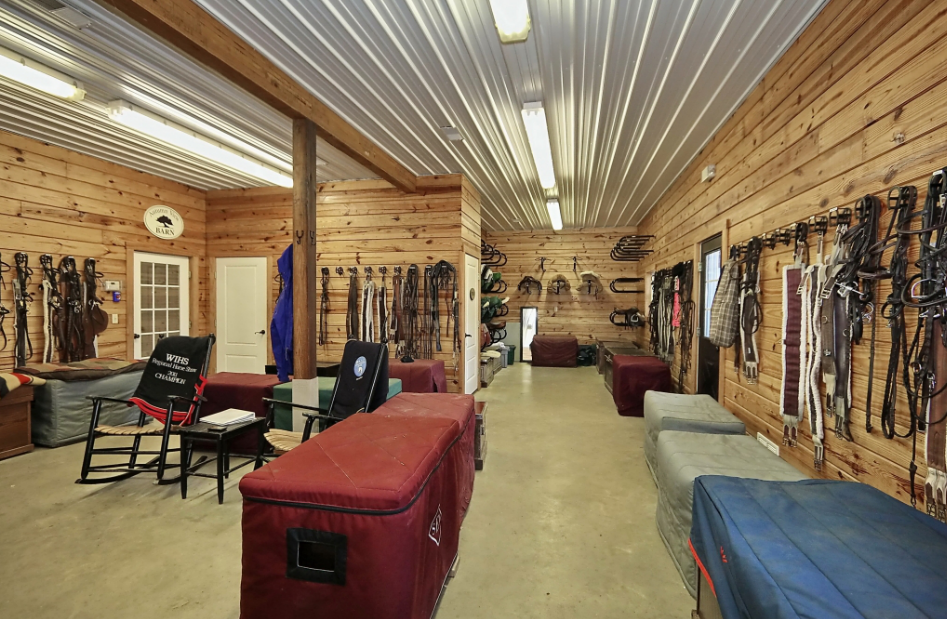
In this inaugural edition of EN Cribs: Aiken Edition, we’re taking a look at Will Coleman’s stunning winter base at Quarter More Farm in Aiken, S.C. The grand prix field is large enough to accomodate two international dressage arenas, as well as a large jumping area. The open-stall concept in the 22-stall barn provides a wonderful airy feel to the barn, and the double-dutch doors on the back of the stalls allow the horses to see what’s going on outside. I’m also particularly loving that beautiful, bright tack room. What’s your favorite part of Will’s Aiken facility?

All photos were originally posted on Will’s Twitter account (@ColemanEventing)

Best Clinic Reports of 2012

Clinic reports have long been a reader-submitted staple on Eventing Nation. Taking a clinic with a top rider or trainer offers an incredible way to expand and stretch your riding knowledge and ability. What better way to fully capture and remember every detail from the clinic than to type up a report and send it to [email protected]? Grid diagrams, quotes from clinicians, photos, and your analysis — we want to see it all firsthand. Here’s a look at the best clinic reports we published  in 2012. 

_____________

Clayton Fredericks removes a noseband during the clinic.

1. Clayton Fredericks Clinic, submitted by Denya 

Why we loved it: We’re total suckers for diagrams of grid exercises that really challenged you and your horse. Denya included two excellent diagrams of Clayton’s clinic exercises, which consisted of poles and low jumps set on a variety of creative angles. She also included this great tip from Clayton: “Watch your horse’s ears. If he is listening to you, they will be turned out to the side. If they are forward, he’s not paying attention to you.”

Our favorite part:  Clayton removed 12 of the 30 horses’ nosebands during the clinic, explaining that tight nosebands allow the horse to lean and argue with his neck muscles. “Without a noseband, they only have their lower jaw, which offers them no leverage and relatively little strength. Having taken the offending nosebands, Clayton preached soft hands, give when the horse responds — and to the amazement of many, it worked,” Denya said. Many thanks for submitting such a super clinic report, Denya!


George Morris shows off his classic scowl during the clinic. Photo submitted by Katie Murphy.

2. George Morris Clinic, submitted by Katie  Murphy 

Why we loved it: Eventer Katie Murphy audited a George Morris clinic and found herself agreeing with many of his crotchety opinions. “Day by day, I found myself aligning with George. He and I shared many of the same thoughts: perfection begins in the details; you must work through a problem not remove it from the equation; be bold and achieve your objection through accurate, well-planned riding,” Katie said.

Our favorite part: Katie included a list of George’s best quotes from the clinic, which include some true gems, like: “I’m not putting up with this meek and hapless riding” and “You sit there like a soup sandwich.” Gotta love George! Many thanks for sending in this great report, Katie!


Amy practices the puzzle of poles exercise.

3. Peter Atkins Clinic, submitted by Amy Grayson

Why we loved it: A broken leg didn’t slow Peter down during this clinic. He kept all the riders on their toes, especially during his puzzle of poles exercise, which he used to prepare the riders to jump. We also loved that Peter walked Amy through jumping on a diagonal, a challenge she’d never tackled. That’s what clinics are all about: trying new things under the watchful eyes of a pro.

Our favorite part: “In a way that only Peter can do, he asks each rider question after question, partly for us to know the answer, but mostly to get us thinking for ourselves and analyzing every single moment we are on our horses. I will give you a tip about riding with Peter: no matter how dumb an answer, he doesn’t care as long as you NEVER say, ‘I don’t know,'” Amy said. Thanks for sharing your report with EN, Amy!


Mary jumps during the clinic with Colleen.

4. Colleen Rutledge Clinic, by Mary Getsey Bernier 

Why we loved it: Mary hadn’t been on a horse for two months and hadn’t jumped in a year when she took this clinic with Colleen Rutledge. We love the way Colleen worked with Mary to have her back to jumping in no time. “Colleen helpfully pointed out I tend to not look at the top rail of my fences as I approach them. How can I see what I’m jumping if I don’t look at it? Colleen explained I must focus on the top rail of the fence, on the approach, until it cleared my horse’s ears,” Mary said.

Our favorite part: “Jumps and poles were always set up for me in a lesson, without explanation of distances.  I knew the basics of how far apart to set poles and jumps, but Colleen spent time going into detail about why the distances were set as they were, for the whichever particular exercise we were working on, at that particular moment,” Mary said. Kudos to Colleen for taking the time to explain distances to Mary. Great job on this report, Mary!


Oliver works with riders during the clinic.

5. Oliver Townend Clinic, by Jessie Widner

Why we loved it: Jessie included a lengthy explanation of Oliver’s warm-up routine, which consists of (1) giving the horse 5-10 minutes to just walk, trot and canter around however he wants, (2) starting work and geting the horse to listen, and (3) transitions and change of pace within the trot.

Our favorite part: “The most important point Oliver made to every rider is the need to stay as still as possible and not interfere too much with their horse before the fence. He stressed the importance of coming in with a powerful canter and letting the horse do its job,” Jessie said. A big thanks goes to Jessie for sending in this report!

EN’s Got Talent: Accolade Poised for a Promising Future

We hear all the time about horses at the top of the sport, but what about the next generation of equine talent? EN’s Got Talent introduces the future superstars of the sport, interviewing riders about how they’re tackling training with these youngsters. Have you spotted a spectacular young horse at an event you think should be highlighted in this column? Tip me at [email protected].

_____________________

Kim Keeton and Accolade show jump at the Aldon International CCI* in 2011. Photo by James Pyne Photography.

Last week we met Dr. Kim Keeton and Accolade, a 7-year-old Swedish Warmblood stallion who cut his eventing teeth in England when Kim, an equine vet, crossed the pond to further her career. “Bear” competed in England during his 5- and 6-year-old seasons, concluding 2011 with a successful run in the Aldon International CCI*, his first one-star. After Bear had adjusted to the different tracks in England, Kim found it challenging to bring him back to preliminary level in the U.S. for the 2012 season. “I struggled with his age and how talented he was, because I didn’t want to push him to intermediate too soon,” Kim said. “I did find that some of the preliminary tracks didn’t hold him, just because he’d been in such a different environment. In England, questions come up very quickly because you don’t have the long galloping tracks. Here we have a lot more gallop, jump, gallop, jump, with a little bit of a gallop to get them back. Even moving up to intermediate, I struggled to grasp how to gallop so that he was prepared for the questions.”

Bear won his preliminary division at Poplar Place in May before making his intermediate debut at Chattahoochie Hills later that month, where he placed 11th. The pair finished fifth at the American Eventing Championships in their preliminary division before finishing out the season with a 10th place finish in intermediate at Poplar Place. After the eventing season wrapped up, Bear and Kim spent the fall show jumping in the 1.20-meter classes. “It made a huge difference,” Kim said. “He had a couple clears, which for a horse that was having two to three down was quite good. He’s young and bold cross country, and what helps him in the cross country is what hurts him in the show jumping. If I was able to jump 10 horses a day, I might be able to fix it a little quicker, but that’s just not the case.”

Kim Keeton and Accolade go cross country at the Aldon International CCI* in 2011. Photo by James Pyne Photography.

Kim is very pleased with how Bear finished the season. He’ll start out 2013 going intermediate again, and while Kim knows “plans are made to be broken,” she has some big goals for this year. “If all is going well, I’ld like to see him do the Ocala CCI2* this spring,” Kim said. “Long term, a very loose goal is to do the CCI2* at Fair Hill this autumn.” Kim doesn’t know what the future holds for this horse, but she’s confident he has the talent to go far. “I will take him as far as he is willing to take me,” Kim said. “I would love to say that the horse is a four-star horse. I’ve never gone Advanced, so I think saying that is a bit premature. But he certainly has the scope and the talent on the flat. It’s really about if he wants that as much as I do.”

In addition to watching Bear develop into an upper-level prospect, Kim also has the incredible privilege of watching his little bear cubs, as she calls his foals, carry on his legacy. “I did not want him breeding until he had proved himself,” Kim said. “He was bred to be an event horse, but I wanted him to prove that first.” Kyle and Jen Carter ultimately convinced Kim to breed Bear as a 4-year-old after it was clear he was going places. The baby — named Lola and coming 3 this year — is out of Jen’s four-star mare Leaps and Bounds, who is bred back to Bear and due in February. Kim currently has five mares in foal to Bear — ranging from a mare that ran a two-star in England to a pony she kicked around intermediate — all due around Memorial Day.

–

http://www.youtube.com/watch?v=yZXcih0DqGw
Kim and Bear at the Aldon International CCI* in England in 2011

–

Whether Bear makes a bigger name for himself as an upper-level event horse or a prolific event horse sire — or both — remains to be seen. In the meantime, Kim plans to enjoy the journey and appreciate each day she has with this special horse. “I know the horse like the back of my hand,” Kim said. “He was foaled in my lap; I was the first thing he saw. It’s just really neat to see the horse grow and change. He certainly has far exceeded any expectations I had for him. He’s a pleasure to be around and a joy to ride. Every day I get on him and feel lucky to have something like that in my barn. Realizing I had a vision and seeing that he’s also realizing it is a big deal. I’m hoping his babies will continue his legacy.”

–

 Next week on EN’s Got Talent: We’ll bring some girl power to the blog when we meet Sayyida, a 6-year-old Trakehner mare owned by Sean Tennant and Kyle and Jennifer Carter. “I originally bought Xena to have her compete and then to add her to my string of broodmares,” Sean said. “I began having some major medical problems soon after and decided I needed to sell off the others and try to keep my real future star any way that I could. I approached Jen and Kyle in October of 2010 and we agreed to become partners on Xena. They took her into their program after she had just a couple of weeks under saddle.” Xena has come a long way since and is currently running preliminary with Jen in the irons. Mac Tennant, Sean’s father, tipped me about Xena. Thanks for the tip, Mac!

Should Dogs be Banned from Horse Trials?

These two dogs enjoyed Rolex last year. Photo by Teresa Craig.

The debate about whether or not dogs should be banned at horse trials seems to rear its ugly head every year, and for good reason. Every time a dog slips its leash and chases a horse on course, it puts the welfare of the dog, horse and rider at risk. But there are compelling opinions on both sides of the debate, which Horse & Hound addressed in its most recent issue. The H&H Online forums have been lighting up with comments on both sides of the debate, although H&H said most comments seem to favor banning dogs. An informal poll posted in the forums showed that 63 percent of responders were in favor of a ban, according to Horse & Hound. “Put yourself in the rider’s place. How would you feel if a dog ran out at you, put you and your horse off and totally ruined months of training?” one commenter said.

But the officials of major British horse trials told Horse & Hound they have no intentions of banning dogs; rather, it seems horse trials are going out of their way to welcome our canine friends. Hugh Thomas, director of Badminton Horse Trials, said a ban has been considered every year for the past 30 years; but Badminton has never pulled the trigger. “When one of those infernal long retracting leads gets wrapped around a visitor’s ankles or a loose dog chases a horse on the cross-country course, we veer towards a ban, but so far not enough actually to implement one,” Thomas said. Badminton believes dogs contribute to the wonderful atmosphere of a big horse trial, which is why the event provides a dog holding area, as well as plenty of bags to facilitate poo clean-up.

Sadly, while there are thousands of responsible dog owners who keep their pooches leashed and poop scooped at horse trials, there are others who neglect to properly contain their dogs and clean up messes. And, of course, this problem isn’t isolated to British events. We’ve all seen loose dogs and had to dodge dog poo at U.S. events. The main concerns cited by commenters in the H&H forums were dogs chasing horses, owners failing to clean up after their dogs and threats to animal welfare. But are those reasons sufficient enough to outlaw dogs from attending horse trials? Weigh in, EN. Do you think dogs should be banned from horse trials? How can horse trials better address the dilemma of loose pooches, dog poo and animal welfare? Many thanks to Horse & Hound for addressing this issue.

George’s Wednesday News & Notes from Horse Quencher

As seen on Horse Nation

Yesterday was National George Morris Day, as declared by Horse Nation. We celebrated this momentous occasion by sharing some little known facts about George Morris, like: “George Morris once won the Maclay Finals on a unicorn” and “The only time George Morris was wrong was when he thought he made a mistake.” Head on over to Horse Nation to read the rest of these fascinating facts. We also commemorated this special day by posting a snippet of a classic George rant from the training sessions held last weekend in Wellington. The gist of his rant: “Desperate Housewives weekend warriors with horses” taking an “a la carte sloppy gimmicky approach” to modern riding means the sport is doomed. Ah, George. You sure know how to work a crowd. And we love you for it.

Your Wednesday news:

Lauren Billys reflects on an eventful 2012, which she wrapped up by winning the Galway Downs CCI** aboard Ballingowan Ginger. Representing Puerto Rico by donning her pinque coat at Galway was one of her proudest moments, she said. She looks forward to graduating this year with a degree in chemistry and enology, the science of winemaking. [COTH]

Tickets are now available for the Badminton Horse Trials, which will run May 2-6, weather permitting; flooding washed out the 2012 event. For the first time ever Badminton will serve as the final leg of the Rolex Grand Slam of Eventing, which William Fox-Pitt seeks to clinch after his victories at Burghley and Rolex in 2011 and 2012, respectively. [British Eventing]

The Paralympics helped change the way people perceive disabilities, according to a study from Bournemouth University. The study found people felt more comfortable about discussing disability sports after watching the Paralympics, and that they were excited and moved by the display of talent and pride shown by the athletes. Go Paralympics! [Horsetalk]

The International Eventing Forum will feature David O’Connor and Mark Todd, among other leaders in the eventing world. Scheduled for Feb. 4 at Hartpury College in Gloucestershire, England, the forum is widely regarded as a must-attend event for British eventers. David will address solutions for challenging cross-country scenarios. [British Eventing]

The Area I Annual Meeting will be held Sunday at the Springfield Marriot in Springfield, Mass. Call-in bids will be accepted for the silent auction; available items can be viewed on the Area 1 website. Guest speaker Steve Kraus, head of farrier services at the Cornell University College of Veterinary Medicine, will speak on conformation and soundness. [USEA]

Best of Twitter: Will Coleman (@ColemanEventing) is making us all crazy jealous with his drool-worthy Twitter photos of Quarter More Farm, his Aiken homebase for the winter. [Entrance] [Stalls] [Dutch Doors] [Barn] [Tack Room] [Barn Aisle] [Dressage Ring] [Jump Field]

http://www.youtube.com/watch?v=yO1zPGT6NFw
Meet Metro the Painting Racehorse, as seen on HN 


RRTP Thoroughbreds Prepare for Their Debut

Gunport continues to be the most popular Thoroughbred thus far in the 100-Day Challenge. Photo courtesy of the RRTP Facebook page.

The four Thoroughbreds made famous by the Retired Racehorse Training Project’s 100-Day Challenge are preparing for their 6-week performance judging at the Maryland Horse World Expo, which will be held Jan. 18-20 at the Maryland State Fairgrounds in Timonium, Md. Thousands of fans have followed the training journey of these Thoroughbreds on RRTP’s YouTube channel, and if you live near Maryland you’ll get the chance to see the stars of the show go in person. I’ll be on the ground covering the expo for EN, so if you can’t make it to Maryland you can still follow along on the blog. I posted a 30-day update on Alluring Punch, Suave Jazz, Declan’s Moon and Gunport last week before their 30-day videos were published, so here they are now for your viewing pleasure. All the horses — sans Declan’s Moon, who lost a week of training due to a stone bruise — are jumping small oxers and grids now. Gunport continues to be the most popular of the four by far. Her petite build, flashy movement and dainty personality have captured the hearts of many. Which of the four Thoroughbreds is your favorite?

http://www.youtube.com/watch?v=oQzCHGQlDuA
Gunport at 30 days 

http://www.youtube.com/watch?v=kwIHamIVIcY
Declan’s Moon at 30 days

http://www.youtube.com/watch?v=Kz_2SEyY-zY
Alluring Punch at 30 days 

http://www.youtube.com/watch?v=m1Xjz92TMJw
Sauve Jazz at 30 days 

Winter Q&A: Volume 6 with Doug Payne

The Winter Q&A Series gives Eventing Nation readers a forum to ask their most burning winter-training questions. Panelists Katie Murphy, Doug Payne, Denny Emerson and Jennie Brannigan will answer reader-submitted questions through March, with their answers appearing each week on the blog. Have a question for our panelists? Submit it to [email protected]. Doug Payne is answering today’s questions.

——————————

Manoir De Carneville enjoys a snowy hack. Photo courtesy of Meg Kep.

–
Q: My horse was laid up most of 2012 with an injury. She was cleared by the vet to begin light work — as in long, slow distance. For the next 2-3 months I’ll be limited to the outdoor ring and on some weekends, an indoor. What do you recommend for keeping a clever mare’s mind entertained while walking for most of 45 minutes, with limited options for ground poles and the like? (Submitted by EN reader Kathryn)

Doug: It’s always a challenge to keep their mind busy with limited options! I would want to speak with your vet to find out details about the injury. I think you’ve got to find out your limitations before going forward. Regardless of what competitions are on the horizon, be conservative; you’ll have a better horse for it in the end!

Find out from your vet if you’re able to include any or all of the following: ground poles, lateral work, how much trot or canter, jumping, etc. Once you have a complete idea of your horse’s capabilities and limitations, your goal should be to keep your horse constantly thinking and on his toes. Look over your dressage tests from the past year and try to pinpoint weaknesses that need improvement. The weakness may actually be a trait found in more than one particular movement. Maybe your horse is prone to get a bit crooked and fall onto the right shoulder consistently. Leg yields to the left, turns on the haunches, or half passes may help tremendously.

It’s also a great time to work on collecting and extending the walk with ground poles, or, better yet, work on that free walk. I would say stretching walk and trot are the two movements in tests that riders throw away the most points, and the walk is x2! Keep busy and come out of the injury ready to win.

–
Q: Quarter sheets — to use or not to use? My horse is fully clipped and everyone in my barn uses quarter sheets while warming up. But it seems like one more accessory I’m not sure I really need. As long as my horse isn’t visibly shivering, do I really need one? (Submitted by EN reader Kelly)

Doug: I do think they are beneficial, especially when the horses are working hard. If it’s below 45 degrees and fully clipped, our horses generally use them. They stay in place throughout the ride, and will keep their hindquarters working well. Often times it does not appear as if your horse is cold, but without insulation they can easily cramp. Would you want to go for a long run outdoors in a T-shirt?!

Quarter sheets can be very important with horses who have tied up in the past; keeping them warm will help dramatically. Regardless if your horse has a history or not, it’s better to be safe than sorry. Quarter sheets can also be very useful for longer walks/hacks outdoors in the cold and wind, although a full cooler to help keep YOU keep warm is preferable at times!

–

Q: It’s not even January and I’m already tired of riding in I can tell that my horse is also getting bored and generally uncooperative. I try to keep our rides different and interesting so she doesn’t lose interest, but I always find myself drifting back to working on the same things over and over — the things I know I need to work on. How can I keep my mare engaged while still working toward accomplishing my goals over winter? (Submitted by EN reader Jesse)

Doug: It’s best to check back with the past year’s competitions, as mentioned in Kathryn’s rehab question. Identify your weaknesses and do your best to devise exercises to improve them. I’ve always looked forward to the winter indoors; it’s a great chance to iron out all of the shortcomings you’ve been trying to hide from the judges all year.

Ground poles and cavaletti can be excellent. Use them to improve your horses strength in all three gaits, as well as a means to improve your ability to lengthen and shorten your horse’s stride. In addition to improvements to be made on the flat, use your time indoors to improve your horse’s quickness when jumping. Regardless of how small you indoor is, build gymnastics like they’re going out of style. Bounces and combinations can be set on straight lines as well as on circles and figure 8s. There are a number of great books out now, which have a wealth of exercises bound to spice up your dull winter indoor blues. Get creative and be ready to win when the ground finally thaws.

Fighting the Winter Doldrums

Here’s a fun video sent in by EN reader Calli Krebs, who is fighting winter boredom in the frozen tundra of Cleveland by making music videos of her equally bored horse. Way to be creative, Calli! You can make your own music video of your horse by downloading VidRhythm, the free iPhone app Calli used to create the video. I’m hooked already. Be sure to send in any videos you make to [email protected].

From Calli:

“With no shows all winter in Ohio, we have to find ways to entertain ourselves. Calli Krebs and Blithe Hill Troubadour found some winter fun at their barn Blue Ridge Farms in Cleveland, Ohio while Troubadour became a one-man show and took to his name as a ‘troubadour!’ … sorta ;-)”

Sinead Halpin’s New Digs

This aisle houses the horses of Team SHE at Autumn View Farm in Long Valley, N.J. Photo courtesy of www.autumnviewfarmnj.com.

Sinead Halpin recently moved from her former base at Fieldstone Farm in Pittstown, N.J., to a stunning new facility, Autumn View Farm in Long Valley, N.J. The farm is seriously impressive and certainly has the wow factor when you drive up. Sinead currently shares the facility with Amanda Flint, a Grand Prix show jumper who has a large string of horses and students. About 40 horses are currently stabled at the facility, with 10 of those being in Sinead’s program. More horses are coming in for training with Sinead this month. Head groom Meg Kep indicated there will be closer to 15 horses in the program by the time Team SHE leaves for Ocala on Jan. 31. Here’s a tour of the facilities. I actually took photos for my own tour, but the photos from www.autumnviewfarmnj.com are much better than mine — and weren’t taken during a blizzard — so enjoy!

Facility specs:

  • 200 X 300 outdoor arena with stone dust footing
  • 80 X 200 indoor arena with dust-free footing
  • Tack room with viewing lounge to indoor arena
  • Two wash stalls with hot water and heater
  • Two grooming stalls
  • Multiple turnout paddocks
  • Three-horse walker

Photos courtesy of www.autumnviewfarmnj.com

USEF Publishes Eventing Rulebook for 2013

The USEF just published its 85-page rulebook for eventing. While the rulebook covers every aspect of the sport — from legal bits to jump specs — the most critical part of the 2013 rules is the USEF’s excellent breakdown of the new FEI qualifications. I know the USEF has been working very hard to seek clarification from the FEI in order to publish the most accurate information possible in the rulebook, so I’d like to extend a big THANK YOU to those who developed the new language for the 2013 rulebook. While you’ll want to flip through the entire rulebook to view other updates and changes, the FEI qualifications start on page 72 and go through page 76. I included pertinent information below from the rulebook’s guidelines for the new FEI CCI/CIC qualifications. Click here to view the new 2013 USEF eventing rulebook.

Do You Use a Neck Strap?

Lainey Ashker rocked this blingy neck strap during the PRO Bareback Show Jumping Challenge at Fair Hill last October. Photo courtesy of Alec Thayer.

Neck straps have been on my mind recently after spending two days at Sinead Halpin’s barn during the Howdaa Working Student Bootcamp. When we were tacking horses — whether for a simple hack or a jump school — head groom Meg Kep made it clear that each horse always gets a neck strap. Sinead always rides with one — always. Then last week An Eventful Life published this great post with quotes from William Fox-Pitt, who discussed his rationale behind always using a neck strap himself.

“When I was learning to ride my mother always made me wear a neck strap because she felt it wasn’t fair to pull on the horse’s mouth just because you may have lost your balance. We would get into a lot of trouble if she saw us (my sisters and I) ride without one. As I progressed I came to appreciate that a neck strap was a really useful piece of equipment in so many situations. Most of my horses will stop by using a neck strap so on the occasions when those horses spook or go a little faster than I want the neck strap can be used rather than always relying on the rein contact. These days I will rarely get on a horse without a neck strap — it would just feel as if something was missing.” — William Fox-Pitt, from An Eventful Life

That got me thinking — why don’t I use a neck strap? I’m just your typical adult amateur. I botch distances just as much as the next person. I ride horses that get spooky and silly on hacks. While I always strive to keep my balance and never hit a horse in the mouth, I’d be a fool to pretend it never happens. An Eventful Life points out that neck straps have long been associated with beginner riders. But when I looked through photos in our EN Media Library, I found many riders who always use a neck strap, like William Fox-Pitt, Caroline Powell, Sinead Halpin and Becky Holder.

I can think of many times in the past where having a neck strap would have prevented me from some truly outrageous “freestyle” moments when jumping. What about you, Eventing Nation? Do you ride with a neck strap? Why or why not? I feel like I’ve had a light-bulb moment and will be riding with a neck strap from now on. Time to go wrangle up a stirrup leather, or buy a blingy belt like Lainey Ashker did before the PRO Bareback Show Jumping Challenge at Fair Hill.

Sunday Links from Dubarry

Carrick, left, and Sloopy, #14 and #19 on the USEA High Score Horses List, enjoy their retirement in Southern Pines. Many thanks to Ellen Williams for sending in this great photo!

Eventers from all along the East Coast have started migrating south to Aiken, Ocala and other warmer climates. While in reality this only signifies that the winter weather is about to become even more miserable for those of us unlucky enough to be stuck in northern states, it also means that full-blown eventing season is right around the corner. The season kicked off this weekend with the Ocala Horse Properties Winter I Horse Trials, which wraps up today. For those of you lucky enough to be competing already, remember us poor frozen northerners when you’re out riding in a T-shirt. Spring come quickly.

Events this weekend:

Ocala Horse Properties Winter I HT: [Website] [Entry Status] [Ride Times]

Your Sunday links:

TBs Dominate U.S. Eventing’s All-Time Leaderboard

No Stirrups on Day 4 of George Morris Training Sessions

Rules Tightened Around Sales of Mustangs, Burros

Owners Need 2.5 Million Pounds to Buy Valegro

Ride in a Clinic with Charles Plumb and Susan Beebee

William Fox-Pitt Always Rides with a Neck Strap

Disaster Preparation for Horses

http://www.youtube.com/watch?v=-T3cxeniW5Q
The USEF recaps Day 1 of the George Morris Horsemastership Training Session


Meet On Cue: Sinead Halpin’s Newest Superstar

Meg Kep rides On Cue, Sinead Halpin's newest upper-level prospect.

–

Sinead Halpin announced her new syndicate last month, which offers shareholders the unique opportunity to own shares in both Manoir De Carneville and On Cue, her newest upper-level prospect. I met Cue in person during the Howdaa Working Student Bootcamp last weekend, and I can assure you that she is fancy fancy fancy. Kristin Michaloski has purchased the first share in the syndicate, which I imagine won’t have available shares for long considering the quality of these horses. Cue is a 6-year-old Selle Francais/Thoroughbred mare bred by Jolyse and Alyse Clancey of On Horses in North Yorkshire, England. Helen Bell took Sinead on a horse-shopping spread in northern England after Burghley, and Sinead ultimately brought Cue back with her when she returned home.

“She was the first horse Sinead and I have ever agreed on,” head groom Meg Kep said. “When we first saw her standing on the trailer we could tell right away how nice she was. Then Jolyse brought her out and flatted her, and we were both wowed.” Meg said she and Sinead couldn’t stop sharing secret grins; they both could tell this mare has a big future ahead of her. “She’s Sinead’s type: light and floaty,” Meg said. “She’s an impressive mover and is just a nice horse all around,” Meg said. “She’s got spirit. When she jumps she flips her tail up; it’s really fun to watch. She definitely has that saucy French personality. The difference between her and Tate is that you can see all her emotions in her big, beautiful ‘Radar’ ears.”

Cue competed at pre-novice in England, which is the equivalent of training level in the U.S., before coming to the States. She was ready for preliminary, but the flooding and heavy rain in England prevented her from moving up. Cue’s first event in the States was at the Horse Park of New Jersey, where she and Sinead won their training division. The mare completed the 2012 season at the Virginia Horse Trials, where she scored a 26.8 in dressage, ultimately finishing second. “She’ll move up to preliminary in the spring,” Meg said. “When they are this naturally talented it’s easy to forget how young they are. What’s most important is making sure she is fit and ready before moving her up. There’s no point in rushing her; she’s going to be so nice.”

–