Articles Written 2,016
Article Views 5,519,084

Tilly Berendt

Achievements

Become an Eventing Nation Blogger

About Tilly Berendt

Latest Articles Written

Day One at Belton: The Funnell Factor

Piggy French and Vanir Kamira in front of Belton House. Photo by Tilly Berendt.

Is there anything more British than a stately country home? Yes, perhaps–a stately country home nestled within an expansive deer park, cocooning an enclave of sporting activity; to wit, the pulling together of the very best event horses in the country as a centrepiece, with dog agility, ferret racing, and an almost competitive consumption of tea dotted throughout as minor attractions. Welcome to Belton House: the first stately home international in the season, the second leg in the Tristar League, and our home for the next three days as we follow the highs, lows, and heroics of the hotly-contested Grantham Cup.

The breadth and depth of the field here is astonishing–the number of entries in the CIC3* hovers around 150, and the list of horses and riders coming forward reads like a veritable who’s-who of eventing. As at the ill-fated Burnham Market CIC3*, many of the Badminton entries are here for a final-and, in many cases, first-pipe-opener before contesting the impending four-star.

Willa Newton and Moonlight Dance S – 13th overnight. Photo by Tilly Berendt.

Little more needs to be said about the unprecedented spate of cancellations in the UK and Ireland this spring, but with over 50 days of competition cancelled in the UK alone so far, horses across the levels are over-fittened and underrun. Ordinarily, a Badminton-bound horse would have a run or two in an Open Intermediate to get back into the swing of things, before a final run at CIC3* with the aim of riding a fast clear. This year, the riders of these horses find themselves in the tricky position of having to somehow do both–give their horses what amounts to an early-season confidence-building run, while equally needing to run them against the clock and ensure that both their horse’s and their own reaction times are quick and accurate. Team coaches and performance managers are out in force to ensure that the correct decisions are made this weekend, particularly with the looming prospect of the World Equestrian Games later this year.

Overnight leaders Pippa Funnell and MGH Grafton Street. Photo by Tilly Berendt.

Where Burnham Market’s two days of dressage saw a remarkable number of personal bests, today’s action saw scores trending somewhat lower. But one factor remained consistent: as she had at Burnham Market, Pippa Funnell swept decisively into the lead.

This time, it was with the promising 10-year-old MGH Grafton Street. Produced as a four- and five-year-old by Ireland’s Padraig McCarthy, before being campaigned briefly by Aaron Millar and Andrew Nicholson, the horse is one of Pippa’s great hopes for the future. His results speak for themselves: but for two unfortunate rails in the final phase, he would have won the CCI3* at Blenheim last year, and he’s finished in the top 10 in 11 of his 15 international runs.

“He’s a lovely horse to ride in the dressage, but what’s so exciting is that he’s improving every time he goes out,” says Pippa. “The more he strengthens up, the more expressive he’s going to get, and he’s a nice horse to do a test on. He does normally score quite well so it’s nice to feel that all the time he’s getting more mature and stronger.”

On the possibility of finding herself in a competitive position going into Saturday’s jumping phases, Pippa is pragmatic and forward-thinking.

“It’s still very early days–I need to see how he feels and see what the ground is like. I think an awful lot of this horse; he had a great result at Tattersalls in his first three-star and then went very well at Blenheim–if he hadn’t had the rails he’d have won it. I know you can’t say ‘oh, if only this had happened…’ because the sport is always like that, but this is a horse I think so much of and am so excited about – and anyway, it’s a long time until Sunday!”

Emma McNab and Fernhill Tabasco – the early leader’s of the first day of dressage. Photo by Tilly Berendt.

Australia’s Emma McNab and Fernhill Tabasco took an early lead with their score of 29.6, the only sub-30s score before the lunch break. Only a 10-year-old, the Tabasco Van Erpekom gelding finished in ninth place in both the 8/9 year old CIC3* at Blenheim and his first four-star at Pau last season, and fourth in the eight- and nine-year-old class the season prior. Today, he proved his consistency in the first phase, almost equalling his 2017 Blenheim score and producing a classy, mature test. He is aided, perhaps, by the fact that he and Emma have already managed a no-pressure run this season–they contested the OI, rather than the CIC3*, at Burnham Market, notching up a slow clear round.

Piggy French and Vanir Kamira are joint third overnight. Photo by Tilly Berendt.

Their lead was usurped early in the afternoon by another graduate of Pau’s top ten. Ros Canter – a Lincolnshire local and member of the gold medal-winning British team at the European Championships last year – rode Zenshera to a 28.9. This would prove enough to clinch them joint-third place overnight, an honour shared with Piggy French, who, aboard Burghley runner-up Vanir Kamira, performed a flowing, pleasant test.

Piggy was one of several riders to benefit from an intensive warm-up with dressage coach Ian Woodhead, and it was interesting to see how, even at this level, it’s nailing the basics that gets the job done. Throughout the day, he implored his riders not to be afraid to ride forward from their leg to their hand and to lift and straighten their upper bodies in order to allow their horses to lift in front, too.

Flora Harris and Bayano. Photo by Tilly Berendt.

Flora Harris and Bayano posted a 29.2 to round out a very close top five, while fan favourites Gemma Tattersall and Arctic Soul didn’t quite repeat their polished personal best from Burnham Market. They sit in 10th overnight on 32.3.

Jonty Evans and Cooley Rorkes Drift after their test, which held the lead for most of the afternoon. Photo by Tilly Berendt.

Second-placed by just 0.3 points at the end of the day, and a very popular temporary leader, was Ireland’s Jonty Evans riding Cooley Rorkes Drift.

“I was very pleased with him,” says Jonty. “He was very rideable in the arena, and felt like he’d really come on another gear from Burnham Market, where he did a good test–but here he just felt a bit more polished.”

Jonty Evans and Cooley Rorkes Drift sit in second overnight. Photo by Tilly Berendt.

Jonty and ‘Art’ are entered for Badminton, but each of their planned spring runs has been cancelled–they managed a dressage test at Burnham Market before the event was abandoned. That this CIC3* is to be their first and only run before Badminton presents its own unique dilemma: how to tackle the course. Jonty’s approach? Adaptability, every step of the way.

“I’ll probably see what the ground’s like on Sunday. Then, I’ll leave the start box and go to the first three fences in a competitive manner, and just see how he goes. If he feels like he needs it, I’ll slow down, and if he doesn’t, I’ll let him run on. When they haven’t had any runs, it’s really hard to know where they’re at, but I think that here, Mark Phillips has built us a track that will prepare us for Badminton, and if you can go around it in a good competitive pace then you’ll find yourself in a good place pre-Badminton.”

Tension marred Alex Bragg and Redpath Ransom’s test – with fit horses, too few spring runs, and an atmosphere in the ring, this wasn’t an uncommon problem today. Photo by Tilly Berendt.

With less than a point between the top five, the removal of the dressage multiplier is already showing its worth at Belton. As a result, it’s likely that we could see placings won and lost by mere seconds as we move into the jumping phases on Saturday. In the meantime, however, tomorrow’s dressage section list contains an embarrassment of riches where talented, low-scoring combinations are concerned, so stay tuned tomorrow as we bring you the scoop from the centreline, all the information you need on the movers and shakers, and a preview of Belton’s testing track, too.

The top ten after day one of dressage at Belton CIC3*.

Belton links: Live scores, EN’s coverage, times

Friday Video from World Equestrian Brands: That Sounds…Reasonable?

The equestrian mark-up phenomenon – it’s a real thing. Ever been shopping for buckets? $5 at Home Depot, $25 at your local tack shop. Every. Damn. Time. Just whispering the word ‘horse’ near an item makes its value quadruple instantly.

But hey, we’d all be lying to ourselves if we said we didn’t fall for it. Our horses eat better than us, they dress better than us, and, frankly, they smell better than us – and it all comes at a glorious premium. And where do we get duped most dramatically? In the murky midst of the multimillion dollar supplement industry. Turns out, they’re an easy sell – as the German Riding Instructor deftly demonstrates in this week’s Friday video.

Go eventing – and, uh, shopping.

https://www.facebook.com/germanridinginstructor/videos/1961879224066999/


The Badminton 2018 Course: Unpacked and Explained

https://www.instagram.com/p/BhbY0ZlHNxB/?tagged=mmbht

Most of the UK’s spring season has been a complete washout, with 47 days of eventing lost so far to the non-stop rain. After the partial abandonment of last month’s Burnham Market International, the murmurings began — what would this mean for the Mitsubishi Motors Badminton Horse Trials, due to take place in the first week of May, and looking ever more threatened by the deluge?

Event director Hugh Thomas and course designer Eric Winter put paid to those concerns yesterday, revealing the course for this year’s event and their confidence in its ability to run.

Winter’s sophomore effort is visually very similar to his course last year — it’s rustic, it celebrates an intermingling of the golden era of classic eventing with modern safety technology, and, well, it’s big. But when you get into the nitty-gritty, it becomes obvious how much thought has gone into creating a course that will amply challenge the best of the best without asking impossible questions of less experienced combinations.

The course will run in the opposite direction this year — counter-clockwise around the park, as opposed to the clockwise trajectory of 2017 — and makes use of artificial terrain challenges, as well as those found naturally on the estate. The optimum time is yet to be confirmed, but is provisionally set at 12 minutes, with 45 jumping efforts over some 6,840 metres, and an average speed of 570mpm.

The Course

This year’s course begins, familiarly, in the main arena, with the beautiful dressed ASX Starter flowerbed starting off proceedings. With its horse-friendly colour spectrum, sloping profile, and obvious groundline, it’s an easy fence for these experienced combinations to tackle. It’s the vibrant atmosphere of the main arena that becomes the distraction here — the likes of Andrew Nicholson and Nereo won’t bat an eyelid at the crowds, but first-timers here will have to exercise discipline to set off in sync.

Fence two.

As they clear the first fence and gallop out of the arena, they’ve got a reasonably long stretch to prepare for the second fence, the Rolex Feeder. Here, they can jump the left- or right-hand rolltop, depending upon the line they’re on, before heading up the hill. Again, this is an easy fence for the level, but Winter has been sly here — he recognises that most horses and riders won’t be travelling at full speed yet, and as such, the long stretch between one and two is an easy way to steal crucial seconds on the clock from the competitors.

Fence three, the HorseQuest Hump, is set atop the first of the artificial mounds on course, which is new this year and, according to Winter, only likely to be used in conjunction with a fence when the course is run in this direction. It’s a set-up fence to prepare for the first combination on course; with its airy log atop the mound, it slightly disrupts the rhythm of the approach and requires both horse and rider to sit up, take notice, and ride actively and reactively.

Fence 4B.

This should put them in good stead coming into 4AB, the HorseQuest Quarry, which consists of a 1.15m wall with a steep landing side, and then a 90-degree turn to the left, up another steep bank, and over a second wall.

“The second fence shouldn’t be an issue — horses run up these banks and jump fences at the top really well,” explains Winter. “It’s the first fence that’s the issue — keeping the horse under control, having it so that it doesn’t run off with you. These horses are as fit as racehorses.”

There’s an alternative here, which sees the second wall on a straighter line, and likely won’t add much in the way of time penalties. But riding the direct route at 4ab can establish the control needed for the faster line at fence 5, the Rolex Grand Slam Skinny. This narrow ditch and hedge can be approached one of two ways — around the back of a tree on the approach, which allows for horse and rider to tackle it head-on, or inside the tree, which creates a steep angle and requires serious accuracy. Those who are in it to win it will look to save time by coming inside the tree.

Fence 6A.

Fence 6ABC sees the return of Huntsmans Close, with its trio of beefy logs. The first is wide and inviting, but riders mustn’t get complacent — with two skinny logs following on a tricky line, they must take off precisely where they intend to over A. There’s an alternative route, with a loop back around over a different B element, but this will waste time and disrupt the rhythm.

It’s time for a breather at fence 7, the Traders Table — though its dimensions are almost maxed out, and it’s one of the biggest fences on course, it’s also one of the most straightforward.

Fence 8.

Number 8 is Wadsworths Water, and horses and riders will come to it after a long galloping stretch, so a conscious effort must be made to create the correct approach. The fence itself is a large A-frame hanging log into the water — the water itself isn’t visible until the last few strides, but the fence invites horses to take a confident leap in, because it presents so many options. The left-hand side of the log is over the water, creating an obvious groundline with the bank, while the right-hand side angles back over to dry land, leaving less of a rider-frightening gap, but also less of a visual cue for the horse to size up the fence.

Fence 9ABC.

At fence 9ABC, we enter Badminton proper. The Lake begins with an enormous, reasonably skinny log in, but there’s no time to land in a heap after the colossal initial effort. Our intrepid combinations must then head straight for the narrow brush in the middle of the water, before turning to the last — a skinny brush angled away from the approach, leaving the door wide open for a run-out to the left which, incidentally, would take the horses straight back to their friends at the start. Winter created a seriously influential lake last year, which rewarded riders who thought on their feet, and we could well see this making similar waves. The long alternative route takes riders around the back of the lake and probably won’t be a popular option.

After the lake, horses and riders will get to sail over fence 10, the Mitsubishi L200s — because who doesn’t like to jump actual pickup trucks as a bit of a breather? Surrounded by 15,000 spectators, but with one of the toughest questions on course behind them, everyone who makes it this far should get a good jump over this Badminton classic.

Fence 11.

Fence 11, the World Horse Welfare Gates, feature two identical gates. Competitors can go left- or right-handed over the gate of their choosing, which is airy, white, and tall — 1.20m, to be precise. Last year, some were caught out by trying to use this fence as a chance to save a few seconds — but this is a fence that must be respected and jumped straight on.

In front of the house, fence 12, the Formulate! White Oxers are big — 1.80m wide — and a classic Winter test of a rider’s street smarts. There are two oxers to choose from, and both are the same dimensions, but it’s up to the rider to choose which line will offer the best and most flowing ride for their horse. The rider who has a well-thought-out plan — and is able to adapt it on the fly — will be the rider who makes light work of this fence.

Next up is 13, the Stick Pile, which is one of the largest fences on course, and is on a straight line, which means that riders will have to make a real effort to balance and set up for the fence, lest they find themselves zooming along on a (speedy) half-stride.

Fence 16B.

At 14, 15, and 16AB, riders negotiate the Outlander PHEV Mound, which is one of the most difficult questions on the course. 14 is a large, open corner, and, on landing from it, competitors will gallop down into the quarry and over a wide oxer. Then, it’s up a choice of banks — either very steep or less steep — and over 16A, an airy rail at the top. 16B is another open corner, on a longer line from the steep bank, or a much shorter line from the less steep bank, so it’ll be up to the riders to decide which option will suit their horse — and their level of control at this point. The winding alternative route gives even more options, but will gobble up the time.

Fence 17.

Fence 17 is a new addition this year, and the Devoucoux Quad Bar is a classic rider frightener. The sprawling downhill timber fence is tall, wide, and gappy, but those who attack it will make it look easy. Expect this to produce some of the classic images of Badminton 2018.

Onwards from a big leap at 17 to a technical test at 18ABC, the Eclipse Cross Pond. The direct route is actually only two fences — an airy vertical into the pond is 18A, and a 1.20m high/1.40m wide timber oxer up a slope on the other side of the pond is 18BC. The alternative here takes out the slope but adds an extra fence — competitors will have to jump two oxers instead of one.

19’s Vicarage Rolltop is a maximum-height brush rolltop — but for all that, it’s a let-up on course before the next set of tricky questions.

Fence 20B.

The Hildon Water Pond at 20ABC features a seriously slow alternative route, but myriad run-out possibilities in the direct route. In this, they must jump A, a large woodpile, before shortening the stride sufficiently to sneak down a steep bank and over the trough into the water at B. The trough isn’t enormous, but its approach — and the cascade of water that will dance out of its underside — may catch out riders who haven’t prepared sufficiently. Then, it’s a pull through the water, a tight turn to the left, and a skinny brush fence on dry land, which is placed on a severe angle and opens the door for a right-handed runout. The alternative will add on roughly ten seconds, but flows much better.

The National Star Trakehner at 21 looks imposing, with its yawning great ditch beneath a hanging log, but it’s another real breather for horses and riders. And then it’s straight on to that old favourite …

Fence 22/23.

…the Vicarage Vee at 22/23, possibly the biggest rider-frightener in the world and back in action after a year out for revetting. This fence is as Badminton as it gets, with a timber upright placed perpendicularly over a water-filled ditch. The direct route is a single fence numbered as 22/23, while the long route features a couple of hops over the stream and then a pop over a trakehner. It’ll add 20 or 30 seconds, but is an easy option for competitors who run out at the direct route on the first attempt.

Just over eight minutes in, fence 24ABCD, the Shogun Hollow, is “easy — if the horse and rider stay on their line,” says Winter. Competitors will come through a line of trees and pop over the upright rails at 24A, down to a narrow angled ditch (24B), and up to a narrow house (24CD), angled in the same direction. The angles will push less experienced riders and horses off their line — they’ll have to commit to what they’ve walked and not be taken in by optical trickery to make this work. The distances are token Winter — a variable two or three strides between A and B impacts whether the measured two between the ditch and house become long, short, or another number entirely. We learned over and over again last year that Winter will always reward adaptability and a rider who doesn’t adhere to a fixed idea of striding, and we’ll see that demonstrated again here. The long route is far more circuitous and adds an extra element.

The Countryside Haywain at 25 is a longtime Badminton fence — an inviting, wide haywagon — and a break from the intensity of the previous section of the course. This gives competitors a bit of confidence before they reach the next combination.

Fence 26C.

26ABC sees the Joules Corners, a tricky accuracy question for tired horses and riders. They’ll have to collect and rebalance to tackle the direct route, which begins over a big brush oxer at 26. This will encourage horses to land running, but although there’s a bit of space before the angled corners of the B and C elements, riders will have to prepare to adjust straight away on landing. There’s no room for errors or deviation from the line here — even the tiniest mistake can cause an expensive runout, as we saw last year. The alternative here sees an easier S-bend over the elements, but will cost valuable seconds.

The BHS Table at 27 is big, solid, and imposing, but can be jumped on an angle to save a bit of time. Four-star stalwarts won’t falter on their approach; inexperienced combinations may grant this fence more set-up time.

Fence 28.

Winter made bullfinches trendy again last year — although not without causing some controversy — and this time he’s added one in again. The Crooked S Bullfinch at 28 isn’t a fence out of water this time, but rather, atop a long, steep hill. The fence itself shouldn’t cause problems but riders will have to help their tiring horses out and give them the push they need to pop over it.

Fence 29ABC.

29ABC, the Savills Escalator, is the last big question on the way home. It’s a test of balance — with its straight line through, Winter expects horses to lock on and power through, and it’ll be up to their riders to ensure that the canter and balance is correct to allow them to clear the brush fence at A and then the two skinny angle stone brushes of B and C. The long route features more turns, and may well be harder work for a horse without much petrol left in the tank.

As they approach fence 30, the Fischer Brush, competitors will be able to see the main arena once again, and so the big ditch and hedge should jump well and strongly, ready to head for home.

The penultimate fence, the Rolex Treetrunk at 31, features a slight incline to a hanging log, so some organisation is needed on the approach — but it’s not a difficult fence, and those who make it this far will find it a much easier question than those that have come before it.

Fence 32.

Then, it’s back into the main arena and the roar of an appreciative crowd before popping the final fence, the Shogun Sport Saddle at 32. A forgiving profile, and so close to the end — but it’s still a Badminton fence, and it still must be jumped and respected. But once it is? Well, that’s the sort of thing that dreams are made of.

To check out the course, its alternative routes, commentary from Eric Winter and Lucinda Green, and some great walk-throughs and drone flyovers, check out CrossCountry App’s guide here.

Go Badminton, and Go Eventing!

Badminton Links: Website, Entries, Form Guide, Course Map, EN’s Coverage, Live Stream

Friday Video from World Equestrian Brands: Four Weeks ’til Badminton

Libby Head and Sir Rockstar at Badminton. Photo by Shannon Brinkman.

Imagine it: in exactly four short weeks’ time it’ll be the evening before cross country day at Badminton. We’ll know who our leaders after the dressage are; we’ll know if we have a chance of seeing another Grand Slam attempt, as 2017 Burghley winner Oliver Townend will have already contested Kentucky, and we’ll be armed with course previews, performance statistics, and, for those lucky enough to attend the event in person, armloads of shopping to see us into arguably one of the most exciting Saturdays in sport.

That is, of course, if the rain stops: the United Kingdom has been subjected to relentlessly poor weather, resulting in over 30 lost days of competition so far — including the CIC3* at Burnham Market, which was one of the final stops on the long road to Badminton for many of the entered combinations. We’ll see them next week instead, at Lincolnshire’s Belton International Horse Trials, where, we hope, they can get in the match practice they need to tackle the formidable course at Badminton.

Eric Winter. Photo by Kit Houghton/Badminton.

The course itself is always one of the biggest talking points in the lead-up to the competition. Designer Eric Winter returns this year for his sophomore effort, after his bold, old-fashioned course last year was widely praised for embracing classic cross country riding. But his lips, and those of event director Hugh Thomas, are sealed for now — we’ll have to wait until next week to see what’s in store for our intrepid horse and rider combinations. We’ll be bringing you all you need to know about the course, so keep it locked onto EN!

Today, let’s turn our focus to someone else — someone who, perhaps, goes unnoticed by the spectators, but whose role in the great machine of Badminton Horse Trials is vitally important. Paul Farrington MRCVS is the official Veterinary Delegate at the event, which means that he is responsible for upholding the FEI’s commitment to putting horse welfare at the forefront, throughout the competition. His Badminton begins as the horses arrive, and he ensures that each one is free of infection or viral disease, and that its paperwork and vaccinations are up-to-date before it can enter the stables.

His presence is most felt by the public at the two horse inspections, in which one veterinarian assists the ground jury in making a decision on each horse’s suitability to compete, whilst another mans the holding box, ready to perform additional inspections on any horses not passed straight away. Throughout the competition, too, he’s hard at work — looking out for any lamenesses, ensuring that equipment used doesn’t impinge upon the horses’ welfare, and carrying out dope tests. The eagle eyes of a veterinary delegate — particularly one as experienced as Farrington, who has worked an enviable list of FEI events — can not only help to avoid welfare issues through the week, but can spot and prevent longer-term damage, too.

Over to Paul himself who, in our Friday video, supplied by the good folks at Badminton and brought to you, as ever, by the brilliant World Equestrian Brands, shows you around the beautiful historic stables at the event and explains what, exactly, makes it such a momentous occasion.

Stable Stories from our Veterinary Delegate

"The atmosphere, the wonderful stables, the masses of people – its just the most wonderful spectacle" – our Veterinary Delegate, Paul Farrington takes us around the legendary Badminton stables and explains the importance of his team at #MMBHT #FridayFeature #Badmintonstories

Posted by Badminton Horse Trials on Thursday, April 5, 2018

Beware the Tides of March: Burnham Market from Behind the Lens

Oliver Townend and Ballaghmor Class down the final centreline. #mudbanter

‘Another one bites the dust’, one might say – if there was any dust left to metaphorically bite on this floating island of mud. The first rule of journalism is that you should never talk about the weather; so far this season, it’s unfortunately the only story we keep being given to work with. After two days of cracking competition at Burnham Market International, the clouds well and truly threw their toys out of the pram and unleashed a tantrum across Norfolk. Within an hour of the end of competition yesterday the surrounding roads had begun to flood. It wasn’t looking promising, but the Musketeer, the team behind the event, weren’t prepared to go down without a fight.

To their eternal credit, they had done a marvellous job. The ground onsite was the best it could possibly be for such a difficult spring, and even the heavily trafficked warm-up areas still had some grass cover after two days of constant use. But when the weather breaks, it really breaks, and despite a long night of fence moving, reroping, and ground maintenance, the team had to make the difficult decision to abandon the rest of the competition early this morning. All eyes will now be on Belton in two weeks’ time, which will be the last chance for a CIC3* run for our Badminton-bound combinations.

It’s easy to get the blues when your horses are fit, well, and popping out personal bests between the boards, but eventers are a creative bunch, and many found alternative uses for their unplanned days off. Jonty Evans and Cooley Rorkes Drift enjoyed a schooling session over part of the course…

…Holly Woodhead resorted to bribery…

https://www.instagram.com/p/Bg_nWk1j1Qz8fklAwi36MgSuH6JrsJTVuwWV440/?taken-by=hollywoodhead94

…and Emily King organised a spa day.

When the CIC*** at a show has been abandoned.. rolling in the mud is the only way forward..

A post shared by E M KĮNG (@emilykingofficial) on

Instead of rueing what could have been, let’s embrace what was, with some shots from the ground from the last two days of competition.

Morning schooling sessions in the sunshine belied the precipitous turn to come. Photo by Tilly Berendt.

Ben Hobday served what can only be described as a #LOOK as he schooled Shadow Man in the world’s most impractically fluffy jumper. If it works, it works, I suppose. Photo by Tilly Berendt.

Meanwhile, Oliver Townend practiced his Blue Steel aboard Coldplay III. Photo by Tilly Berendt.

Young rider Mollie Summerland and Charly Van Ter Heiden cruise through the OI water…

…and pop neatly over the cascade. Photos by Tilly Berendt.

Emma Hyslop-Webb and Ducati II in the Intermediate. Photo by Tilly Berendt.

Dee Hankey and Chequers Playboy strut their stuff in their CIC3* test. Photo by Tilly Berendt.

A quiet moment whilst schooling. Photo by Tilly Berendt.

Blyth Tait and Dassett Courage post a 36 in the CIC3*. Photo by Tilly Berendt.

Alex Hua Tian and CIC2* entrant PSH Convivial. Photo by Tilly Berendt.

Not just horses: Burnham Market featured varied crowd-pleasers, including a falconry display. Photo by Tilly Berendt.

Sit tight: Bill Levett and This Ones On You take a stride out through the Intermediate water. Photo by Tilly Berendt.

Ludwig Svennerstal gives Balham Mist a leg-stretch ahead of what should have been a Saturday CIC3* test. Photo by Tilly Berendt.

Bill Levett and Badminton mount Alexander NJ complete their CIC3* test for a mark of 27.2. Photo by Tilly Berendt.

All smiles from Blyth Tait. Photo by Tilly Berendt.

American rider Christina Henriksen and Sierra warm up for their BE100 section. Photo by Tilly Berendt.

Kevin McNab and Casperelli perform a smart test for 27.2 in the CIC3*. Photo by Tilly Berendt.

Andrew Nicholson pilots Yacabo BK, his 2017 Le Lion CCI2* entrant, in the CIC3*. Photo by Tilly Berendt.

Jonty Evans and CIC3* debutante Clara M. Photo by Tilly Berendt.

Busy Izzy indeed – with 11 entered at the event, Izzy Taylor was seldom seen off a horse. Photo by Tilly Berendt.

Tina Cook and Calvino II finish 7th in the Advanced. Photo by Tilly Berendt.

Jonty Evans schools Cooley Rorkes Drift. Photo by Tilly Berendt.

Izzy Taylor’s Direct Tullyoran Cruise practices some unconventional dance moves ahead of his test. Photo by Tilly Berendt.

A great test from Bulana leaves Nicola Wilson beaming. Photo by Tilly Berendt.

A plea to the weather: please, just sort it out. Until next time, folks – perhaps we’ll see a competition through yet this season!

Day Two at Burnham Market: The Return of the King

Oliver Townend: Burnham Market’s winningest rider. Photo by Tilly Berendt.

The second day of competition at the Barefoot Retreats Burnham Market International Horse Trials saw another high-profile group of horses and riders lay down their first-phase scores, but the murmurings from the assembled supporters were all about the final test of the day.

Oliver and MHS King Joules, 8th in the Advanced. Photo by Tilly Berendt.

Oliver Townend has dominated the north Norfolk fixture with remarkable consistency, winning the CIC3* here ten times since 2007. There are riders with whom certain events make easy association – Andrew Nicholson and Barbury, for example, or William Fox-Pitt and Gatcombe – but Oliver’s long-term relationship with his happiest hunting ground is the most successful of any rider with a particular venue. It’s not unusual for him to bring several of his top-level competitors here for their first competitive run of the season, but this year he entered just one in the main class: 2017 Burghley winner Ballaghmor Class. His remaining spring four-star entries – Cooley Master Class, Cooley SRS and MHS King Joules, all of whom are cross-entered at Badminton and Kentucky – contested national sections, with both Cooley horses entered in the OI and King Joules in the Advanced.

And so ticked along a day full of the great and good of eventing, creeping closer to that moment of reckoning at the end of the day, which would decide Oliver’s odds on an unusurped reign. Andrew Nicholson and Jet Set were the first in the ring, and they continued yesterday’s trend by setting a decisive personal best of 27.1 – 40.6 in old scoring, which bests their old-score international average of 47.3 by a considerable margin. We’ve seen Jet Set put up a first-phase score in this region just once before: at Bramham CCI3* in 2016 he scored a 41, and duly won the class. Today, the score was good enough for 11th place going into tomorrow’s final group of riders, but this horse is historically a climber: in thirteen of his fourteen international competitions he hasn’t faulted across the country. It was only at the end of 2017, in his four-star debut at Pau, that he incurred his first international non-completion when a late rider fall blotted his clean record. Jet Set will continue on to Badminton – but if he can maintain his previous form and add minimal time penalties tomorrow afternoon, he may well break the upper echelons of the leaderboard here, too.

Jonty Evans and Cooley Rorkes Drift: back for 2018 with a score to settle. Photo by Tilly Berendt.

Firm fan favourites Jonty Evans and Cooley Rorkes Drift were another of the morning’s early contenders, posting a 26.8 for a test that was balanced and correct, if, perhaps, more conservative than previous efforts. Their score didn’t rival their career PB at Badminton last year, at which they scored 37.2 (24.8), but was good enough to secure them 9th place overnight. This is the 12-year-old’s first run of the season, after an early intended run at Aldon was lost to what has been an exceptionally wet March, and is the start of a campaign to settle the scores of 2017, which was marred by several uncharacteristic runouts across the country and fractured by the complicated sale of the horse.

Laura Collett and Grand Manoeuvre, who will focus on CIC3*. Photo by Tilly Berendt.

Laura Collett‘s Grand Manoeuvre slotted in just behind Jonty on a score of 26.9. The 14-year-old Hanoverian has completed two four-stars before, once with Laura and once with former rider Nick Gauntlett, and it was widely thought that he would, perhaps, be entered again this year. But instead, Laura has decided to focus on the Event Rider Masters (ERM) CIC3* series with him instead after top-ten finishes in the Blenheim and Barbury legs last season.

 Ireland’s Aoife Clark brought forth her Badminton entry Master Rory (31.3, 31st), but it was her Fernhill Adventure who gave the performance of the day, scoring a PB 24.1 to sit in third place. With only one clear international cross country run on his record since early 2016, the gelding isn’t the surest bet for a top placing tomorrow, but he goes into the jumping phases with the confidence of a good run in Barroca’s CIC2* behind him.

Fourth place was taken by Fernhill Pimms, who, with rider William Fox-Pitt, is cross-entered for Badminton and Kentucky, but currently waitlisted for the former. This is because he’s one of a small string of horses that have been lightly campaigned – if at all – since William’s accident in 2015. The fourteen-year-old’s 10th place finish at Burghley that year was his last international run, but he’s run well, if slowly, in two OIs and an ON since. Part-owned by Catherine Witt, who has been one of William’s top owners, he’s a reliable campaigner and, if he runs tomorrow afternoon, will likely post a steady, slow clear to regain his sea legs.

The reigning king of Burnham: Oliver Townend and Ballaghmor Class. Photo by Tilly Berendt.

And as for Oliver and Ballaghmor Class? If those gathered were expecting them to swoop into the lead, they were to be disappointed, as the Yorkshireman and his Courage II gelding posted a 29.7 for 24th place overnight. But both horse and rider are fast and typically clean across the country and, on a course where the time is always tight, this could see them make huge strides up the leaderboard. Their occasional tendency to a pole, though, could equally cost them that climb – there’s eight penalties between them and the top, and those eight penalties can be made or dropped easily.

Pippa Funnell and Billy Walk On. Photo by Tilly Berendt.

Pippa Funnell holds her lead with Billy Beware, and finishes the day with three horses comfortably within the top ten. Up-and-comer Billy Walk On earned a 26.5 to take 8th place at this stage. He was 20th in this class last year, but the remainder of his 2017 season was dogged by problems that belied an otherwise impressive record, with ten consecutive top-ten placings at international level preceding that season. If Pippa has cracked the issues of last season, then she’ll be sitting aboard a super-fast cross-country machine tomorrow. If she hasn’t, we may see an early withdrawal.

Tom Jackson and Waltham Fiddlers Find, 20th overnight in the CIC3*. Photo by Tilly Berendt.

The CIC3* wraps up tomorrow with the end of the dressage in the morning, followed by showjumping and cross country. We’ll be bringing you all the day’s action, as well as a breakdown of what the results could mean for our Badminton and Kentucky-bound horses. To see what the competitors will be tackling on the hill tomorrow, click here, and, to follow along with the live scores, click here.

We’ve been keeping an eye on CCI4* entrants in the OI and Advanced sections, too, and we were heartbroken to report that British-based Canadian Kathryn Robinson‘s longtime partner Let It Bee died on course after collapsing between fences. The EN team sends its deepest condolences to Kathryn and the Cranford Stud team.

The Good, the Bad(minton Bound) and the Ugly: Day One at Burnham Market

Piggy French and Vanir Kamira — runners-up at Burghley 2017 — in the CIC3* at Burnham Market. Photo by Tilly Berendt.

The first major international of the British eventing season is historically an early litmus test for those horses bound for major spring CCIs, and this year’s pathfinder, the Barefoot Retreats Burnham Market International Horse Trials, is no different. Its three CIC3* sections, as well as its Advanced and Open Intermediate classes, boast a veritable who’s-who of top-level eventing, with 54 Badminton-entered horses and riders featuring across the three days of competition.

So, too, is this early-season international an opportunity to test 2018’s new FEI dressage scoring, whereby the coefficient is removed to tighten the ranks and place a more pronounced effort on cross country performance. How does this work? Rather simply, it turns out, once you get used to a spate of 20s across a scoreboard.

Formerly, scores were calculated by splitting the difference once an ordinary dressage percentage had been calculated — so, for example, a 75% test would become a 25. Then, this figure was multiplied by 1.5 — making it, in this instance, a 37.5. Of course, the higher the original number, the more impact that 1.5 multiplier has, which meant that before the change, scores would be far more spread out across the board, which meant that for cross country to be influential, course designers would have to produce more difficult tracks, or tracks on which the time was particularly tight.

Caroline Powell and Up Up And Away. Photo by Tilly Berendt.

The new scoring system does away with the 1.5 multiplier, leaving just the inverse percentage: so, in our example, that 25 would stay as a 25. With the scores much closer together after the first phase, horses who can jump quickly and cleanly are likely to advance up the placings — and the horse who can finish on his dressage score is armed with an enviable weapon. Ahead of Badminton, one of the major stops on the long road to this autumn’s World Equestrian Games, the effect of this influence is well worth studying.

Alexander NJ and Bill Levett sit in 7th place on a score of 27.2. Photo by Tilly Berendt.

The first of the three CIC3* sections took to the centreline today, resulting in a female-dominated top five and a smattering of personal bests, too.

It was Gemma Tattersall and the Spike Syndicate’s Arctic Soul who held the lead for most of the day, scoring a significant personal best of 25.1. Under the old scoring system, this would have been a 37.7 — and their first trip under the 40 barrier, according to statistical whiz-kids EquiRatings. The rangy ex-racehorse hasn’t always made this phase an easy one for Gemma, who has had to ask crowds not to applaud at major events for fear of exacerbating his occasionally explosive tension. But the Spike who entered at A today was a horse transformed.

“He was really relaxed, and rideable, and soft,” Gemma said. “We’ve sort of picked up where we left off last year, which is very exciting because he did such a lovely test at Burghley. Today he came out and he was very supple — he was fresh, for sure, and we had to make sure we got up early enough to have a lunge this morning. But that’s what makes the difference in the marks — he’s soft in his outline now, but he’s forward. He’s so established now that he’s confident in the movements, and it’s all about confidence for him.”

With four top-ten placings at CCI4* level in his career, including last year’s Burghley, at which a single pole cost him the win, Arctic Soul is one of the most obvious contenders for this year’s Badminton title. But with WEG on the horizon, is Gemma tempted to play it safe this spring and focus her attentions solely on Tryon?

As it turns out, no — “I’ll go to Badminton to be as competitive as possible,” she explains. “At the end of the day, you never know what’s going to happen. WEG’s not until September, and so many things can happen in that time. I’m aiming for Badminton and obviously WEG is a huge aim as well — but hopefully I’ve got a few good horses behind Spike.”

Nicola Wilson and Bulana: expressive for all the right reasons in the CIC3*. Photo by Tilly Berendt.

It wasn’t until late in the afternoon that Gemma’s comfortable seat atop the leaderboard was usurped, and it was done so by two of her fellow countrywomen. Nicola Wilson and Bulana may not be Badminton-bound, but if they can repeat the latter half of their 2017 season this spring, they’ll be an almost untouchable combination for the WEG.

Second at Luhmühlen and individual bronze medallists at the European Championships, Nicola and Bulana pair followed Gemma and Spike’s lead to post another personal best. Their score of 23.3, when calculated back to 34.9, is better than any of their scores at any international level and Bulana, another horse who has tended towards trickiness in the past, produced a malleable, pleasant test, with expressive but rideable extensions earning a smile from team performance manager Dickie Waygood.

Pippa Funnell and MGH Grafton Street sit in 4th place going into Saturday’s jumping phases. Photo by Tilly Berendt.

But one of the very last tests of the day would scoop the top accolade and the most remarkable personal best yet. Pippa Funnell‘s Billy Beware has had a quiet few seasons — indeed, he currently sits in 4th place on the Badminton waitlist — since a niggling injury saw him cut from the team for the 2014 WEG. Since then, he’s only contested three internationals — Burgham and Belton at the beginning of 2016, and Belton again at the beginning of 2017. In 2016 Billy Beware made the top 20 on both occasions, with dressage scores just shy of competitive and a smattering of time penalties across the country. Last year, he was eliminated for refusals.

His score today of 21.7 would have been a 32.5 under the old marks — exceptional by its own right, but especially so when looking at the horse’s historical scores. It’s nearly three points lower than his former personal best of 35.2, earned here in 2014. If his return to — and eclipse of — form continues throughout the week, perhaps we could look forward to the sort of competitive streak that made him such an exciting youngster, when he won four consecutive internationals as a seven-to-eight-year old.

Izzy Taylor and Springpower — 5th on 26.2. Photo by Tilly Berendt.

The Great British girl power movement continued elsewhere in the top ten, as Pippa notched into 4th place with MGH Grafton Street. Izzy Taylor piloted the young Springpower into 5th place; this is the young horse’s second start at the CIC3* level, after a 7th place finish in last year’s Blenheim CIC3* for eight and nine-year-olds. Burghley runners-up Piggy French and Vanir Kamira sit in 9th place overnight on 29.5.

Stay tuned for more tomorrow, as we check in with top horses including Cooley Rorkes Drift, Mr Bass, Burghley winner Ballaghmor Class, the prodigal Ceylor LAN, Classic Moet and more. We’ll also be bringing you a gallery of behind-the-scenes images — imagine the first day back at school, but actually fun — and plenty of updates and opinions from every corner of the industry. Got any burning questions for your favourite riders? Leave them in the comments!

Until next time, Go Eventing!

[Burnham Market Live Scoring]

Friday Video from World Equestrian Brands: One Hump or Two?

I wish I could make a hump-day joke.

Happy Friday, dear readers. And what a Friday it is: Kim Severson is merrily smashing records at Carolina, eventing has actually managed to go ahead without any cancellations in the UK, and all of the Monty Python films are about to be added to Netflix, so we all have an excuse to prance around like loonies while smashing coconut halves together. Blissful.

Your Friday video, so kindly brought to you by World Equestrian Brands, is something a little bit different today. That’s because it’s the fulfilling of a promise I made to you all long ago, in the shadowy depths of 2017, when I was merely a contender in the seriously high-stakes Eventing Nation Blogger Contest. I got my claws out. I pulled my trump card. I told you about the camels.

‘What camels?’ I hear you murmur from the back. ‘What is she talking about? Who is this person, and where is my Friday video?’ You are adorable when you play coy. Get comfortable, and allow me to tell you all about my first international of 2017…

Andrew Nicholson at Burnham Market. Photo courtesy of the Burnham press office.

Picture it: a cluster of eventers and their mums are perched atop a hill on the Norfolk coast. There’s a handful of eventing fans amongst them, because people who like eventing are insane, and team GB chef d’equipes Dickie Waygood and Chris Bartle, zooming in circles on their bicycles, looking like mildly deranged (and colour-coordinated) collie dogs herding their parka-clad victims. The wind is blowing at approximately 860 miles per hour, threatening to pick everyone up and deposit them merrily into the sea. Some horses are probably also running around and jumping over things. I wouldn’t know, because I am on the side of the hill feeling very nervous.

Nervous about what, you ask? Not nervous about the fact that Oliver Townend has nearly galloped straight over the top of me and then reappeared a few minutes later to ask me if I happen to have any black tape on hand (NB: if I ever post something that just says ‘COPENHAGEN’, I’ve been kidnapped – please mobilise the troops). Not nervous about the fact that I’ve just accidentally made eye contact with an elderly Lord whilst hastily changing in the back of my Peugeot, because that’s just life in the British eventing scene. Nope, I’m nervous because at some point over the winter I went completely stir-crazy and agreed to take part in a camel race to raise essential funds for the region’s extremely busy – and extremely valuable – air ambulance service. And today, on this fine, hurricane-y day at Burnham Market International, is the day I have to make good on my agreement.

Have you ever been close to a camel? I mean really close – within spitting radius? They are ENORMOUS. Like a 22hh behemoth of rage and wonkiness and pom-pom encrusted tack. I had to sign a disclaimer agreeing not to sue if I died in a horrifying and violent manner, and I had to take out specialist extreme sports insurance for the day, which, I discovered, also insured me for a rather marvellous sport called ‘dirt surfing.’ I think that’s just another name for the particular brand of eventing that I partake in, but I digress.

Yes, I wore a stock to race a camel.

I’m never sure if it’s comforting or highly concerning when very accomplished riders harbour the same fears as you, but fellow dirt-surfers Lissa Green, Jonty Evans, and Laura Collett were looking a bit green, too. I mean, Jonty always looks green, because he has to make up for the fact that he’s the most belligerently English-sounding man in the world by plastering himself and everything he touches with shamrocks, but he didn’t look wildly confident, either.

Our small group – a cluster of normal people, and the three nut-jobs who jump over trucks for fun – were split into heats and assigned camels according to our experience. I was given the four-year-old who, I was told “bucks – and doesn’t steer”, which made me feel miles better about the entire experience, frankly. You’ll see him merrily terrorising another hapless rider by refusing to let her get on in the following video.

Jonty Evans takes up a second career as a camel wrangler. Jonty is about the same height as a moderately-sized building, to give you some idea of the height of the creature he’s sitting on.

Jonty’s heat went first, and despite somehow looking rather graceful on a camel – probably because he’s also about 22h – he got thoroughly trounced. Then it was my turn. There were no practice runs, I hasten to add. Not a quiet moment to get used to the feeling of getting on the rage-beast and maybe meandering around a bit. Nope. The entire event was paused, so every single mad person on site was clustered around to watch (Dickie and Bartle were still merrily cycling in circles, their tiny bicycles squeaking away like budget church bells portending my imminent death and/or dirt-surfing), the camels plonked themselves on the floor, and we were expected to pull our big girl knickers up and get on with it. Ugh.

Believe me when I say mounting and dismounting a camel is the worst thing about it. They lie down – although they don’t always stay down – and you have to wedge yourself in between their humps without startling them, offending them, accidentally jabbing them in the ribs, or taking longer than the allocated 0.4 seconds to do so. Then, they lurch upwards, front end first, until your head is at the upper edges of the ozone layer. If you think you can grab hump to stabilise yourself, surprise! They wobble. In fact, a camel is pretty much just wobble, from top to bottom. Nothing moves as it ought to. Also, they sometimes get back down again, with no warning, and double wobble.

Pictured: no control, but some impressively wind-swept camel locks.

A lifetime of learning how to manoeuvre a horse in a sort-of straight line means nothing when you race a camel. They go exactly where they want to go, exactly when they want to go there, and using exactly the route that they deem most appropriate. They veer and crash into one another and I’m sure their entire ribcage is just on a spin cycle the whole time they’re moving. You begin to fear for the safety of your kneecaps. This is a long, roundabout way of saying that I lost. Lissa Green beat me and I have held a grudge ever since. Later in the day, I volunteered myself again, because apparently I wanted to combine the sensations of riding a barrel down Niagara Falls and a backwards lunge lesson, and then Bill bloody Levett beat me, too. Although he nearly got himself bucked off in the process, which will forever remain one of my most precious memories.

That night, the cold sting of defeat propelled me home, and I realised that after two months of fundraising, I could no longer think in anything but tenuous camel puns. Sometimes, you have to accept these things, and so I put on my most soothing car playlist – Smooth as Salted Camel – and trundled back down to the south, where people are normal and ride feral Irish horses instead. I still listen to that playlist, just to test the sticking power of my hump-related PTSD. It’s sticking well, thanks for asking.

So there you have it – the story of my first ride at an international. Just in time for the advent of Burnham Market, which begins next week, and at which I shall stay very much earthbound. Unless, of course, the opportunity to finally beat Lissa Green happens to arise…

Camel racing at horse trials! Yes indeed, Malcolm went along to Burnham Market where they're doing novelty races in aid of East Anglian Air Ambulance. More here –> http://www.itv.com/news/anglia/2017-04-16/novelty-event-sees-thousands-raised-for-air-ambulance/

Posted by ITV Anglia on Sunday, April 16, 2017

I thought it would be just like riding a youngster- send it forward and let it run underneath you!

Posted by Bill Levett eventing on Saturday, April 15, 2017

Badminton 2018 Entries: Everything You Need to Know (and Some Things You Probably Don’t)

2017 winners Andrew Nicholson and Nereo will return to defend their title — but two other former winners will aim to do the same. Photo by Nico Morgan Media.

IT’S HERE. The 2018 Badminton entry list is out and honestly, it’s a doozy. Four North American combinations feature, alongside three former winning combinations, some fan favourites, seriously exciting move-ups, and the return of former stars.

When CCI4* entry lists come out, Chinch is like a rodent possessed. He gets out a pile of scrap paper, a well-chewed biro, and his trusty calculator (seriously, Chinch, who even owns a calculator anymore) and holes himself up in his nest with the list, the FEI database, and a one-sided WhatsApp conversation with Diarm Byrne of EquiRatings. I glanced at the conversation once; it was just a string of messages in all caps, saying things like ‘I FOUND A NUMBER AND IT IS A GOOD NUMBER. REALLY INTERESTING. STATS STATS STATS PLEASE LET ME BE THE EQUIRATINGS MASCOT.’

Anyway, I think Diarm has changed his number and we at Team EN are considering disciplinary strategies for mathematically overstimulated rodents who try to offer their mascot services elsewhere. Any reasonably humane ideas would be welcomed; we’re really struggling to get the chinchilla labour thing past PETA as it is.

In the meantime, hole up in your own nest and get to know your Badminton 2018 entrants. Who’s your pick to lift the trophy this year? Are you tuning in for the Sam v Nereo match race, or do you think someone else will pip them at the post? Let us know in the comments!

THE COMPETITORS (IN DRAWN ORDER)

1. Caroline Powell and Up Up And Away – NEW ZEALAND

First out of the start box, Up Up And Away went to Pau last year for his first four-star: he finished in 17th place, adding 26.4 time penalties and one rail to his dressage score of 44.3. In his first two internationals of 2017, Belton and Burnham Market, he picked up the only cross country jumping penalties of his international career. These came off the back of a year out of action and were promptly followed by five consecutive international clears. He’s yet to make the time at an international, but if he can produce a mid-to-low-40s score (28-30 revised) and jump clear over the weekend, he’ll be in the top half of the class.

His spring season has been a stop-and-go affair, with a good run in the OI at Oasby at the beginning of March for 6th place. Since then, he’s only managed one of his planned outings, in the CIC3* at Belton. His luck here wasn’t quite so fortuitous – he posted a 32.6 dressage and showjumped clear, but was eliminated across the country. This is unlike the horse, and likely due to lack of match practice, but with his relative inexperience, it’s not an ideal prep run. Fortunately, a clear round in Kelsall Hill’s OI will give them a bit of confidence to play with.

2. Georgie Spence and Halltown Harley – GREAT BRITAIN

Georgie took the ride on Halltown Harley over from Kiwi Caroline Powell at the end of 2016, and they’ve quietly gotten to know one another through the last season. They won the Nations Cup — Georgie’s first — at Wiener Neustadt and came in 14th in the Nations Cup at Waregem, as well as finishing 12th at Bramham’s CCI3*. A low-to-mid 50s (33-37) score is about right for these two, and while they don’t usually add much time, this is likely to be a different story in the horse’s first four-star. With the powers-that-be of the British team watching, Georgie will want to prove that he’s a real horse for the future.

The duo posted a win in their first run of the season – an OI section at Tweseldown – and did a 34.6 dressage at Burnham Market CIC3* before the event was ultimately abandoned. They made up for it with a quick double clear for 17th place at Belton CIC3*, adding just 8 time penalties on a course on which nobody made the time, but their 36.2 dressage stopped them from challenging the top of the leaderboard. Still, it proved that they’re consistent, despite little prep, and with Belton’s tricky course mirroring some of the questions on Badminton’s, they should be feeling full of confidence going into the final countdown.

Tom McEwen and Toledo de Kerser at Badminton 2017. Photo courtesy of Kit Houghton/Mitsubishi Motors.

3. Tom McEwen and Toledo de Kerser – GREAT BRITAIN

Toledo is a seriously special horse, and Tom certainly knows it — he pulled off two clear rounds for a 22nd place finish at his first four-star at Pau in 2016, went on holiday for the winter, had a jolly good think about the whole thing, and then duly smashed out 11th at Badminton, 9th in the CIC3* at Gatcombe, and 4th at Burghley. Their dressage PB at four-star is 44.6 (29.7 now), posted here last year, but it’s by no means their lower limit — they finished on their dressage score of 40.4 when they won the U25 CCI3* at Bramham in 2016, and they managed an impressive 36.6 in the 8/9yo CIC3* at Blenheim later that season. A slow – but clear – run at Great Witchingham in the OI got their 2018 season started, and they scooped 5th place in the Advanced at Belton on a 29.8, adding 18.8 time penalties.

Tom is cool, calm, and calculated under pressure, and he, too, will have taken the winter to learn from last season. Depending on team instructions, we may well see him better his Burghley performance — or he may try to save the horse for a certain big party later in the year.

Andrew Nicholson and Nereo. Photo by Jenni Autry.

4. Andrew Nicholson and Nereo – NEW ZEALAND

Andrew’s win here last year aboard the stalwart Nereo was one of the most poignant victories in recent memory. It was his 37th attempt, and, two years on from a catastrophic neck injury that came so close to ending his career, he was hungrier than ever to finally lift the trophy that had so long eluded him. His week was a masterclass in tactics, and Nicholson was at his calculating best on Saturday, when he intentionally added the smallest margin of time penalties so as to go into the final phase just out of the lead, and just out of the highest pressure zone. It paid off, and riders, coaches, connections, and the media swarmed into the collecting ring en masse to congratulate the man of the hour. We’ve spoken about the Bannister effect before — will we see its eventing equivalent this year? Now that Nicholson knows he can win Badminton, it may be a challenge to get him to stop. Second place in the AI at Tweseldown and fourth in the Advanced at Belton will be all the preparation that this powerhouse combination needs.

Alex Bragg and Zagreb jump the last at Pau. Photo by Tilly Berendt.

5. Alex Bragg and Zagreb – GREAT BRITAIN

If romance novels are your cup of tea, then look no further than Zagreb for the ultimate stamp of a tall, dark, and handsome man. Zagreb put in a stunning performance at his first trip to Badminton last year, posting a 44.6 in the first phase and adding just 14.4 in the second to become one of the real crowd favourites going into the final day. It wasn’t to be, however, and Zagreb was held for re-inspection at the final trot-up. Alex made the tough, but absolutely correct, call to withdraw the horse and save him for another day.

The decision paid dividends, and Zagreb’s final five international runs of the season each earned him top ten placings, including 8th place at Aachen’s Nations Cup, third place in the Gatcombe leg of the ERM, 8th place at the Blenheim leg, and 5th place at Pau. They’ve proven they can handle Eric Winter at his most inventive, and they’ve shown time and time again that they have a competitive dressage test in them — if they can get themselves to the final phase, odds are they’ll go clear — and they’re likely to be sparring with the leaders at that point.

Zagreb has notched up a top ten finish in his early-season prep run in the OI at Gatcombe, but was withdrawn before the cross country at Belton CIC3*, where he posted a 32.2 dressage and added two rails to his score. If this is Team Bragg tactics – saving the horse for the big party – we could see it come good, as Alex has proven that he’s a horseman who knows how to preserve and prepare his horses.

Mark Todd and Leonidas II. Photo by Jenni Autry.

6. Mark Todd and Leonidas II – NEW ZEALAND

Oh, Leonidas, we really did think you were going to win Burghley with that cracking score of 36.7, but a late wobble put paid to that plan, and our fragile little hearts did break a bit. Badminton could be his redemption song — he finished sixth last year, despite giving us all palpitations (and his rider a bit of a bloody face) with his creative interpretation of the question at the Lake. Still, the pair gathered themselves and managed to jump out without faulting, when many who made a good jump in didn’t.

Avoiding wobbles will shave their time down, too, and make them even more competitive. Badminton suits this game, clever horse — he’s completed four times, and come fourth twice, sixth once, and fourteenth once. Leo’s got a four-star win in him, and a decade after his return to the sport, Toddy will be riding for it. Keep an eye on these two – they come into the big day off the back of a sixth-place finish in the Advanced at Belton, where their dressage score of 24 bettered their Burghley test.

“Pretty much perfect”: Pamero 4 and Gemma Tattersall hit their stride for third place at Belton. Photo by Tilly Berendt.

7. Gemma Tattersall and Pamero 4 – GREAT BRITAIN

This will be Gemma’s first four-star with Pamero 4, who was produced up the grades by her good friend Laura Collett, and whom Gemma started riding last season. Pamero went to Pau in 2016 but fell, and Gemma wasted no time in getting to know the ins and outs of this talented horse when she took over. They clocked up four international starts last year and finished in the top ten in all of them, culminating in 4th place in the CCI3* at Blenheim with an FOD of 43.7. They’ll be aiming for a 30 or thereabouts (formerly mid-40s) and a clear on Saturday — Pamero is a naturally reasonably quick horse, and Gemma is fast and competitive and may push him to learn on the job and cut a few seconds out. They could be very competitive, but it’s still a big step up for a horse, no matter how talented he is.

Despite their exciting results last year, Gemma admits she felt that she and the horse were ‘bodging it together’ – but after their third-place finish in the CIC3* at Belton last week, where they added just 4.4 time penalties to their dressage score of 29.6, it’s clear that they’ve figured one another out. First-timers at Badminton are, perhaps, overlooked by punters – but it would be amiss to discount this one.

Harry Dzenis and Xam. Photo by Samantha Clark.

8. Harry Dzenis and Xam – GREAT BRITAIN

This will be Xam’s eighth four-star start — he’s been to Badminton three times, Burghley three times, and Luhmühlen once. His best result was 11th at Burghley last year, where he was quick and clean, but plagued by two rails in the final phase. He went inside the time at Luhmühlen – admittedly an easier course, but it did prove that he’s capable of doing so. He won’t be in contention after the first phase, but if he can manage a fault-free cross country — which he doesn’t always, despite being an old campaigner for Harry — we’ll see him climb to the top 15. The final phase can be problematic for these two — at Burghley in 2016, they pulled nine rails. A 20 in the cross-country phase in Belton’s Advanced isn’t the ideal final run, but Harry and Xam have plenty of experience together at the top level and will work to adapt and overcome.

10. Oliver Townend and Cooley SRS – GREAT BRITAIN

Of the four horses he’d originally entered here, Oliver will bring forward two – four-star first-timer Cooley SRS and Burghley winner Ballaghmor Class. The other two – Cooley Master Class and MHS King Joules – made their way to Kentucky, where Cooley Master Class was the victor in this second leg of the Grand Slam. This week, Oliver has his sights set on leg three – and he’ll be a force to be reckoned with.

Don’t let green mistakes at the Europeans put you off the idea of this classy horse — remember that despite clocking up 40 penalties, the pair still made the time on a course in which doing so was an impressive feat. Oliver was then able to use the horse’s pathfinder round as a way to unravel the questions asked on course, bringing the information back to his teammates, whose efforts then netted Team GB the gold. Aero won his first CCI3* at Ballindenisk in 2015 and came second in the CIC3* at the same event the following year. Two forgettable internationals followed, with eliminations across the country, but then, in his next six internationals, he never left the top ten. Only one of those was a CCI — Boekelo in 2016, where he came third — but it’s an interesting insight into how consistent he can be. A low-40s scorer, who’ll go clear if he’s had the right prep runs this spring and who nearly always makes the time at 3*, but if the pair can make it through the cross country without bottling, it’ll be the final phase that presents the real challenge. Aero has a recurrent case of four-faultitis.

Aero has had one-and-a-half runs in preparation for his first four-star: an 11th place finish at Burnham Market OI, and a 29.2 dressage and five penalties added in the showjumping in Belton’s advanced before Oliver withdrew all of his four-star entries.

14. Ciaran Glynn and Killossery Jupiter Rising – IRELAND

The first accepted entry from the waitlist, Killossery Jupiter Rising has been lightly campaigned since his international debut in 2011, with only 15 starts. After finishing fourth in his first CCI3* at Tattersalls in early 2014, he took a long hiatus from the international scene and didn’t reappear until Ballindenisk CIC1* at the beginning of 2017.

But naysayers be damned: he proved that he was as good as ever, and plenty tough enough to weather a full season, with five international run last season. These culminated in 7th place at Millstreet CIC3* and 32nd at Blenheim CCI3*, where he picked up an unfortunate 20 penalties. As Ciaran’s second string here, and a relatively inexperienced mount, we’re not likely to see a blazing fast run — a conservative clear with a view towards a competitive latter half of the season will be a good aim for these two. They ran well – but slowly – at Belton’s CIC3* in preparation, finishing 59th after adding two rails and 32 time penalties to their 34.5 dressage.

15. Richard Jones and Alfies Clover – GREAT BRITAIN

Everyone loves a comeback kid, and good-humoured Richard has, perhaps, one of the more unusual comeback stories in this year’s field. Last year, he and Alfies Clover were on track to achieve the best result of Richard’s career in the CCI3* at Bramham, where they posted a 52.5 (35 in new scoring) and one of the top cross-country rounds of the weekend to sit in 11th place going into the final phase. After their round, however, disaster struck – Richard slipped while stepping out of the living area of his lorry and caught his wedding ring on the way down. He ended up losing his finger.

But he’s not stopped easily – this is a man who, the year prior, had to have a foot completely rebuilt – and we saw the pair at Burghley a mere three months later. They finished in 22nd place, despite the constant pain and lack of grip in Richard’s left hand. That was the 11-year-old gelding’s first four-star, and Richard’s first since 2014. They’ve begun their 2018 season with two clean OI runs, at Oasby and Burnham Market, and will likely post a first-phase score of 33-34 (51-52 in old money). They haven’t picked up a 20 in the second phase since 2014, but they did suffer a horse fall at Burgham last year – their first international after Richard’s accident. They’re also very capable of going fast, as their Bramham run with just 1.6 time penalties shows, but much will depend on whether Richard has found a way to accommodate his lessened grip. A top 20 here may not seem like much consolation for what would have likely been a top 10 finish at Bramham, but it could set them up well for another crack at a top placing later on in the season.

They’ve been quietly posting some very promising results this spring in preparation: an 8th place in the OI at Burnham Market and 10th place in the CIC3* at Belton will set them up well.

16. Alicia Hawker and Charles RR – GREAT BRITAIN

Lici and Charles RR made their four-star debut at Pau last year, and although the pair clocked up a stop, they went on to complete the tough course and finished in 37th place. Their best result was in the U25 CCI3* at Bramham in 2017, where they finished in 3rd place. They’ve proven to themselves that they’ve got the goods at three-star — now they’ll be looking to do the same at four-star by notching up a slow clear. They’ve got a good result under the belts already this spring, with 11th place in the competitive Advanced at Belton, with a final run planned next weekend at Withington.

Dan Jocelyn and Dassett Cool Touch. Photo courtesy of Kit Houghton/Mitsubishi Motors.

17. Dan Jocelyn and Dassett Cool Touch – NEW ZEALAND

Dassett Cool Touch quietly popped to Tweseldown a few weeks ago and jumped around the OI for ninth place — the first time he’s been seen since Badminton last year. Then, he jumped a super clear round, but time penalties and three poles stopped him from cracking the top 20. The year prior, he jumped around Burghley with 13 fewer time penalties, the same number of rails, and a three-point higher dressage score, to finish 13th. If the pair can improve upon their dressage score once again and hit the low 50s — or roughly 35 in revised scores — and pick up the pace a bit, they could post a good score for the Kiwi contingent. If they do so and jump clear, they’ll pick up a WEG qualification, too — although their best shot at a trip to Tryon is likely as individual competitors.

The pair have had a busier spring than most – they’ve managed four runs, including two top-ten finishes at OI. They competed in the CIC3* at Belton, too, finishing in 49th place after a slow, clear run.

Alex Whewall and Chakiris Star at Pau. Photo by Tilly Berendt.

18. Alex Whewall and Chakiris Star – GREAT BRITAIN

Alex and Chakiris Star have been quietly but impressively moving up the ranks over the last few years — they haven’t been out of the top 20 in an international since Osberton in 2015, which, incidentally, is the only 20 on their FEI record. In sixteen total career internationals, they’ve finished in the top 20 fourteen times, including picking up 19th place at Pau last year on their four-star debut. Their chance at a better placing there was marred by a muddle of showjumping penalties — they knocked two rails and clocked up 10 time penalties on the final day. But their dressage score of 46.6 is nothing to sniff at, and if they can post a similar number (or its revised scoring equivalent of 31) here, they’ll be away laughing. They finished 9th and 4th, respectively, in the Advanced sections at Burnham Market and Belton, managed a good dressage of 28.8 at the former. An unfortunate elimination in Bicton’s OI the week after Belton presents a slight hitch in the plan.

Will likely add time penalties on Saturday and a dropped rail is probable on Sunday, so they won’t trouble the likes of Michi and Nicholson, but a top-20 finish here is well within their abilities.

Ben Hobday (GBR) and Mulrys Error. Photo by Leslie Wylie.

19. Ben Hobday and Mulrys Error – GREAT BRITAIN

What Mulry – the V8 Supercob – lacks in speed, he makes up for in charisma and fan adoration. He and Ben were responsible for the most poignant moment of the 2016 season, as they jumped clear around Badminton following Ben’s battle with Burkitts Non-Hodgkins Lymphoma. Ben chronicled his fight for his life – the good, the bad, and the bald – and along the way, became great friends with the late Hannah Francis, whose incredible courage, eternal optimism, and selflessness, even in the face of terminal bone cancer, created an unprecedented wave of philanthropy within the community that has continued under the auspices of the Wilberry Wonder Pony charity ever since. On Ben’s return to Badminton, he brought Wilberry along for the ride, and now, it’s a common sight to see eventers at all levels bringing their own Berry Ponies through the finish line.

Ben and Mulry’s cross-country clear rate is remarkable – they’ve gone clear in 89.8% of their 49 national and international runs – and Mulry is well-hunted and sure-footed. They’ll likely add 20+ time penalties onto their dressage score, which averages a 39.9 (59.9 in old scoring) but has been steadily improving, and their final phase performance can be hit-or-miss, but they’ll almost certainly enjoy each phase more than anyone else in the field. And what’s that worth? Everything, really.

Come for the Insta-stories, stay for the refreshing lesson in perspective (and seriously snuggly-looking horse). #yehboi.

Clare Abbott and Euro Prince at the 2014 World Equestrian Games. Photo by Jenni Autry.

20. Clare Abbott and Euro Prince – IRELAND

After nearly losing the horse in 2016, when his owners entered him into the Goresbridge Go For Gold auction, Clare has been enjoying every moment with Sparky, with the results to prove it. After finishing 37th at Rio, Sparky’s value shot up and he was entered into the sale, but his reserve price wasn’t met. The pair went into 2017 on flying form, finishing 10th at Belton CIC3*, 14th at Badminton, 8th at Burgham CIC3*, and 13th at Burghley. Their pre-Badminton prep run in the CIC3* at Belton this year mirrored their Burghley performance – they finished in 13th place on the same dressage score, again adding a rail but cutting their time down significantly. They completed Badminton in 2014 and 2015, too, never adding any jumping penalties in the second phase, and their first and final phase performances have been steadily improving. On prior form, they’ll make the top 20, but if they’ve continued to improve over the winter, they could challenge the top 10.

21. Dag Albert and Mitras Eminem – SWEDEN

Dag is a stalwart of the Swedish team, with two Olympic team appearances, two World Championship runs, and five European Championships under his belt. His career best placing at Badminton came in 2007, when he finished in 17th place after an FOD aboard Who’s Blitz, the horse with whom he contested the 2006 WEG.

This year, he rides 17-year-old Mitras Eminem in the horse’s third four-star. His two previous starts at the level have been at Luhmuehlen, in 2011 and 2016 and, curiously, he has finished in 17th place in both of those, too. But Luhmuehlen is a more forgiving four-star, and the duo haven’t gone inside the time at an international event since 2007, so they’ll have to pull out a personal best to make it a hat trick. Their international dressage average is 38.5 (57.8 in old money), but they’ve got an 84% cross-country clear rate, so even with time penalties, they may be able to climb from a middle-of-the-road placing. Showjumping tends to be their downfall – they haven’t had a clear round in an international since mid-2015.

Mitras Eminem is one of many horses who have struggled with the especially wet spring – his only pre-Badminton prep runs were at Belton in the Advanced, where he ran slowly across the country but finished in a respectable 14th place, and an OI at Kelsall Hill. His dressage score of 41.4 at Belton trended lower than average, but we saw early-season tension mar the performances of many experienced combinations.

Padraig McCarthy and Mr Chunky at Belton. Photo by Tilly Berendt.

22. Padraig McCarthy and Mr Chunky – IRELAND

If Padraig hasn’t been on your radar thus far, then he should be. The former showjumper spent a decade working and riding on the US and European circuits, and only took up eventing in 2013 because his wife, Lucy (nee Weigersma), was eventing at the top level. A year later, he made his first two team appearances in Nations Cup legs at Waregem and Boekelo, and in 2016, he competed at the Rio Olympics. Despite his stratospheric climb, he’s not short of experience, and nor is his horse. Produced by Lucy until her pregnancy in 2015, Mr Chunky has three international wins to his name and is a consistent performer at the 3* level, where he reliably scores in the mid-40s, goes clear with a handful of time penalties, and, with Padraig in the irons, almost always leaves all the fences up.

He’s completed a four-star before — Burghley 2015 with Lucy, where he finished 28th — but on recent form, with three top-ten three-star finishes in 2017, Padraig will be looking to better that. A good result here could put the pair well in contention for a place on the Irish WEG team. Oh, and something you totally didn’t need to know, but that’ll make you feel like a total underachiever? Padraig has a PhD in Business and Sociology. If you’re inclined to hate him for being good at everything, let me ease your troubled mind — his dancing is seriously questionable. Also, I’m afraid, he’s far too nice to hate.

Mr Chunky has fit in two pre-Badminton runs, with a second-place finish in Burnham Market’s Advanced on a personal best at the level of 28.2, and 30th in Belton’s CIC3*, where the pair jumped clear in both phases, adding 14.4 time penalties to their 33.9 dressage. This score was rather higher than we usually see them post – their career average together is 31.4.

Louise Harwood & Mr. Potts

23. Louise Harwood and Mr Potts – GREAT BRITAIN

Louise has bred her own string of horses — with brilliant names like Partly Pickled, Bit of a Barney, and Much of a Muddle — and Mr Potts is no exception. His grandmother was Louise’s first eventer, Gerfuffle, who had a career change from racing at the late age of twelve and went on to qualify for the Junior national championships with a teenaged Louise in the irons. This will be Mr Potts’ thirteenth four-star — his best result was 12th at Burghley in 2014. He’s a solid low-to-mid 50s (34-37) scorer and like many big horses, he’s not a speed machine across the country, but another clear round would be a worthy goal for this pair.

Two clear Advanced runs at Burnham Market and Belton and an OI at Bicton have made up their spring season thus far, netting them good placings, but last year’s consistent poles look to continue, with three rails at Burnham and one each at Belton and Bicton.

24. Kate Honey and Fernhill Now Or Never – GREAT BRITAIN

Kate and Fernhill Now Or Never logged plenty of miles on the motorway last year, completing both Pau (32nd place) and Luhmühlen (24th place). They headed to Ireland, too, where they took a crack at the Millstreet CIC3* and finished in 11th place. In their first four-star on UK soil, they’ll hope to emulate their clear round at Luhmühlen, rather than their 20 penalties at Pau (or worse, their fall and elimination at the same event in 2016). Their dressage score of 48.3 at Pau in 2017 was a career PB at an international competition, and they’ve likely spent the winter sourcing more of the fairy dust that led to that score. Three of Kate’s four planned prep runs were cancelled this spring, and so they go into their biggest competition so far with just an OI run at Belton and an AI at Bicton behind them. But what runs they were: they went fast (just 2.8 time at Belton and 3.2 at Bicton) and clear, looking confident and competent throughout.

25. Alan Nolan and Bronze Flight – IRELAND

At 19, Bronze Flight is the oldest horse in this year’s field, but that doesn’t stop him – since his four-star debut at Pau in 2014, Alan has saved him almost exclusively for this level, completing Burghley three times and Luhmuehlen twice. The one international exception was Bramham CCI3* in 2015.

The pair have only had one run since Burghley – an OI at Bicton – but they won’t be coming here to try to win. A high-30s to 40 score, time penalties, and a handful of poles on the final day will preclude that, but the Worcestershire-based Irishman and his longtime partner will be out to have a good time over Winter’s course.

Tom Jackson with Waltham Fiddlers Find. Photo by Alex Colquhoun.

26. Tom Jackson and Waltham Fiddlers Find – GREAT BRITAIN

25-year-old Tom might be young, but horsemanship is in his blood, and he’s built up an impressive record for himself thus far in his career. This will be his second Badminton – at his first, last year, he finished in 46th place aboard this horse. An inauspicious debut, perhaps, but don’t overlook this pair, who know one another perhaps better than they know themselves.

Waltham Fiddlers Find – Wesley at home – was bought for Tom as four-year-old from a local breeder to be the young rider’s move-up mount from ponies. Since then, they’ve grown up together and produced a spate of impressive results, including a win in the U25 CCI3* at Bramham in 2014. They’ve also represented Great Britain on a number of occasions: at the Junior Europeans in 2011, where they were part of the gold medal-winning team, and at the 2013 and 2014 Young Rider Europeans, where they helped to earn team silver and bronze, respectively. They were called up for the European Championships at Blair Castle in 2015, but a minor setback meant that their Senior team debut was shelved.

The duo finished their season with 20th place in the ERM class at Blenheim and 22nd at Pau. Expect around a 46 dressage score (30-31 amended), and, if their ordinary form is anything to go by, a clear round across the country with 20 or so time penalties. Their showjumping record is hit or miss – they go clear as often as they pull rails at the international level – but other than their learning curve at Badminton last year, where they clocked up 60 jumping penalties, they have a spotless international record at CIC3* and above across the country. Their spring season shows an improvement in first phase scores: they posted a 29.2 in the CIC3* at Burnham Market and a 29.6 at Belton, trending a couple of points lower than their international performances last year.

Selena O’Hanlon and Foxwood High. Photo by Jenni Autry.

28. Selena O’Hanlon and Foxwood High – CANADA

2017 Eventing Nation Horse of the Year, USEA Advanced Horse of the Year, and EquiRatings HOTY contender Woody finished his 2017 season on a serious high note, as he and Selena became the first Canadian combination to win the Fair Hill CCI3*. They posted a CCI3* PB of 39.4 and added a couple of time penalties across the jumping phases to walk the win, and Selena is confident that Woody is ready to continue on top form this year.

The duo have been to four-star before, claiming 10th place at his debut at Kentucky in 2014, and in 2017 they finished 11th at the same venue — their only foray out of the top 10 at an international all season. They’ve started well this year, too, with 4th place at Red Hills CIC3*. If they can bring their four-star dressage score, which usually hovers around 50, down to something closer to their three-star score, they’ll be well on their way to adding another great result to their record.

Selena and Foxwood High have been using this month as a litmus test, getting used to running on English ground and working with host Mark Todd to formulate a battle plan. An unfortunate 20 penalties in the Advanced section at Belton may well be a symptom of the teething process: Selena knows this horse like the back of her hand and will be training with variable ground conditions in mind.

29. Andy Daines and Spring Panorama – NEW ZEALAND

Apparently the Kiwi governing bodies were concerned that those of us in the Northern Hemisphere would forget how preternaturally talented their riders are, so they’ve sent us a new face in the form of Andy Daines. Haven’t heard of him? You will. He made his four-star debut with ‘perfect Pete’ in 2016, finishing 10th at Adelaide, and occupied the same place last year at the event.

The pair have clocked up a number of good results, including second at Taupo CIC3* twice in 2017, third at Kihikihi CIC3*, 10th at Puhinui CIC3*, and 9th in their prep run in Belton’s OI. With dressage scores ricocheting from the low-40s to the low-60s, and the occasional mishap on course clocking them a 20, they won’t be coming to steal Nicholson’s crown — but a return foray to the ultra-competitive stomping grounds of the rest of the Kiwi team could mark a real turning point in Andy’s career. Is he tough enough to hang with the big boys? Something tells us he won’t be afraid of the challenge.

Michael Jung and La Biosthetique Sam FBW. Photo by Nico Morgan Media.

30. Michael Jung and La Biosthetique Sam FBW – GERMANY

Former world champion, double Olympic champion, former European champion, winner of Badminton, Burghley, Luhmühlen … the horse is an absolute machine and a testament to the meticulous production values of Michi Jung and his team. Now 18 and in the twilight of his career, you still wouldn’t want to bet against him — in fact, it’s likely that his biggest rival will be fellow 18-year-old, and last year’s winner, Nereo.

Sam had an inauspicious end to his 2017 season, with a very out-of-character mistake and subsequent retirement at Burghley. He was rerouted to Pau but withdrawn before the first phase with a mystery lameness. Now, Michi has said that Sam will continue to compete as an individual, rather than for Germany’s teams, and will retire when he’s ready to. There has been much speculation about his eventual retirement, with many expecting Burghley last year to be his swan song. One last win here could be a poignant end to the most remarkable career in eventing history, or it could be the first chapter in the New Testament of Sam. Either way: don’t miss these two, and enjoy every opportunity to watch the magnum opus of modern eventing in action in his final season. A third place finish at Pratoni’s CIC3* and a training run at Kreuth’s CIC2* – from which he ultimately retired, likely to preserve the horse for Badminton – make up his early-season prep.

32. Giovanni Ugolotti and Cult Rewind – ITALY

Kathryn Robinson’s other half brings gorgeous grey Cult Rewind forward for his first crack at four-star. The gelding isn’t particularly competitive in the first phase — his three-star record never dips below the 50s — but he’s reliable and quick across the country, so will likely benefit from the revised scoring. Badminton is never a dressage competition, anyway, and Cult Rewind’s strengths allowed him to finish 16th at Blenheim CCI3* and Millstreet CIC3* in the latter half of last season. Gio hasn’t been to a four-star since Badminton 2016, so he’ll be pleased to be back at the top, and with any luck, this thoughtfully produced horse will give him a great ride.

Tim Price and Ringwood Sky Boy. Photo by Leslie Threlkeld.

34. Tim Price and Ringwood Sky Boy – NEW ZEALAND

We last saw Ringwood Sky Boy at Badminton in 2016, the year that Tim would probably most like to forget — he fell here, and went on to fall at Rio, too, when the horse slipped on the flat. But it wasn’t all heartbreak — they finished fourth at Luhmühlen and Burghley that year, and fifth in the CIC3* at Tattersalls. Their 2017 didn’t start off brilliantly, with very unusual cross country jumping penalties shunting them down the order to finish 36th at Kentucky, but fourth at Barbury and fifth at Burghley redeemed them. Their best result at the level was second at Burghley in 2015, and Tim came within spitting distance of the top here last year, finishing third with Xavier Faer.

They’re capable of going sub-40 (mid-20s in revised scoring) and it’s rare for them to produce anything but a fast clear on Saturday. On the final day, they’ve got around a 50/50 chance of leaving the poles up — but Tim has been hard at work in Spain perfecting his technique. With the best string of horses he’s ever had and an almost guaranteed spot on the WEG team, Tim shouldn’t be feeling too much pressure from the Kiwis — this is a title he’ll want to win for himself, and if luck goes his way, he could just do it. Three national-level prep runs, in which Tim focused on a confident cruise around, rather than going for the time, will have Ringwood Sky Boy feeling fit and confident in his abilities going into his first big competition of the year.

Denis Mesples and Oregon de la Vigne. Photo by Jenni Autry.

35. Denis Mesples and Oregon de la Vigne – FRANCE

30th at Burghley 2016 and Luhmühlen 2017, as well as 16th at Pau 2017, show a slightly redeemed Oregon de la Vigne, who isn’t always the easiest ride and can occasionally have a difference of opinion with his rider in the first phase. He’s experienced, though, and has been to Badminton twice before — once in 2013, when he finished 42nd place, and the following year, when he was eliminated for a rider fall. He’s been to the WEG and the Olympics, too, so he and Denis won’t suffer from inexperience — they just need to agree on their plan of action to pull off a result they’ll be pleased with.

Lydia Hannon and My Royal Touch. Photo courtesy of Kit Houghton/Mitsubishi Motors.

36. Lydia Hannon and My Royal Touch – GREAT BRITAIN

Lydia was thrilled to sneak into the top 20 in her Badminton debut with My Royal Touch last year. The pair were clear inside the time in Blenheim’s CCI3* at the end of the season, and now that they know they’re capable of tackling a track of this level, we may seem them pick up the pace. Expect to see them back in the top 20, particularly if they perform as well in the first phase as they did last year. Their score of 45.1 translates to a 30 under the new scoring system, and they posted a 31.4 in the dressage at Burnham Market’s CIC3*. Your pub quiz breeding fact: My Royal Touch shares a sire (Touchdown) with competitor and former winner Paulank Brockagh.

37. Imogen Gloag and Brendonhill Doublet – GREAT BRITAIN

Imogen was only 21 when she contested her first four-star in 2016, riding top horse Brendonhill Doublet. That attempt, at Burghley, didn’t go quite to plan, and they withdrew before the final phase, but last year, a slow, clear cross-country round saw them finish in a respectable 26th place. This will be their first attempt at Badminton, and Monster, who has only faulted across the country twice in 18 international runs, is well-equipped to help Imogen notch up another useful educational experience in her fledgling career.

Look for a mid-to-high 30s score (mid-to-high 50s in the old scoring), and both time penalties in the second phase and poles in the third – but, on recent form, hopefully another classy clear round, alluding to what might be to come as Immi grows and expands her string.

Danni Dunn and Zocarla BLH on their Badminton debut. Photo courtesy of Kit Houghton/Mitsubishi Motors.

38. Danielle Dunn and Zocarla BLH – GREAT BRITAIN

In their debut last year, Danni and Zocarla fell on course and were eliminated. They came back for the Waregem CIC03* and finished in 37th in this very competitive class. They put two big results on the board in 2016 — 11th in the CCI3* at Blenheim and 7th in the U25 CCI3* at Bramham — but while their scores have stayed consistent, their placings have slipped in the last year. If they can lower their dressage score, which usually sits in the mid 50s (mid-to-high 30s) they’ll give themselves a much better chance, but they won’t ride for the time here and they’re almost guaranteed to have a rail on the final day.

Danni and Zocarla have notched up one prep run before Badminton – an OI at Gatcombe, in which they added an uncharacteristic 20, which they’ll aim to rectify in Bicton’s CIC2*. They’re cross-entered for Chatsworth’s CIC3* the week after Badminton, so we may see them reroute and tackle a later-season CCI4* instead.

39. Simon Grieve and Drumbilla Metro – GREAT BRITAIN

Drumbilla Metro contested his first four-star last year at Burghley, but 20 jumping penalties and plenty of time meant that he finished in 36th place. The pair had another 20 penalties early in the season at Burnham Market’s CIC3*, but other than that, they have a clean record, with 16 out of 18 clear international cross country runs. Drumbilla Metro isn’t a first-phase performer — 50 (33) is as low as he’s likely to go, and he’s not particularly quick, either, but a clear round on both days could net the pair a career best. They go into the event off the back of a win in an OI section at Great Witchingham and a reasonably slow clear in the CIC3* at Belton.

Lauren Kieffer and Veronica. Photo by Jenni Autry.

40. Lauren Kieffer and Veronica – UNITED STATES OF AMERICA

The return of the Troll! Lauren and her feisty mare spent the 2017 season based in the UK and managed to pick up top-20 placings here (17th) and at Burghley (12th). They scored a 38 and 37 in the first phase, respectively, and cruised around the cross country. Time faults are the duo’s biggest roadblock in the quest for a top-ten or better — but their FOD and 2nd place at Kentucky in 2014 shows that they’re very capable of picking up the pace.

Now that they’re both familiar with the sort of questions that Eric Winter will ask, we’ll likely see Lauren put her foot down and aim to finish faster than last year. If they do? They could be a real threat to the leaders — they led after the first phase at Burghley and their dressage score at Badminton was the same as winner Nereo’s (and better than a certain German wundernag’s).

We’ve seen Lauren and Veronica hard at work already this season, posting a third place in an Intermediate section at January’s Rocking Horse Winter Horse Trials, 10th in the Carolina CIC3*, and a win in the Fork’s Advanced. Coming into the Big B on great form, they could be a formidable duo.
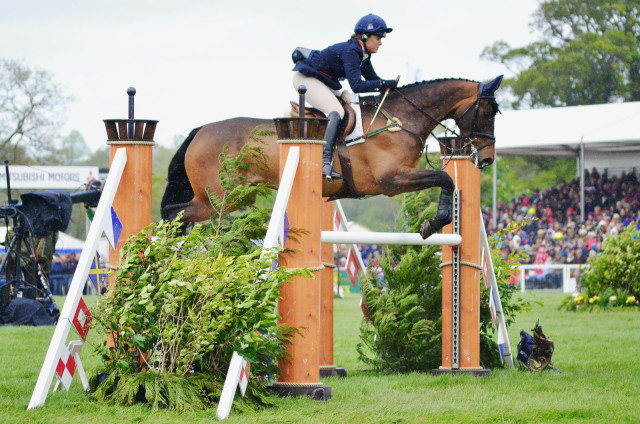
Pippa Funnell and Billy Beware at Badminton 2014. Photo by Jenni Autry.

41. Pippa Funnell and Billy Beware – GREAT BRITAIN

‘Gorgeous’, as he’s known at home, has been off our radar for quite some time as he battled the niggling lameness that saw him withdrawn from the British WEG squad in 2014. It was that year that he pulled out the best result of his career – sixth place at Badminton, his first and only four-star – but then, he wouldn’t contest another international for nearly two years. In 2016, he finished in the top 20 in early season CIC3* at Burgham and Belton, before disappearing again until the following spring. Then, he posted his only international result in 2017 – a big E at Belton.

But don’t write him off just yet – if Grand Slam winner Pippa has entered him at Badminton, it’s because she has a huge amount of faith that the horse has come through the other side of his problems. He proved he was a force to be reckoned with at ill-fated Burnham Market last month, where he threw down the gauntlet with an incredible 21.7 (32.5 in old scoring – a PB by nearly 3 points) and led comfortably after the first two days of dressage. He then went on to prove that it wasn’t a fluke, leading the CIC3* after dressage at Belton by a comfortable margin. A cheeky runout at the skinny out of the water dropped them out of contention, but this wasn’t a green or gutless mistake – rather, the sort of trainable error that a rider of Pippa’s experience will have a plan in place to fix, as their second-place finish in the AI at Bicton proves.  He won five internationals out of seven runs as a seven and eight-year-old – and if Pippa believes he’s not finished there, then we’re inclined to believe her. Look to see the duo in the upper echelons after the first phase.

42. Virginia Thompson and Star Nouveau – NEW ZEALAND

Ginny is another Kiwi talent who’s been hidden away in the Southern Hemisphere — this will be her first time competing in Europe. She completed her first four-star in November at Adelaide aboard this horse, finishing eighth despite scattering the poles on the final day. The pair clocked up three fourth-places and an eighth-place finish at three-star last season, as well as two good clear rounds at CIC3* this spring, and will be venturing over hungry to learn by pitting themselves against the best in the world. Likely to post a score in the 50s, or high 30s under the new scoring system, they won’t challenge the top but will look to complete and come away from the experience miles more worldly and capable.

Flora Harris and Bayano. Photo by Samantha Clark.

43. Flora Harris and Bayano – GREAT BRITAIN

After winning the 2015 Bramham CCI3* on a seriously impressive 36.8 FOD, Bayano propelled himself into the spotlight. He’s since pulled out some very good performances, including a win at Blair CIC3* in 2016 and 8th at Blenheim CCI3* last year, but none have quite matched the sparkle of that first major win. Nevertheless, the horse is a beautiful, catlike jumper who yanks his knees to his eyeballs and doesn’t want to make any mistakes. This will be his second four-star — he finished in 21st place at Luhmühlen last year — and Flora will be hoping to set an early challenge with a mid-to-low 40s (30 or below) score and a similar second-phase performance to the one he delivered at Blenheim. Then, the last day is a mere formality — Bayano doesn’t often pull rails. He finished 4th in Belton’s incredibly competitive CIC3*, so we could well be about to hit his peak at the perfect time.

Sarah Bullimore and Reve du Rouet at Pau. Photo by Tilly Berendt.

44. Sarah Bullimore and Reve du Rouet – GREAT BRITAIN

Reve du Rouet gave Sarah her best result of a stonking three-way takeover of Pau at the end of last season, but his success hasn’t come easy. She’s wryly referred to herself as a ‘battered wife’ when speaking about the gelding, who has proven tense and reactive to a fault in high-pressure situations, bolting in the dressage arena at Badminton two years ago and demolishing showjumps when he becomes overwrought.

Sarah has been endlessly patient with the talented horse where many other riders may have given up, and her reward was second place in France, missing the win by the narrowest margin of a tenth of a point. He added just 2.4 time penalties on a day when fast rounds were few and far between, and he never once looked taxed. It’s a bit of a Jekyll and Hyde situation here — if Good Reve du Rouet comes out to play, Sarah could slip in the back door and quietly win the whole thing. If Naughty Reve du Rouet rolls out of bed, however, she may put her hand up on Saturday. Keep your eye on them, if for nothing else but a demonstration of remarkably tactful riding.

Ros Canter and Allstar B. Photo by Samantha Clark

45. Ros Canter and Allstar B – GREAT BRITAIN

Though she be but little, she is fierce: tiny Ros Canter doesn’t quite make 5’2, and Alby is just shy of 17.2hh, so they may not seem the best-matched pair, but they’ve proven that opposites really do attract. Fifth here last year, they were named best first timers at Burghley on their four-star debut in 2015 and were part of the gold medal-winning team at the European Championships, where they also finished fifth individually.

They’re considered one of Team GB’s best hopes and will be looking ahead to the WEG. The British riders in contention have made plans with team coach and performance manager Chris Bartle and Dickie Waygood, and as I’ve not yet managed to plant a bug on either of them (one of these days…) we can’t predict whether they’ll try to be competitive or just notch up a steady, confidence-building clear. If they do the former, they are able to easily break into the top ten or better. If they do the latter, they’ll likely still feature in the top fifteen. A slow start to the season may prove to be their biggest hurdle: they’ve managed just two runs, in the OI at Oasby and 5th in the AI at Kelsall Hill.

Yoshi Oiwa and the Duke of Cavan at Badminton. Photo courtesy of Kit Houghton/Mitsubishi Motors.

46. Yoshiaki Oiwa and The Duke of Cavan – JAPAN

The Duke of Cavan made his Badminton debut last year, finishing in an impressive 8th place, before going a bit quiet on us. He wasn’t entirely out of action — he contested, but didn’t complete, the Nations Cup at Waregem in September, and finished a slightly lacklustre 25th in the CIC3* at Strzegom. But he’s come back with a bang this year, having been busy in rainy Portugal, where he came fifth in Barroca’s CIC2* and won the CIC3*, and Strzegom, where they finished 3rd in the CIC3*.

Yoshi, for his part, is a seriously capable jockey, having won the CCI3* at Bramham last year with Calle 44 and making history as the first Japanese rider to win a 3* in the UK. He’s also Japan’s most decorated rider at the level, with three wins. All roads lead to Tokyo for Yoshi, and Cavy, with whom he finished 20th at Rio, is one of the horses who could take him there. It’s unfair to call the duo a dark horse, as they’ve been roundly celebrated and have certainly proved their worth, but if spectators forgot their names during the latter half of 2017, they may be surprised by the gauntlet they throw down.

48. Izzy Taylor and Perfect Stranger – GREAT BRITAIN

Formerly campaigned by Andrew Nicholson, Perfect Stranger is produced and schooled at home by his owner, Alex Phillips. He snuck in a four-star debut with Andrew in 2016, when he finished seventh at Luhmühlen, but hasn’t been back at the level since. Izzy has had four international starts with him, and has won two — the CIC3* at Mallow and the CCI3* at Millstreet. In 2017, other than a withdrawal at Gatcombe, she only ever won or finished third on the gelding. Posted a 54.7 at Luhmühlen but capable of better than that — certainly one to keep an eye on, and Izzy always means business. May benefit from the revised scoring, and certainly looked impressive when finishing 14th in the CIC3* at Belton.

Georgie Strang and Cooley Earl. Photo by Tilly Berendt.

49. Georgie Strang and Cooley Earl – GREAT BRITAIN

Cooley Earl made the step up to four-star at Pau last year, where he ably finished in 20th place. He managed 13th and 23rd in his two CCI3* starts in 2017 — at Haras du Pin and Bramham, respectively — and 22nd in the CIC3* at Belton this month, but he is yet to post a really significant result at the level. He’ll score around 33 — formerly the low 50s — and if he jumps clear, it’ll likely be with some time. But he’s just an 11-year-old, and currently Georgie’s top horse, so she won’t mind putting a competitive result on ice until he’s established at the level.

James Sommerville and Talent. Photo courtesy of Kit Houghton/Mitsubishi Motors.

50. James Sommerville and Talent – GREAT BRITAIN

James and Talent made their four-star debut here last year, but their competition was cut short when James fell midway around the course. Unscathed, the pair rerouted to Bramham, where they finished 7th in the CCI3* and adding just 4.4 time penalties in the second phase. It was their career best result to date, although we’ve only seen them once in an international since then – they finished 39th in Belton’s CIC3*, jumping clear in both phases but adding time across the board to their 34.5 dressage. This year, the goal will be to complete — a lifelong dream of James’ — and next year, they can work on making the time, something that the horse looks very able to do.

51. William Fox-Pitt and Fernhill Pimms – GREAT BRITAIN 

14-year-old Pimms is one of William’s old stalwarts, all of which took a hiatus from competing at the end of 2015 when owner Catherine Witt opted to take some time away from the sport. We’re seeing them all come back into action, now, as Pimms and Bay My Hero both reappeared to tackle the CIC3* at Belton. Pimms had a couple of uncharacteristic errors across the country, likely due to lack of match practice – the gelding, who was 10th at Burghley in 2015, was withdrawn from Kentucky due to lack of preparation. He’s cross-entered at Chatsworth’s CIC3* the weekend after Badminton, and if William does opt to run him in the four-star we probably won’t see him aim to be competitive – rather, he’ll be easing his old friend back into life at this level.

Imogen Murray and Ivar Gooden. Photo courtesy of Kit Houghton/Mitsubishi Motors.

52. Imogen Murray and Ivar Gooden – GREAT BRITAIN

Charles was one of only two horses to jump clear around both Badminton and Burghley in 2017, a fact made all the more impressive when you realise that it was his first season at the level. They also made their Nations Cup debut at Haras du Pin, finishing in 10th place and best of the Brits. He’s quick — he added just 10.8 time penalties at Burghley — and he’s reliable, with cross country clears all the way back to 2016. He looked very impressive when finishing in 11th place at Belton’s CIC3* with the second-fastest time of the day on a course that saw no one make the optimum.

He came here last year with the aim of a top-half finish, but went better than that — if they can drop their mid-to-late 50s dressage score by a few points, they could make a big move. Oh, and as an aside — the other horse to complete the double last year? It was fellow competitor Toledo de Kerser.

Will Furlong and Collien P2 stick the landing at Houghton Hall. Photo by Laura Butcher.

53. Will Furlong and Collien P 2 – GREAT BRITAIN

It’s a four-star debut for young British talent Will Furlong, but he’s amply prepared: he made his senior team debut aboard the grey mare at the Nations Cup at Houghton Hall last year, where he rode incredibly maturely (and displayed some enviable stickability, too) to come fourth. Then it was off to the prestigious U25 CCI3*, which he and Collien P 2 duly won. Sixth place at each of their final two internationals of 2017 — the CICO3* at Haras du Pin and Blenheim’s CCI3* — proved that their impressive results weren’t just a fluke, and 2nd in a tough Advanced section at Belton showed that the pair had wintered well.

Will looks set to be a mainstay on the British team as his career progresses, and while we’ve seen him make a fast pace look easy, he’ll likely be a bit slower as he navigates his first Badminton. He’s a real contender for best first-timer.

55. Kirsty Short and Cossan Lad – GREAT BRITAIN

Kirsty and Bouncer will contest their first Badminton in this, their tenth season together. They’ve completed several four-stars – Burghley, Pau, and Luhmuehlen – and had entered here last year, but unfortunately never made it off the waitlist.

Their record at this level is patchy – their dressage average is 48.5 (72.8 in the old scoring), they’ve only completed one four-star with a clear cross-country round, and they usually have a handful of rails down – but Kirsty knows the horse well and has campaigned him exclusively at this level since 2015, citing his recurrent 20 penalties as the result of exuberance rather than disingenuousness. They won’t run here to be competitive but rather to enjoy themselves, with each top-level completion giving Kirsty more experience to pass along to her string of Monart-sourced youngsters.

Paul Tapner and Bonza King of Rouges. Photo courtesy of Kit Houghton/Mitsubishi Motors.

56. Paul Tapner and Bonza King of Rouges – AUSTRALIA

Fast, feisty, and clad in red — no, not Spiderman, but Taperz, the former-professional-turned-elite-amateur (when he’s not wrangling wires and changing the face of the sport on the frontline of Event Rider Masters). Last year these two had a seriously unpleasant — but thankfully relatively harmless — rotational fall coming out of the Lake, but redeemed themselves at Burghley, where they finished in 19th place.

King, who was produced to Intermediate by Matt Ryan, has a fair collection of CCI and CIC3* top-ten placings to his name, and Taperz has won here before, in 2010, so he’s well equipped to build upon the horse’s 2017 education. Probably unlikely to trouble the very top contenders, but this pair could be one of the dark horse combinations this year, if they can keep on the straight and narrow after mistakes at Belton.

57. Regis Prud’hon and Kaiser HDB 4175 – FRANCE

Okay, so his horse’s name might sound like a knock-off brand microwave that you pick up at a stall on the street and enjoy for two days before it burns your kitchen down, but Regis’ Anglo-Arab stallion could become one of those horses that sneaks into the limelight and catches everyone by surprise in May. Ridden as a youngster by Spain’s Carlos Diaz Fernandez, Mr. Microwave (NB: not actually his stable name. Although, in fairness, I don’t know that for sure — it could be. One can but hope) promptly won at his first international with Regis – a CIC1* at Barroca d’Alva in 2016. Since then, he’s steadily worked his way up the levels, picking up top-ten placings at CCI2* (Ballindenisk, Strzegom) and CIC3* (Jardy) along the way.

Last year, he went to the 8/9YO CIC3* at Blenheim and finished in a respectable 18th place, before a disappointing end to the season with a Big E and a retirement at CCI and CIC3*. So why should you be watching him? Well, he’s notched up two international runs so far in 2018 — and he’s won them both. He took the CIC2* at Barroca, finishing on 30.2, and then claimed the CCI3* a week later at the same venue. It’s amazing what confidence can do for a rider’s performance, and if this duo can maintain this form until the big week, they’ll be riding high.

Cedric Lyard and Qatar du Puech Rouget at Badminton. Photo courtesy of Kit Houghton/Mitsubishi Motors.

58. Cedric Lyard and Qatar du Puech Rouget – FRANCE

Cedric has been a longtime member of the French front, and Qatar du Puech Rouget will be contesting his fourth four-star here. His first was Pau in 2016, where he finished in 18th place, before contesting Badminton last year. The pair retired on course, but bounced back to finish 5th in the CIC3* at Jardy. They then went to the Europeans, where they ran into difficulties on course. A confidence-building run at Ligniers CCI2* set them up well for Pau. There, they were the only combination to finish on their dressage score — a feat that was enough to propel them from 27th after the first phase to a third-place finish.

The horse does well over tight, technical courses but is perhaps less established over big, bold courses such as Badminton. With mid-40s dressage scores, the pair will benefit from the new scoring, but to really climb the placings on the second day, Cedric will have to use the horse’s manoeuvrability to his advantage, rather than letting it back him off Eric Winter’s beefy course.

Lissa and Hollyfield II tackle the final water on the formidable Pau course. Photo by Tilly Berendt.

59. Lissa Green and Hollyfield II – AUSTRALIA

In her first four-star riding for Australia, Lissa pilots top horse Hollyfield II. The 14-year-old gelding is relatively inexperienced, having made the move-up to three-star in 2016, but Lissa rates the horse as a serious talent for the future and has made educational experiences her aim when running the horse. He showed a glimpse of what he’s capable at his four-star debut at Pau last year, over a tough and technical track, before Lissa opted to retire him near the end of the course. Both will have learned a huge amount from the experience and will aim to go one better here.

A score in the mid to low-50s — or around the mid-30s in the revised scoring — and a steady clear round across the country will be their goal. The final phase can go one of two ways — a copybook clear or a smattering of rails. Hopefully the education of Oli will have been rounded out over the winter and the former will be on the cards. A classy clear in Belton’s CIC3* has us hopeful, but the duo are cross-entered for Chatsworth the weekend after Badminton, so we may see a change of plan.

60. Ashley Edmond and Triple Chance – GREAT BRITAIN

Ashley and Triple Chance moved up to four-star at Pau last year, finishing in 36th place with a 61.5 dressage, a slow clear round across the country, and four rails on the final day. Their best result together was in the U25 CCI3* at Bramham in June, where they came in 7th place. They’ll be aiming to break the sub-60 (sub-40) barrier, which is well within their capabilities — they’ve scored as low as 53.9 at CIC3*. They’re never quick, but they don’t need to be — their first Badminton will be used as a learning experience, and a clear round here is a badge of honour, signifying a step into the big leagues. Then, there’s an entire career left in which Ashley can chase the clock. First, though, they’ll have to tackle each question as it comes – a 20 across the country at Belton will have them training hard before the big day.

61. Dee Hankey and Chequers Playboy – GREAT BRITAIN

Dee and Chequers Playboy first appeared at four-star in 2013, when they finished 39th at Burghley. The following year, they nabbed 16th at Pau. After that, it got a bit tricky — they were eliminated at both Burghley and Badminton in 2015, withdrew before the dressage here in 2016, and were spun at the final horse inspection at last year’s Burghley. This year, hopefully, their luck will turn, and Dee can set her sites on piloting Kenny — who she rides with two sets of reins — around the difficult track. A fun fact for you: Dee used to be in a pop band. They toured with Boyzone. This is easily the most ’90s fun fact you’ll get in this guide.

62. Carlos Diaz Fernandez and Junco CP – SPAIN

Our sole Spanish entrant this year, so expect gratuitous use of the flamenco-dancer emoji during his dressage test. The pair scored 49.9 at Pau last year, where they finished 15th, and 46.1 at the Europeans, so although they average in the low 50s at three-star and above, they are very capable of dipping below this. Other than two wobbles at the Europeans, where they notched up 40 jumping penalties on cross country, they haven’t faulted in this phase since the WEG in 2014. They’ve managed a few FODs, too — most notably in the CCI3* at Barroca last year, which they won.

63. Tom Crisp and Coolys Luxury – GREAT BRITAIN

Tom has entered Coolys Luxury three times at Badminton, but is yet to manage a completion — Burghley seems to be a happier hunting ground for the pair, and they’ve finished in the top 20 there three times. They’ve also jumped around Pau and Luhmühlen, so they’re not short of experience. If they can hit their stride around the course here, there’s no reason they shouldn’t see another top 20 finish — but a clear round at Badminton never comes easily, and a 20pen in the CIC3* at Belton will either have sharpened them up or dented their confidence before the big day.

Becky Woolven and Charlton Down Riverdance. Photo courtesy of Kit Houghton/Mitsubishi Motors.

64. Becky Woolven and Charlton Down Riverdance – GREAT BRITAIN

Becky and her rangy Irish gelding made their four-star debut at Burghley in 2016, where they finished in 17th place, and Becky took home the prize for best first-timer. They started here last year, where they posted a 52.4 in the first phase and added 18.4 time in the second, but unfortunately, they were spun at the second horse inspection. We saw Charlton Down Riverdance in the CIC3* at Belton, where he ran conservatively and pulled three rails to finish in 57th place. He’s already got one withdrawal under his belt this year — he was meant to contest the AI at Tweseldown — so if he runs, it’ll likely be conservatively.

Jonty Evans and Cooley Rorkes Drift after jumping a clear showjumping round at Badminton 2017. Photo by Jenni Autry.

65. Jonty Evans and Cooley Rorkes Drift – IRELAND

After coming achingly close to a top ten finish last year, the People’s Horse took a bit of a break to become arguably the most talked-about (and prolifically purchased) horse on the planet. If 2017 was a four-star course, then the small blip of having to raise half a million pounds midway through the year acted rather like a hold on course just before the most eye-wateringly difficult combination. With their training rhythm and competition schedule fractured, and the eyes of the world on them, Jonty and Art had a lackluster end to their season, but it would be unwise to forget the reason why the horse was so in-demand.

His ninth place finish at Rio made a seriously difficult competition look like a Pony Club rally, and the ease and intelligence with which he takes to new challenges makes him one of the best horses in the world when he and Jonty are left to focus on the task at hand. They showed a remarkable return to form at Belton, winning the CIC3* Grantham Cup and earning Jonty the biggest win of his career. They’re one of Ireland’s top hopes for the WEG, and Jonty will want to use Badminton as a litmus test and also a way to shake off the demons of his 2017 season. Capable of a remarkable test — they scored 37.2 here last year — and consistent on the final day, if Jonty can keep the clever horse’s mind on the job across the country as he did at Belton, they could be serious challengers for the title. At the least, Jonty will be aiming for a coveted WEG qualification.

Warren Lamperd and Silvia. Photo by Nico Morgan Media.

66. Warren Lamperd and Silvia – AUSTRALIA

The horse that coined the phrase ‘doing a Silvia’ – that is, um, banking a fence and making it look like that’s how it ought to be done – is back. Bossy, as she’s known at home, is well known for being game and gutsy, and she proved her adaptability last year at Burghley when she made light, if creative, work of the Dairy Mound combination. They finished in 31st place after adding rather too many time penalties and poles to threaten the top 20, but Bossy is a classic cross-country competitor, and she’ll suit Eric Winter’s course, which rewards forward-thinking and that adaptability that she’s shown off so well.

With street smarts come personality quirks, and Bossy displays plenty of those at home – impossible to contain in a paddock, she’s allowed to roam free-range around Warren’s Berkshire base and choose the best grazing spots. An unbroken broodmare until the age of six, she spent more of her formative training putting Warren on the floor than learning to contain her enthusiasm, but his patience has paid off, and he’ll leave the start box on a partner he can trust. The pair will post a score that hovers around 50-51 (33-34), and although they’ll rack up time penalties, they’ll likely go clear – in fact, they hadn’t had a cross-country jumping penalty since mid-2014 until the influential Gatcombe AI added a 20 to their record. They’ll add faults in the final phase, though, with two or three poles likely to tumble. They haven’t gone clear in the showjumping at an international since 2009.

Joseph Murphy and Sportsfield Othello. Photo by Samantha Clark.

67. Joseph Murphy and Sportsfield Othello – IRELAND

We haven’t seen Sportsfield Othello at an international since the European Championships in August, where he finished in 47th place, but this isn’t indicative of his usual form: he’s usually fast and clear and, if he’ll falter anywhere, it’s in the final phase, where he can get a bit heavy-footed. He’s experienced at the level, having made his move-up at Pau in 2011 and competed consistently since. His best result was back at Pau in 2014, where he came fifth. He finished 13th here last year — a dressage score about six marks worse than his average let him down, but he was able to climb on the strength of his performance in the other phases. The duo are likely candidates for the WEG team, so consistency and care will be key — for horses aimed at the Championships, Badminton will be a way to guide them towards their peak performance, rather than the summit itself.

Jonelle Price and Classic Moet. Photo by Nico Morgan Media.

68. Jonelle Price and Classic Moet – NEW ZEALAND

We’ve only seen supermare Classic Moet at one international event since her third-place finish at Burghley in 2016 — Blenheim’s ERM class last year, at which Jonelle made her return to the sport after having son Otis. The pair finished 29th — nothing to write home about for the ordinarily lightning-fast combination, but a necessary run to build Jonelle’s momentum again. Jonelle went on to finish in the top ten at Ballindenisk CIC3* and Pau, riding Faerie Dianimo, and Classic Moet has since been making light work of Spain’s Sunshine Tour, to which the Price clan emigrate every winter to sharpen their skills over the poles.

You’d be doing yourself a disservice to write these two off now — prior to Jonelle’s maternity leave, they managed 3rd and 5th at Burghley, 20th at Badminton, 4th at the 2014 WEG, and 12th at Luhmühlen. Classic Moet rarely falters in the second phase, and she is QUICK. Her weakness has ordinarily been the final phase, but Jonelle has been fine-tuning that. They won’t be in the upper echelons after dressage — expect them to sit somewhere around 15th — but if a return to form is on the cards, they’ll keep on climbing. Their only run this spring has been in the competitive Advanced at Belton, which they won easily, zooming around to add just 3.6 time to their 31.4 dressage.

Piggy French and Vanir Kamira make light work of Belton. Photo by Tilly Berendt.

69. Piggy French and Vanir Kamira – GREAT BRITAIN

Just 1.3 penalties separated Piggy and Vanir Kamira, known as Tilly, from the win at Burghley last year, but a tearful Piggy was more than happy with where she finished. Piggy is riding better than ever after a hiatus to have her son, Max, and Tilly is a classy mare with a huge amount of ability. Badminton will be just her second four-star with Piggy, although she’s been here before with Paul Tapner in the irons. Then, she finished 18th. Now, she ought to finish higher. Piggy has figured out which buttons to press to get speed without silliness — that, partnered with another low 40s (high 20s) dressage score should make them very competitive. Their 28.9 dressage and 4.8 time penalties was enough to net them second place in their prep run at Belton CIC3*, where Piggy confessed she’d been running reasonably conservatively to save the horse for Badminton – with more left in the tank, it’ll be exciting to see what she does over Eric Winter’s course.

70. Nana Dalton and Absolut Opposition – GREAT BRITAIN

Badminton will be the third four-star for Nana and homebred Miley – so named because, as a foal, his legs went on for miles. They finished 52nd at Badminton in 2015, notching up 20 penalties across the country, and 34th at Pau last year after doing the same. Otherwise, he’s only ever had one other fault in this phase in his international career, when he fell in the CIC3* at Chatsworth in 2014. Their dressage is likely to be in the high 30s, and they’ll pull a rail or two on the final day, but a clear round across the country will be a thrilling victory in itself for Nana, who thinks the world of this horse.

Madeline Backus and P.S. Arianna. Photo by Leslie Threlkeld.

71. Madeline Backus and P.S. Arianna – UNITED STATES OF AMERICA

P.S. Arianna was Madeline’s 10th birthday present, and together, the pair have learned their sport and doggedly climbed to the top level. Having contested the naJJYRC in Lexington in 2011 and 2014, they returned to tackle their four-star debut last year, finishing in 20th place.

This year, with the help of the Rebecca Broussard National Developing Rider Grant and the Wilton Fair Grant, they’re basing themselves at Austin O’Connor’s Attington Stud, and have already posted clear rounds in the Advanced sections at Burnham Market and Belton in the lead-up to the Biggest B of Them All.

Their dressage, ordinarily hovering in the mid-to-high 50s, will see them fall short of the leaderboard in the first phase, but they could benefit from the revised scoring, and if they can repeat their second-phase performance from Kentucky, they stand to climb the placings. Badminton will be the biggest challenge either of them has ever faced, but there’s a lot to be said for a longstanding relationship like theirs and the subtleties of communication it can bring into the equation. On a tough track like this, that can make all the difference.

72. Hanne Wind Ramsgaard and Vestervangs Arami – DENMARK

Danish Hanne may not have had reams of top horses — in fact, Vestervangs Arami makes up most of her competition record after her first horse, skewbald Lucky Luke, who she took to two-star — but she’s no rookie. The pair made their four-star debut at Pau in 2014, finishing 12th, and then went on to the European Championships at Blair the following year. There, they finished 33rd, as 30 time penalties and two poles pushed them down the leaderboard.

They came to Badminton in 2016, notching up an unfortunate 20 penalties across the country and finishing 43rd. Then, we really only saw them contest CIC2 and 3*, until the Europeans last year, when they made light work of the tricky track to finish 20th. Hopefully, the softly-softly route back to four-star will have served them well, and we’ll see them deliver a tidy — if slow — clear round. With scores hovering between 50-60 (33-40 revised) they probably won’t trouble the leaders, but they could put themselves in contention for an individual spot at the WEG later this year.

73. Emilie Chandler and Coopers Law – GREAT BRITAIN

Emilie and Spider had a career-best result at Pau at the end of last season, finishing in 14th place and up from 52nd after the first phase. Prior to that, we hadn’t really seen them since Burghley in 2015, where they finished 21st. Spider is in his element on the cross country, but struggles with tension and occasional improvisation in the first phase. The pair won’t trouble the leaders for this reason, but they’ve demonstrated a significant learning curve in each of their major outings, so they should be well-equipped to give Eric Winter’s course their all. Seventh place in the AI at Great Witchingham and third in Belton’s Advanced should set them up well.

Harry Meade and Away Cruising at Belton. Photo by Tilly Berendt.

74. Harry Meade and Away Cruising – GREAT BRITAIN

Spot made the step up to four-star last year, with promising results at Luhmühlen (14th, clear within the time) and Burghley (15th, clear with time penalties). A small blip saw him add 20 penalties to his record in the CIC3* at Gatcombe, but this is his first mistake on course at an international since his very first one-star back in 2013. Otherwise, he has a 90% clear rate across the country at internationals. He’s not naturally quick — although his Luhmühlen result proved that he can make time — and his showjumping is his weak link, averaging three poles, but Harry is a meticulous rider and trainer and will constantly be analysing and solving the problem. He show jumped clear in Belton’s CIC3*, proving that hard work pays dividends, and ran well, albeit slowly, across the country. A good result here — and perhaps just one or two poles — should come as no surprise.

75. Dani Evans and Smart Time – GREAT BRITAIN

The pair made their one and only four-star appearance as a combination here in 2016, but it didn’t quite go to plan: 40 jumping penalties and 51.6 time dropped them right out of contention and three poles on the final day sealed their fate. Since then, they’ve been working hard and earning some very promising results, including a 44.6 FOD and 4th place at Barbury CIC3*, 7th place at Blenheim CCI3*, and 5th at Boekelo CCI3*. A mid-40s score (now 30) should be their aim, and, as they haven’t had a cross country jumping penalty in an international since that fateful Badminton, they ought to go clear here, albeit perhaps with an alternative route or two added in. They can be in the top 20, although 20 penalties across the country at Belton won’t have been part of their preparation plan.

Will Coleman and Obos O’Reilly. Photo by Ginny Nayden.

76. Will Coleman and OBOS O’Reilly – UNITED STATES OF AMERICA

To make up for the lack of Boyd, the Gods of Dreamy Americans have sent us Will Coleman instead, and frankly, I’m not sad about it. He pilots OBOS O’Reilly, known as Oboe, who has already clocked up significant experience on both sides of the pond. Oboe made his four-star debut at not-Rolex in 2015, adding just one pesky pole to his dressage score and finishing in sixth place. This made him the Reserve National Champion, too – a real step up from his formative years, during which his ‘exuberant’ personality made him a tricky prospect.

He’s proved himself over a variety of track styles: later that year, he posted an FOD at the Blenheim CCI3*, arguably one of the toughest three-stars in the world, and finished 12th at Luhmühlen last year. A high-forties scorer but quick, quick, quick across the country. If Will can cure his four-faultitis, he could be a great shout for a US challenger.

77. Michael Owen and Bradeley Law – GREAT BRITAIN

This will be Bradeley Law’s second attempt at the level — he was eliminated in his four-star debut here in 2016. He was then out of action for all of 2017 — we haven’t seen him on the international stage since he finished in sixth place in the Barbury CIC3* in mid-2016. The pair finished fourth in an Open Intermediate section at Oasby earlier this month and will head to Gatcombe this weekend at the same level. They won’t be there to compete, but rather, to complete and get the horse’s education moving forward again. Fun fact: Michael Owen produced Ludwig Svennerstal’s King Bob to four-star before the Swede took the reins.

James O’Haire and China Doll at Pau. Photo by Tilly Berendt.

78. James O’Haire and China Doll – IRELAND

James might be a relatively new face on the UK scene, but he’s been quietly working his way towards his four-star debut, which he made at Pau at the end of 2017. He and China Doll finished in 31st place after adding 20 penalties on Michelet’s track — and if that doesn’t sound like a very impressive debut, you must not have been following Pau. Fresh from that absolute stinker of a course — and with good performances at Kilguilkey CIC3* (18th), Camphire CCI3* (5th), and Millstreet CCI3* (7th) — they’re ready to tackle their biggest challenge yet.

Last year, Eric Winter described his course as one that would suit a hunting rider, who can ride positively without getting hung up on the technicalities, and this is where the Irish really come into their own. Gutsy, forward-thinking, and instinctive — is it an offensively sweeping generalisation if it’s a positive one? — they think on their feet and are likely to be rewarded here. James and China Doll can do exactly that, and although their dressage will leave them in the bottom third of the pack after the first phase, if they ride like they mean it through the weekend they could leave with a strong completion. James, who has a sideline in breaking in (presumably ornery) racehorses, is certainly able to do that. We saw this duo turn the Lycett’s Leap coffin in Belton’s CIC3* into a bounce, with nary a batted eyelid, proving their gutsiness and trust in one another once again.
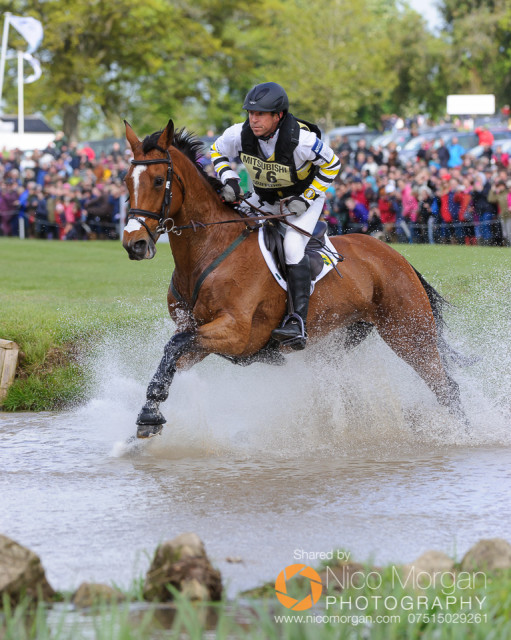
Sam Griffiths and Paulank Brockagh win Badminton in 2014. Photo courtesy of Nico Morgan Media.

79. Sam Griffiths and Paulank Brockagh – AUSTRALIA

One of three combinations who have won here before — Sam lifted the trophy in 2014. The pair have three other top-ten four-star finishes, including eighth place at Pau last year, at which Sam made his top-level comeback after missing the majority of the season with a broken neck. Brocks was also his mount at Rio, at which they finished in fourth place individually and won a bronze medal as part of the Australian team.

Their dressage is consistent at this level, ordinarily sitting between 42 and 43 (or roughly 28 in the new scoring) and if they can avoid falling foul of the flag rules, as they did last year, they’re likely to go clear. Their last two attempts at Badminton have been plagued by upsets — a contested 50 penalties last year, and a rare 20 the year before — but they’re very capable of besting the Gloucestershire venue, as their win in 2014 and 10th place in 2015 proves. Unlikely to go inside the time, but one of the clear favourites for a top ten placing. A pub quiz fun fact for you: Brocks is one of only five mares to win Badminton.

Gemma Tattersall and Arctic Soul. Photo by Nico Morgan Media.

80. Gemma Tattersall and Arctic Soul – GREAT BRITAIN

Arctic Soul — known as Spike — has come SO close to a big win, finishing in third place at Burghley last year and third at Badminton in 2016. He’s also been seventh here, last year, and fifth at Burghley in 2014. Last year, he won the ERM leg at Gatcombe, securing Gemma the series title and earning himself the British Open Championship, too. He added just 1.2 time penalties on a day when the time was impossible to get.

The ex-racehorse has been lovingly referred to as ‘totally crazy’ by Gemma, who has to ask for silence from the audience to get a good test from him, and when he goes across the country, he really goes. But he’s not stupid, and his sense of self-preservation extends to his rider, too — at Burghley, Gemma was battling a serious chest infection all week and Arctic Soul stepped up to the plate. These two have an incredible relationship, wrought from time, patience, and a similar gutsy tunnel-vision, and if they’re given the green light to push for the time here, they will — and they could finally find themselves at the top of the leaderboard if they do.

An extremely rare 20 penalties at Belton, and subsequently a very slow schooling run around the course, might not look great in the eyes of the bookies, but Gemma sees the runout as a positive mistake in preparation for a four-star – the strong, cocky horse often needs reminding that he can’t make all the decisions himself, and by making the wrong one in a CIC3* and not being able to jump out of the combination, he’s been given that reminder without a knock to his confidence. He certainly looked on form when claiming third place the weekend after in Bicton’s AI.

Andrew Nicholson and Jet Set at Pau. Photo by Tilly Berendt.

81. Andrew Nicholson and Jet Set – NEW ZEALAND

Jet Set sometimes — understandably — languishes behind Andrew’s top horses in terms of public attention, but he shouldn’t be regarded as a second string. This is an up-and-comer that Andrew thinks a huge amount of — at the end of last season he called him a ‘true four-star horse, definitely’, and who are we to disagree with the Maestro? Jet Set made the trip to Pau in October for his first attempt at the level, but misread a skinny atop a steep hill late on course and, unfortunately, ejected his rider, cutting short his debut. He made an impressive effort over the three-fourths of the course he did tackle, though, and other than that, he’s never had a cross country jumping penalty in his international career.

He’s capable of going fast, and Andrew has an almost psychic way of knowing when a young horse needs its hand held and when it will benefit from riding for the time. His philosophy has always been to teach his horses to be comfortable with high speed and high pressure, so watch these two on Saturday to learn a huge amount about the education of a future star. Likely to score in the mid-to-high 40s (30-33), discounting Belton’s poor-scoring test of 40.4, and will almost certainly have a pole on Sunday, but could make a very impressive mark on his first Badminton.

Alex Bragg and Redpath Ransom. Photo by Tilly Berendt.

82. Alex Bragg and Redpath Ransom – GREAT BRITAIN

Alex’s somewhat overlooked Redpath Ransom is nevertheless proving himself as a cross country powerhouse, and a useful second-in-command to star stablemate Zagreb. ‘Reeko’ is the king of consistency, faulting across the country just twice in an international career spanning 23 competitions. Those faults were picked up at Chatsworth in 2014 and at his most recent run at Pau last year, where horse and rider slightly misjudged a distance in the first water — one of the most influential parts of arguably the toughest Pau we’ve ever seen — and fell.

But don’t hold this against him: otherwise, he’s seriously capable and quick — unless Alex dials him back for a quiet run, as he has done at the horse’s level debuts. He loses ground in the first phase, where he usually scores in the mid-50s, or the mid-30s under the new scoring system, and in the final phase, where he can go clear but is more likely to take two for joy. He probably won’t outpace big brother Zagreb, but he’ll put up a good show.

Mark Todd and Kiltubrid Rhapsody at Pau. Photo by Tilly Berendt.

83. Mark Todd and Kiltubrid Rhapsody – NEW ZEALAND

Kiltubrid Rhapsody has been something of a CIC specialist, appearing in ERM legs at Gatcombe (4th), Blair (WD), and Blenheim (9th). In fact, the Gatcombe result broke Toddy’s ERM duck, as he’d previously suffered a spate of bad luck in the series. After Blenheim, he headed to Pau for his first four-star and to help Toddy chase the World Number One crown. A dressage score of 40.4 put him well in the hunt, but jumping and time penalties across the country snatched the dream away. They jumped clear on the final day and finished 25th.

A similar dressage performance will set them up well at Badminton, and the good-looking grey (that’s Kiltubrid Rhapsody, not Toddy) could take to the course, which will be unlike anything we’ve seen him over before, and certainly very different to Michelet’s Pau course. He looked confident and capable over Captain Mark Phillips’ Belton track, which was built to emulate some of the Badminton questions. Bold prediction? They’ll either challenge the top five or languish just outside the top 20.

84. Harry Dzenis and Dromgurrihy Blue – GREAT BRITAIN

Look, I’ll tell you about his record, but for the love of god, don’t ask me how to pronounce his horse’s name. Drunkenstammer Blue has been competed by no less than four of the riders entered here — not including Harry. Patricia Ryan rode the horse in his first international before passing the ride over to husband Michael. Four years later, Harry first got the ride, but two years thereafter and just after the horse’s first Burghley, Oliver Townend took the reins. He posted some good results, including a CIC3* win at Burgham in 2016, and then it was Padraig McCarthy’s turn.

Harry took the horse back at the end of last season and competed at Burghley with him, finishing 25th. The horse has the potential to go higher, but being mounted more frequently than a character in Gossip Girl probably hasn’t entirely helped the situation — if Harry can repeat his Burghley performance, but keep more rails up on the final day, he’ll slip into the top 20.

Tina Cook and Calvino II. Photo courtesy of Kit Houghton/Mitsubishi Motors.

87. Caroline Powell and On The Brash – NEW ZEALAND

Caroline took over the ride on the 12-year-old gelding, formerly piloted by Sam Griffiths, in the middle of last season. They finished 11th in their first international together, in the CCI3* at Bramham, and 6th in the CIC3* at Blair, but two stops and 40.8 time dropped them right out of contention at Burgham, and they were one of many combinations to retire on course at Pau. Badminton will be a litmus test for this fledgling partnership after a long winter to get to know one another. They’ll want to emulate their Bramham performance (49.5) rather than their Pau one (60.1), and avoid the 20 penalties they picked up in Belton’s CIC3*.

Ciaran Glynn and November Night. Photo courtesy of Kit Houghton/Mitsubishi Motors.

88. Ciaran Glynn and November Night – IRELAND

Ciaran and November Night completed Badminton last year, finishing in 36th place with a slow clear round. They then went on to finish 8th and 4th in the CIC3* at Camphire and Millstreet, respectively, and 10th in the CCI3* at Blenheim. The Irish mare has gone clear cross country in 19 of her 21 international starts, so is well primed to take on the Badminton track. Their Belton CIC3* performance was confident, if slow, but their 39.6 dressage was higher than they’re capable of. If they can score sub-50 (low 30s or lower in the new scoring) and maintain their form throughout the jumping phases, they could be a dark horse contender for a spot in the top ten.

89. Georgie Spence and Wii Limbo – GREAT BRITAIN

Georgie and Wii Limbo have plenty of experience together, finishing 12th at Burghley in 2015, 5th at Bramham’s U25 CCI3* in 2013, and completing Badminton and Burghley on two other occasions. Their season has started off well, too – they finished 5th in the non-Grantham Cup CIC3* at Belton. Their dressage score there of 31.9 is about what we’d expect from this pair, and while it won’t be enough to thrust them into the spotlight after the first phase at Badminton, a good clear round on the second day will see them improve upon their placing. They’re usually clear on the final day, too, which will help their cause massively under the new scoring system.

Oliver Townend and Ballaghmor Class. Photo by Jenni Autry.

92. Oliver Townend and Ballaghmor Class – GREAT BRITAIN

A seriously tactful rider, Oliver has made a career out of being able to nurse horses around four-stars where other riders wouldn’t — but now, his hard work has paid off and he’s getting some out-and-out top-level contenders in his ranks. In Thomas, he has a young horse who has proven he can do it, with a 100% cross country clear rate in 2017, and one who meshes incredibly well with his way of riding. You’d be unwise to bet against Oliver, who is always out to get the job done and won’t be happy with anything but the win.

Burghley-winner Ballaghmor Class made his four-star debut look like a Pony Club rally, easily eating up the variable terrain and tricky questions at the Lincolnshire venue. Winning at Kentucky last week, Oliver is chasing the Grand Slam dream, to which he came so close in 2009, but Thomas is the only one of his entrants who wasn’t cross-entered. It’s a safe bet that Oliver considers the scopey grey his best hope of a win here.

Thomas, like Aero, has only had one and a half runs this spring – he finished 9th at Oasby OI, managed a dressage test at Burnham Market’s CIC3*, and then put up an uncharacteristically unremarkable 33.9 in Belton’s CIC3* before being withdrawn. He sprung back into action with third place in the AI at Kelsall Hill, adding just 1.2 time to his 29.4 dressage for third place.

A fun fact for you: Thomas’ sire is Courage II, who also sired entrants Ringwood Sky Boy, the Duke of Cavan and Cooley Rorkes Drift.

93. Tom McEwen and Strike Smartly – GREAT BRITAIN

Tom and Paddy won a CIC3* (Chatsworth) and a CCI3* (Camphire) in 2017, and now that they’re entering their second season together, they’re looking to take their partnership up a notch at the Ghareeb gelding’s first four-star. Expect a mid-to-high 40s dressage test (that’s 30-33), although the horse has shown he’s capable of dipping below this, and a steady trip across the country. The horse can go for the time, but in his first four star — and considering that Tom has another ride here in top horse Toledo de Kerser — he’s unlikely to be pushed for a big result. With a bit more experience, this will be a very fast horse.

Jenni Autry edited all 14,000 words of this article and deserves a special place in heaven.

Friday Video from World Equestrian Brands: Getting Piggy With It

Piggy French and Quarrycrest Echo. Photo by Jenni Autry.

How brilliant was Piggy French‘s 2017? A spate of strong results – and a string of serious international horses – placed her firmly back on the map after missing the 2016 season to have baby Max. She clocked up four international wins – her highest tally in a season in ten years – and amassed sixteen national level wins as she came out, weekend after weekend, with a lorryload of horses and her son in tow, proving that actually, perhaps you can have it all. Through the season, she opened up about the toll that the pressures of the sport had taken on her. The break, while unplanned, had led to the birth of not only her son, but of a revitalised new Piggy, too. Her no-holds-barred return to the top levels led chef d’equipe Chris Bartle to quip that “having babies is obviously the secret – I think I’ll make it a team requirement!”

A steady climb (back) to the top – Piggy French finishes 2nd at Burghley 2017. Photo by Tilly Berendt.

And so the successes kept rolling in, and the buzz around her impressive string intensified. In the rangy chestnut Quarrycrest Echo, who had made his move up to Advanced and CIC3* in 2016 under Tina Cook with mixed results, Piggy found a talented upper-level contender whose quirks she could untangle and weave to his advantage. The pretty and powerful mare Vanir Kamira, produced by Piggy in 2012 before going to Izzy Taylor, Paul Tapner, and then, circuitously, back to Piggy, would give her her equal top result at 4* level – a close second place at Burghley, to match her runner-up result at Badminton in 2011. Between the two horses, Piggy would fly the Union Jack three times in 2017 – at Nations Cups at Houghton Hall and Aachen, and alongside Gemma Tattersall as an individual competitor for Britain at the European Championships. Her up-and-comers, too, generated much attention, lead by 1* wunderkind Cooley Monsoon. Owned by British comedy legend Jennifer Saunders – she of Absolutely Fabulous fame and one half of iconic duo (Dawn) French and Saunders – Cooley Monsoon won six of his eleven starts and finished in the top five of the rest, with the exception of a rare twenty penalties and subsequent 20th place at Bradwall.

So why the speculation? Because, dear readers, we have every reason to believe that 2017 was simply a warm-up. With only a handful of days of completed competition in the UK, Piggy has already clocked up a slightly bonkers twelve completions. Eight of those have resulted in top-five finishes, and three of them she’s won. Oh, and those wins? She nabbed them all in one day, while competing eight horses at Oasby. We’ve just Busy Izzy and, um…Turbo Townend (I’ll copyright that later), so ten points to anyone who can come up with the catchiest nickname for Piggy for 2018.

For now, Piggy can enjoy the view from atop the British Eventing leaderboard, but we suspect she’ll be aiming to top another leaderboard this spring. Always a bridesmaid, never a bride? We very much doubt it.

To celebrate the rise and rise of Ms French, enjoy this video from An Eventful Life of one of her Oasby wins last weekend, on Graf Cavalier. Intermediate, or a Pony Club schooling track? You decide.

Go Piggy, and go eventing!

Piggy French and Graf Cavalier Oasby (1) 2018

Congratulations to Piggy French and Graf Cavalier, winners of the Intermediate Sec H and our #XCVideo at #OasbyHT Bede Events #TriStarEventing – watch and learn! https://www.an-eventful-life.com.au/event/oasby-1-2018

Posted by An Eventful Life on Wednesday, March 14, 2018


Gallery: Best of British on Show at Season Opener

Everyone is glad to be back, but perhaps none more so than Caroline Harris’ Falko TH. Everyone say cheese! Photo by Tilly Berendt.

FINALLY. The weird, out-of-character British snow has subsided, the stud holes have been drilled, and the eventing season has kicked off with a bang on our merry little isle. Okay, more of a dribble than a bang — a sudden deluge put paid to the final two days of both Oasby, in Lincolnshire, and Tweseldown, in Hampshire. But before the unfortunate early finish, both hosted plenty of sections, filled to the brim with amateur riders and the creme-de-la-creme alike.

If you’ve never experienced a British eventing season, its advent in March looks a bit like this:

  • Mud.
  • An endless queue of lorries clogging up the M5 as they attempt to leave Gloucestershire en masse at 5am.
  • More mud.
  • “I didn’t recognise you under all those coats!” Repeated, ad infinitum.
  • Hairy, grubby Thermatexes become the number one sartorial choice — for people, mind, not horses.
  • Tractors lurking around the edge of the lorry park, ready to pull said lorries out of the mud.
  • Andrew Nicholson nearly sending you flying on a particularly fresh Novice.
  • I mean, just Andrew Nicholson full-stop, as he’ll be riding approximately 38 on any given day.
  • Neck straps. Two of them on one horse, memorably, in a Novice section.
  • An endless queue at the coffee trailer, in which three phrases are uttered: “Go on, add the whipped cream, I’ll shiver the calories off anyway!” “Eventing in March, eh — why do we do it?!” and/or, “Bit brisk, isn’t it?” Anyone daring to deviate from the script will be punished (ie., they won’t have mini M&M’s sprinkled on top of the whipped cream on their hot chocolate. Look, I really do believe in the calorie-reducing powers of shivering.)
  • A bit more mud.
  • Studs the size of kitchen knives, to ensure that showjumping doesn’t become a sloppy game of pick-up sticks.
  • New puppies, acquired through the off-season, wiggling merrily through the morning and passed out, soggy and satisfied, in the driver’s seat of every lorry by noon.
  • Enormous smiles, chattering teeth, and joyous reunions, every which way. “It’s SO great to see you!” echoes around the lorry park, the secretary’s tent, and the warm-ups, all day, every day. It’s lovely.
  • Also probably more mud.

I could wax lyrical all day long about just how marvellous it is to be back in action for another jam-packed season, but if anyone knows the sheer joy of the first event of the season, it’s the fine readers of Eventing Nation. Instead, I’m going to let the pictures tell the story — welcome to a wet, blustery, bloody brilliant day at Tweseldown Horse Trials.

Let’s begin with this brilliant video, courtesy of Harveywetdog: Andrew Nicholson and his 2017 Badminton winner (and then some) Nereo, second in the AI, looking as well as ever. Will they maintain their title this year?

Legends on tour: Blyth Tait and Havanna Vant Castanaehof (22nd in OI F) and Dan Jocelyn and Dassett Cool Touch (9th in OI D). Photo by Tilly Berendt.

Izzy Taylor and Perfect Stranger, 12th in OI section F. Photo by Tilly Berendt.

Lydia Hannon’s Tierro posts an impressive early season result, with second place in OI section F. Photo by Tilly Berendt.

The stars – they’re just like us. Mary King gets stuck in with the Hannon family’s new puppy, Lily: “Lydia was either going to be Lydia or Lily, so we’ve put the name to use on the dog,” says Mummy Hannon. Photo by Tilly Berendt.

Australia’s Kevin McNab and Brookfield Quality warm up for Intermediate section G. Photo by Tilly Berendt.

Not a bad groom to have on side — mum Mary King puts herself to work before daughter Emily goes cross country. Photo by Tilly Berendt.

Mary and Emily King’s distinctive lorry (with a slightly concerning Learner plate?!), parked next to Pippa Funnell’s. Just your normal, average, casual lorry park in England. Photo by Tilly Berendt.

Chris Burton on Quality Purdey and Andrew Nicholson on Zacarias discuss the intricacies of the OI showjumping course. Photo by Tilly Berendt.

“I’ll judge your round!” offers Andrew Nicholson from the collecting ring, as Chris Burton waits to be able to commence. Photo by Tilly Berendt.

Australia’s Chris Burton rides Quality Purdey, who won the CIC3* at Le Pin au Haras, to 9th place in OI section E. Photo by Tilly Berendt.

Andrew Nicholson’s Zacarias won two Intermediates in 2017 and finished in eleventh place in his first CIC** – bred by Ramon Beca, who bred superstars Nereo and Armada, could this young horse be one of Nicholson’s stars of the future? Watch this space, people. Photo by Tilly Berendt.

Jonty Evans and Ringwood LB taking this whole dressage thing very seriously indeed. Photo by Tilly Berendt.

All smiles from Harry Meade aboard Away Cruising, top 20 at both Luhmuehlen and Burghley in 2017 – who needs to be able to feel their toes when there’s eventing to get on with?! Photo by Tilly Berendt.

It’s all too much for some – Jonty Evans’ Gambesie (also known as, um…Kevin) enjoys a quick snooze before heading down to the showjumping. Photo by Tilly Berendt.

Harry Dzenis rides Xam, with whom he has clocked up five four-star completions, in the AI. Photo by Tilly Berendt.

Young talent Tom Jackson works in one of his Novice horses. Photo by Tilly Berendt.

Padraig McCarthy gives Ludwig Svennerstal the eye. Anyone fancy guessing the subject of the story Ludwig was so merrily telling? Photo by Tilly Berendt.

The jumps are lava: Lissa Green’s Corraggio Z, known as Snoop, takes no chances in the Novice showjumping. Photo by Tilly Berendt.

Emily Baldwin and Uppercourt Cooley finish 12th in the Open Novice. Photo by Tilly Berendt.

Andrew Nicholson and his final ride of nine, Argentino BK, clear the final Novice fence. Every single one of Andrew’s horses finished in the top 20 in their sections, and he managed the one-two in the AI, winning on Swallow Springs and clinching second on Nereo. What. A. Champ. Photo by Tilly Berendt.

Diachello II and Kiwi Jesse Campbell look equally happy to have notched up their first cross country completion of the season. The pair finished fourth in Novice section N. Photo by Tilly Berendt.

Mary King and homebred King Bill might be a bit soggy, but it doesn’t dim their shine – they finish fourth in their section. Photo by Tilly Berendt.

Focus, finesse, and nearly flattened photographers – the Andrew Nicholson story. Photo by Tilly Berendt.

Go Eventing — whichever side of the pond you may be on!

Friday Video from World Equestrian Brands: Vintage Badminton Footage

Michael Jung and La Biosthetique Sam FBW at Badminton 2017. Photo by Nico Morgan Media.

Yesterday marked two milestones in Britain — the eventing season officially began, with competitions at Tweseldown and Oasby, and — thrillingly — the official countdown to Badminton commenced. Eight cheeky weeks to go, people! Cue much speculation about the entry list, obsession over course designer Eric Winter’s sophomore effort, and, best of all, a serious amount of behind-the-scenes insight over the next two months, as EN delves into what goes into putting on the world’s biggest three-day event.

https://www.instagram.com/p/BfxtNEbAOmL/?taken-by=bhorsetrials

The staging of this veritable masterclass in eventing excellence is managed because of the tireless dedication of its organisers, whose forward thinking has allowed the event to evolve over the decades. Each year, the event gets bigger, better, more prestigious, and embraces more and more sporting and safety technology. Want proof of this evolution? Check out this 1988 documentary showcasing the history of the event — it’s a whole different world from the mod-cons we enjoy today, like, um, tack that doesn’t disintegrate mid-course.

Keep your eye on EN for your backstage pass as we count down to the 2018 Mitsubishi Motors Badminton Horse Trials — who are you hoping to see leave the start box this year? Can’t wait two whole months? Check out Badminton’s YouTube page, where you can revisit all the action in full from 2017.

Friday Video from World Equestrian Brands: You Know You’re Getting Old When…

It’s a noble sight — a glorious sight. Enjoy it now, before I use it to destroy your perceptions of time and self entirely. Photo via Wikimedia Commons.

It doesn’t take much to inspire Olympic fever — never mind that the next Games aren’t for another two and a half years, and never mind that, with the WEG looming, there’s plenty to occupy our pony-mad minds in 2018 alone. But with the announcement of the Tokyo 2020 official mascots, and the end of several weeks of curling, the Fever began to make itself known once again.

The as-yet unnamed Tokyo mascots. The chap on the left can teleport and the one on the right can move things with her mind. Can’t wait to see the guys in the costumes give that a whirl.

Now, my initial plan was to share with you all this lovely little compilation video, put together by the chaps at the Olympic Channel, which charts the evolution of the equestrian sports at the Games from their inception. But in watching and rewatching it, something struck me — Beijing was 10 years ago. TEN. I can still remember sticking in endless VHS tapes (we weren’t a very tech-savvy household) to record the whole lot as though it was yesterday. Further plumbing the recesses of my memory made me realise, with some shock and horror, that even Athens doesn’t feel like ancient history. The horses, the stories, the ups, the downs, the fact that Mark Kyle later let me school Drunken Disorderly, who sort of felt like a camel on the flat but let’s not let that get in the way of my terribly subtle name-dropping — all of it feels so recent, and I think that might mean I’m getting old. Quelle horreur. 

If I have to suffer in the sudden knowledge of my own mortality then you, fine folks of the Nation that Events, must suffer with me. Misery loves company, so join me on my front porch of crotchetiness, and let’s deflate the errant soccer balls of all the young guns who dare play near our lawns. Or something.

Good people, I bring you: recent Olympic history, which is, appallingly, no longer recent. Enjoy (with a cup of Ovaltine and your latest knitting project, probably).

The Evolution of Equestrian at the Olympics

Sign you’re getting old: Blyth with a full head of hair seems normal.

Pippa Funnell and Primmore’s Pride Showjump at Athens 2004

Sign you’re getting old: You remember telling your high school guidance counsellor that your plan after graduation was “to do what only Pippa has managed”. That’s, um, win a Grand Slam, of course.

Bonus — sign you’re getting old AND you’re terribly, terribly British: You have, at some point, with absolutely no irony or humour, referred to a horse as ‘a little person.’

https://www.youtube.com/watch?v=8OuGs8SA0Us

Cross Country Highlights from Beijing 2008

Sign you’re getting old: You often find yourself wondering, in idle moments, whatever happened to Hinrich Romeike, the German dentist and ‘hobby eventer’ who swept double gold with Marius and predated Michi Jung’s classic “he gives me a good feeling” with the equally charming, “he is a horse with such strong morals.”

The 2000 Sydney Olympics – The Inside Story with Andrew Hoy and David O’Connor

Sign you’re getting old: Oh, man, where to begin. You know David O’Connor as a gold medal winning rider, rather than as a team coach. You remember when Bettina and Andrew Hoy were the Jay-Z and Beyonce of eventing. You remember when Phillip Dutton rode for Australia. You, my friend, remember the genuine fear of the Millennium Bug. You’re old.

(As an aside, if Bettina could please let us know what brand of moisturiser she uses, all of Team EN would be very, very grateful.)

Be grateful – that’s just this millennium. If you can remember Atlanta, I hope that AARP membership is treating you well. Also please call me so I have someone to talk to about how exciting Atlanta was.

There’s Snow Way: First Weekend of British Eventing Season Cancelled Due to Adverse Conditions

Nobody's idea of a fun time. Photo by Alex Holman. Nobody's idea of a fun time. Photo by Alex Holman.

So near and yet so, so far. The days are longer, the sun had made a few determined appearances, and the official start of the British eventing season was cresting the horizon. We’d made it. Spring had, in fact, sprung.

Nightmare fuel for eventers.

Turns out everyone had spoken – and entered – too soon. All four BE affiliated events set to run this weekend (3-4 March) announced their regrettable abandonment this morning, with each venue besieged by a rare and relentless snowfall, courtesy of ‘the Beast from the East’. Catchy name, right? If you live in the UK, it’s likely to be all you’ve thought or spoken about for the last six days. If you don’t, you’re missing out on a polar vortex bringing Siberian winds to our poor, bedraggled island. Temperatures have hit a new low for this winter, and even those riders who can actually find their arenas in the snow aren’t guaranteed a ride, with frozen ground and arctic blasts forming a particularly potent combination.›

https://www.instagram.com/p/BfwFcd9gVuM/?taken-by=_alexholman

In adverse weather conditions, BE event organisers aim to leave the hard decision to abandon until the day prior, hedging their bets that, perhaps, the weather could turn and the event could still go ahead. In this case, however, there’s nothing that can be done, and all hopes must turn to next weekend’s fixtures at Oasby, Poplar, and Tweseldown, instead. Not that this is a terrible consolation prize for the casual collecting ring lurker, to be fair — the OI sections at each read like a who’s-who of four-star major players, with Ceylor LAN, Star Witness, Arctic Soul, Nobilis 18, Vanir Kamira, Don Geniro and Ballaghmor Class among those entered. Well worth a few hours in Storm Emma’s icy clutches.

https://www.instagram.com/p/BfyeQeTHDJ5/?tagged=teambragg

In the meantime, a gaggle of (sensible) riders have ventured to Portugal’s Barroca d’Alva, which hosts CIC* and CIC** sections this weekend and CCI*, CCI and CIC**, and CCI and CIC3* sections next weekend.

Go eventing (if you can), and go (away) snow … please.

Friday Video from World Equestrian Brands: Welcome to the Wild West

https://www.instagram.com/p/BZ4E1COnHOJ/

Grit and graft, triumph and tears, heart and hardships — these are concepts we’re all familiar with. For every ditch we leap, every test we conquer, ever fear we face, we have to learn to fall down, hard, and still get back up.

The disciplines we choose to inhabit in the horse world might feel like microcosms, but they’re all linked — and we’re all linked — by the indomitable resilience that propels us. That’s why this week’s Friday video focuses on something a little different, but teeming with a tenacity we all recognise.

The 500 Miles Project was launched at the beginning of 2017 by Horses and Heroes, a 501(c)3 veteran rehabilitation program which aims to do more than simply support its beneficiaries — instead, it helps provide them the tools and the purpose to rebuild their own lives, by working with BLM mustangs. The Project saw 15 new equine recruits undergo a three-month training process, before embarking upon a 560 mile ridden journey to Arizona, where they would be matched with a combat veteran.

“50,000 wild horses live in the BLM facilities, while there are only about half of that number in the wild,” said Micah Fink, CEO of Heroes and Horses. “Just like these mustangs, our nation’s veterans face grim statistics: homelessness, joblessness, escalating suicide and addiction rates. What is the real problem society is facing, veterans are facing, and that wild horses are facing? The current response has been more medication, more land, more money, more counseling, better holding facilities — but it’s not working, none of it is. We are missing the greater lesson of life. It’s not about excuses and explanations and stories about how hard you’ve had it. It’s about why we are here, and what life is all about, and the lessons we need to learn. It’s a story about purpose, how life makes room for us, or anything for that matter. I decided to share that story and to show that process though 500 Miles – the story of the un-purposed horse, and the un-purposed human-being.”

The remarkable documentary shows the highs and lows of that journey — “one of the hardest things I have ever done” — and explores not just the relationship between man and horse, but the paradigm shift of plumbing your lowest depths and making it back to the surface again.

Every human being has a 500, says Micah. What’s yours — and how can you find your way to its final mile?


Friday Video from World Equestrian Brands: An OTTB and a Stroke of Genius

Metro the ex-racehorse practices his skills for a new category in the 2019 Thoroughbred Makeover. (Not really.)

On the 2nd of February, 794 lucky equestrians across America found out that they’d be taking part in this year’s Thoroughbred Makeover and, as such, playing a pivotal role in demonstrating how game and multi-talented off-the-track Thoroughbreds are. This is seriously good news, not just for those lucky trainers and horses who will get to reap the rewards of the program, but also for supporters and admirers of OTTBs everywhere. The Thoroughbred horse is back in style, baby!

Metro Meteor the ex-racehorse wasn’t quite sound enough to pursue a second competitive career, but that didn’t stop him – or his enterprising owners – from working on a new skill. Check out this four-legged Banksy’s oeuvre – who wouldn’t want a horse who pays his own vet bills?!

With a little help from dad: Metro’s colourful brushstrokes and owner Ron Krajewski’s details make for a fitting ode to the horse’s former career.

Not only have Metro’s paintings funded the expensive management of his advanced arthritis, they have also helped to give his fellow OTTBs a fresh hope. With 50% of the proceeds of each painting benefiting New Vocations Racehorse Adoption Program, Metro has raised over $80,000 for his four-legged friends.

Soon, however, Metro will soon be hanging up his brushes and retiring with his best friend Pork Chop. If you’d like to see more of his artwork – or even buy an original of your own, and help OTTBs into the bargain – check out his website here.

Go Thoroughbreds!

Thursday Video: ‘Ask a Non-Rider’ by SmartPak, Cross Country Commentary Edition

Over the last couple of weeks, I’ve decided to get a bit more serious about fitness. Why, I asked myself, do I spend so many hours sweating over the German Princess’ interval training regime, making micro-adjustments to his diet, and organising visits from various (expensive) professionals, when I merrily leave myself a battered, bruised, and usually unwashed afterthought? Perhaps, I thought, there might be some merit to the idea of treating myself like an athlete, too.

So I duly joined the local gym, and hey, it’s nowhere near as bad as I thought it would be. In fact, I quite look forward to going, which is a strange and concerning feeling. When the opportunity arose to book in an hour of sweaty sadness with a personal trainer, I jumped at the opportunity — no more squats and lunges for me, I was going to learn about strength training!

I explained my goals to the personal trainer — imagine Tom Hardy, but blonde and about 5’3″ — and talked him through the basics of the sport and what I felt I needed help with. Midget Tom Hardy nodded and smiled and agreed in all the right places. I began to feel suspicious. He hadn’t yet told me that riding wasn’t, in fact, a sport. Was he a robot? Had I been lured into a trap? Was I about to be fed to a treadmill?

Nope. It was worse.

“Yeah, mate, I know all about horse riding,” he told me, with all the self-assuredness of someone who does not, in fact, know very much at all about horse riding. “My ex-girlfriend was a very good rider.”

I could almost hear the Jaws theme in the background. I tried my hand at smiling and nodding in the right places. I could feel that I was just sort of wincing at him, but Minuscule Mad Max was on a roll.

“She had a Lipizzaner, yeah?” he expanded. “You know what they are, yeah?”

“Oh. Unusual. Did she do … dressage with it?” I asked, despite the feeling of impending doom.

“Nah, mate. Jumped it, yeah,” said Itsy Bitsy Bronson. “Nearly got to the Olympics with it, actually.”

“Did she, indeed?”

“Yeah. One of the best in the country over 85cm, just couldn’t quite make the grade for the team because it kept bottling it at 90cm.”

Apparently my poker-face isn’t as good as I thought, because Baby Bane then put me through an hour of the most hellish leg workouts I’ve ever experienced. Everything hurts. Please send help.

While temporarily crippled, I’ve been entertaining myself with various other examples of non-horsey people giving the lingo a jolly good go. One of my favourite examples? This little gem from team SmartPak, who wrangled their less equestrian-inclined colleagues to have a go at commentating on a cross-country round, or ‘fun outdoorsy woodland jumping.’ Try force-feeding that one to the IOC.

Blueprints for Success: Dispatches from the 2018 International Eventing Forum, Part III

The 2018 International Eventing Forum took place at Hartpury College, a leading education and competition centre in Gloucestershire, England, on the 5th of February. For a full report of the first session of the day, led by dressage guru Sandy Phillips, click here. For an insight into training the event horse over fences with international coach Eric Smiley, click here.

Charlie Unwin unpacks positive psychology at the International Eventing Forum. Photo by Tilly Berendt.

I will never stop believing that the consumption of carbs helps the absorption of information into the brain, and my convictions served me well at the IEF, because the post-lunch session yielded a wealth of brain food to mull over.

“The mind limits the body” – performance psychology with Charlie Unwin

The first speaker after the break was performance psychologist Charlie Unwin, who works with world class athletes from a wide variety of sports, but whose involvement in the equestrian industry has gained him a large and devoted following.

In his fascinating talk, he posited that belief – or the lack thereof – can directly affect the way our bodies respond to the circumstances in which they find themselves.

“In our minds, we always come back to things that have gone wrong,” he explained. “Being healthy means we’re not ill, happiness is the absence of sadness. But why should we define good performance as the absence of bad performance?”

Positive psychology, Charlie said, can be used not only to produce the best possible performance in competition, but also to take the most benefit from a training session or lesson. He explained that he encourages his clients to create what he calls ‘mental blueprints’ – a system of goals and targets, utilising positive visualisation, rather than trying to avoid mistakes or faults. This helps to readdress the way they look at their performance, and also breaks big goals down into achievable, buildable targets.

The power of that positive thinking is potent.

“You’re more likely to become what you believe you’ll become – belief is very, very powerful. Your thoughts have a way of going to your hands, your feet, and your seat,” said Charlie. He used the example of runner Roger Bannister and his quest to beat the four-minute mile. In 1945, the world record for running a mile had been set by Sweden’s Gunder Hagg, who set a time of four minutes and 1.3 seconds. This, it was claimed, was the absolute fastest time in which a mile could be run – to go any faster would be outside the realm of human capability and to even try, it was said, would result in catastrophic consequences, such as a heart attack or organ failure. For nearly ten years, no one came close to beating Hagg’s record.

Then, in 1954, 25-year-old Roger Bannister turned the notion on its head. After a long period of training and intensely visualising the achievement, he set a new record of three minutes, 59.4 seconds. He would not hold this record for long: once other runners believed the four-minute mile could be beaten, they began to do so with remarkable regularity. Now, a sub-four minute mile is still an impressive athletic feat, but it isn’t at all uncommon.

This is the same sort of phenomenon that powers incredibly consistent riders, such as Michael Jung, explained Charlie. It’s not that he’s superhuman or possesses an unachievable level of talent – it’s that he pairs hard work and consistent training with an unshakeable belief that he can ride a competitive dressage test, jump an easy double-clear, or leave all the poles up on the final day. He doesn’t place unnecessary limits on himself or his horses by worrying about what might go wrong – instead, he pictures an end goal and works towards it, believing every step of the way that he’ll make it there.

One of the things that makes eventing so unique is that amateur riders find themselves up against the best in the business – not just professionals, but household names. This can diminish your performance or it can enhance it – it all depends on how you view yourself, says Charlie.

“You’ll learn more about the human condition by watching the warm-up arena than anything else. It’s the only spot where you can be warming up next to a world champion, and how you see yourself can dictate how you perform.” He advised using these professionals as tangible examples of goals – instead of thinking that you’ll never beat them because of who they are, or worrying that you’ll embarrass yourself, look at the professional in the arena and realise that their level of competence is the reason why you’re doing what you’re doing – every moment of committed riding is one step closer to their level of skill.

Charlie also spoke about ‘coding’ – associating various experiences with appropriate mindsets. Riders should enter the dressage arena not thinking about merely getting to the next phase, but rather, by adopting the mindset of a world class dressage rider, heading down the centreline on the world stage. This instills a level of self-belief and confidence, which can upgrade your ride from good to great.

Charlie Unwin at the IEF. Photo by Tilly Berendt.

Failure was another of the points of Charlie’s speech: in particular, riders’ fixation on it. Generally, he explained, you’ll replay a failure or mistake in your head about five times more than you’ll replay something you did well. This can inflate the influence of the mistake and make it seem all-encompassing. Instead, he said, failure should be considered a learning opportunity, and relative to what you set out to do. In your goal-setting blueprints, you should also be setting short-term goals in the competition ring – for example, you might aim to land on the correct lead after every fence, or sit tall on the approach and not chase your horse into a stride. Whatever goal you set for the ride, you can use it as a barometer of success. Did you knock two rails? Perhaps, but did you accomplish your goal of landing on the correct lead every time? Great, then that’s a victory to celebrate.

Fear, too, was on the agenda. Physiologically, he explained, fear is almost exactly the same as excitement – the only difference is control. If you feel fearful in a situation, ask yourself: how can I regain control and move this situation back into my comfort zone?

One of the points that Charlie made that was particularly pertinent to the amateur rider was the idea of quality over quantity. He posited that more hours in the saddle isn’t actually the quickest route to becoming a more competent rider – instead, making best use of the time you have is more conducive to improvement. Again, goal-setting helps enormously here – having specific, achievable goals every time you saddle up stops you from logging aimless hours in the saddle, and allows you to improve even if your riding time is limited.

Finally, Charlie spoke to the audience about the ability to focus on the task at hand, and the importance of this for competitive success. The rare moments of total focus that he calls ‘flow states’ might seem hard to achieve, but this is because the intensity of competition rarely factors into our training routine. As a former world class pentathlete, he spoke about introducing this intensity into his own training, by visualising high-pressure situations until his heart rate increased considerably. Then, he trained and worked through the pressure. In competition, he found he was able to focus considerably better and perform to the standard he would in training.

“Preparing for the top” – advanced jumping skills with Swedish team coach Fredrik Bergendorff

Imogen Murray and Ivar Gooden work in at the IEF. Photo by Tilly Berendt.

In the final session of the day, Fredrik worked with two top-class riders – Ludwig Svennerstal, who rode Novice horses Flora and NBE Dexter, and Imogen Murray, who rode four-star campaigner and EquiRatings 2017 Horse of the Year nominee Ivar Gooden. From a session jam-packed with useful tidbits, we took away the following:

  • The warm-up is the most crucial part of your ride. If you only have 25 minutes to ride, spend that time doing the best warm-up you can, and then put your horse away. Don’t ever be tempted to skip it to get to the ‘good stuff’
  • You should establish rhythm, suppleness and connection before you move on to anything else
  • Keep your reins longer in the warm-up: if your horse’s nose is pointing to his chest, his shoulder can’t move. Only when the shoulder is free can the hind-end engage

Ludwig Svennerstal and Flora demonstrate the increased mobility afforded by trot poles. Photo by Tilly Berendt.

  • Trot-poles can be used to encourage your horse to use his full range of motion. Leg-yield is also a useful tool for getting him to use his body
  • Most riders are guilty of riding an underpowered canter at home. Think medium canter when creating a jumping pace
  • If you can find your balance point in the middle of your horse’s canter, everything becomes much easier and you don’t have to overcompensate to get yourself over a fence

Imogen Murray and Ivar Gooden clear a sizeable fence off of a tight turn. Photo by Tilly Berendt.

  • Make adjustments to pace, stride, or impulsion before you turn into a fence, rather than on the approach – by the time you and your horse have locked on, you want to focus on maintaining the rhythm
  • Confidence comes from having a process that you can capably repeat time and time again – not from winging it and hoping for the best
  • Press your horse forward from your leg to your hand in the first stride after landing from a fence
  • Straightness is so important – in fact, it’s the key to a clean effort over a fence
  • Counter canter is a great exercise to establish straightness, particularly with a horse that’s prone to overbending
  • Holding your reins up in front of you, rather than down and back, keeps your upper body tall and in the correct position for jumping

Ludwig Svennerstal and NBE Dexter over Fredrik Bergendorff’s course. Photo by Tilly Berendt.

  • Showjumping courses are simply a series of turns – from long, flowing ones to rollbacks. Ride between each fence as though it’s a related distance
  • Make the basics as good as you can and always assess what’s going on beneath you so you can ask, ‘what can I do to make this better?’

So there you have it – by unlocking the subtleties of your seat, building a sensible and progressive foundation, believing in your own capabilities, and embracing the art of riding forward into a fence, the answer to the overarching question of ‘what’s the limit?’ becomes very easy to answer.

I wrote many thousands of words just to be able to use this GIF.

And that’s it from this year’s jam-packed International Eventing Forum! The IEF will return to Hartpury College on the 4th of February 2019. Tickets are available here.

Building the Right Foundation: Dispatches from the International Eventing Forum, Part II

The 2018 International Eventing Forum took place at Hartpury College, a leading education and competition centre in Gloucestershire, England, on the 5th of February. For a full report of the first session of the day, led by dressage guru Sandy Phillips, click here. 

Lucy Russell-Dixon rides Cusumano PC Z under Eric Smiley’s tutelage at the IEF. Photo by Tilly Berendt.

“The foundation allows for progress”: training the event horse over fences with Eric Smiley

IEF director, former Irish World and Olympic team member, FEI judge, international coach and BHS Fellow Eric Smiley took to the arena for the second session of the morning. This time, the audience was treated to an insight into working a young event horse over fences. Two of his guinea pig riders, too, were up-and-comers — Saffron Cresswell competed at the 2015 and 2017 Pony European Championships with Cuffesgrange Little Ric, and Chloe Rodriguez. Both young riders are students at Hartpury and members of its Academy programme, in which students with the potential to compete on the world stage are selected to train intensively alongside their academic work. Joining them was local event rider Lucy Russell-Dixon.

Eric’s session focused on the progression of education — namely, that it’s the rider’s job to understand what needs to be taught now, and what’s best left for later, and that as horse and rider progress through the levels, the thought process and subsequent reactions must get much quicker.

“The speed of thought is paramount in all sport,” he explained. “We need to teach these instincts to ourselves. It is essential for safety. If we don’t teach ourselves the right instincts, we can make bad choices which end in poor results.”

One of the first steps to good decision-making is to allocate responsibilities to both horse and rider. It is the rider’s job, says Eric, to choose — and stick to — a line, and to ensure that the canter is active and rhythmical. It’s the horse’s job to get over the fence.

But, of course, there’s a big difference between being able to maintain a line and rhythm down to a very straightforward single fence, and doing it throughout a complicated course with the additional pressures of competition. Getting from point A to point B, though, is just a matter of stacking the building blocks in the correct order, and taking charge of your education: only by responding correctly and consistently can you teach a young horse how to do the same.

Eric Smiley explains the four levels of rider education. Photo by Tilly Berendt.

According to Eric, riders can be split into four categories. These are:

  • Unconsciously incompetent — in which the rider is inexperienced enough that they don’t yet recognise what they don’t know
  • Consciously incompetent — in which the rider has addressed and recognised what they don’t know, and is learning, but has not mastered, how to overcome these gaps or weaknesses
  • Consciously competent – in which the rider has learned how to overcome their weaknesses and is filling the gaps in their education, but must still consciously think about what they’re doing in order to get it right
  • Unconsciously competent – a heightened level of education, in which quick, correct reactions have become second-nature and getting it ‘right’ is instinctive. Often equated to the vague concept of ‘feel’

It is the two middle groups — the conscious riders — who need the most guidance, says Eric. The most inexperienced riders — the unconsciously incompetent — tend to make life reasonably easy for their horses, as long as they’re appropriately paired. This is because their horses are largely able to pack them around without much interference. Once riders reach stage two, however, they’ve realised they must improve to progress, and analytical thought comes into play. In the early stages, the conclusions of this analytical thought — and the speed in which they’re achieved — are often incorrect, and can result in an excess of incorrect information being fed to the horse. With correct training, however, the rider will learn to analyse and respond correctly, moving them to the third level — conscious competence. Poor coaching can keep riders in the second group indefinitely.

“Trainers should never just tell their students what to do. They should ask them questions, so they have to think about why they’ll do it,” Eric said. “The information we teach to riders needs to be cleared. What is foundation information? What can be left out? What needs to be taught now, and what can be taught later?”

Pony European team member Saffron Cresswell rides Cuffsgrange Royal Exchange, a rising five-year-old who she hopes to aim at young horse classes this season. Photo by Tilly Berendt.

Eric then moved on to a simple exercise for the three assembled riders and their relatively inexperienced horses. The name of the game? Repetition of simple concepts, done correctly. This, he explains, allows a horse to ‘buy in’ to the learning process, meaning that he engages with it, actively participates in it, and enjoys it.

This is achieved by giving him the tools he needs to succeed — that is, by presenting him with a simple question with one correct answer, and minimising rider input enough that the horse can be allowed to come up with the answer on his own. This is then repeated, establishing the lesson and building the horse’s confidence in his own ability to problem-solve. Then, the lesson can be built upon and the challenge slightly increased. In this way, you can train a horse from his first fences to the highest levels of competition.

Saffron and Cuffesgrange Royal Exchange canter through the first exercise. Photo by Tilly Berendt.

The exercise began on a 20-meter circle, on which two sets of poles had been placed at 6.00 and 9.00. Eric asked the riders to simply trot around the circle, aiming for a consistent rhythm and allowing the horse to relax and swing through its back. The riders had to trot through both sets of poles without changing that rhythm or having to drastically alter their line to get there. It was, explained Eric, rather more deceptively difficult than it looked.

Once each horse and rider pair had managed the circle smoothly, Eric made them repeat the exercise to solidify the lesson, and then they moved into canter. The end goal remained the same, and throughout the session, Eric’s system of getting it right and then repeating it in exactly the same way was used.

“You need to get the forward rhythm first and foremost,” he said. “Then comes straightness, and then you can think about the rest. The horse should genuinely be taking you — you shouldn’t be pushing him.”

Chloe Rodriguez and four-year-old Saucy Contender get to grips with polework. Photo by Tilly Berendt.

The next step was to add a single canter pole to the end of one of the two channels of poles. Again, the key was to maintain the rhythm and the line, managing the canter if the horse wanted to rush towards the pole, and not being tempted to chase a stride. This step of the session gently teaches the horse to look up and ahead to a fence, and to make a decision about striding.

“It might not look exciting, but it’s exciting to watch how they respond to it,” Eric explained. The moment to look for, he said, was the moment in which the horse looks down at the pole, thinks about where it is in relation to its stride, and makes the decision to move his feet. For this reason, he explained that he’ll pat and encourage a horse which balloons over the pole, because that shows a conscious decision about footwork — if, on the other hand, the horse barely notices the pole and trips over it, he’ll ask it to wake up and come to work.

Eric asked the riders to canter in a light seat, which, he explained, allowed the horses to figure out the solution to each question with minimal interference. The full seat, he explained, would come into play once an increased level of adjustment was needed — that is, when jumping courses.

Each progression of the exercise was similarly small but significant: next, Eric added a small upright at 3.00 on the clock face, reminding the riders to trust the exercise and just focus on the line and the rhythm. Then another fence went up, and soon, the riders were able to string together lines and courses with related distances, sweeping curves, and, above all, plenty of impulsion and confidence.

Saffron Cresswell navigates Eric’s course. Photo by Tilly Berendt.

“Curves and circles are the bedrock of everything we do. The geometry of jumping is circles — gone are the days of fences on the long side and the diagonal. We need to be experts at riding loops,” he said. Courses, he explained, are simply a series of curving lines, and because modern course building gives very little time to regroup, maintaining the rhythm throughout becomes crucial to going clear. This rhythm is also crucial to learning to see a stride, which Eric says is one of the most common concerns in riders, and one of the concepts that trainers most struggle to teach. By sitting still and waiting patiently for a fence to come to you, he says, you’ll learn to instinctively feel a stride, and interference — or trying to do the horse’s job for him — will hinder this process.

“Anyone can find a spot to a fence if they pull, and choke, and lose the canter. There has to be a better way. It’s a real problem in our sport that we can’t explain how to see a stride.”

One of the final exercises Eric set up for the riders was to mark out a turn into a fence using small cones. Their trajectory into the fence must touch each of these markers — “if I make the riders focus on the geometry of where they’re going, they forget about the jump.”

The takeaway:

This clear, linear progression from trotting through poles to jumping courses competently and confidently showed how straightforward the learning process can be, when presented correctly. The quickest way to impose limits on your horse, said Eric, was to ask him too much, too soon, diminishing his confidence and diluting his problem-solving ability. Instead, this method took the intensity out — each horse relaxed into his job, and was unsurprised to see a fence appear in front of him.

“If horses aren’t surprised by a question around a corner on a cross-country course, they buy themselves ten more yards to make a good decision,” he explained. This leads not only to a higher likelihood of a competitive clear, but to a safer round, too, and that elusive ‘fifth leg’.

Slow and steady does indeed win the race — and it removes those pesky limits, too.

We’ll be back with part three, in which leading performance psychologist Charlie Unwin explains how to use mental blueprints and focus flow states to expand the limits of your own competitive performance, and Swedish team coach Fredrik Bergendorff shares his top tips for clear rounds. 

Dismantling Limits: Dispatches from the 2018 International Eventing Forum, Part I

The setting: Hartpury College in rural Gloucestershire. The horse: four-star fan favourite Ivar Gooden, ridden by Imogen Murray. The name of the game: education, improvement and elucidation on the sport of eventing. Photo by Tilly Berendt.

In the middle of the off-season, when eventers and their horses are offered the breathing room to regroup, re-evaluate and further their education, the annual International Eventing Forum occupies a hallowed niche in the centre of proceedings.

Taking place each February at Hartpury College in Gloucestershire, England, it brings together a selection of the leading luminaries in the industry, each speaking, presenting or teaching in accordance with the year’s theme. Leading riders, too, act as guinea pigs for the sessions, demonstrating the necessary education of both horse and rider, sometimes on their top horses, and sometimes on new additions. The effect is an emboldening, inspiring, occasionally visceral one — and, perhaps, the perfect antidote to an ostensibly endless off-season.

Organiser Eric Smiley — formerly a competitor on the world stage with the Irish eventing team, and now one of the sport’s foremost coaches and educators — spearheads the IEF. The theme he decided upon for this year’s forum was ‘What’s the Limit?,’ a particularly apt choice in the wake of Team GB’s success in the 2017 European Championships, and in a WEG year.

But the IEF isn’t about bolstering the interests or support of any one country — instead, it’s a universal coming together from across the industry, transcending nationalism in the interest of progress and understanding. This year’s speakers were international dressage judge and trainer Sandy Phillips, Eric Smiley himself, performance psychologist Charlie Unwin, and Swedish eventing team coach Fredrik Bergendorff.

Eric Smiley, organiser and speaker at the International Eventing Forum, asks the gathered audience: what’s the limit? Photo by Tilly Berendt.

Explaining his choice of theme, and as way of introduction to the day’s proceedings, Eric wrote:

Few would argue that eventing is a different sport than it was 20 years ago. The technical demands in the dressage have increased exponentially, as has the quality of the work between the white boards and at the top end of flatwork riding. Cross country has changed from a ‘long format’ and reduced the influence of endurance. The test is increasingly technical and challenges physical and mental agility. The technical demands of the showjumping phase now require an incredible level of precise riding, together with an extremely careful horse to be competitive on the final day.

As the sport changes and will no doubt continue to do so in years to come, we must ask ourselves, “how far can we actually push the boundaries in our sport to keep up with obvious performance improvements of both horse and rider?” And, “how do we retain the integrity of the sport?”

In a sport where amateurs compete alongside professionals, how can we continue to raise our game without alienating the enthusiastic amateur?

If it isn’t good (enough), it won’t get better: dressage with Sandy Phillips

Formerly a member of the US dressage team before switching to British nationality, Sandy Phillips is now one of the most respected authorities in dressage training. She was the British dressage team selector through the Beijing and London Olympic cycles, and judges at the FEI level in both eventing and straight dressage. At the 2016 Rio Olympics, she acted as a member of the Eventing Ground Jury. With an unrivalled eye for detail, she is sought out by some of the top riders in the industry to help eke out every last point, and her presentation kickstarted the forum with the assertion that progress can only come from practicing correctly.

What does this mean? It means that improvement very rarely happens by simply getting on and riding. As a rider, your role is to push the limits of what comes easily by asking for more expression, more cadence, more responsiveness, by not becoming complacent about accuracy and correct geometry, and by taking responsibility for sitting correctly and communicating clearly. Practice doesn’t make perfect, but perfect practice makes progress.

Sandy worked with two guinea pig riders: first, Britain’s Tom McEwen, riding a new horse in his string, and second, Gloucestershire-based Irish rider Jonty Evans, who rode crowdfunded four-star horse Cooley Rorkes Drift, to the delight of the 500-strong audience.

Sandy stressed the amount of influence the rider can have on his horse’s way of going with the most subtle of changes to his seat. In her sessions, she posited that:

  • Rather than passively following the step that the horse chooses to take, the rider must influence the step with their seat.
  • The horse’s steps can be made bigger or smaller by controlling the amount that the rider rises in the trot.
  • When moving into sitting trot, the same concept can be used by stopping the movement of the hip and then allowing it again.
  • A small step is not necessarily an inactive step unless you let it be inactive.
  • Overactive hands can dilute the channels of communication and diminish correct, forward-going movement.
  • Riders must be brave enough to ride actively into collected paces, rather than playing it safe and minimising energy and engagement.
  • Leg, not hand, is the answer to most problems — if your horse is heavy, relax the contact and ride forward. If your horse is spooky, he’s behind the leg — again, ride forward, and don’t become reliant on your inside rein to deflect the symptom: address the cause.

“Horses must move forward to the bit,” she argued. “If they come back on you and your rein, you’re giving them a fifth leg to lean on.”

For this reason, a strong core is hugely important for correct riding. A strong core means control over the seat, which allows for an effective leg, and means that the hand isn’t used for balance or to pull the horse into place. Once the core and seat are correct, they can become the primary communication point from rider to horse.

Sound complicated? It needn’t. Sandy brought Tom back to a walk to demonstrate how to rearrange these patterns of communication at the most basic level. The horse, she explained, must go forward off the leg at all times, but he must remain supple — there’s no point chasing him onto his forehand, but he must be responsive. This combination of suppleness and forward motion allows the horse to take a bigger, more engaged step with his hind end, which, in turn, lightens the forehand.

In walk and on a circle, Tom demonstrated how to set the tone for this adjustability.

“You have to give him time to lift his shoulder,” explained Sandy. “Ask, and then sit still. Leave the front end alone. Let your hips swing with his movement, and then stop that movement. Stop moving, then move again. In this way, the horse starts listening to the seat.”

The seat can be used not only to adjust the length of stride and increase engagement in the walk, but also to transition between the gaits — by using the hips and seat to bring the horse from walk to halt, a heightened degree of responsiveness can be attained in the earliest stages of the warm-up.

Once this concept is established in both horse and rider in the walk, it’s a clear progression to continue through the gaits, says Sandy. In both sitting and rising trot, the amount of movement through the seat dictates the length of the horse’s step and, in the canter, it can be used to shorten and collect without losing momentum or taking an excessive contact.

“Think about riding canter on the spot in a small step, but always letting the horse feel like he can go forward. The rider remains soft,” she explained. Varying circle sizes can be used to further develop the horse’s engagement, balance and jump in the stride. Working on the timing of the aids is vital, too — by asking for a more forward step in the first beat of the canter, when the horse steps underneath himself with his hind leg, you create a quicker tempo behind than in front. This lessens the pressure on his mouth while increasing the activity in his hind end, and by repeating this and remaining strong and stable through your upper body, you can create a high degree of collection. This is the basis not only for standalone collected work, but for transitions to walk or halt, and advanced lateral movements such as pirouettes.

Jonty Evans and Cooley Rorkes Drift (Art) are Sandy Phillips' next demo riders at the International Eventing Forum

Posted by Horse & Hound: Eventing on Monday, February 5, 2018

“You don’t need your reins to make him collect,” asserted Sandy. She encouraged her riders — and the riders in the audience — to experiment with how they sit on their horses, explaining that there is a specific spot in which you can help to put the horse in balance but, by being complacent and sitting as is their habit, they won’t find that spot. By breaking the boundaries, pushing their own limits, and being brave enough to try something new, riders — and their horses — can perform beyond their own expectations.

Stay tuned for part two, in which Eric Smiley FBHS discusses building the right foundation for your horse, and the correct progression of training over fences.

All Change: British Eventer Lissa Green to Ride for Australia

Lissa Green and Hollyfield II compete at Les 4 Etoiles de Pau in 2017. Photo by Tilly Berendt.

In the eventing world’s equivalent of the draft season (that is, the off season, in which riders may actually find a few minutes spare to rethink and restructure their brand and business), big changes are often afoot. Prominent horses switch hands, sponsorship deals are made and ended, and, occasionally, a big-name rider makes the decision to fly a new flag. This is rarely a decision that’s made lightly — often, a change of nationality can have an enormously positive impact on a rider’s future chances of team selection or funding. Often, too, the decision comes down to an innate feeling of identity and belonging.

Lissa Green, daughter of bonafide British eventing legend Lucinda and Australian Olympic eventer David Green, has always had the option of competing under either flag, but as her business is based in the United Kingdom, so too has her choice of nationality been.

“With my upbringing, I have often found myself waving an Australian flag with one hand and a British one with the other,” she wrote in a statement released on Instagram Wednesday evening. “I was born in Britain so it felt natural to be a part of the British system, something I have always admired and been extremely grateful for.”

Lissa’s statement, as posted on her Instagram account.

Lissa, who made the move to four-star in 2017 at Badminton with the small but mighty Malin Head Clover, says that the decision to make the switch wasn’t driven by any one catalyst, but rather, is the culmination of a multitude of factors and input from her expansive support team.

“It’s definitely something I’ve thought about for a while,” she explains. “It seemed like an appropriate time. Over the last few years I’ve been fortunate enough to build a strong team of very promising horses, exciting sponsors, and loyal owners. Having my first attempts at four-star — and LOVING it! — when competing at Badminton and Pau in 2017; all of these factors combined helped with a decision that helps me look forward as my career develops.”

A winter break in Australia, where her father, David, works as a prominent coach, furthered an idea that had been in its infancy.

“I think my father has always secretly wanted this to happen, so I’m sure he was the subconscious initiator back in the day! Although I would have thought about it myself with how fond I grew of the place. I do adore that country — there is something wonderfully special about it, and I said a long time ago that I would, hands down, live there if it wasn’t for my gorgeous horses and career back here in the UK.”

Further support, and welcome advice, came from Australian team stalwart Sam Griffiths, who is one of the lynchpins of a strong Aussie contingent based in the United Kingdom.

“I turned to Sam for advice and we had a great conversation over a pint this winter,” says Lissa. “He’s a perfect representative for Australia, and he really showed the camaraderie the athletes have between each other, and how professional their focus is towards the future.”

Lissa and Hollyfield II tackle the final water on the formidable Pau course. Photo by Tilly Berendt.

Despite the big change, Lissa will be able to continue running her business as usual, and has her sights set on Badminton, this time with Pau mount Hollyfield II. Although the pair didn’t complete the tricky course — a brakes issue at the end of the course led Lissa to make the decision to retire — Hollyfield is an exciting horse for the future. Remarkably, despite the notoriously twisty track and its difficult time, the pair were the fastest round of the day by nine seconds before their retirement, giving Lissa — and her adopted eventing federation — plenty to look forward to.

https://www.instagram.com/p/Ba3hTxPnPeU/?taken-by=lissagreen88

“I’m really excited about him. It’s no secret he was a risk when we bought him, and I’ve spent over two years undoing and changing him with the help of my amazing trainers, to turn him into a solid and rideable horse. This past month, he finally feels like a horse I can now build with — he feels totally different this season, which is something we always dreamed would happen, but you can never be sure when you’re on a fix-up job. I’m so excited — I really believe he’s far from the height of his potential.”

Go Lissa, go Australia, and go eventing!

#FlashbackFriday Video from World Equestrian Brands: The Birth of Eventing

The 1912 US eventing team in all its synchronised (and grainy) glory.

It is a truth universally acknowledged that I am really rather partial to a throwback video. Is it grainy, jumpy, overlaid with ludicrously posh narration and does its footage flagrantly disregard any commitment to health and safety regulations? I’m sold. One day, the epitaph on my headstone will read, ‘Here lies Tilly Berendt; she loved a cheeky dig through the archives, may she rest in peace’ and there will be no further context, but perhaps a picture of Murphy Himself lovingly sellotaped underneath. One can but dream.

In my latest trip down the rabbit hole that is the eventing corner of YouTube, I stumbled across a lovingly restored short documentary film about the training programme of the cavalry. Of course, every eventing nerd knows that the sport developed from these training programmes, but what makes this piece really interesting (other than the fact that they refer to the riders as ‘modern centaurs’, which I am totally stealing) is the time period in which it sits. The date of the film itself is circa 1920, which leads us to believe that much of the footage may have been gathered over the previous couple of years. This puts us firmly into World War One, in which the notion of an operable British cavalry was suddenly revived, with widespread, grievous consequences for both man and horse.

From “Riding Forward: Modern Horsemanship for Beginners” written in 1934 by Vladimir Littauer, Captain, 1st Hussars, Russian Imperial Cavalry. Photo from imh.org.

The earliest iteration of eventing as an Olympic sport had taken place just a few years earlier, at the 1912 Games. Count Clarence von Rosen, who managed the stables of the King of Sweden, established the sport’s initial format. For a brief period, eventing – then simply called ‘Military’, if you’ve ever wondered why Military Boekelo is thus named – as a recreational activity and its ancestral heritage existed in tandem. Somehow, somewhere, someone must have been practicing cross country for competition as another horse and rider used that same skill set to try to survive the countless horrors of the battlefield.

In either situation, partnership with the horse is paramount. So enjoy this visit to the granddaddy of our brilliant sport (and marvel, if you will, at the fact that the horses were apparently stabled up a fairly sizeable flight of stairs. Someone sack the architect).

Go eventing.


On the Road Again with Eventing 25 Emerging Athlete Hallie Coon

The Emerging Athlete Eventing 25 winter training session wrapped up earlier this month in Ocala, Florida, January 8-11. We are excited to introduce you to some of the riders making their debut on the E25 list, which can be viewed here. Today: Hallie Coon!

Hallie Coon and Celien. Photo by Jenni Autry.

When you think of eventing microcosms, Maine is about as far from the opulence and opportunity of the Ocala scene as it gets. But for industrious Hallie Coon, location has always been a mere detail in her quest to build a career as one of the country’s most promising talents.

“I had two older sisters who evented, and my grandmother and aunts evented too, so it definitely ran in the family,” she explains. “We got to ride at Ledyard Farm, which was so influential in the sport in Area I, so it was a great taste of what international eventing was really like. You don’t get to experience that a lot up north.”

The family influence offered valuable connections and education as Hallie became more entrenched in the sport. Her older sister worked for Mark Donovan, now showjumping course designer at the Carolina International, and when she was 16 Hallie got her first taste of wintering in Ocala.

“I trained with someone different every year, and took different things from everyone. I started to spend my summers wherever I could base myself and my horses — Maine, New Hampshire, Massachusetts — and then I’d come down to Ocala and use all of those resources and further my career.”

Now, she splits her year between Hollis, New Hampshire, and Ocala, basing herself with Shannon Baker and training with E25 coach Leslie Law and the O’Connors, who are next door neighbours to Shannon’s Ocala base.

“They’ve been really helpful, and I’m looking forward to learning more from them this year,” says Hallie. The 2018 season is set to be her biggest one yet: With her top horse Celien, she has her sights set on accomplishing some huge career goals.

Hallie Coon and Celien. Photo by Leslie Threlkeld.

“I’ve applied for the Karen Stives Emerging Athlete Grant, which, if I’m successful, I’ll use to go to Bramham in the United Kingdom,” she says. “It would be my first time abroad and to do the two competitions would be a great experience.”

Bramham’s Under-25 CCI3* is one of the most prestigious competitions at the level, and a good result at the Yorkshire venue can be the catalyst for a very successful senior career. Hallie hopes to pair the trip with an entry to the CICO3* at Norfolk’s Houghton Hall — the UK’s Nations Cup competition.

Despite a stop-and-start 2017, Celien relishes a challenge and Hallie has high hopes for her this year.

“I’ve had her since she was a coming-six-year-old,” she says. “I bought her sight unseen off of a very blurry video from Belgium, and I never even saw her trot before she hit the ground here. It was all just a gut feeling that I had about her.”

The gut feeling paid off as Celien climbed the levels at an astronomical pace, completing her first Advanced just a year and a half after her Novice debut.

Hallie Coon and Celien. Photo by Kasey Mueller.

“Nothing could hold her back and she just wanted to be challenged. I’d never normally do that with a horse, but nothing was hard for her — I kept moving her up and she kept answering the questions. 2017 wasn’t our best year to date, I’d say — our season started a bit late as Celien had a minor injury in the spring. I got her back for the three-star at Bromont and she ended up choking on her hay on the morning of cross country. She was cleared to go but in hindsight, I shouldn’t have run her. I ended up retiring her early on course as she just wasn’t quite herself.”

An easy spin in the Intermediate at Jersey Fresh saw her back on form, finishing second on her dressage score, and another strong performance at Great Meadow — “a fantastic venue, which we both love” — put the pair on track to finish their season on a high, until a minor tweak while galloping downhill at Millbrook knocked them out of contention for Fair Hill. But Hallie isn’t one to feel sorry for herself — instead, she has focused on her plans for 2018, and on her talented string of up-and-comers, too.

Both Lansdowne, owned by Shannon, and Hallie’s own Azrael finished the season with strong two-star results — Lansdowne placed third in the CCI2* at Virginia and Azrael finished well at the Ocala CCI2* in November. The two OTTBs — half-brothers, out of the same dam — will contest their first three-star at Jersey Fresh in the spring.

Hallie Coon and Lansdownne. Photo by Leslie Threlkeld.

No matter which way her season goes with Celien, Hallie is optimistic and excited about the opportunities that the year ahead will bring. She is also planning to do an embryo transfer out of Celien this year and is currently researching stallions to make the the right match.

“I think it’s going to be an absolutely fantastic year, between the E25 and all my young horses — I don’t get much more excited about anything than that!”

Go eventing, and go Hallie!