Sally Spickard
Articles Written 4,649
Article Views 12,306,576

Sally Spickard

Achievements

Become an Eventing Nation Blogger

About Sally Spickard

Sally Spickard is a Korean adoptee living in San Diego, California. Sally joined the Eventing Nation team in 2013 and has subsequently written for Noelle Floyd, Heels Down Mag, and other publications both in and out of the equestrian world. Sally is an eventing fan through and through and enjoys telling the stories of riders who are not well-represented within equestrian media.

Latest Articles Written

EN’s Young Horse Academy with Martin Douzant, Part Two: Introducing Free Jumping

Working with young horses is a rewarding experience, but it requires patience and finesse as with any other facet of equestrian sport. Martin Douzant of The Frame Sport Horses has carved out a niche within this subset of the equestrian industry, helping young horses find their footing and their future through the establishment of a solid foundation.

In the first part of this Young Horse Academy series, Martin spoke about the physical attributes of sport horses and how to best present them during competition. We move now to the introduction of free jumping – a common way to teach and display horses without the corresponding wear and tear of traditional riding.

There are two approaches for free jumping, Martin says: completely free and a “catch and release” style. He recommends the free format for introducing the horse – “I prefer starting loose so they learn more on their own” – but that moving to catch and release offers more control. In competition, you will see the catch and release format used.

What are some other key pointers Martin advises handlers to integrate?

  • Horses must be familiar with moving away from the whip – this helps handlers control the situation more
  • A minimum of three people (ideally, four or five) should be involved in free jumping for better control
  • Make sure the arena is appropriately sized and that the jumping chute is positioned properly – horses jumping toward the door or gate may rush too much
  • Observe each horse for what may help it understand better – perhaps a pole in between fences to slow down the front end or a low, wide oxer to encourage a horse with a tight back to stretch out more

Have a question for Martin? Please send an email to [email protected] and we’ll address it in an upcoming article. This series is presented in collaboration with Mythic Landing Enterprises. Happy young horse-ing!

Andrea Baxter Comes Full Circle with Indy 500, Laguna Seca

Last year at The Summer Event at Woodside, among the ribbons won and personal bests achieved, there was a quieter victory that represented a full-circle path for Paso Robles, Ca.-based rider Andrea Baxter. It was here that Andrea would ride her longtime five-star partner, Indy 500, and also her homebred gelding, Laguna Seca, the only foal Indy 500 has produced to date, over the same cross country track for the first time.

But in order to understand the brevity of this particular weekend in August, one must rewind the clock a few years, to a local tack store in 2013.

Andrea Baxter and Indy 500. Photo by Nico Morgan Media.

An Accidental Bond

Andrea laughs when you ask her about how she came to be acquainted with the unassuming bay Thoroughbred mare, Indy 500. “I actually saw her on a flyer in a tack store when she was two,” she recalls. “She looked nice in the photo, but when I went to see her, she was as downhill as a wheelbarrow with legs the size of toothpicks. I passed, and when Indy was four, her owner called and asked if she could send her to me for training to be sold.”

In the lead-up to Indy’s arrival at Twin Rivers Ranch, where she and her family have put down roots and continue to put on one of the most popular events on the West coast, Andrea heard a slew of stories about the “crazy” mare heading her way. Yet when the mare stepped off the trailer, she looked around the property as one might imagine Queen Elizabeth sweeping the crowd upon arrival to a party, decided that this place would suit, and never once gave Andrea any behavioral trouble. “It’s like she took one look at Twin and decided she would stay,” Andrea describes. “I’d love to take credit for training the ‘crazy’ out of her, but she really never gave me any trouble.”

But the fact remained that Indy 500 was lacking in the conformation department. Still – upon appearances, at least – unsuited to life as a sport horse. Selling her remained a challenge, but in the meantime, Andrea took a liking to the little mare. “There was something about her,” Andrea recalls. “I would always go down to the barn and ride her first. And she was really trainable. I got her, unbroken, in May and by July, she was winning the four-year-old Young Event Horse divisions.”

Andrea brought home her bouquet from a friend’s wedding to meet “Junior”. Photo courtesy of Andrea Baxter.

The next call Andrea made was to Indy’s former owner, Linda Miller. A trade was made, and Indy became the newest member of the Baxter family. Having gotten so much under her belt at four, Andrea decided to breed the mare rather than continue to push her training. More time never hurt anyone, she thought. On August 1, 2010, on the day of Andrea’s best friend’s wedding, Indy 500 gave birth to a leggy bay colt who would be named Laguna Seca.

Indy, however, did not take to motherhood with aplomb. She struggled to bond with the colt and also underwent several bouts of postpartum colic, one of which would necessitate a gut-wrenching decision from Andrea. “She colicked really badly during a big show at Twin,” Andrea recalls. “She wasn’t insured, and at the time I didn’t have the financial means to do the surgery. I had never had to make that choice before, and I felt awful. I was hysterical.”

Somehow – Andrea believes that a visit from Linda Miller truly helped Indy round a corner – she would make it through the night. And the next. “I swear, ever since that day she has been a fighter and just wants to be the best,” Andrea says. “It also made us really bonded – more than I ever have been to a horse. She didn’t start out as my favorite, but through that we became more connected.”

Andrea would go on to tour the world on the back of the little mare that could, completing 36 FEI events, to date, including three trips each to Burghley Horse Trials and the Land Rover Kentucky Three-Day Event and another overseas trip to Blenheim.

Meanwhile, back on the Ranch, Laguna Seca began his own journey, waiting in the wings.

Andrea and Laguna Seca at Twin Rivers in 2020. Photo by MGO Photography.

Taming the Dragon

For what Indy 500 lacks in size, her stallion match and Laguna Seca’s sire, Linaro (Landgraf – Calypso, by Ladykiller), has it in spades. It was a bit of luck that led Andrea to choose the Holsteiner stallion stood by Fox Fire Farm, who has also sired upper-level horses such as Betawave (Robyn Fisher), Uphoria (Frankie Thieriot-Stutes), Let’s Go DF (Earl McFall), and Lafite (Liza Horan).

Andrea and her mother, Connie, share an affinity and a knack for breeding (Andrea’s first five-star mare, Estrella, was a homebred out of her Young Rider partner, Say Grace), but the options for fresh semen this late in the season, for a maiden mare, were limited. Nonetheless, the match was made, and Laguna Seca was everything one would imagine a top event horse to be: tall, refined, athletic. “He was always a really good looking horse, but when I started to break him in he was a real pain,” Andrea laughs. “He was a weird mix of super lazy and super reactive. He was also really big,LONG, strung out, and hard to put together.”

Andrea, who is 5’6”, said putting her leg on the big horse was challenging. Couple the size with the “baby brain” and the “random acts of terrorism” and reactivity and, well, one can guess how well it went. After chipping away and struggling with “Junior” for his four- and five-year-old seasons, Andrea enlisted the help of a longtime friend with slightly longer legs: Tamie Smith.

Taming the dragon, indeed. Photo by Full Tilt Photography.

“When he was six, I sent him to Tamie,” Andrea recalls. “He needed to be stronger, but he wasn’t yet ‘broke’ enough and I wasn’t big enough to put him together.” Andrea would also later hand the reins to her good friend and business partner, Bec Braitling, and credits both her and Tamie with helping her produce Junior, now affectionately nicknamed “T-Rex”.

All systems were go with the young horse’s education until, as things often go with horses, “Junior” turned up not quite right getting off the trailer at Rebecca Farm in 2017. After extensive testing, it was discovered that the gelding had somehow fractured his hock; veterinarians couldn’t pinpoint exactly when, but the absence of arthritis indicated that it was not an old injury. There was a surgical treatment option, but it was relatively unknown and had not shown overwhelming success. So Andrea opted to give the horse a year off.

11 months into his time off, Junior was still not quite right on the leg, prompting Andrea to try the surgery. Why not?, she reasoned. Despite whatever misgivings she had, the surgery turned out to be a success; Junior had two screws placed in the hock and “he’s never been sounder”.

Two years later and Junior is hitting his stride. He’d shown flashes of brilliance – Tamie Smith even showed interest in him for herself while she had the ride – but now he was gaining the miles to back it up.

Laguna Seca, who is 11 this year, has now made the step up to the three-star and Intermediate level, and Andrea says she’s elated to be realizing these goals with the son of her horse of a lifetime.

Andrea and Indy 500 at Woodside. Photo by MGO Photography.

More Than Worth It

This perfect breeding match may have yielded Indy 500’s only descendent, too. Andrea has tried, unsuccessfully, to breed using oocyte (egg) retrieval and embryo transfer with her mare in the years since Junior arrived, but Indy appears to have other plans. “I’m just not sure she wants to play that game,” Andrea says now. “She doesn’t seem to even produce a viable egg to harvest or inseminate, which makes Laguna Seca that much more special.”

And so if the tall and striking gelding is to be Indy 500’s only son, how poignant it was that the plans aligned to place both mother and son – and the woman who has bonded with each of them – on the same cross country course. This brings us back to that moment at Woodside Horse Park earlier this summer, where both mother and son – along with Andrea, the owner, rider, and breeder – jumped clear around the same track, on the same day; Indy 500 was running the Advanced/Intermediate and Laguna Seca was entered in the Open Intermediate.

“It was the same cross country course,” Andrea explains. “I got the pictures and wow – they looked exactly the same. I really enjoyed following Tamie and Bec riding him, but it really didn’t hit home until then that I got to ride them at the same competition. Indy hadn’t really been at the same shows.”

Of course, coronavirus and the horse health gods-willing, there is more yet to come in the career of Indy 500, who has herself benefitted from a “lifetime of fitness” and the addition of treadmill work in the extended off-season. Her dressage scores are dropping, and she’s one you feel confident will jump around the biggest tracks with much enthusiasm. And following close behind will be Laguna Seca, maybe destined for some of the same famous eventing grounds that his mother has galloped across.

It was as if Indy knew the doubts others had about her. Everything you said she couldn’t do, wasn’t suited to do, would never be good at – she has done. Laguna Seca is just one more emphatic “yes, I can” to add to the list of Indy’s accomplishments. “She always wanted to prove to me that she was worth it,” Andrea says. “Which she has more than done.”

Wednesday News & Notes from Haygain

Graphic designed by Black Unicorn Creative LLC.

We’re thrilled to see more urban grassroots programs forming around the idea of increasing equestrian access and representation within equestrian sports. This week we learned of a new program out of Minnesota, The CREW Urban Youth Equestrians. The CREW Urban Youth Equestrians supports youth to develop a sense of Community, Relationships, Empowerment and Well-being through work with horses and is working toward an official March 1 launch.

U.S. Weekend Preview:

Grand Oaks H.T.: [Website] [Entry Status]

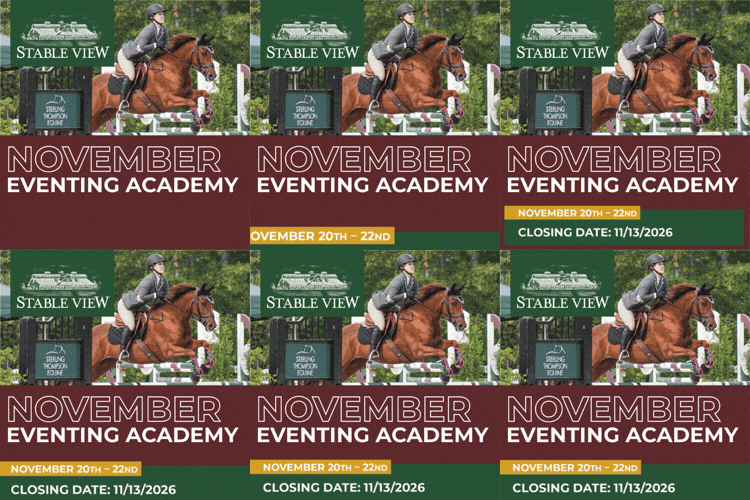
Stable View Aiken Opener H.T.: [Website] [Entry Status]

Wednesday Reading List:

US Equestrian this weekend rolled out its plans for furthering Diversity, Equity, and Inclusion within its membership and beyond. The organization announced new marketing initiatives, a plan to partner with existing organizations working with underrepresented demographics, and a newly-created Opportunity Fund with $50,000 earmarked from the 2022 budget. You can learn more about this and other updates coming from the US Equestrian Board of Directors meeting here.

Cool job alert! Haygain is currently hiring a Marketing Specialist with a focus on web and graphic design. This is a full-time, remote position with salary and benefits. Click here to learn more about this position.

Speaking of jobs, if you’re thinking of packing up and joining the working student or grooming ranks, we’re keeping our list of open positions up-to-date right here.

A consistent presence on the USEA calendar each winter, this year’s Educational Symposium will sadly not happen. The decision was made due to the COVID-19 pandemic and ongoing risks associated with large gatherings.

Collegiate eventing is something I wish had been around when I was in school. One team that’s really made a name for itself is that of the University of Georgia. The team was just featured in the UGA newspaper, The Red & Black.

Trailering woes can be a big issue for horse owners. Once a horse finds they are anxious in the trailer, the situation can turn stressful and dangerous in a short time. Use these tips from the FEI to help make loading and trailering more stress-free for everyone involved, especially your anxious horse.

MIMclip technology will see an increased frequency of usage on cross country courses thanks to new FEI testing standards and rules implemented for 2021. These devices allow a fence to collapse under either forward or upward pressure and are designed to prevent the occurrence of rotational falls. Learn more about this technology and what it means for course design going forward here.

Wednesday Video Break: I always love scenes from the famous “Madden Mountain”, home of show jumping legend Beezie Madden.

Breakfast Roll Call at the winter barn. 🦄🏠

Posted by Beezie Madden / John Madden Sales, Inc on Tuesday, January 19, 2021

Adequan USEF Youth Team Challenge: What You Need to Know

Gold for Area VIII. Photo by Shelby Allen.

2021 brings about some changes to the youth competitions here in the U.S., with the former North American Youth Championships (NAYC) evolving into this year’s Adequan USEF Youth Team Challenge. This evolution, USEF Managing Director of Eventing Jenni Autry says, came about after the NAYC repeatedly encountered difficulty fielding international teams. In an effort to more closely align the Young Rider program with the USEF Eventing Pathway Program, the Youth Team Challenge also emerges as a way to expand opportunity to a greater number of riders.

In order to field a larger pool of talent from which to select championship teams, the U.S. here takes a page from the books of federations such as Great Britain, Ireland, and Germany. In these and other European countries, young riders enter the funnel at a much younger age, meaning that by the time they reach the senior level they’ve already had some legitimate team experience under their belts. It’s this model that USEF Development and Emerging Coach Leslie Law hopes to emulate.

“Certainly in the U.S. what we’re trying to do in a way is change the culture of it a little bit,” he explained on an informational webinar hosted by the USEF last night. He went on to explain the importance of this experience under pressure, citing the fact that the U.S. has often put riders on championship teams who had no previous team experience. This, he says, is an area of opportunity, and a reason behind this new Youth Team Challenge.

The team of Jenni Autry, USEF Development Coach Leslie Law, former Young Rider Caroline Martin, and USEF Eventing Performance and Program Support Director Christina Vaughn provided their vision for this new program in the webinar, which expands both the age limitation and the number of competitions available to riders ages 14-25. The full informational webinar has been made available for on demand viewing on the USEF Network.

Below are some key takeaways from the informational webinar. For full information on the USEF Youth Team Challenge, click here.

When do riders need to declare for their respective areas?

The deadline for area declarations is January 29 at 5 p.m. EST. The Area Declaration form is found in an athlete’s MyUSEF account under the Athlete Dashboard. Jenni Autry advised that even if a rider is not yet qualified for a level, submitting a declaration will allow the USEF to have everything in order for when the rider does achieve their qualification later in the year. Information about declaration can be found in the Selection Procedures here.

What are the age ranges for each level?

  • CCI1* – 14 through 18
  • CCI2* – 14 through 21
  • CCI4* – 16 through 25

What events will host the NAYC competitions and finals?

The host venues are expected to be announced soon. We do know that there will be five events on the East coast and four on the West coast, all in Short format, culminating in a Long format final on each coast in the fall.

What will be the team format at NAYC competitions?

A team may be comprised of up to four riders, with three the minimum to field a team. Areas may also send individual riders. At the Short format events, areas may field up to two teams. Mixed teams may also be available. Foreign teams will also be welcomed; riders should reference their own Federation’s selection criteria.

Other notable takeaways:

  • Riders will not be required to stay at the level they begin the year at – so, they could start at CCI2* and end at CCI3*, with proper qualifications
  • There will not be a CCI1* offered at each venue; it is the USEF’s hope that more venues will add CCI1* courses in the coming seasons
  • Riders will not have to compete in each leg in order to qualify for the year-end final

Have more questions? The USEF has published a Q&A addressing common questions about the Youth Team Challenge, and you can also reach out directly to Jenni Autry ([email protected]) or Christina Vaughn ([email protected]) with further inquiries.

Remembering The Alchemyst

Debbie Rosen and The Alchemyst at the 2014 Rolex Kentucky Three-Day Event. Photo by Jenni Autry.

We are saddened to report the passing of Debbie Rosen’s longtime upper-level partner, The Alchemyst. The Canadian Sport Horse gelding was 22 years old.

Debbie and The Alchemyst competed at the top levels of the sport from 2007 through 2015, also acquiring two then-four-star completions at the Rolex Kentucky Three-Day Event in 2009 and 2010. The West coast-based pairing was a regular sighting at events scattered up and down California and was a source of deep inspiration after Debbie underwent breast cancer treatment in 2009. Her chemotherapy was completed just a month before the 2010 edition of Kentucky – before that came multiple surgeries – where she would go on to finish 36th overall aboard “Al”.

Big Al said it was time to go. He made my dreams come true and then went on to live his best days with Lauren Sherrill….

Posted by Deborah Rosen on Monday, January 18, 2021

Debbie sent the following tribute to her friend:

“Al had a buck known coast to coast and made five-star fences feel like cross rails. He both terrified and thrilled me every time I stepped in the tack and I came off of him more than all other horses combined. And yet, when I was chemo sick, he watched over me like a parent and babysat even the smallest of children. I think his youngest passenger was 10 months old.

He lived for the roar of the crowd when he show jumped around Rolex clean and the noise was deafening, you could feel his heart burst with pride.

He loved to travel and one year we drove just the two of us across the country. At one point, the wind was blowing semis over so I pulled to the side of the road and got in the trailer with him. The trailer felt like it was going to rock off its axles but we just huddled up until it was safe to continue. He just patiently waited, munching hay, until we could get on with it. He never saw what the fuss was about, in general.”

The Alchemyst truly became the vessel through which Debbie lived out some of her biggest dreams. In 2015 at the conclusion of his upper-level career, Debbie elected to allow her partner to become a teacher, sending him to reside with Lauren Sherrill. He remained under Lauren’s care, traveling with her from the East coast to California to Arizona, all the way through his final days.


View this post on Instagram


A post shared by Lauren Sherrill (@lsherrill92)

“You taught me more lessons than I ever imagined possible,” Lauren wrote in a statement. “I will forever miss getting to gallop cross country with you. There will never be another like you. What I’ll miss the most, though, are the quiet moments at home. From cuddles in your stall while you napped just before attacking a cross country course, to the bareback trail rides to watch the sun rise or set.”

Please join the Eventing Nation team in sending condolences to Debbie, Lauren, and everyone else who loved The Alchemyst. Please share your favorite “Al” memory in the comments.

Weekend Winners: Majestic Oaks, Fresno County Horse Park

Welcome to a fresh edition of Weekend Winners! We’ve got plenty of highlights from around the country to get to, so let’s jump right in.

Our Unofficial Low Score Award winner from the weekend was earned by Sofie Vane Olmen and Highlife’s Je Taime. This pair finished their weekend with a win in the Beginner Novice B division on a final score of 20.0. This is a personal best for the pair, their previous having come at Rocking Horse last February, where the finished on a 31.2. Looks like that off-season work is paying off – well done!

Let’s take a look at who else took home the blues this weekend:

Horse Trials at Majestic Oaks: Final Scores

Open Preliminary A: John Michael Durr and PDQ Leigh (31.1)
Open Preliminary B: Eliza Farren and Creffino PJ (29.1)
Preliminary Rider: Ella Kay Lane and Dark Shadow’s (26.6)
Open Training A: Caroline Martin and Redfield King (32.3)
Open Training B: Caroline Martin and Redfield HSH Conner (25.5)
Training Rider A: Tracey Corey and Byrnwyck West (29.8)
Training Rider B: Stephanie Sills and Salt (29.1)
Novice Rider A: Lily Allen and All Aboard (31.4)
Novice Rider B: Emma Tuit and Rapid Romero KV (26.2)
Open Novice A: Ariel Grald and In Vogue (28.6)
Open Novice B: McKena Knott and Alice Alice (22.1)
Beginner Novice Rider A: Crissa Gillette and EPA Wildfire (28.8)
Beginner Novice Rider B: Sofie Van Olmen and Highlife’s Je Taime (20.0)
Open Beginner Novice: Conor Rollins and Meerfalken (26.8)
Starter: Kathleen Roof and Light the Lights (36.4)

Fresno County Horse Park Combined Rest: Final Scores

Advanced CT: Lauren LoPiccolo and Diego (38.6)
Intermediate CT: Alexis Helffrich and Graceland’s Lincoln (30.9)
Open Preliminary CT: Amber Levine and Keep Calm (23.9)
Open Training CT: Amber Levine and Lordanna (23.6)
Training Rider CT: Samantha Stewart and Pride of Tautane (34.5)
Open Novice A CT: Mia Brown and Duke HW (26.7)
Open Novice B CT: Sue Buxton and Clintwald (21.4)
Beginner Novice A CT: Khloe Garrett and Cloud Nine (30.8)
Beginner Novice B CT: Chloe Black and Leap of Faith XI (31.1)
Open Beginner Novice CT: Kelsey Holmes and Karel H (28.6)
Open Intro CT: Laura Tesone and Ehrens Freedom (25.8)

A 28 in dressage and a clear show jump round to begin our partnership. I’m over the moon 💖

The village that helps me step up for this girl grows every day and you are all in my head every step we take.
VC Kim Goto Miner
Equine body work Sara Lujano

#grateful #ottb #panthermackeynbs #newyearnewdream
New Beginning Sporthorses Foundation
Wild Ride Eventers

Posted by Deborah Rosen on Sunday, January 17, 2021

Other Results from This Weekend:

Carolina Horse Park Pipe Opener

Full Gallop Farm Schooling Show

Pine Hill GHCTA Schooling H.T.

Stable View Winter CT

Teaching Truths: Daniel Sarango on Partnership, Wellness, and Why You Don’t Have to Be Perfect

Welcome to EN’s latest educational series, “Teaching Truths”, in which we tap up-and-coming and established professionals for their core training philosophies. Horsemanship runs at the core of our first trainer, Georgia-based Daniel Sarango, who helps run Le Bonheur Equestrian at Chatsworth Stud with a critical eye to horse care and rider wellness.

Daniel Sarango and Koninklijke Diamant DS, an approved stallion he has produced. Photo by Maggie Perkins.

Daniel, who has been at Chatsworth for over nine years, is now in charge of the breeding and training business, working with boarders and horses in training as well as providing coaching at shows. He’s also heavily involved in producing the horses bred at Le Bonheur, priding himself on the fact that he’s often there when the foal is born all the way through their first steps under saddle and early competitions.

“I’m very blessed in my life, I have a great team and I’ve been able to learn so much about management and horsemanship,” Daniel, who immigrated to the U.S. from Ecuador in 2012. “We are so focused on working the horses in their bodies and creating partnerships with them. It’s more important to have a partnership and work them in the way they like to make them stronger.”

We dove into the core philosophies that Daniel employs during every interaction with horses and students alike.

Daniel and Icarus Chatsworth DS. Photo by Maggie Perkins.

Build an Invaluable Partnership

A happy horse will, at the end of the day, outperform her unhappy counterpart who is just going through the motions. As a part of his role with producing the young horses coming through the program, Daniel spends time deciphering what the horses’ strengths are and what they’re communicating to him. “You need to find the job that the horse likes,” he explained. “Not every horse can be an eventer or a jumper. You need to learn what your horse enjoys and what he’s good at – then you can build your relationship.”

Think of it this way: a horse spends the majority of the day in a stall or a turnout and just an hour or two under saddle. In order to maximize this time, a horse must be focused, comfortable in the body, and happy. Time, he says, is the best ingredient for building this comfort level and knowing your horse inside out. “When you start to spend more time with the horse, the horse will start to give you a better feeling,” he said.”

Teaching Sterling Pollard. Photo by Anna Bosworth.

Hone Your Technique

A rider’s education is ongoing, and because of this it’s important to instill proper technique and form in order to ensure correctness of training. Daniel likens improper technique in the saddle to improper technique in the gym – soon enough, this bad form will catch up with you and cause injuries or lack of progress.

“Some people ride every day incorrectly,” he said. “And that doesn’t make the horse stronger, yet they’re being asked to do more and more. Horses start to have pain and then poor behavior comes.”

Daniel Sarango and Katarina Van De Heffinck. Photo by Pat Schmidt.

Implement Wellness and Recovery

The team at Chatsworth has always been fitness focused, and Daniel says rider fitness and taking proper care of our bodies is key to any success in the saddle. This was a realization that came to him later in life, however.

“I never thought you had to be fit to ride a horse,” he recalled. “I thought you just needed to ride and ride and ride every day. I came from Ecuador and was in the anti-narcotics police, and every four months we were given fitness tests. I never thought in my life that being fit could help you ride.”

After beginning his tenure at Chatsworth and learning the Crossfit ways of Michael Pollard, Daniel’s outlook was changed. If anything, he says, taking proper care of ourselves is a way to deal with the everyday stress that comes with running a horse business.

“One of the best medicines for stress is exercise,” he explained. “And you don’t need to do too much, but you just need to invest in your body and your life. If you’re happy, your horse will be happy, too. Everything is about energy.”

In the same vein, Daniel says that he encourages everyone in his program to implement proper recovery – for both themselves and their horses. “You can have all the muscles you want, but too much will stress ligaments if you don’t do proper stretching and recovery,” he said. “The body needs time to recover.”

Daniel and Carmac at Pine Top. Photo courtesy of Hoofclix.com.

Don’t Chase Perfection – Chase Improvement

In teaching clinics, Daniel says he often comes across riders who feel they need to be perfectly “on” during their lesson. This isn’t so, he explains. “I feel the more you try to do, the more stressed the horse will be,” he said. “It’s not stressful. One lesson isn’t going to fix everything. I’m just going to observe and give you some advice to improve. We are all so different – we can’t expect ourselves to always be perfect and ride really nice and be straight all the time.”

Improvement, not perfection, should be the goal. Daniel encourages everyone who rides with him to open their minds to learning. “You need to find the way that is good for your horse,” he said. “You can do many good things if you want, when you’re able to open your mind.”

Hoping for the Best, Preparing for the Worst: How We Can Help the Kentucky Three-Day Survive

Photo by Leslie Threlkeld.

The economic devastation of the global coronavirus pandemic continues to impact businesses both large and small, forcing quick thinking and willingness to pivot in order to survive. In the wake of the cancelation of the 2020 Land Rover Kentucky Three-Day Event, Equestrian Events, Inc. (EEI) — the organization that has managed major horse trials at Kentucky Horse Park since 1975 — is looking ahead to this year’s event, scheduled for April 22-25, with cautious and realistic optimism.

With many variables still up in the air, EEI Executive Director Lee Carter this week issued a letter stating his team’s determination to run the event. The state of Kentucky, at this juncture, has allowed small percentages of spectators at sporting events, which Lee views positively as he looks to April. The event’s success this year, he says, is highly reliant on ticket and spectator revenue. This remains a fluid situation, however, as the state remains in the “Critical” tier for its Current Incidence Rate and the COVID-19 vaccine has been slower than anticipate to roll out.

EEI was forced to reduce its staff by nearly 70% at the height of the economic withdrawal, but was able to secure Paycheck Protection Program and Economic Injury Disaster funding to bring its staffing numbers back up to 50% — still a skeleton crew of six for the monumental task of pulling off an international event.

Regrettably, Lee says, the prospect of running without spectators at all is not financially feasible. The organization has $900,000 in its reserve from rolled over ticket and sponsorship sales. If the event is canceled or run without spectators, those funds will need to be returned, effectively eliminating the funding to run the event at all.

So what can we do to support what was North America’s sole five-star until the Maryland Five Star came to fruition? Lee says Equestrian Events, Inc. is asking for tax-deductible donations and is also open to suggestions for fundraising and other ways to salvage the event in the worst case scenario.

“We are a 501(c)3 nonprofit, but historically we have not gone out and solicited donations,” he explained. “We haven’t needed to, as the event in April has sustained us. We know how hard other, smaller events work to stay afloat and we don’t want to take away from that. We want to use our event to lift up the entire sport as best we can.”

“Those funds rolled over from 2020 are going to come due one way or another,” Lee said. “So if we have to refund everybody, how much do we have left and how much can we deal with?”

There are too many variables to make a definitive call right now. Lee says EEI will apply for the second round of funding for the Paycheck Protection Program, which opened up this week. He also feels comfortable with the status of EEI’s investments — though a tumultuous market in 2020 has him cautious in terms of future projections.

At the end of the day, Lee does “believe there is a pathway forward,” but with so much still up in the air — and likely still to change — the best he can do is plan for the best but prepare for the worst.

Lee told EN he is happy to accept ideas for fundraising or other means of assistance — those interested in providing feedback can email [email protected]. You can also make a tax-deductible donation to EEI here. Those donating $500 or more will qualify for an exclusive ticket presale for the 2021 event.

“The eventing community is tremendous,” he said. “I meant what I wrote in my letter that we know they will do whatever we ask them to do to run this event responsibly. There is a scenario where (the end of the event) is where we are, but there is also a scenario where we live to fight another day.”

We will continue to update this story as it evolves. Go Eventing.

Thursday Video: Teaching a Thoroughbred to Jump with Elisa Wallace

Many of our readers may be working with a new off-track Thoroughbred this winter, and Elisa Wallace has some advice on starting these athletic horses over fences in their new careers.

Elisa spends time working over fences with show jumper Anne Kursinski on her 7-year-old lightly raced Thoroughbred, I Reckon So or “Ricky”. “You can see he’s sorting out his body and his balance,” Elisa explains, observing the horse’s reactions to the new concept and reiterating that it’s important that the horse is allowed to understand each question and learn through mistakes.

Other key takeaways from Elisa’s pointers:

  • Repetition is key – allowing the horse to learn little by little over a fence should yield more understanding
  • Do your best to stay out of the horse’s way – assume a neutral, stable position over the fences, avoiding yanking the mouth or otherwise punishing the green horse for jumping
  • Allow the horse to sort out his own balance

Elisa is always hard at work producing more content for her followers, and you can support her endeavors through Patreon by clicking here.

Volunteer Nation: Five Opportunities to Help Out This Weekend

One of Stable View’s hardest working volunteers, Zeus! Photo courtesy of Stable View.

There are numerous opportunities available to help out your local event this weekend as the eventing season begins to wake up for the year. Don’t forget, the USEA Volunteer Incentive Program is full of year-end prizes and rewards for dedicated volunteers who spend time helping out. Your help goes a long way!

We’ve compiled some resources on volunteering with COVID-19 regulations in mind. We’ll reference this list each week in Volunteer Nation, so take a few moments to familiarize yourself with what’s new and different.

COVID-19 Resources for Eventers
Volunteers Adapt to the New Normal
Volunteers Weigh In on New COVID-19 Protocols

As always, you can earn merit points when you donate your time through the USEA’s Volunteer Incentive Program. Registering to volunteer through EventingVolunteers.com makes it easy and seamless to both find a job and shift as well as learn what your role will entail.

Event: Carolina Horse Park Pipe Opener
Dates: Saturday, January 16
Address: 2814 Montrose Rd., Raeford, NC, 28376
Positions Available: General Help, SJ Jump Crew

Event: Fresno County Horse Park January Combined Test
Dates: Friday, January 15 through Sunday, January 17
Address: 7430 North Weber AVe, Fresno, CA, 93722
Positions Available: Dressage Crossing Guard, SJ Jump Crew

Event: Horse Trials at Majestic Oaks
Dates: Saturday, January 16 through Sunday, January 17
Address: 17500 N US Highway 441, Reddick, FL, 32686
Positions Available: Hospitality Steward, Floater, XC Crossing Guard, XC Finish Timer, XC Jump Judge, XC Score Runner, General Help, SJ Jump Crew, SJ Scribe

Event: Pine Hill GHCTA Schooling H.T.
Dates: Saturday, January 16 through Sunday, January 17
Address: 1720 Hwy 159 East, Bellville, TX, 77418
Positions Available: Greeter, Parking Steward, XC Crossing Guard, XC Finish Timer, XC Jump Judge, XC On-Course Timer, Event Takedown – XC, Floater

Event: Stable View Combined Test
Dates: Saturday, January 16
Address: 117 Stable Drive , Aiken, SC, 29801
Positions Available: Dressage Score Runner, Dressage Scribe

Also seeking volunteer help this Friday, January 15 is Martin Douzant of The Frame Sport Horses. This young horse clinic is being held at Milestone Sport Horses in Lovettsville, Va.

We're looking for a couple of volunteers for the day for this Friday the 15th, at Milestone Sport Horses in Lovettsville for our Jump Chute Clinic. If you are available and would like to spend the day helping and learning, let us know!

If you're already participating in the Young Horse Show Series you can earn $50 for the day.

Thanks!!

@milestonesporthorses Milestone Sport Horses
#volunteer #gratitude #education #horses #younghorses #younghorseshow #VAhorses #horsetrainer #jumper #hunterjumper #equestrianlife #equinelife

Posted by The Frame Sport Horses on Tuesday, January 12, 2021

Three Mental Health Hurdles Every Eventer Can Relate To

What do event riders struggle with the most in terms of mental health? It’s no secret that the inextricable reach of the internet and social media has made everyone just a bit more miserable. Comparison being the thief of joy and all, this element can pile on to the mountain of worries we all carry at any given moment.

I spoke at length with Sarah Carlan, MSW, a licensed social worker and transformational coach, about the nuances of being an equestrian and how the sport affects our view of ourselves. Truth be told, I left the conversation feeling a little less alone.

In her work with not only equestrian athletes but also individuals from varying backgrounds who passionately pursue their endeavors, Sarah has observed several commonalities among riders. An eventer herself, she understands the mental demands of the sport – and she wants everyone reading this to know that they aren’t alone in the insecurity they feel. Indeed, it’s true that we all feel these at some point along the way.

“To use a horse as an analogy, if our horses are worried about life or spooky or have ulcers, it doesn’t matter how perfectly we get them to the base of the fence – they’re not going to really be able to demonstrate their greatness,” she explained. “And so we have to take care of those fundamental pieces before we really expect them to perform at their peak.”

Sarah Carlan. Anna Lens Equine Photo.

The same concept applies to us as riders. What does Sarah work with riders the most on? Let’s dive in:

Equestrians often feel diminished when explaining their sport to “non-horse folk”.

“Horse people struggle with the difficulty of explaining to the general population why we do what we do. It is a very privileged sport. But a lot of us figure out how to scrape it together, and the amount of sacrifice it takes is tremendous.

Yet people see it as an elite, privileged sport. What they don’t see is what drives most of us to be there. At our core, especially the amateurs working full-time and riding at night, taking their one vacation week to go to a show, we are willing to sacrifice just about anything. It’s hard for others to understand why we do that, and that can feel us leaving unseen.

That’s why horse people can’t stop talking about horses when they’re with each other! Because they feel seen. It’s such a core passion, it’s in our DNA, so to have other people get it is really incredible.”

Many riders have grown accustomed to self-criticism as a form of “toughness”.

“Think of the early coaches you might have had that screamed and yelled. Now think of how that might affect you now. How do you approach improvement? Through curiosity, or through self-flagellation?

We are taught that if we aren’t super hard on ourselves, we aren’t going to make it. We beat ourselves up, and then nerves arise from these expectations of doing well. While there is such a thing as the other side of the coin – too much positivity with too little accountability – there is a huge difference between accountability and self-flagellation, but many riders don’t seem to understand the distinction.”

The performance of an eventer is impacted by many variables, making for a mental rollercoaster.

“We as riders are very performance oriented, and our evaluation of our performance is impacted, especially in eventing, by so many variables that if we don’t have a very good, stable ego, it can knock us off so easily.

You can go to a hunter/jumper show and your chances of getting a few ribbons – a few chances to get it right – are pretty high. But at an event, one mistake might ruin your entire weekend, and you don’t get another chance to do it. Imagine the pressure this creates!”

Mindfulness. It’s likely a term you’ve heard or read about at some point – but how does it play into our riding (and our everyday lives)? This is a topic we’ll be diving into with Sarah in the coming weeks – and she wants to answer your questions, too! In an effort to create a more open dialog around the topic of mental health (destigmatizing for the win!), we’ll be working with Sarah to answer reader-submitted questions and explore the concepts of mindfulness and mental health in equestrian sports.

Do you have a question you’d like Sarah to answer in a future column? Please tip me by emailing [email protected]. Questions can be provided anonymously.

What’s On Tap for the US Equestrian Annual Meeting This Week

Vicki Lowell (far right) leads a panel discussion with (far left to right) Andrea Evans, Taryn Young, Rich Cronin, and Bob Hughes at the 2020 US Equestrian Annual Meeting. Photo courtesy of
US Equestrian.

The US Equestrian Annual Meeting commences this afternoon and will continue with virtual sessions through Sunday, January 17. The sessions will be available for live viewing via Zoom and the 2020 USEF Pegasus and Horse of the Year Awards Celebration will be broadcast on the USEF Network. You can view the full schedule, along with Zoom registration links, here.

Wednesday, January 13:

Tune in at 4 p.m. ET for the Member Services Council Presentation, operating with the theme “Ideas Into Action”. Expect this to be an overview of accomplishments and upcoming goals from each department of the USEF.

Then at 6 p.m. ET, tune in for what is sure to be a popular session: Competitions – Member Feedback, Survey Results and Next Steps. During this session, US Equestrian CEO Bill Moroney will address member ideas and feedback submitted to the USEF Competitions Task Force.

Thursday, January 14:

At 4 p.m. ET, tune in for the National Breeds & Discipline Council – Grassroots to Grand Champion session.

Friday, January 15:

The International Disciplines Council will meet at 4 p.m. ET to discuss the concept of growth across FEI disciplines, both at home and abroad. The International Discipline Council will also present updates on the Olympics and the path forward to the Los Angeles Olympics in 2028.

Saturday, January 16:

A General Session will be held at 4:30 p.m. ET lead by USEF President Murray Kessler and President-Elect Tom O’Mara along the theme of Listen, Learn, and Lead Together.

Then, at 7:30 p.m. you can tune in for the 2020 USEF Pegasus and Horse of the Year Awards Celebration, which will be carried live on the USEF Network.

Sunday, January 17:

Finally, two public sessions of the Board of Directors Meeting will be held, the first from 11 a.m. – 12 p.m. ET and the second at 12:30 p.m.

For more information and to register for the sessions you’d like to follow, click here.

Wednesday News & Notes from Haygain

Michele’s comprehensive program allows for her students and clients to fully understand the why’s and how’s of riding…

Posted by In Stride Equestrian on Saturday, January 9, 2021

When I joined the Equestrians of Color Facebook group, I was anticipating meeting some incredible new people from a rich and diverse array of background. What has been particularly positive to see are the posts from professionals and trainers welcoming BIPOC, LGBTQ+, and every other rider into their program. Seeking out a new barn or a new trainer is an overwhelming process to begin with; add in any type of marginalization and many riders feel uncomfortable at the prospect of starting their search.

Will the people at this barn accept me, or will they stare at my hair? Will the coach treat me as the equal of the other riders, or will they make assumptions about my ability based on my looks? These are questions riders must ask, and having professionals stepping up to be visible allies is invaluable. Many thanks to Aiken-based Michelle Arana of In Stride Equestrian for making a post voicing her allyship. “As an equestrian of color I want to support brown and black communities through my business and offer discounted lessons,” she wrote in the group. You can reach out to In Stride Equestrian though the embedded post above.

U.S. Weekend Preview:

Horse Trials at Majestic Oaks: [Website] [Entries]

Fresno County Horse Park Combined Test: [Website] [Schedule]

Wednesday Reading List:

New year, new clean barn? It’s a great time of year to refreshing your barn – but are you missing two key culprits of unhealthy barn air? The latest blog from Haygain details the importance of hay and bedding in terms of their contributions to air quality and your horse’s respiratory system.

“I’m not saying you can’t have any fun with horses, just that you have to maintain your focus on why you ride, rather than on how you did at the last competition.” Jim Wofford muses on the effects of the pandemic – both positive and negative – on riding in this thought-provoking read from Practical Horseman.

Following the FEI suspension of Australian eventer Callum Buczak after he was charged with rape in 2019, fellow rider Alexandra McDonough has also been suspended on allegations of stalking and psychological abuse of the alleged rape victim.

Looking to sharpen your skills this off-season? Add these polework exercises from top British eventers to your list of things to do.

Australian race trainer Annabel Neasham has seen every corner of the equestrian world. A former show jumper, eventer, point-to-point rider, and Mongol Derby winner, Annabel is now striking off on her own with an all-female team with an eye to reach more racing success. Get to know Annabel in this piece from Paulick Report.

Wednesday Video Break: Learn all about northern California-based Brittney Chambers of CBC Therapeutic Horseback Riding Academy and her mission to empower more kids through horses in this interview with Elysia Buss.

Tuesday Video from Kentucky Performance Products: Visit Courtney Cooper’s Winter Base in Aiken

🐴 Here we go! On today's extended version of #TrainingTipTuesday we're spending the day with Courtney as she takes us on a behind-the-scenes tour on the farm in Aiken! Meet the horses, catch up on what everyone is planning for the winter and meet the new staff (some new faces and some you'll know!)

☀️ Don't forget to post your questions in the comments for Courtney, and thanks for joining us to enjoy the Aiken sunshine!

Posted by Courtney Cooper, C Square Farm on Tuesday, January 5, 2021

Courtney Cooper, of C Square Farm and Excel Star Sport Horses, has made her annual trip to Aiken, Sc. for the winter, and in the latest of her social media video series she takes us on a tour of the facility she and her team will call home for the next few months. Featuring plenty of turnout space and even a cross country field, this Aiken base is a true eventer’s paradise. Enjoy the tour!

Fight back against an energy crisis that can impact condition and performance.

Equi-Jewel® is a high-fat, low-starch and -sugar formula developed to safely meet the energy needs of your horse.

Whether you have a hard keeper that needs extra calories to maintain his weight, or a top performance horse that needs cool energy to perform at her peak, Equi-Jewel can meet your horse’s energy needs. Equi-Jewel reduces the risk of digestive upset, supports optimal muscle function, maintains stamina, and helps horses recover faster after hard work, all while providing the calories your horse needs to thrive.

The horse that matters to you matters to us®.

Not sure which horse supplement best meets your horse’s needs? Kentucky Performance Products, LLC is here to help. Call 859-873-2974 or visit KPPusa.com.

Land Rover Kentucky Three-Day Event Wants to Run with ‘Carefully Managed’ Amount of Spectators

Photo by Leslie Threlkeld.

Equestrian Events, Inc. (EEI) Executive Director Lee Carter wrote a letter updating followers on the status of the Land Rover Kentucky Three-Day Event, presented by MARS Equestrian. Currently scheduled for April 22-25, 2021, Mr. Carter says that the goal is to run both the Three-Day and the Kentucky Invitational Grand Prix “with a carefully managed level of spectators”. The 2020 Kentucky Three-Day Event was canceled due to the coronavirus pandemic.

“For months the single, most asked question we’ve heard is, ‘What will the 2021 Kentucky Three-Day Event look like?’,” he wrote. “Our typical responses ranged from, ‘Great question,’ to ‘it changes every day.’ These answers are still applicable.”

“We cannot achieve our goal alone,” he continued. “We have been and continue to be in constant contact with US Equestrian, the Commonwealth of Kentucky, and the Kentucky Horse Park. The approval for spectators from each of these organizations is key to achieving our goal. These partners also recognize the challenges ahead and the work that must be done. They too are resilient.”

As the coronavirus refuses to yield its hold on the world, vaccine manufacturers are scrambling to produce the massive quantities that will be needed to inoculate enough people. Despite limited vaccine availability, some states in the U.S. have began to allow spectators back into sporting events. These stadiums, primarily within the National Football League, are operating on a case-by-case basis and allowing small amounts of spectators in states such as Florida and Texas. Looking to the status of spectators in Kentucky, the University of Kentucky did allow for about 12,000 spectators at its football games over the fall season after governor Andy Beshear authorized 20% capacity at stadiums back in September.

We will continue to keep you abreast of any changes in the ongoing situation surrounding the status of events and spectators. Go Eventing.

Equestrian Sports New Zealand Names 2021 High Performance Eventing Squads

Jonelle Price and Faerie Dianimo. Photo by Tilly Berendt.

Equestrian Sports New Zealand has named its 2021 Eventing Squads, consisting of High Performance, High Performance Futures, High Performance Potential, Talent Development, and Talent ID lists. The new season brings about a change in management, with Jock Paget announced as the High Performance general manager late last year.

“It has been a tough year for everyone in many ways but particularly for gaining selection onto a squad given there haven’t been many opportunities to show form,” Jock said. ESNZ high performance eventing manager Graeme Thome recognized the collective efforts of all involved for pulling together through the rollercoaster that was 2020. “I cannot say enough about the efforts everyone has made during this trying time,” he said. “Our riders have been immeasurably supported by their owners. Our support team of coaches and horse health professionals have been making every effort possible to make things happen.”

Tim Price and Ascona M. Photo by Tilly Berendt.

Featuring prominently among the High Performance selections is the power duo of Jonelle and Tim Price, who between themselves have eight horses named to the top squad. Included among this star-powered list are 2019 Luhmühlen winner Ascona M, 2018 Burghley winner Ringwood Sky Boy, 2018 Badminton winner Classic Moet, and 2018 Luhmühlen winner Faerie Dianimo.

Clarke Johnstone and Balmoral Sensation. Photo courtesy of the Australian International 3DE.

Also making the High Performance squad for 2021 are Clarke Johnstone with his seasoned campaigner, Balmoral Sensation. This pair came sixth individually at the Rio Olympic Games in 2016 and also won the Adelaide International then-CCI4* in 2017.

All three riders are also named to the High Performance Futures Squad.

ESNZ Eventing High Performance Squad:

  • Clarke Johnstone – Balmoral Sensation (Johnstone family)
  • Jonelle Price – Classic Moet (Trisha Rickards and Jonelle Price)
  • Jonelle Price – Faerie Dianimo (Trisha Rickards, Jacky Green and Jonelle Price)
  • Jonelle Price – Grovine de Reve (Therese Miller, Jo Preston-Hunt and Philip Hunt)
  • Tim Price – Ascona M (Suzanne Houchin, Lucy & Ben Sangster and Sir Peter Vela)
  • Tim Price – Bango (Numero Uno Syndicate)
  • Tim Price – Ringwood Sky Boy (Robert Taylor, Varenna Allen and Tim Price)
  • Tim Price – Xavier Faer (Trisha Rickards, Nigella Hall and Tim Price)
  • Tim Price – Wesko (The Windrush Equestrian Foundation)

ESNZ Eventing High Performance Futures Squad:

  • Amanda Pottinger – Just Kidding (The Pottinger Family)
  • Bundy Philpott – Tresca NZPH (Bryan Philpott and Bundy Philpott)
  • Caroline Powell – On The Brash (Sarah Tobey and Sue Smiley)
  • Clarke Johnstone – Aces High (Johnstone Family)
  • Dan Jocelyn – Blackthorn Cruise (Panda Christie and Dan Jocelyn)
  • James Avery – One of A Kind (Hazel and Chloe Livesey and James Avery)
  • James Avery – Mr Sneezy (Tiny Clapham, Heidi Woodhead and James Avery)
  • Jesse Campbell – Cleveland (Kent Gardner and Jesse Campbell)
  • Jesse Campbell – Diachello (Kent Gardner and Jesse Campbell)
  • Jonelle Price – McClaren (David and Katherine Thomson)
  • Jonelle Price – Grappa Nera (The Grape Syndicate and Jonelle Price)
  • Maddison Crowe – Waitangi Pinterest (Crowe Family)
  • Monica Oakley – Acrobat (Monica Oakley)
  • Monica Oakley – Artist (Monica Oakley)
  • Tim Price – Falco (Sue Benson, Jackie Oliver and Tim Price)

To view the remaining ESNZ talent lists and the full press release, click here.

Ms. Jacqueline Mars Receives USEA President’s Lifetime Achievement Award

Ms. Jacqueline B. Mars accepting the R. Bruce Duchossois Distinguished Trustee Award at the 2017 Gold Medal Club Reception with Tucker Johnson (left) and Brownlee O. Currey, Jr. (right). Photo courtesy of the USET Foundation.

Ms. Jacqueline Mars, a beloved longtime supporter of the sport of eventing, was awarded the USEA President’s Lifetime Achievement Award during the virtual USEA Year-End Awards Ceremony on Friday. Ms. Mars has been involved with countless facets of the eventing industry, supporting the careers of riders such as Karen and David O’Connor, Lauren Nicholson, and Hannah Sue Burnett, breeding quality sport horses, administering millions in grant funding to further U.S. eventing, and much more. She is a true champion of and believer in the sport of eventing and has never missed a chance to put her full weight behind that belief.

“It is perhaps her emotional and physical support that means the most to us,” USEA president Max Corcoran said during the ceremony, which can be viewed in its entirety here. “Having her at the events both local and international watching and cheering her horses on, whether it’s Beginner Novice or at a five-star event, she’s always there to lend a hand, to give a pat on the shoulder, wipe away a tear, or celebrate a victory.”

“She is compassionate and encouraging,” Max continued. “It is not just her own horses she celebrates, but the victories of all competitors. She is a true supporter of the sport at every level and we are so lucky to have her presence. She is willing to share her wisdom gained from years of experience being around horses and always stays on the forefront of wanting more for the sport, for both horses and riders.”

Ms. Mars was inducted into the USEA Hall of Fame in 2015 and was awarded the USET Foundation’s R. Bruce Duchossois Distinguished Trustee Award in 2017

Please join us in congratulating Ms. Mars on this award and in thanking her for her ongoing generosity and unwavering support of our sport. Go Eventing.

Weekend Winners: Kicking Off the 2021 Season at Barnstaple South

The first event of 2021 is officially done and dusted, which means we’re off and running with Weekend Winners to kick off your Monday mornings. This year, look for more international results to make appearances every now and then as we love keeping tabs on eventing in all corners of the world. If you spot a good story from an event over the weekend, please tip me by emailing [email protected].

Leah Lang-Gluscic got her year off to a rocking start with two wins at Barnstaple South. Bollywood, a 6-year-old Oldenburg gelding who began eventing with Leah in June of last year, picked up the blue in the Open Novice division, also earning the first Unofficial Low Score Award of 2021 on a final score of 23.3. Meanwhile his stablemate, Only the Silk, owned by Lee Thibodeau, finished the Open Beginner Novice event with a win on a score of 26.1. This was the third career start at the level for the 8-year-old Thoroughbred gelding.

Looking to the other divisions, here’s how the weekend concluded (view full results from Barnstaple South here):

Open Preliminary: Jean Thomas and Magic John (41.0)
Training Rider: Taylore Clarke and Excel Star Challenge Accepted (34.2)
Open Training: Maxine Preston and Wants To Be Cooley (27.5)
Open Novice: Leah Lang-Gluscic and Bollywood (23.3)
Novice Rider: Ava Jezowski and Outlander (28.6)
Beginner Novice Rider: Kristen Ayers and Pack Leader (34.8)
Open Beginner Novice: Leah Lang-Gluscic and Only the Silk (26.1)

Identifying Your Bad Habits and How to Break Them

Photo by Shelby Allen.

Let’s face it: we all have a whole slew of bad habits following us around at any given point in time.

Often, a habit becomes so deeply embedded that our movements become nearly automatic, driven not by conscious decision but more by instinct. It’s easy to see, then, how seemingly impossible it can feel to break bad habits or create new habits.

While there are many different numbers of days thrown about in terms of time needed to create a habit – good or bad – the fact is that there is no one size fits all timeline, and habits are created, recreated, and broken through the practice of repetition. If in the midst of your new year goal planning you’ve decided that this is your year of getting over that bad habit hump, Coach Daniel Stewart has some timely advice to take to heart.

“Some patterns deserve to be broken,” Daniel explains. “Let’s say a rider rides really well on Wednesday evening after work, but gets tense and tight at the show on Saturday. That’s their pattern, and it’s not a great pattern. That pattern deserves to be broken.”

Daniel then calls on riders to call upon a new set of behaviors during the times at which we believe we struggle the most. This process – which takes time, practice, and awareness – allows riders to replace their bad habits with a more healthy overall relationship to behaviors.

Let’s use the example of the rider who rides phenomenally at home but succumbs to nerves at competitions. Daniel identifies three time periods in which habits in need of improvement can most frequently be created for riders:

Pre-ride: This could be a fear of failure, a fear of losing, a fear of messing up – all of the things we anticipate before our ride.

Prime-ride: Fears or bad habits that arise in the midst of your ride. This could manifest in the form of mistakes – missing a change, getting a bad distance – and often stem from the pre-ride breakers.

Post-ride: After the ride often comes the disappointment or embarrassment.

“Among those three, identify the times in which you struggle the most,” Daniel encourages riders. “And for each one, come up with a new pattern that you can then use to break that old habit.”

This process of identifying trigger points is important in the process of breaking habits. After all, how are we to know where our outward reactions are coming from if we have not first identified the internal fears and the thoughts those fears generate? Cognitive Behavioral Therapy references a flow of situational thoughts, feelings, and behaviors wherein a situation prompts thoughts, which in turn churn up emotions, which then manifest in the form of our outward reactions. In many cases, we go straight from a situation to the emotions, rather than stopping to identify the thoughts triggered by the situation that have caused these emotions. Thus, negative habits can become automatic and in need of replacement.

A flow explaining situational thought, emotion, and behavior flow. Graphic from Clayton Therapy.

“There is a relationship between pressure and memory,” Daniel says. “As the pressure goes up, our memory often goes down. We forget. So a trigger is something that triggers a rider’s brain into doing tasks automatically without thought.”

In time, a rider who consistently suffers from nerves may have an automatic physiological response to the situation (being at a competition), further reinforcing the idea that showing gives that rider anxiety. By stepping back and identifying these patterns, we can begin to insert replacement habits in a more intentional way.

“The rider who feels nervous as soon as she hears the bell ring for the dressage ring might identify the bell as her trigger and resolve to take a deep breath and open her shoulders,” Daniel says. “But here’s the thing: we have to practice these new patterns in situations where that pressure and tension aren’t there, too. This solidifies the habit through repetition.”

Practice makes perfect, right? Finding a behavioral substitute – taking a deep breath, stretching up through the spine – is all well and good, but it will not become a habit unless it’s practiced in all situations.

“The underlying message is to find the things you’re doing when you’re nervous that happen automatically,” Daniel says in conclusion. “Slow down to identify these trigger points, then work to substitute inappropriate behavior with the positive behavior. Eventually, the brain will think, ‘ok, these two things seem to be related,’ and you’ll soon have a new, better automatic response.”

Just as we can automatically associate getting in a car with putting a seat belt on, so can we create new and healthier habits for ourselves. Make this a challenge for yourself this year – and don’t forget to pre-order a copy of Coach Stewarts fourth book, Bolder, Brave, Brighter: The Rider’s Guide to Living Your Best Life on Horseback, due to be published in February.

Volunteer to Help the First USEA Event at Barnstaple South This Weekend

Photo via Barnstaple South on Facebook.

It’s nearly time for the very first USEA-recognized event hosted at Derek Strine’s beautiful Barnstaple South facility in Morriston, Fl. just to the northwest of Ocala. It’s been just over a year since Derek opened the 80-acre facility to the public with the intent of creating a facility perfectly appointed for eventers, and since then Barnstaple South has played host to multiple events including clinics, schooling shows, and educational symposiums. This weekend’s first foray into recognized events will host riders competing from Beginner Novice up through Preliminary. A second event is also on the calendar for May 1-2, 2021.

If you’d like to have a chance to check out this beautiful new venue and do some early-2021 good for our sport, there are still opportunities to volunteer at Barnstaple South this weekend. You can sign up for the role of your choosing on EventingVolunteers.com. Here’s a look at the jobs still open for this weekend:

  • XC Decorator
  • General Event Prep
  • Dressage Check-In
  • XC Jump Judge
  • General Clean-Up

We’ve compiled some resources on volunteering with COVID-19 regulations in mind. We’ll reference this list each week in Volunteer Nation, so take a few moments to familiarize yourself with what’s new and different.

COVID-19 Resources for Eventers
Volunteers Adapt to the New Normal
Volunteers Weigh In on New COVID-19 Protocols

As always, you can earn merit points when you donate your time through the USEA’s Volunteer Incentive Program. Registering to volunteer through EventingVolunteers.com makes it easy and seamless to both find a job and shift as well as learn what your role will entail.

Don’t Miss the USEA Virtual Year-End Awards Ceremony Tomorrow

2018 AEC Jr. Beginner Novice champions Ella Robinson and Fernhill Fearless des Terdrix. Photo by Leslie Wylie.

After postponing the year-end award ceremony typically hosted during the USEA Annual Meeting & Convention, the 2020 class of winners will be recognized in a virtual prize-giving tomorrow, January 8 at 6:30 p.m. EST.

James “Jim” Wofford will be the Master of Ceremonies for the awards tomorrow, and all USEA year-end awards and leaderboard winners will be recognized for their achievements that will come as a particularly sweet reward after a strange and difficult year.

This event is free for all to attend on Zoom; you can register for the meeting by clicking here.

Featuring among the awards to be distributed during tomorrow’s ceremony are:

  • Leaderboard Champions presented by Nunn Finer (Beginner Novice through Advanced)
  • USEA Classic Series Training Three-Day Winner presented by D.G. Stackhouse & Ellis
  • USEA Volunteer of the Year presented by Sunsprite Warmbloods
  • RevitaVet USEA Young Rider of the Year
  • USEA Adult Amateur Rider of the Year
  • Bates USEA Mare of the Year
  • Smartpak USEA Stallion of the Year
  • Smartpak USEA Pony of the Year
  • Standlee Premium Western Forage USEA Horse of the Year
  • Bates USEA Lady Rider of the Year
  • World Equestrian Brands USEA Rider of the Year
  • USEA Groom of the Year
  • Vintage Cup Award
  • Cornerstone Instructor’s Award
  • Sue Hershey Award
  • Ironmaster Trophy
  • Andrew H. Popiel Award
  • Wofford Cup
  • Governor’s Cup
  • USEA President’s Lifetime Achievement Award

You can catch up on some of the awards that have already been announced in this article, but you’ll want to tune in for the full list of winners tomorrow evening. Congratulations to all, and Go Eventing!

Homegrown Talent: Through Partnership, More Growth is Possible for American Sport Horse Breeding

Kate Chadderton and Crescenda, Crescenda (Contratto x Gi Gi Giselle/Grandom), one horse sent to Kate to start her career. Photo by Brant Gamma Photography.

It was equal parts happenstance and a demonstration of the positive power of social media that brought a dark bay new ride to Kate Chadderton’s barn in 2019.

Kate, who is based in Woodbine, Md., had just returned from an unsuccessful horse shopping trip in Europe when she kicked back at a bar with some friends. Bemoaning the lack of success on her trip, she pulled up her Facebook app and typed up a post. Would anyone happen to be connected to a talented young horse with upper level potential? While the U.S. may not be as geographically friendly for horse shoppers as smaller countries in the UK, there is still much “homegrown” quality to be found. Perhaps she’d have a bit of luck by reaching out to the vast internet.

And so it would be this innocuous Facebook post that connected Kate with Brandi Smith of Fox Lair Sport Horses in White Plains, Md. After Kate paid the farm a visit and sat down with the team, a partnership ensued. Soon enough, young horses were being sent off to Kate to begin their careers as sport horses.

Crescenda as a foal. Photo courtesy of Fox Lair Sport Horses.

“Our program was started in 2010 and is dedicated to breeding and training Hanoverians, though we’ve begun to branch out to other registries in recent years,” Brandi explained. She and her breeding manager of seven years, Meghan Palensky, share a passion for equine matchmaking and producing. Working for Valerie and Dr. Ken Fox to breed quality horses that could eventually be either sold, kept for future breeding, or produced to be a part of the family’s competition string, the two women have established a robust, boutique operation featuring top-shelf sport mares.

“I started teaching their daughter, Katie Fox, who had ambition to be a grand prix show jumper,” Brandi said. “Once her parents figured out how expensive the sport is, they decided that breeding their own horses would be the way to go. And now we’ve built this small little empire.”

A large obstacle often faced by breeders in the U.S. is finding a way to properly produce and market these young horses. This process is risky, and it’s expensive. And while breeders want to market to amateur riders, they often have difficulty reaching this target demographic with young horses in need of training. Within this gap, a growing number of professionals are seizing opportunity to collaborate with breeders and produce young horses, the budding partnership between Kate and Fox Lair Sport Horses as just one example.

We asked Kate and Brandi for their perspective on breeding and selecting quality young horses for eventing purposes. We’ll continue to feature other breeding programs and young horses coming out of them in forthcoming articles here on EN (tip me at [email protected] if you have a lead!).

Photo by Brant Gamma Photography.

What qualities do you as a rider look for in an event prospect?

Temperament, Kate says, is perhaps one of the most vital components she looks for in a prospective event horse. “I’ve ridden a variety of horses to the Advanced level, and the commonality among them is their desire to do the sport,” Kate explained. “It’s the attitude to please and the desire to do the sport that I’m looking for.”

For breeding purposes, Kate emphasizes the importance of having a mare with a good temperament; after all, the foal spends all of its formative days with its mother. An even temperament can be passed on through bond.

This concept is echoed by Brandi and Meghan, who have spent years building up a quality broodmare barn. “Like many breeding operations, we don’t want to just breed to one stallion every year,” Brandi said. “We want different options, so it’s easier for us to have a large group of mares.”

Kate also recommends building this relationship yourself when you’ve got a new young horse. “Find out what they like, what they don’t like,” she explained. “I had one mare who was obedient but just didn’t really care about what I was asking. So I happened to spend some time grooming her one day, and I discovered that she went better if I was spending that extra time with her rather than having a working student get her ready. Just little things like that.”

What are some training tips for starting a young horse’s education?

It depends on temperament, Kate says. For example, Crescenda, the 2016 mare sent who began her eventing career under Kate’s tutelage, has a very curious temperament so “I kind of go down whatever path she wants to take me,” she explains. If a horse is curious and can hack out, do so. “At that age, I don’t think you can do that much training as far as schooling the dressage, it’s more just making them happy with being ridden and enjoying their job, keeping them happy. They can learn through play.”

Photo courtesy of Fox Lair Sport Horses.

How can riders and breeders work together more here in the U.S.?

Finances, Brandi and Meghan agree, pose the biggest challenge. It’s a financial risk for both a breeder and a rider to take on a young horse that may or may not show prowess for a sport career. Many breeders, as a result, find themselves loaded with young horses that could be matches for amateurs down the road – with a little polish. And that polish can be hard to find when professionals have their own bills to pay, their own next big star to find.

“Europe is several hundred years more advanced than us with breeding programs that are more established,” Brandi explained. “It’s hard to be a breeder for business here, you have to make money somehow. It’s hard to get these horses to professionals. So the breeders have to be able to financially support these horses until they’re three, four, five years old and then they have to afford to send them off to be started.”

Much of the risk, then, falls on the breeder. Brandi says she is grateful to have found Kate, happenstance and all, as a potential pipeline to send horses through. Some may show talent for the upper levels and stay on with her, others may move on to dabble in other disciplines or be sold. But regardless of the outcome, it’s a moving system that shows promise in terms of promoting sustainable growth. “I think the biggest thing is if we could get more professionals involved with the breeders to even out the risk factor, then that helps cover the amateur market because now more horses have been professionally produced.”

“We got lucky with Kate,” Brandi and Meghan continued. “She wanted to be in a relationship with a breeder. We would love to see more breeders getting in with trainers – that’s going to be the way to grow the breeding in our country.”

C-6 Equestrian Wants to Show Riders ‘How Women Do It’ with New Symposium Series

What comes to mind if I were to tell you to picture the origins of equestrian sport? In my mind’s eye, that origin looks a little something like this:

Embed from Getty Images

The roots of the sport of eventing, among others, are heavily military-driven. Originally designed as a fitness and suitability test for cavalry horses and the officers riding them, the sport of eventing has since evolved into the iteration of the sport that we see today after first becoming an Olympic sport in 1912 (and even then, only open to amateur riders in the military). It’s a noble beginning for any sport, but there is one undercurrent worth noting: cavalry riders were men, the officers training them were men. Indeed, a woman would not enlist in the U.S. military for the first time until 1917; women were not made a permanent part of the military until 1948. Even throughout the sport’s evolution, its foundational male influence can be seen in the way we now think about and train our horses.

This year, three women are setting out to show the world that there is another way – “how women do it” – and in the process, they hope to create more empowered, confident female riders ready to accomplish their goals and conquer their fears.

The C-6 Equestrian Energy for Confidence and Connection symposium series is the result of a collaboration between sport psychologist Dr. Jenny Susser, PhD, international dressage rider Mette Larsen, and international event rider Sinead Halpin. Jenny and Mette had begun teaching clinics together previously, and it was at one such event that Sinead was first introduced to the concept of energy-focused teaching.

“I was so moved by the energy, so impressed by the concepts,” Sinead recalled. “The funny thing is, I wasn’t one of those people who felt strongly about or felt influenced by the presence of men – until that clinic. Things there just felt totally different – not better or worse, just different.”

Sinead, who together with her husband, Tik Maynard, live in the same area of Citra, Fl. as Jenny and Mette, asked if there was a way she could be involved in the clinics in the future. After a few brainstorming sessions, the women emerged with a powerful new idea and a way to promote the concept to an even wider audience. The group has since signed a production deal with Horse & Country TV, who will film and produce the first Energy for Confidence and Connection in Horsewomen symposium, happening January 23-24, for distribution on its streaming platform.

The Six Cs

At the core of the teaching and the symposium lie the six Cs, the core values around which the three women chose to build their messaging.

  • Confidence
  • Connection
  • Commitment
  • Communication
  • Community
  • Culture

“For 10 years, I’ve been helping scared, terrified, self-punishing women,” Jenny explained. She described how a male-driven, male-originating model of training that encourages strength and brawn over compassion and connection can create less confident riders. “What these women have done is they’ve had to violate their own instincts. The idea of strength and force is a model that doesn’t fit – it’s like wearing a man’s shoe.”

Of course, this isn’t intended to label all male-driven training models as wrong; indeed, there are countless examples of compassionate male trainers, and much of the foundation of horse training centers around a relationship and partnership with the horse. However, the reality is quite simple: women understand women, and from this place of mutual understanding emerges a different school of thought, a different way to find solutions rather than simply adhering to what’s always been done.

Posted by C-6 Equestrian on Saturday, December 12, 2020

Mette drove the notion of compassion and connection with the horse home as she recounted her early riding days and how her career has shaped her current path. “I don’t think I’ve ever used the word ‘submission’,” she explained. “Now, that doesn’t mean I don’t want my horses to work hard. I want them to perform, but I want them to leave the arena feeling like they weren’t ‘done to’, that they were an active, engaged participant. So many of the dressage clinics I attended through the years were so much about ‘don’t let them get away with that’ or ‘make him listen to you’ – all very dominant concepts. And that kind of ride can leave you feeling bad after a hard ride.”

How many times have we all gotten off our horses after a particularly difficult ride, feeling like we’ve let them down? Maybe we’ve struggled, maybe we’ve “made” the horse do something, but at the end of the day we don’t feel like we’re on the same page, and this leads to guilt. “That’s not love,” Mette said. “We always want our horses to feel ‘with us’, even after a hard work.”

This is where the C-6 symposiums will differ. “We didn’t even want to use the word ‘clinic’ as we know that even just the word can elicit a negative connotation,” Jenny said. “And it’s really about tools and using them well. You can use a tool well, but it also depends on who is swinging the hammer, which is where our model comes in. We may use the same tools as a man, but we’ll use them differently.”

The symposium will take place with a small group of riders and will include riding demonstrations, candid conversation sessions, and riding instruction with an eye to connect to each rider and help them through their uncertainties. The group also plans to host regular clinics beyond this month and add virtual options in order to reach as many riders as possible.

Sinead says her visit to that first clinic Jenny and Mette invited her to changed her life, and now the group is working furiously to share what they’ve discovered – and seen the results of – with a larger audience. They hope the project will empower more women to feel safe, seen, and heard. Indeed, this has already begun: as word spreads about the project, more women reach out, eager to finally feel understood.

“The thing we don’t get, especially as women, is to explore what the relationship to ourselves means,” Jenny said. “And whatever sort of fishbowl you’ve been raised in shapes what you believe that you’re supposed to think about yourself. You should be confident, quiet, calm, reserved – whatever it is. And when internal doesn’t match external, you get problems. So what we do is work with people to help them bring out some of that – our swirling private voice that is just so bad to ourselves – and understand how to manage it, to understand that there is another way.”

For the most current information about C-6 Equestrian, follow them on Facebook here.